Data centers 101: What to know around Charlotte about the controversial issue
Recent community opposition to massive data center proposals is igniting awareness and debate across the Charlotte region, fueled by the booming demand for artificial intelligence.
From Mooresville and Statesville to west Charlotte, residents are increasingly vocal about the impact of these large-scale facilities. While data centers aren’t new — the first U.S. data center was built in 1945 — more are planned and they’re getting larger.
Here’s what else you need to know about data centers.
So what is a data center?
Imagine a building packed with racks of computer servers, high-powered storage devices and a complex web of network switches.
These facilities are the backbone of the internet, enabling everything from streaming video and online banking to navigation apps and, increasingly, AI.
Data centers are giant warehouse-like facilities full of computers and related equipment for storing, processing and distributing digital information or data. said Nick Jimenez, senior attorney at the Southern Environmental Law Center.

How data centers work
When you send an email, watch a Netflix show, or ask a question to an AI chatbot, that request is sent to a data center.
A computer server there receives and processes it, retrieving data from storage drives and then sends the information back to you via network connections.
“A data center is really a big building that basically provides all the services that are behind the internet,” said Eric Masanet, a professor in Sustainability Science for Emerging Technologies at University of California, Santa Barbara, who has studied data centers for 20 years. He likens it to a highly centralized library for digital information, accessible 24/7.

Why are bigger and additional data centers needed?
While data centers have steadily grown over the past decades with internet usage, the AI boom has catapulted the industry to grow much more quickly.
AI models like ChatGPT require immense computational power for training and operation, demanding thousands of specialized servers and, consequently, additional and bigger data centers.
Why are data centers causing community concerns?
Like other regions in the U.S., North Carolina is seeing a surge in proposed data center projects, leading to growing public opposition in communities that previously accepted them without much fanfare.
Recently, residents in the Charlotte region have begun voicing opposition to plans for large data centers in their communities.
In Statesville, 100 people turned out Aug. 26 for a planning board meeting to oppose a Texas company’s plan for five, 270,000-square-foot data center buildings on 340 acres off the Stamey Farm Road. But the family who owns the farmland said Compass Datacenters’ project will generate long-term revenue for the city and county.
And on Monday night, Sept. 15, Statesville City Council unanimously approved the data center project in western Iredell County
In Mooresville, about 200 residents protested plans Aug. 4 against a proposed $30 billion data center on 399 acres, owned by Teresa Earnhardt, widow of NASCAR legend Dale Earnhardt. The Colorado developer withdrew its request for those plans.
In West Charlotte, neighbors opposed the rezoning of 156 acres at 12899 Moores Chapel Road to allow for a 3-million-square-foot data center but the rezoning was approved anyway in May.
It will be North Carolina’s largest data center housing two buildings that could support up to 400 megawatts of IT capacity. The average home uses 30 kilowatts a day.
What are the power demands of data centers?
Data centers require enormous amounts of electricity. These new AI-driven facilities can consume as much electricity as a medium-sized town, Masanet said.
Power companies are finding ways to meet the demand. Duke Energy projects a 30% increase in demand on its grid between 2024 and 2038, with a significant portion of that driven by data centers.
This demand strains existing power grids and often requires construction of new power generation capacity, frequently from natural gas plants.
Are there lots of jobs at data centers?
Not really.
While data center construction provides an initial boost in jobs, its long-term operational workforce is small. A $1 billion project by Kansas-based QTS building York County its first data center near Lake Wylie, for example, would create 12 jobs. Microsoft’s planned then postponed $1 billion data center in Catawba County is only set to bring in 50 jobs.
While data centers themselves don’t create a large number of permanent jobs, the demand for related infrastructure is creating significant opportunities in engineering and construction. Siemens Energy, for example, is hiring hundreds of engineers for a new transformer plant, critical for powering these facilities.
Where’s the biggest data center in the Charlotte region?
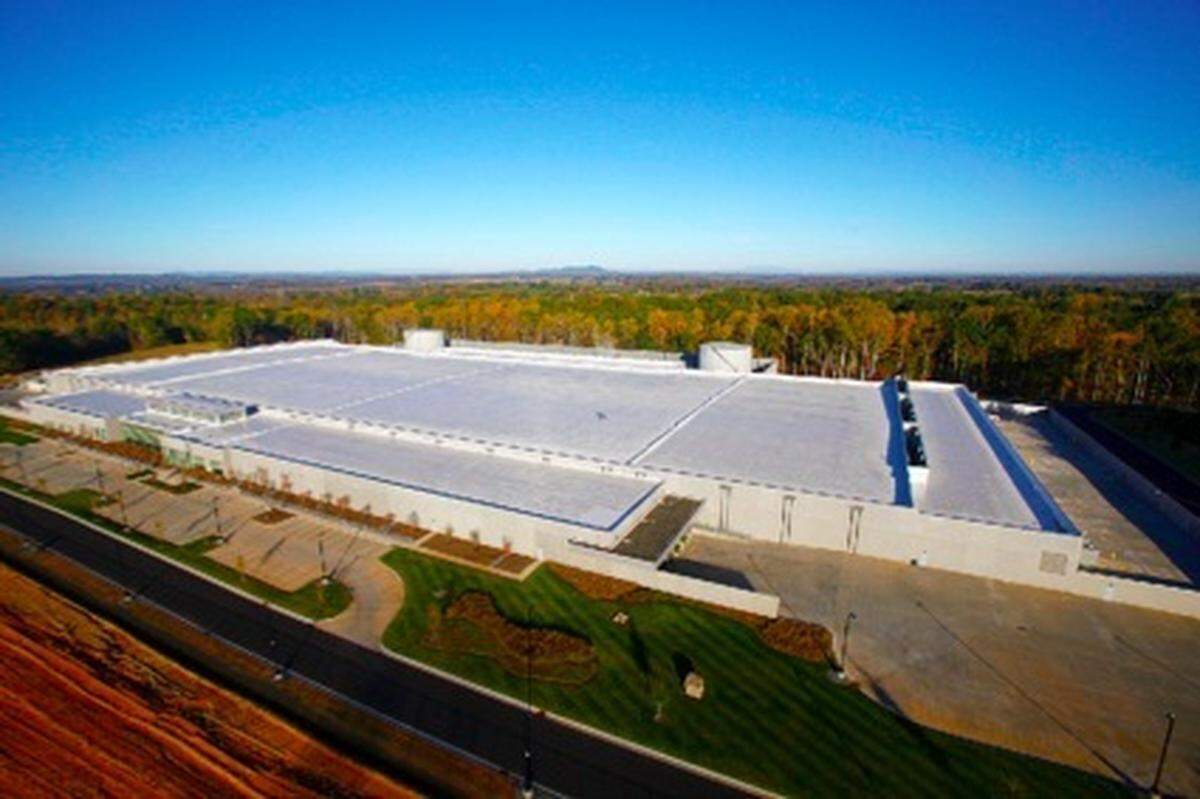
Currently, Apple has the largest data center in the Charlotte metro area with a size of 505,000 square feet in Maiden, and has invested over $4 billion in Catawba County.
In February, the tech giant said it would invest $500 billion to expand its data center capacity in North Carolina, as well as in Iowa, Oregon, Arizona and Nevada.
This story was originally published September 16, 2025 at 5:00 AM.