‘Surreal.’ Charlotte residents grapple with I-77 impact on Black neighborhoods
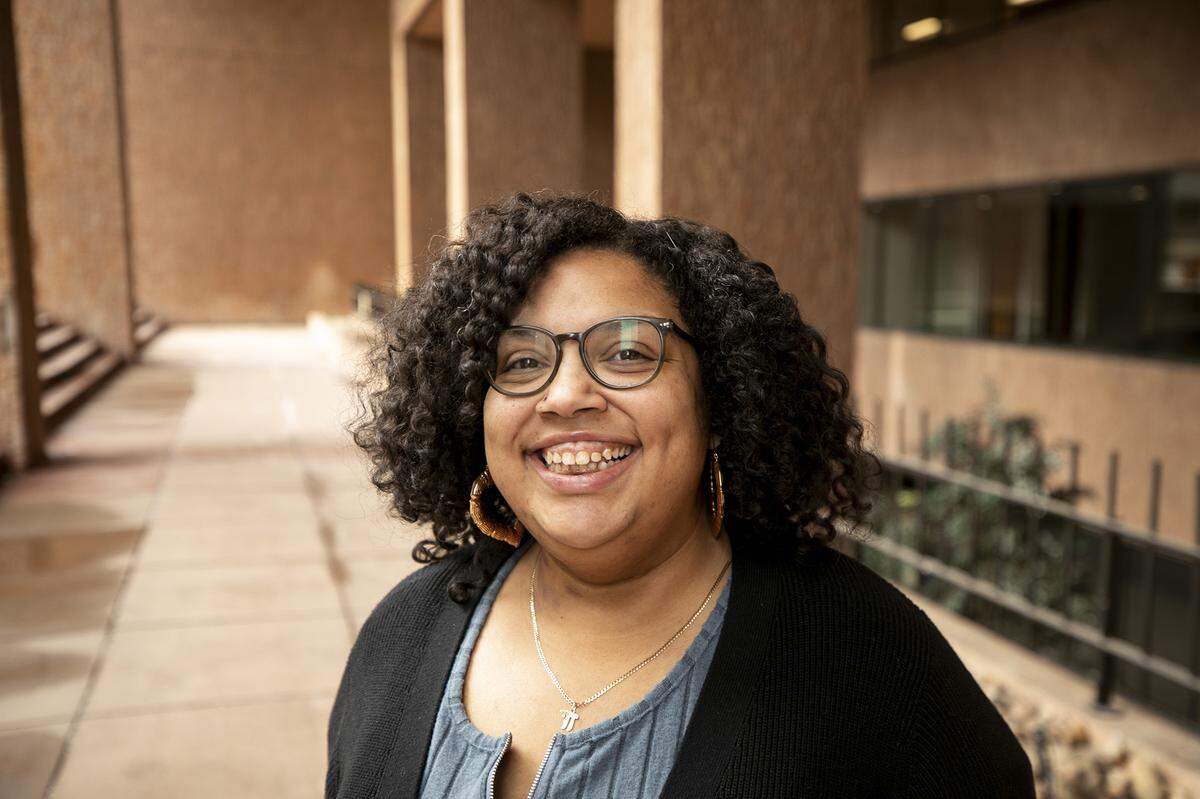
Shauna Bell knew the proposed maps showing how Charlotte and the state planned to widen Interstate 77 were coming.
North Carolina Department of Transportation officials had already been to her neighborhood of McCrorey Heights sharing news that the state would be moving forward with adding toll lanes to the interstate that is mere feet from her front door.
And Bell knew that the plan would impact her, McCrorey Heights and several other historically Black neighborhoods. But it’s a different feeling to know something is coming versus seeing the potential impact right in front of you.
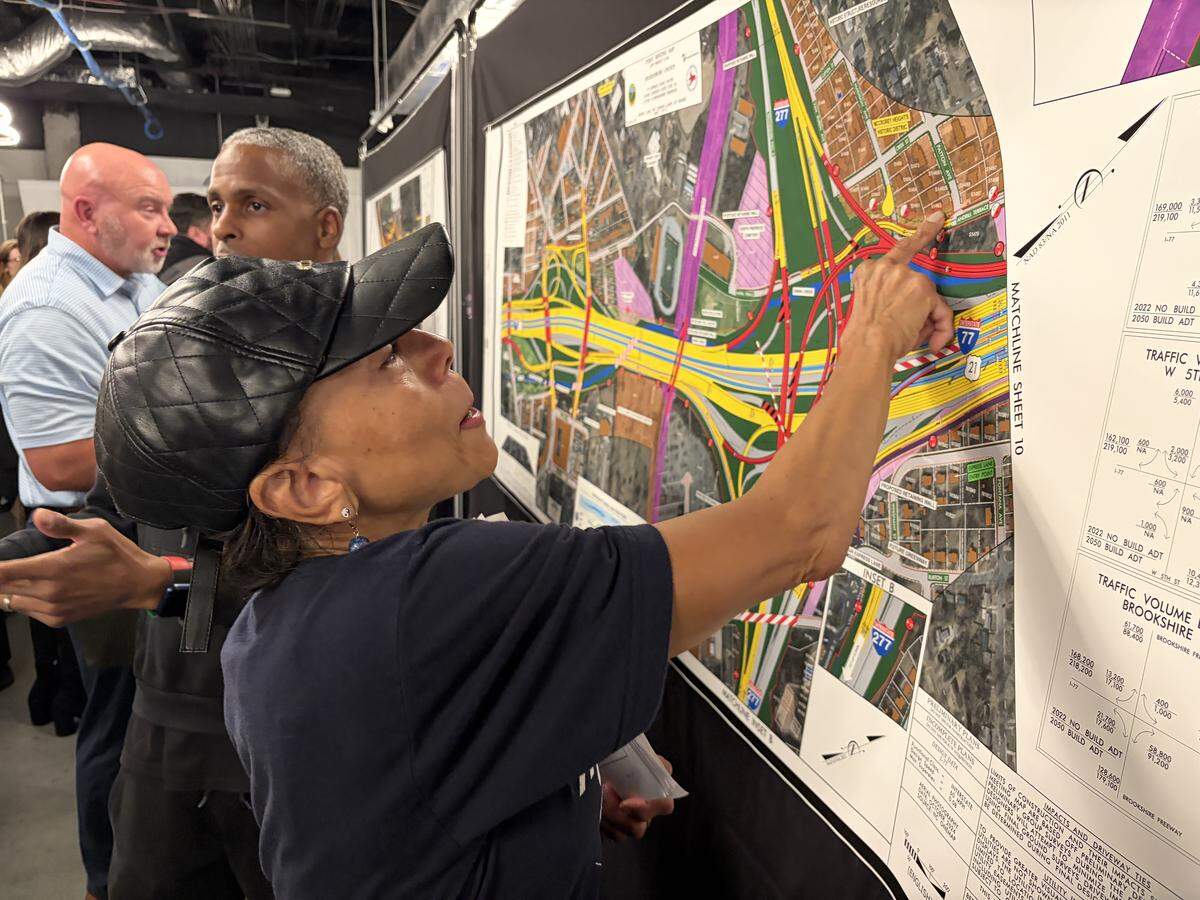
One map shows a roadway going straight through her home on Van Buren Boulevard.
“It was surreal,” Bell said. “When you see a big red line going through your property and no one is there to explain it. We were making up stories of what the impact could be, and now it’s confirmed.”
NCDOT’s I-77 South Express Lanes plan is an 11-mile project that would add toll lanes from the Brookshire Freeway exit to the South Carolina border. At $3.2 billion, it’s the most expensive highway project in the state’s history .
Upset Charlotte residents want NCDOT to reconsider
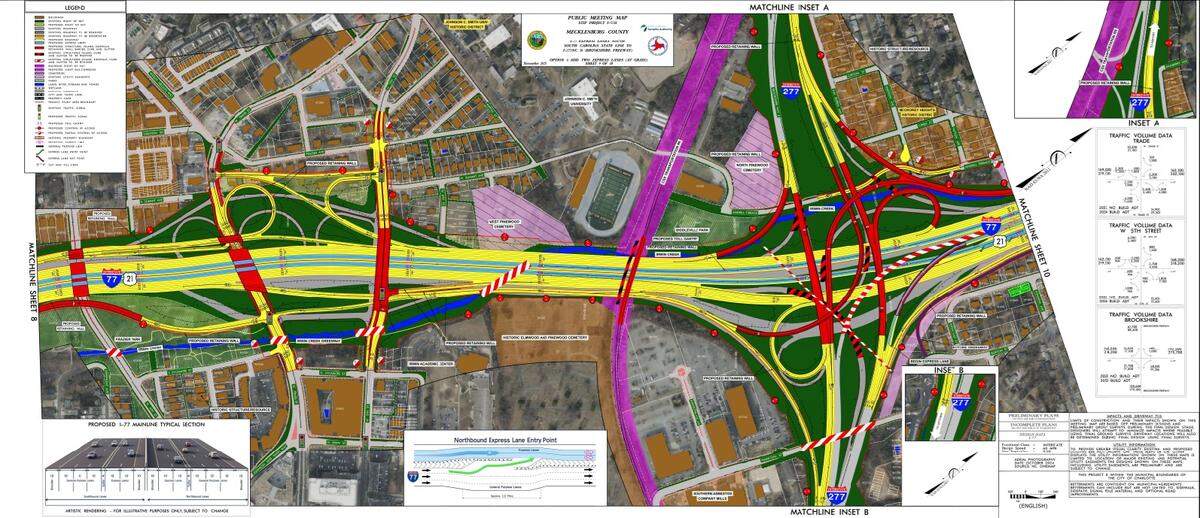
In late October, the transportation department released several maps illustrating how the project might take place.
The proposed maps show roadways going through people’s homes, like Bell’s, in historically Black areas. There’s also some encroachment on the grounds of Pinewood Cemetery, a historically Black cemetery, and Frazier Park in uptown.
Neighborhoods including Biddleville, Dalebrook, Oaklawn Park, Seversville and Wesley Heights will be impacted.
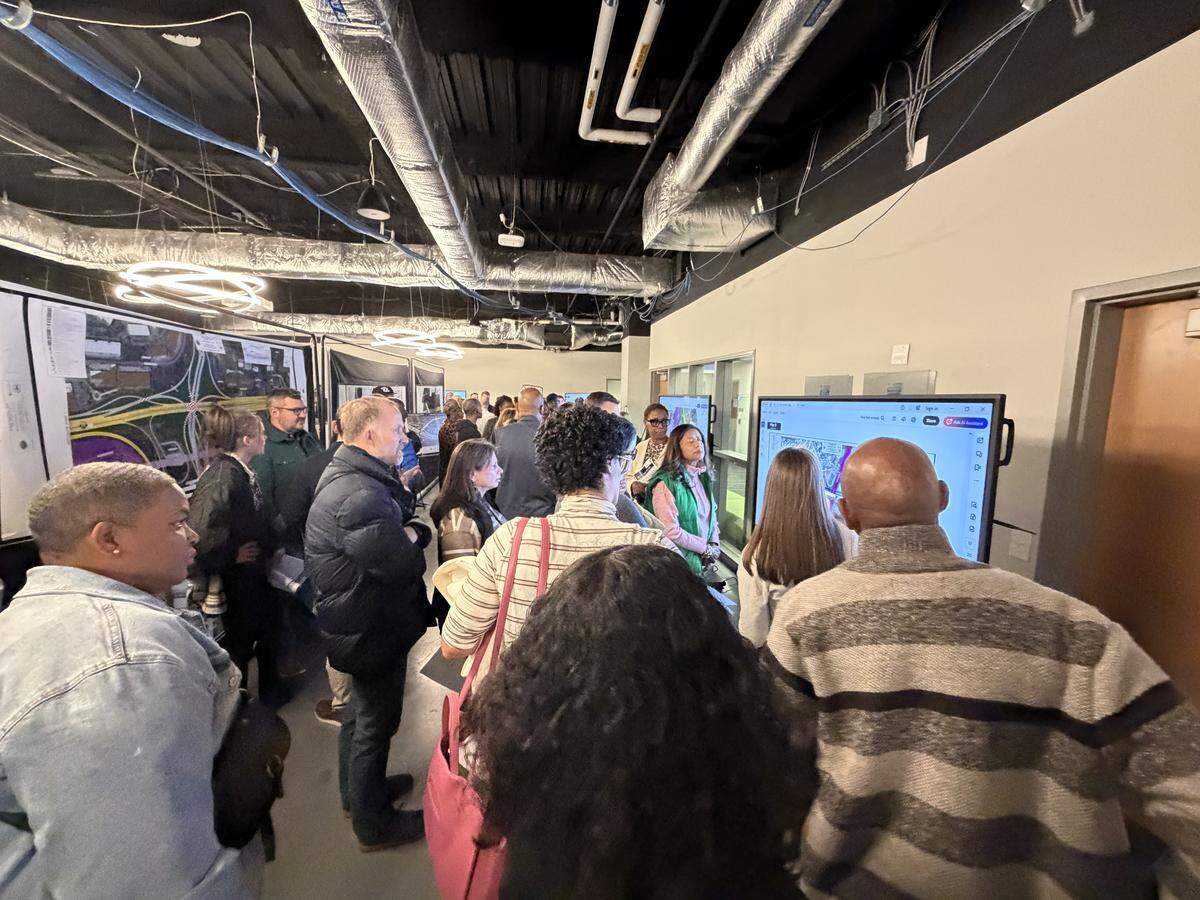
On Wednesday, NCDOT held its first public event on the project at Johnson C. Smith University. More than 100 people showed up to wander through corridors of flat and interactive maps. State officials stood by to explain what folks were looking at.
Many residents were vocally upset with what the plans revealed, holding up signs that read, “NCDOT is proposing to demolish homes for toll lanes.”
The map designs are preliminary, said Felix Obregon, an NCDOT engineer. And the public meetings are one way residents can give their input on the design, though it’s unclear if major changes to the plans would occur.
Many residents want NCDOT to pause the plan so it can consider the impact and possible alternatives. But with the push behind the project being around the safety of the corridor, that’s unlikely to happen.
“Without these improvements, congestion and safety conditions will continue to worsen as the region continues to grow to almost 4 million people by 2050,” Obregon said. “Doing nothing is not an option on this corridor.”
An I-77 South Express Lanes project refresher
State and regional transportation planners began discussing the addition of toll lanes to the I-77 corridor in 2007.
The agencies conducted a “Fast Lane Study” to determine whether existing and planned highways would benefit from express toll lanes to ease congestion, especially because of Charlotte’s potential growth.
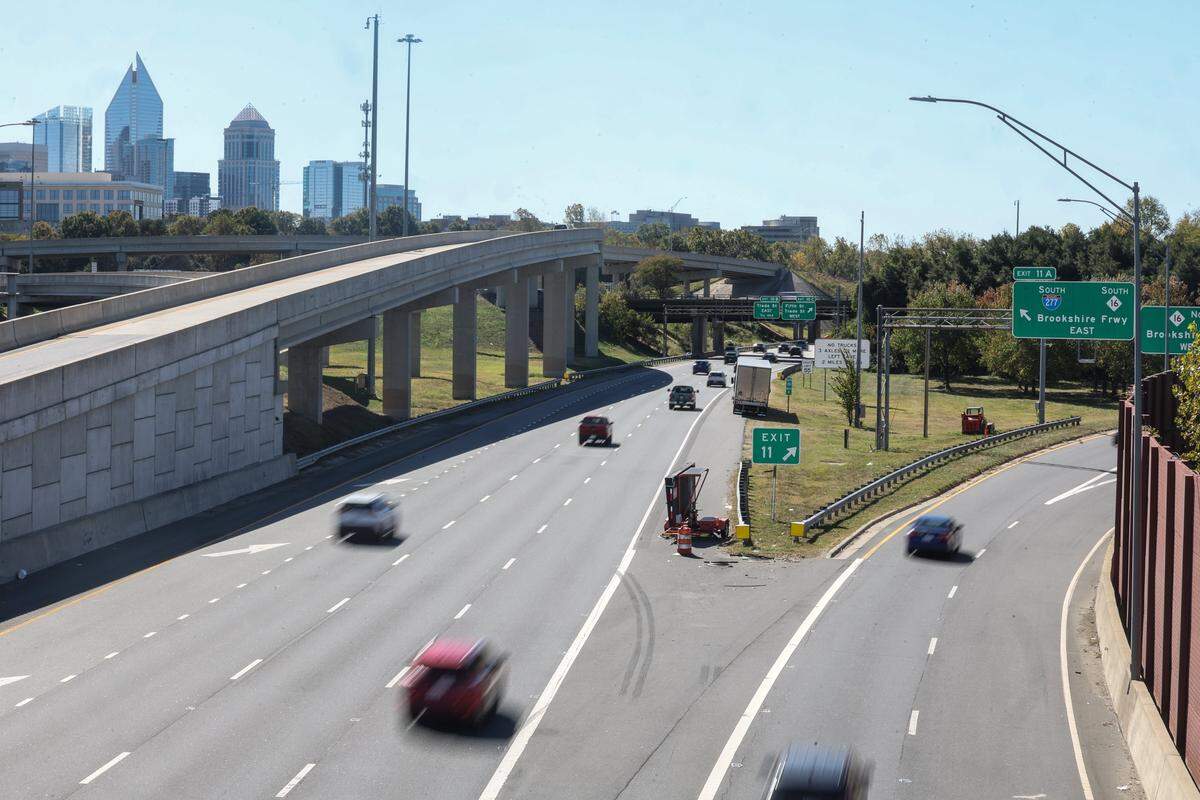
A local project first goes through the Charlotte Regional Transportation Planning Organization, which looks at urban transportation improvements in Iredell, Mecklenburg and Union counties. After several stages of rankings and approvals, the I-77 South Express Lanes project was put on a long-range planning document in 2014.
That plan was finally approved last year.
No updated study has been done on the plan, Obregon said. But statistics show that the plan is needed now more than ever, he added.
The goal of the project is to reduce traffic and crashes. More than 160,000 vehicles travel the project length, and this section of I-77 has a crash rate 2.5 times higher than state average, Obregon said.
A recent report from Wilmington-based law firm Shipman & Wright said I-77 from central Charlotte down to South Carolina is the sixth-deadliest stretch of roadway in the state, with 12 deadly crashes from 2019 to 2023.
Concern over NCDOT communication
Charlotte’s growth is driving the plan. But during Wednesday’s event, some residents didn’t agree with the idea that more lanes equals less traffic.
“A road will never be big enough if the city continues to grow,” said Shannon Hughes, president of the Five Points Community Collaborative and the Wesley Heights Community Board. “This is a short-term solution. Widening roads, they fill back up again … Probably by the time they get this built, it’ll be full again.”
But a major concern for residents has been NCDOT’s communication and engagement.
“I’ve lived in the neighborhood 18 years, and I’ve been neighborhood president for about 13 of them,” Hughes said. “This is the first time we’ve been engaged.”
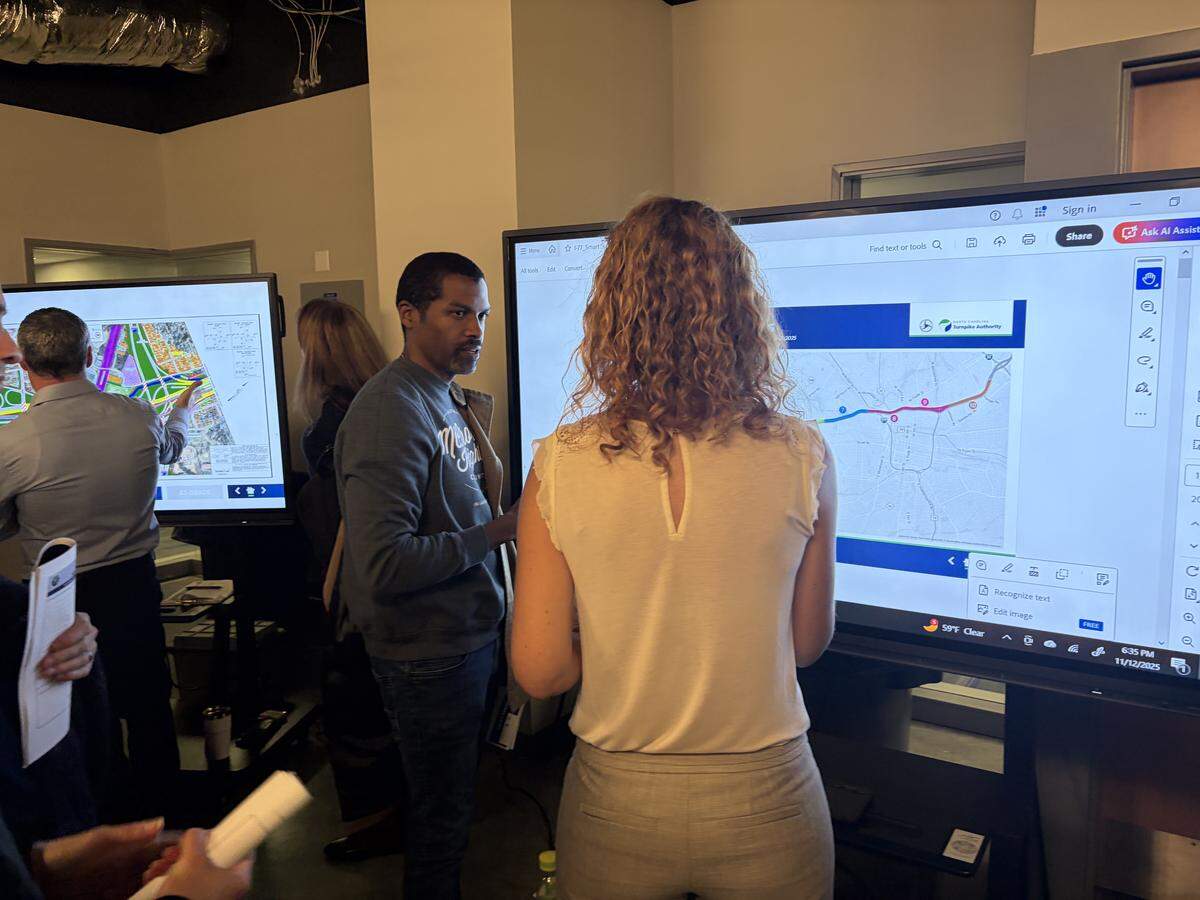
Sean Langley, president of the McCrorey Heights neighborhood association, echoed that sentiment.
For years, McCrorey Heights residents have been touch with NCDOT requesting that sound barriers be placed on Van Buren Boulevard to block noise from Brookshire. No one mentioned the highway expansion project, Langley said.
And for the past year, NCDOT has been hosting small community meetings on the project. McCrorey Heights had their meeting in October, days before the maps were released.
“(NCDOT) knew what was in these maps a month ago when (they) came to our neighborhood,” Bell said. “But (they) tried to skirt the issue. If I had not sought out the maps before this meeting, I would have showed up today and seen a line through my house. That’s not okay.”
Langley continued, “There’s been a lack of transparency between NCDOT, and specifically McCrorey Heights …There’s no trust.”
And for McCrorey Heights residents, this feels like deja vu. In the 1960s, more than 240 families were displaced in the West End to make way for Brookshire and Interstates 77, 85 and 277.
Some of the proposed maps include two options. For instance, one map shows ground-level changes near Bell’s home would require her house to be taken through eminent domain.
But another option shows that a roadway could be elevated, going over her house.
While Bell said she’d prefer the option that doesn’t take her home, having a highway go over her head for the sake of Charlotte’ growth isn’t a pleasant alternative.
What’s next for I-77 South?
The project is about 30% of the way into the design process, Obregon said. There is a long way to go.
NCDOT will collect the comments received from the two public meetings, and it will continue to receive comment through the project website.
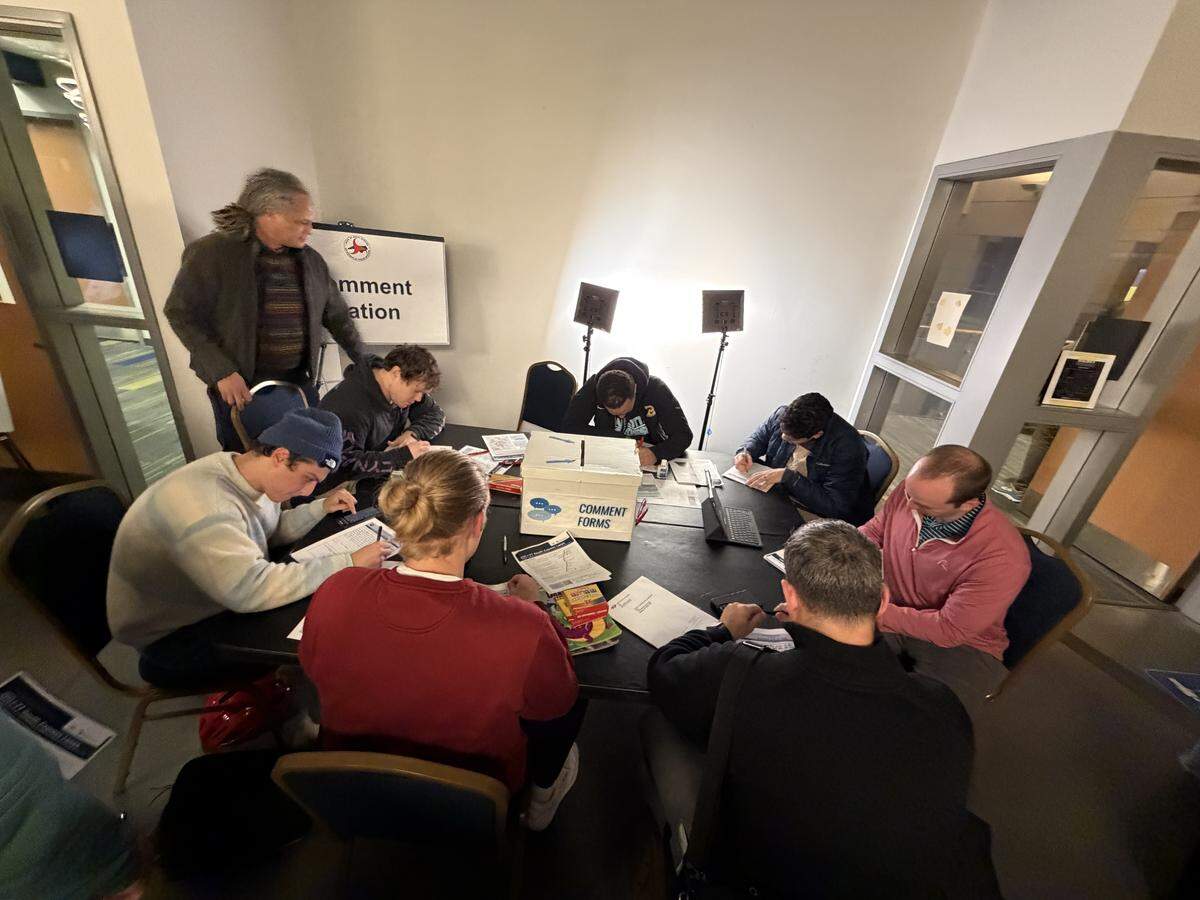
In the spring, there will be additional public meetings and opportunities for communities to meet with officials.
“We want these neighborhoods to be in step with us as we go through this process because we know they are concerned, and we take those concerns seriously,” said NCDOT spokeswoman Jennifer Goodwin. “We’re not at the point in the design process where we can say with finality, ‘This is how it’s going to look, and this is where it’s going to go.’ That’s unfortunately where we are in the process.”
But while the design remains in process, residents like Bell and Kyle Williams, who also lives on Van Buren Boulevard, are left in limbo.
If the design that runs through their homes is approved, they wouldn’t know that until maybe 2030. And it’s unclear how long the eminent domain process takes.
Williams envisions a long legal process if the state attempts to take his home. His house has been in his family since the 1980s.
“If the acquisition does happen we’re not going to be able to take the amount they feel like it’s worth because it’s worth way more to us,” Williams said. “You can’t buy generational wealth. You can’t buy memories.”
A few residents at the event, including Hughes and Langley, said community groups will start to work together to try to get the project paused.
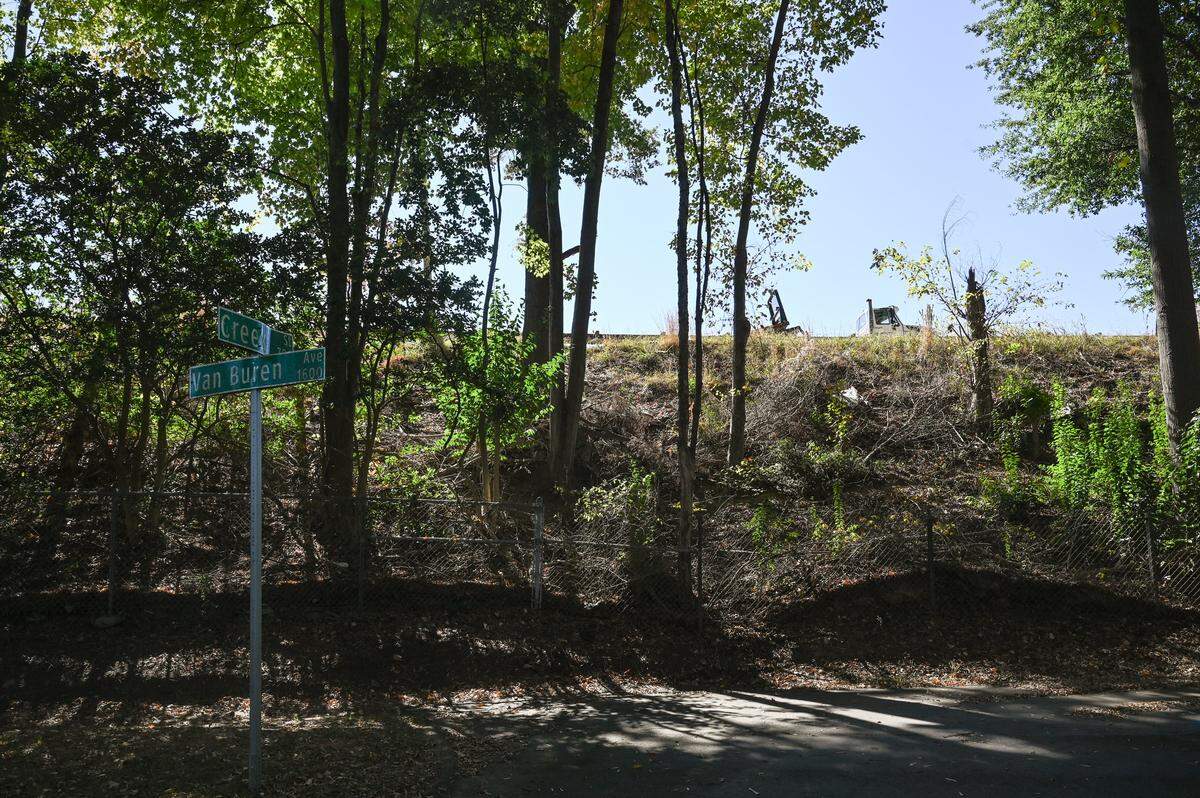
Bell hopes NCDOT takes the comments it receives into consideration, considering many of them are asking for a pause. But if history is repeating itself, that’s unlikely.
“In the old articles, someone who wasn’t trying to stop Charlotte’s progress asked the state to move the interstate to save the community, and they didn’t,” Bell said. “History is repeating itself ... They say it’s preliminary, but there’s not a lot of trust. There’s not a lot of transparency.
“But I hope they prove us wrong this time.”