
Forgot to scan items at an NC grocery store? You could face criminal charges
AI-generated summary reviewed by our newsroom.
- Shoppers may be charged for failing to pay for items at grocery stores.
- Larceny charges hinge on the shopper’s intent and item value.
- Check cart and receipts and place scanned items in bagging area to avoid charges.
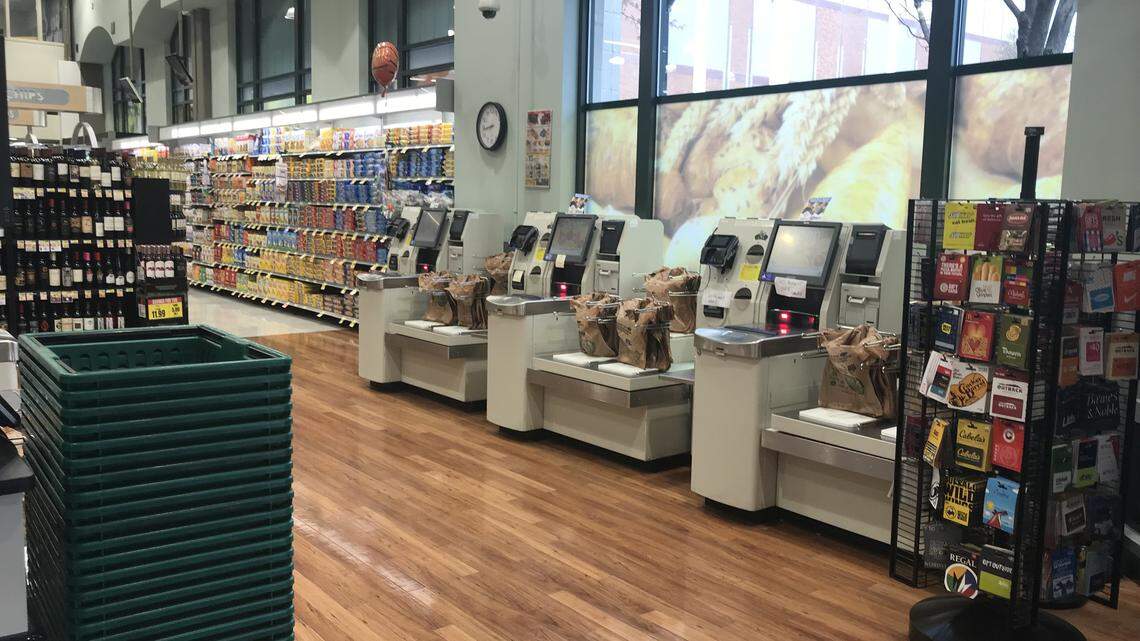
Grocery store self-checkout lanes offer an alternative for shoppers looking to get in and out quickly.
But during a frantic grocery run, with one’s thoughts occupied by unchecked tasks on the to-do list or life’s stresses, a shopper could forget to scan an item or two.
Many stores take steps to prevent customers from walking out without paying for something.
Grocers contacted by The News & Observer, including Target, Walmart, Food Lion and Wegmans, did not share specifics about safety and security measures used in stores. However, North Carolina shoppers have probably observed some of the ways stores monitor self-checkout areas, such as cameras at the registers or employees standing watch nearby or at exits.
Still, even with these precautions in place, customers can unintentionally walk out of a store without paying for something.
And that mistake, though a result of forgetfulness or distraction, could still result in significant consequences, including criminal charges.

Can you face charges for forgetting to scan items at the store?
There are a few ways a shopper could face criminal charges after making a mistake at the self-checkout.
A grocery store can report to the police that a customer has left without paying. Once a law enforcement officer has collected the necessary facts and is satisfied that a theft has been committed, the officer could issue a citation charging the customer with a theft, said Brittany Bromell, an assistant professor of public law and government at the UNC-Chapel Hill School of Government.
The officer could also swear out charges before a magistrate and get an arrest warrant for the theft. Charges may be misdemeanor or felony larceny, depending on the value of the items taken, Bromell said.
Larceny requires that a person takes the property of another without consent and has the intent to permanently deprive that person of the property. Shoplifting, however, requires a person to conceal goods they are stealing. If a person simply forgot to scan an item at the grocery store but didn’t hide the item, it wouldn’t be considered shoplifting.
Prosecutors may determine later that the customer didn’t have the intent to commit a crime, and charges may be dismissed, Bromell said.
For example, if a shopper realizes immediately they have forgotten to scan something and brings the item back, that suggests the shopper didn’t mean to take the item, Bromell said. A prosecutor or judge may then see the intentional requirement for larceny isn’t met, and charges may be dismissed.

“I don’t know that people are being prosecuted for mistakes often,” Bromell said.
A store manager could also go directly to a magistrate to swear out charges against a shopper, Bromell said. If the magistrate has sufficient information, they could issue a criminal summons charging the customer with the theft.
Tips for using grocery store self-checkout
Beaufort-based Hancock Law Firm offers some recommendations for shoppers using self-checkout lines to avoid accidentally stealing items:
- Check your cart to make sure you have scanned every item.
- Place every scanned item into the bagging area.
- Check your recipt before leaving the store to make sure you have paid for everything you think you purchased.
This story was originally published March 30, 2026 at 2:26 PM with the headline "Forgot to scan items at an NC grocery store? You could face criminal charges."
