
They paid tens of thousands toward ‘dream homes.’ Then this NC company ghosted them.
Thomas Daniels was looking for a new beginning.
Just on the other side of a divorce and two brain surgeries, Daniels’ life in the years leading up to 2021 had been rocky. His career as a marine mechanic behind him thanks to his physical limitations, Daniels was coming to terms with a future that looked much different than he’d imagined for himself.
But one dream still seemed within reach.
“Out of its materials alone, log homes have the power to create a serene oasis in an otherwise chaotic landscape,” read the website of American Log Homes and Cabins, a Charlotte-area company Daniels had found online.
He’d always wanted a log cabin.
American Log Homes and Cabins had been advertising discounted kits online and in newspaper ads across the country. The kits — packages of pre-cut logs that promised an affordable alternative to traditional building — had been partially paid for by customers who later abandoned them, the company claimed. That meant lucky would-be owners like Daniels could pay just the remaining balance to make the “dream homes” theirs.
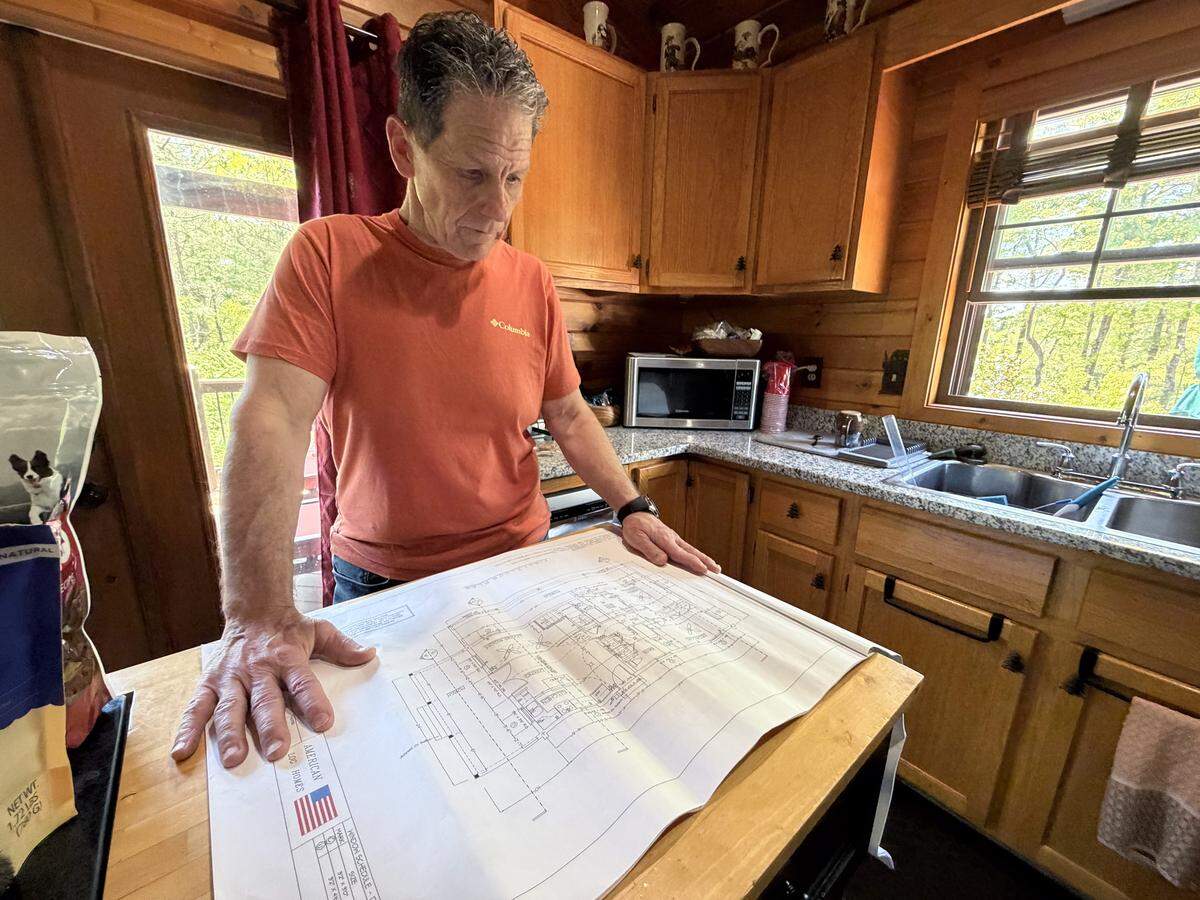
After reading glowing online reviews about the Better Business Bureau-accredited company, Daniels, who had just relocated to western North Carolina from Florida, wired American Log Homes $16,500 in September 2021. He got his blueprints, and the company promised he could have the logs delivered whenever he was ready. All the company’s invoices promised customers there was no deadline.
It’d taken longer than Daniels hoped to secure land in Hayesville, and a few years passed. But any time he’d checked in with Michele Wilson Szabo, the company’s owner, he’d been assured he just needed to give the word and his log cabin kit would be sent.
So Daniels called to do just that, in January 2026. He got no response. When he tried again, he reached a recording:
“Please note that American Log Homes and Cabins has permanently closed and is no longer operating. We are unable to accept new inquiries, projects or requests, and no refunds will be issued.”
Daniels is one of at least 50 former customers in 22 states who say they paid for a log cabin kit and were left empty-handed by American Log Homes and Cabins. They reported paying between $14,500 and over $25,000 each — some wiring the company money within weeks of it being dissolved on January 15. Many of those customers submitted complaints to regulatory agencies, posted on social media and left reviews detailing their experiences online.
They’ve been told they will get little, if any, of their money back.
The Charlotte Observer tried to reach Szabo through phone calls, text messages and a certified letter sent to her Indian Land, S.C., home. Grier, Wright, Martinez, a Charlotte law firm representing American Log Homes and Cabins, declined an interview request.
“American Log Homes and Cabins operated for 24 years without any issues,” Szabo’s personal attorney, Noell P. Tin, said in an email to the Observer. “Michele fully intended to continue the business and believed she could do so until the very end. When she ultimately concluded that closure was the only option, she retained counsel to ensure the process was handled lawfully.”
Szabo hasn’t spoken to her former customers. Many now wonder: Were they victims of a scam? Or just the collateral damage of a post-pandemic economy that put another company out of business?
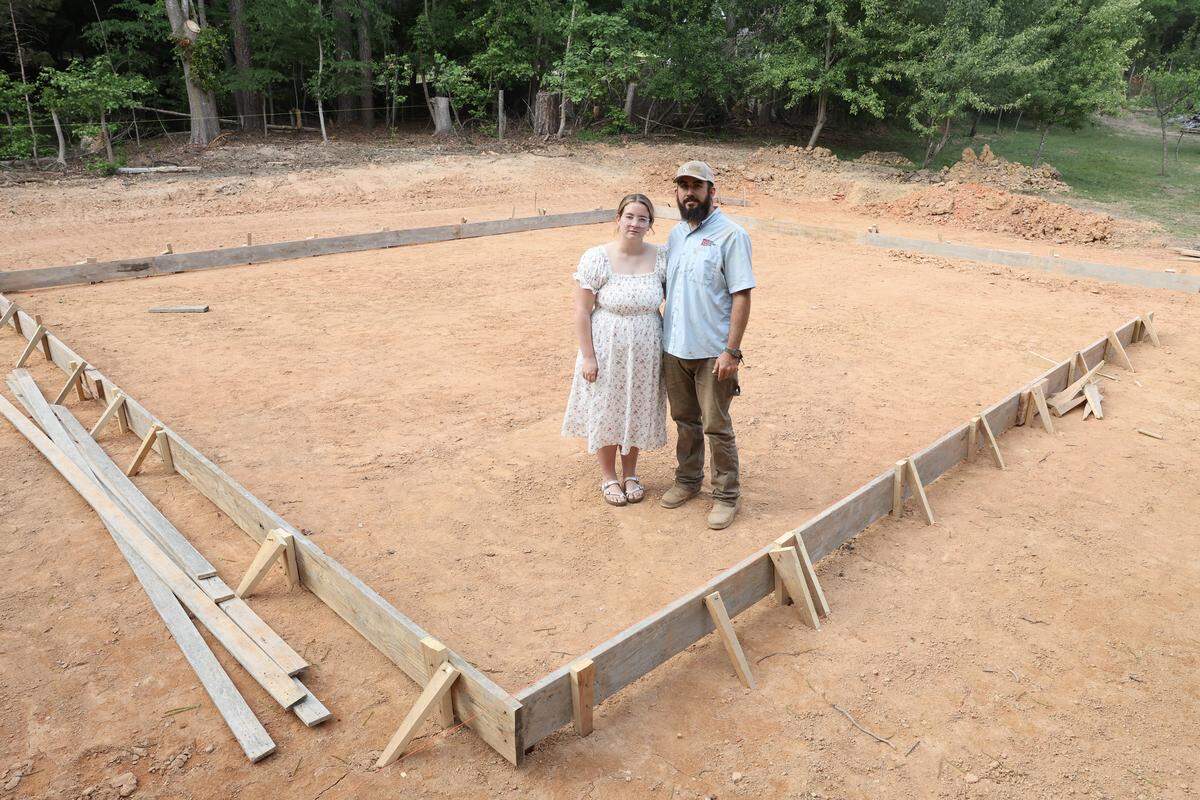
“This was not an accident and this was not some oopsie bad business decision, this was malicious,” said White Springs, Florida, resident Karli Russell. She and her husband paid $17,500 for a log cabin kit they haven’t received, she said.
To Daniels, why the company closed matters little.
“This leaves me stuck,” Daniels said.
‘Pennies on the dollar’
The claim forms started rolling into the law offices of Grier, Wright, Martinez within a month of American Log Homes and Cabins closing. Hired to handle the company’s “winding down,” the firm – which represents “distressed businesses” — had mailed claim forms to former customers across the country, according to emails attorney Anna Gorman sent claimants. Customers who had paid for log cabin kits but hadn’t received them could send in completed claim forms to the firm for potential repayment, they were told in a January 16 letter from the attorney’s office.
Those claims added up quickly: the law firm estimated they would receive more than $1.8 million in requests for reimbursement, Gorman told a customer in an email February 13.
But the company had less than $40,000 in assets to be distributed.
“I want to relay that the entity is defunct and has very little in assets,” Gorman wrote. “If we are able to make a distribution it…will be pennies on the dollar.”
That didn’t make sense to Tara Swicicki. Szabo confirmed in a text that she received Swicicki’s wire of more than $21,000 on Dec. 5 — just over a month before American Log Homes filed dissolution papers with the state. Swicicki, who lives on Long Island, hoped the purchase of a log home kit would be the first step toward establishing a homestead for her, her husband and their adult children in upstate New York.
“I’m a business owner, and there’s no freaking way in hell that you are selling things and closing your business five weeks later — you would know something was going on,“ Swicicki said.
It didn’t make sense to Fort Mill, S.C., resident Colby Benfield, either. He’d just made his last of two payments to Szabo totalling $16,500 on December 15, bank records show. He hoped to build a permanent home for himself, his wife and their newborn daughter, born in October.
Nor did it add up to Dawn and Roger Williams of Country Club, Missouri, whose $6,025 check for an upgrade to their cabin kit Szabo cashed on Dec. 23rd, 2025, records show. The couple originally paid more than $14,000.
“Clearly you knew the writing was on the wall, and you’re still taking people’s money, you’re still offering your services, knowing damn well that you’re not going to deliver, right? That is fraud,” Benfield said.
By February — when ALH’s attorney was telling claimants there was little money left in the company’s coffers to repay them — many former customers had found one another online.
In Facebook chats and in log cabin group posts, they traded tidbits of information they’d found about Szabo. They said they’d all gotten different stories about how the company had come to possess so many partially paid-for kits it could sell at such a low price.
Some had answered classified ads from the company for estate sale log homes. One former customer said they were told a dealer building short-term rental cabins had put down nonrefundable deposits on the kits and ended up needing less than predicted. Another said Szabo told them a dealer died after purchasing cabins for a development and his widower wanted the company to sell them since American Log Homes didn’t offer refunds.
A few customers responded to ads from third parties on Facebook, people who said they’d invested in the kits only for their plans to later change.
Other former customers who’d connected with each other online looked to Szabo’s personal financial dealings for clues. She’d placed her South Carolina townhome in a trust in August, public records show. Several speculated it was an attempt to hide assets in anticipation of the company’s closure.
As they exchanged theories, suspicions mounted. The collective ire of the group spilled over. Former customers tried to reach Szabo through her personal social media accounts and filed grievances with state regulatory agencies.
“This company is a fraud. They scam[med] me out of $14,500 dollars on a log home kit. [...] [Szabo] has done this to hundreds of people,” a Stroud, Oklahoma, resident said in a Feb. 2 complaint to the North Carolina Attorney General’s Consumer Protection Division.
So many miffed log cabin kit purchasers had started calling Szabo’s recent employer, real estate company Better Homes & Gardens Paracle, that a beleaguered receptionist at one point threatened Benfield —the Fort Mill man who wanted to build a home for his wife and baby — with legal action for harassment, he said.
“I said, ‘Well, how about I just harass you guys a little bit more, because $16,500 is a lot of damn money, especially to a new dad building a house,’” Benfield said.
Szabo got her real estate license in March 2024. She worked at Waxhaw-based Farms & Estates Realty that year before joining Better Homes & Garden’s Paracle, according to the company’s Facebook page.
Szabo is no longer with the real estate company, a representative confirmed by telephone to the Observer in April.
But the group’s efforts led to two state investigations they hoped could reveal where their money had gone.
‘Helping people get their dream home’
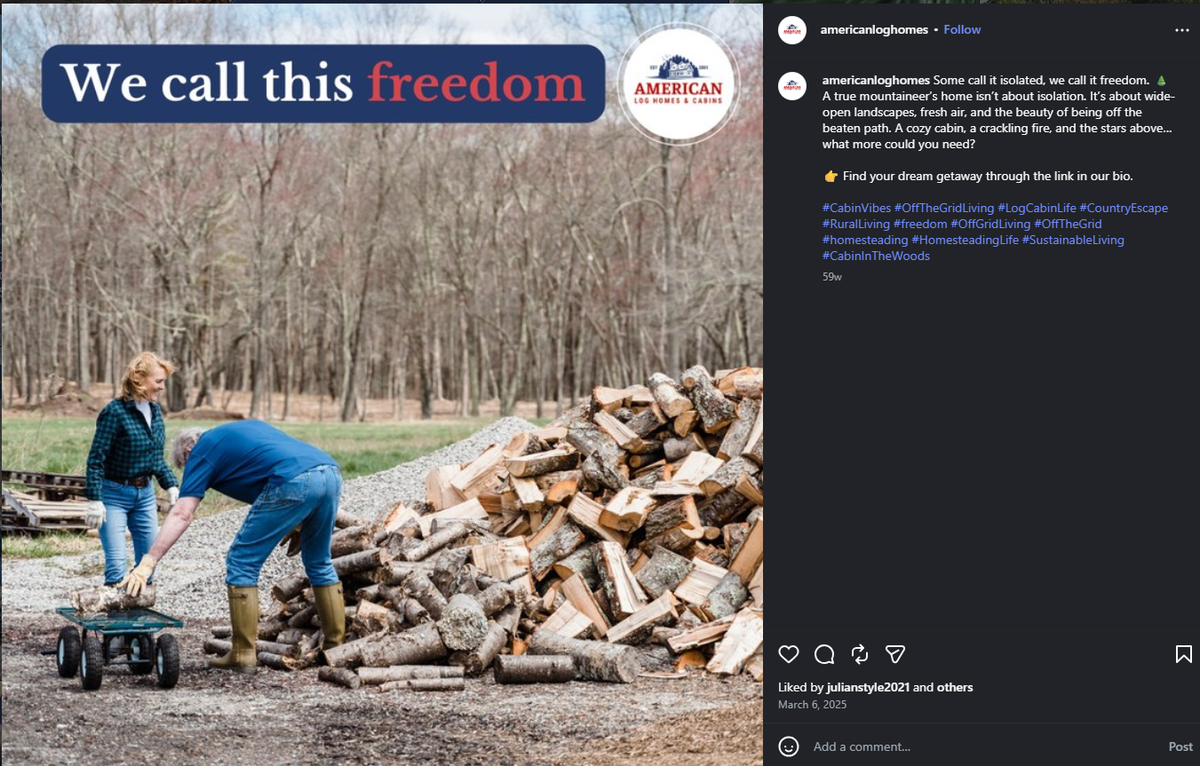
As American Log Homes peddled discount cabin kits to customers across the country, it traded on the same values that log cabin life evoked, especially among DIYers: hard work, self-reliance and tradition.
Szabo’s father, James “Mike” Wilson, had been in the log home industry since the 1980s, according to the company’s website. Szabo joined him in 1994 after graduating from the University of North Carolina-Greensboro with a bachelor’s degree in political science.
When Michele’s son, Adam, was born in 2001, Michele and her father decided to “branch off” and create their own company, American Log Homes, in 2002.
“So when we say our business is family owned and operated, we mean it,” the website read before it was taken down in January. “We think we have the best job in the world — helping people get their dream home, an American log cabin or tiny house!”
With home ownership becoming increasingly difficult amid high interest rates and inflationary prices, that dream has eluded many Americans. Some fraudsters have exploited would-be owners’ desperation to their advantage: Last October, an Asheville man pleaded guilty to wire fraud after at least two dozen customers in four states reported paying more than $2.5 million for log cabin kits that were never built. He was a former pastor, local media reported.
In 2019, a couple was charged with embezzlement and exploiting the elderly for bilking buyers in six Western North Carolina counties out of millions of dollars for log homes. The couple took hundreds of thousands of dollars at a time from most of the 20 victims. The more than $2 million they collected did not go to building the cabins they promised customers, law enforcement said.
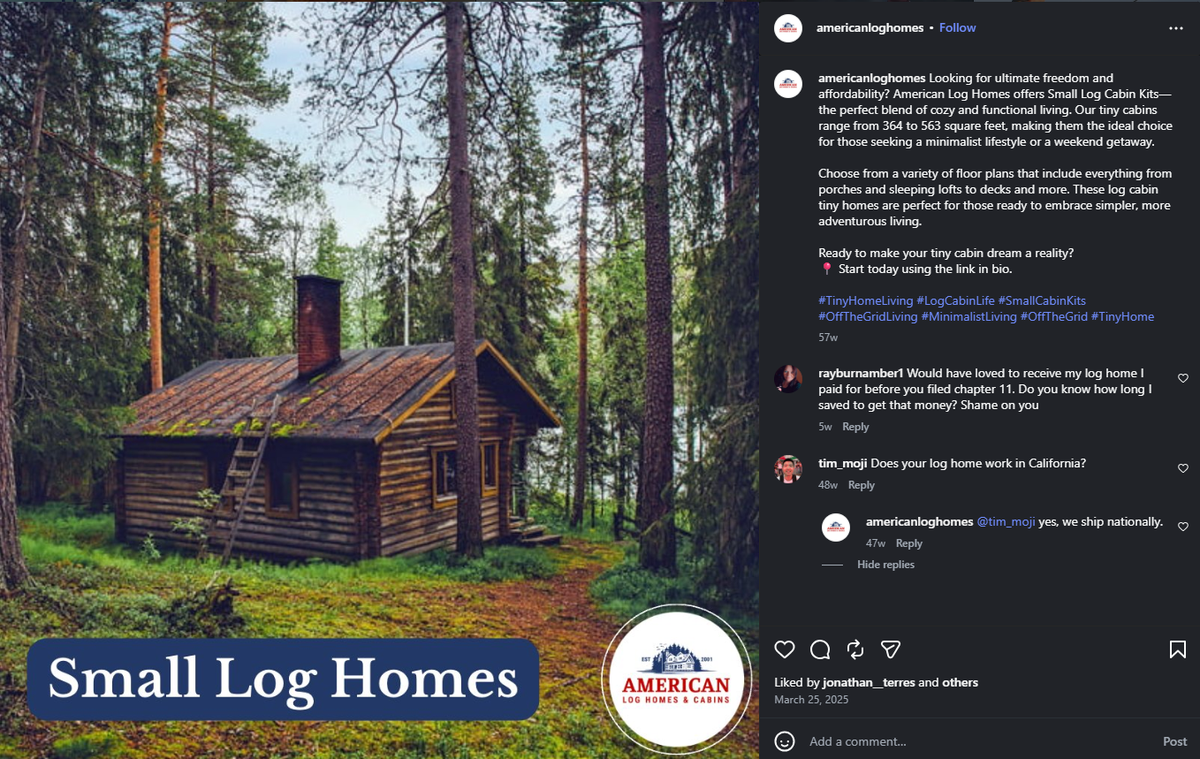
Companies like American Log Homes promise lower entry fees to homebuilding than other methods, with would-be owners able to use the blueprints to build their log cabins themselves, if they desire. ALH’s customers could choose one of 25 designs, with models ranging from about 1,000 square feet (the Waco) to more than 3,000 (the Dallas). The business also offered plans for tiny homes, about the size of an efficiency apartment.
The discounted packages appealed to Ed Danyo, who lives in the Millers Creek area of Wilkes County. The 62-year-old was looking for a log cabin to build on his 5-acre property in the foothills of the Blue Ridge Mountains. He and his two senior Goldadors, Jake and Kobe, had outgrown his current cabin.
He, too, vetted the company before pulling the trigger. Its glowing online reviews — complete with pictures of log homes in progress — and its Better Business Bureau accreditation assured Danyo that the steeply discounted kits were legitimate.
“We are so pleased with American Log Homes! Michele is the best! Every time I have called her with questions, she was quick to help and gave us exceptional service,” one Tennessee reviewer wrote on Google in November.
“We are finally building the home of our dreams and American log homes has helped us every step of the way through it,” another review reads.
An archived version of ALH’s profile confirms it was previously accredited and had an A+ rating. A BBB representative declined to answer specific questions about American Log Homes and Cabins but said the agency reviews “various elements…including but not limited to complaints, licensing, and advertising” when considering companies for accreditation.
The company is now listed as possibly out of business, and not accredited, on the bureau’s website.
In August 2024, Danyo wired Szabo $16,000. It’d been difficult to get contractors up the mountain — many of them faced a backlog of orders following Hurricane Helene — but by early February 2026, he’d finally lined up someone to put in the cabin’s foundation. When he called American Log Homes to order his logs, he reached a recording saying he wouldn’t get them — or his money.
“There was at least $20,000 in land preparation — I’m probably out thirty-five to forty thousand dollars,” Danyo said.
Sierra Vista, Arizona, residents Bret Hamilton and Heather McAteer also vetted the company before their purchase. Bret, a retired Army veteran, was looking to build a home in Hillsboro, Kentucky, that the couple could retire to when McAteer finishes her time in the Army. He wired American Log Homes and Cabins $21,000 in September 2025 for a Biloxi log home kit, bank records show. He said he tried to reach someone at the company multiple times in December and January to discuss plans to get his logs for a summer 2026 build, with no response.
McAteer found others online who’d also had trouble getting in touch with the business after purchasing kits. Then the couple got the letter from ALH’s attorney saying the company had dissolved.
“I’ve never heard from Michele Szabo since I bought it,” Hamilton said.
Company grows under Szabo
Part of the business’s success in attracting customers like Danyo and Hamilton, according to company insiders, was thanks to Szabo’s efforts. Szabo took over day-to-day operations at American Log Homes and Cabins in 2016, when her father became ill, according to the company’s website. He died in October 2018 at age 74, leaving his daughter and his wife, Kathryn Wilson, in charge, public records show.
The company, then called Log Concepts LLC, was valued at $700,000. Szabo and Wilson each received half, according to estate records.
Szabo by that time had a history of personal debts, according to court records. She’d been sued by banks, credit card companies, debt collection agencies, homeowners’ associations and the IRS. Most of the suits were filed between 2010 and 2013. Her South Charlotte home had been foreclosed on in 2013, several years after her second divorce.
She was also a single mother. Her ex husband owed more than $121,000 in back child support, Szabo wrote in an August 2019 court filing.
But her father’s company grew under Szabo and Wilson. The pair rebranded the company and ramped up its social media presence, according to its website. The number of orders ticked up for the first several years under her management, according to Billy Davis, who owns the China Grove log mill that American Log Homes hired as a subcontractor.
Wilson ended her involvement with the company by 2024, according to annual reports filed with the N.C. Secretary of State. Szabo seemed to become the business’s sole employee and the only point of contact, customers and contractors said. The architect who drew up the cabin’s blueprints worked under a contract, like Davis.
Despite the initial gains, American Log Homes’ business had slowed by late last year, Davis said. Still, the company had weathered other downturns, according to Davis. He never expected American Log Homes to close.
“She kind of left me high and dry,” Davis said. He was left with about $150,000 in excess log home materials when the business shuttered, he said, though he’s been able to sell some since.
Davis said he’d asked Szabo in the month before the business closed if she had more orders for him since he’d only fulfilled two in December. She told him she didn’t, Davis said.
That’s despite taking payments that month from customers like Swicicki and Williams.
“From my perspective, that is fraud,” said ALH customer Dan Ashton, referring to payments accepted by the company in December. Ashton and his wife purchased a balance-owed kit for $14,500 in September 2022, planning to build a retirement home in the mountains of east Albuquerque. He said they’ve been trying since last spring to get logs from the company.
American Log Homes’ architect, who spoke with the Observer on the condition his name not be published because he was not involved in the company’s business decisions, said the abrupt closure impacted his wallet, too.
“It was about 95% of my business,” said the architect, who also had worked under Szabo’s father.
Investigations under way
Szabo’s business dealings have drawn the attention of two N.C. regulatory agencies.
The Consumer Protection Division of the North Carolina Attorney General’s office opened an investigation into American Log Homes and Cabins in March after receiving dozens of complaints from former customers.
And Szabo hired prominent Charlotte criminal defense attorney Tin to represent her in an inquiry by the North Carolina Real Estate Commission. The commission launched a probe in January after receiving eight complaints from former American Log Homes customers about predatory practices, according to Janet B. Thoren, director of regulatory affairs at the commission.

Szabo voluntarily surrendered her North Carolina real estate license on April 27th in response to the commission’s inquiry. The conditions of the surrender permanently ban Szabo from holding a real estate license in North Carolina.
Szabo also has a real estate broker license in South Carolina, though it is listed as inactive. The South Carolina Association of REALTORS® declined to move forward with a hearing following complaints from ALH customers, records show.
‘You can only collect what there is’
Former customers of American Log Homes & Cabins are skeptical they will ever see their money again.
Some have split the costs of consulting with an attorney. But they fear a civil suit would be fruitless, with the company pledging poverty.
All wonder where the tens of thousands they each paid went — and what happened to the large deposits the company said other customers walked away from, making the “balance owed” kits available.
The company’s advertising around its cabin kits sounds dubious to Ira Rheingold, executive director of the National Association of Consumer Advocates.
“It just seems odd that you can discount something $25,000 because all these other consumers bought these houses and then walked away, and we got to keep their money. That would raise some red flags with me. What happened to all these people — none of those people wanted their money back?” Rheingold said.
While small companies going out of business and leaving some customers empty handed can happen, the transactions are typically for much smaller amounts, such as deposits on furniture, according to Rheingold.
“I can’t think of a lot of businesses where people are putting that much money down ahead of receiving a product,” Rheingold said.
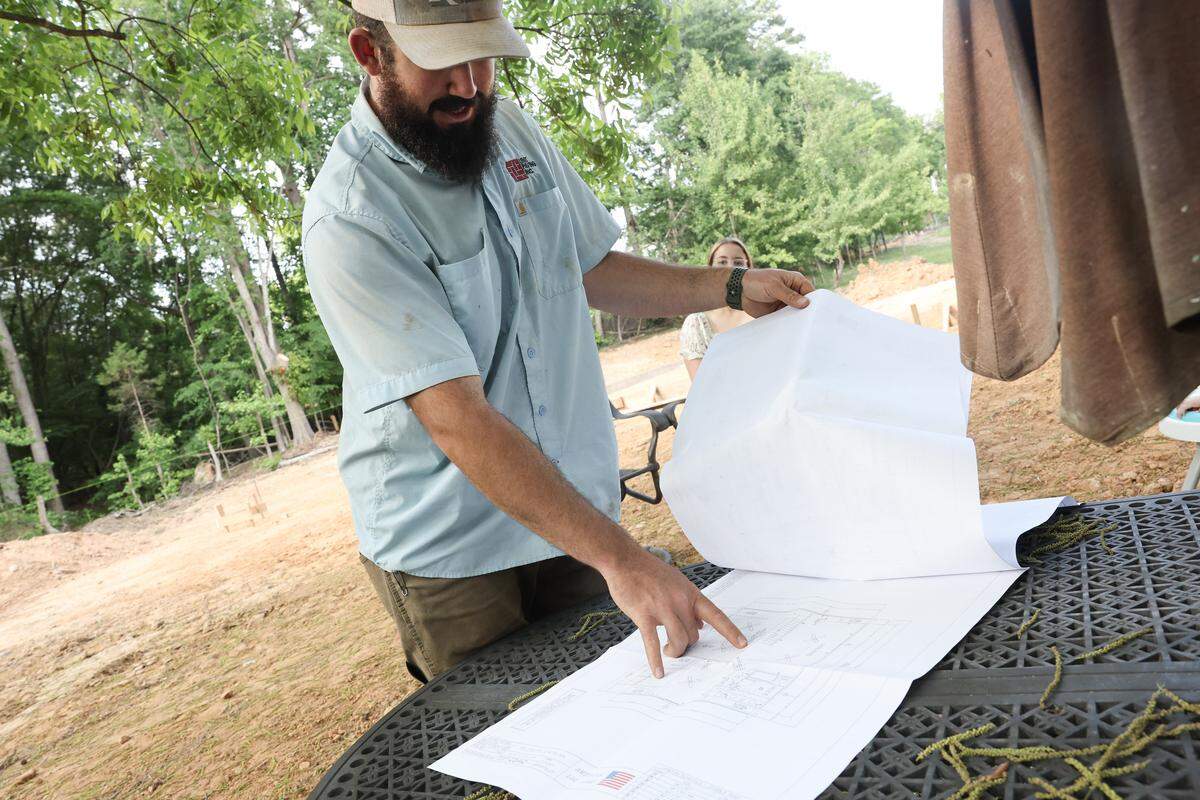
North Carolina generally has strong consumer protections that allow the public to bring forward civil suits when they feel they’ve been wronged by a business.
Customers can also force a company into bankruptcy. That doesn’t happen often, according to Kara Bruce, the Graham Kenan Distinguished Professor of Law at UNC-Chapel Hill. But it does force businesses to disclose a lot about what happened to the dollars they took from customers.
“But if a company goes out of business, you can only collect what there is,” said Kate Sablosky Elengold, associate law professor and director of the Economic Justice Clinic at UNC Chapel Hill.
There are legal avenues to go after the personal assets of a business owner, in some cases. But without many personal assets, there may still be little to collect.
Generally, an investigation by the Consumer Protection Division of the attorney general’s office could lead to civil penalties, restitution or injunctions, press secretary Bailey Aldridge said in an email. But the investigative process can take months or years.
Any disbursements directly from American Log Homes and its attorney — those “pennies on the dollar” — will be dispersed in June after the claims deadline.
In the meantime, ALH’s former customers wait.
Tara Swicicki, the woman from Long Island, bought campers for her upstate New York property.
Fort Mill resident Colby Benfield discovered in late April he and his wife are expecting another child.
Army veteran Bret Hamilton and servicemember Heather McAteer’s plans for a retirement home are on pause. Whatever the couple decides to do, “I’m pretty sure it won’t be a log home,” Hamilton said. “It certainly won’t be a kit from a company… I don’t know how I would trust that again.”
Miller’s Creek resident Danyo worries about entering retirement on solid financial footing.
Daniels, who’d hoped to find stability in a permanent home for himself and his two young adult daughters after his divorce and health struggles, is living in a fifth wheel camper. On disability and with his oldest in college, he isn’t sure he can save enough to try building again.
For would-be homeowners like him, a sanctuary remains just out of reach.
This story was originally published May 14, 2026 at 5:00 AM.