Wells Fargo mortgage denials higher for minorities in Charlotte, new report claims
A new report from a nonprofit financial watchdog stated that Wells Fargo’s mortgage rejection rates for minorities in Charlotte and North Carolina far outpaced those of white applicants.
The Americans for Financial Reform’s Education Fund released its study, “Dreams Denied: Wells Fargo’s Troubling Pattern of Racial Disparities in North Carolina Mortgage Lending,” on Wednesday.
AFR is a nonpartisan Washington, D.C.-based organization with more than 200 consumer, labor and civil rights groups that came together after the 2008 financial crisis. For the study’s release, AFR was joined by North Carolina United Power for Action/NC Industrial Areas Foundation, Organized Power in Numbers, and UNITE HERE North Carolina.
The study covered a five-year period from 2020 through 2024, using federal data from the Home Mortgage Disclosure Act. Banks are required to report mortgage applications and lending decisions.
The study looked at 24,544 conventional home purchase mortgage applications and more than 16,000 loan originations in North Carolina.
Patrick Woodall, AFR’s managing director, said the lending patterns don’t just impact individual homeowners. They also contribute to a racial wealth gap by preventing families of color from investing in their futures.
“This should be a wake-up call for the bank,” Woodall said. “(Wells Fargo) has a big deposit footprint, a big employment footprint — and yet its record of serving the credit needs of all North Carolinians is sort of spotty.”
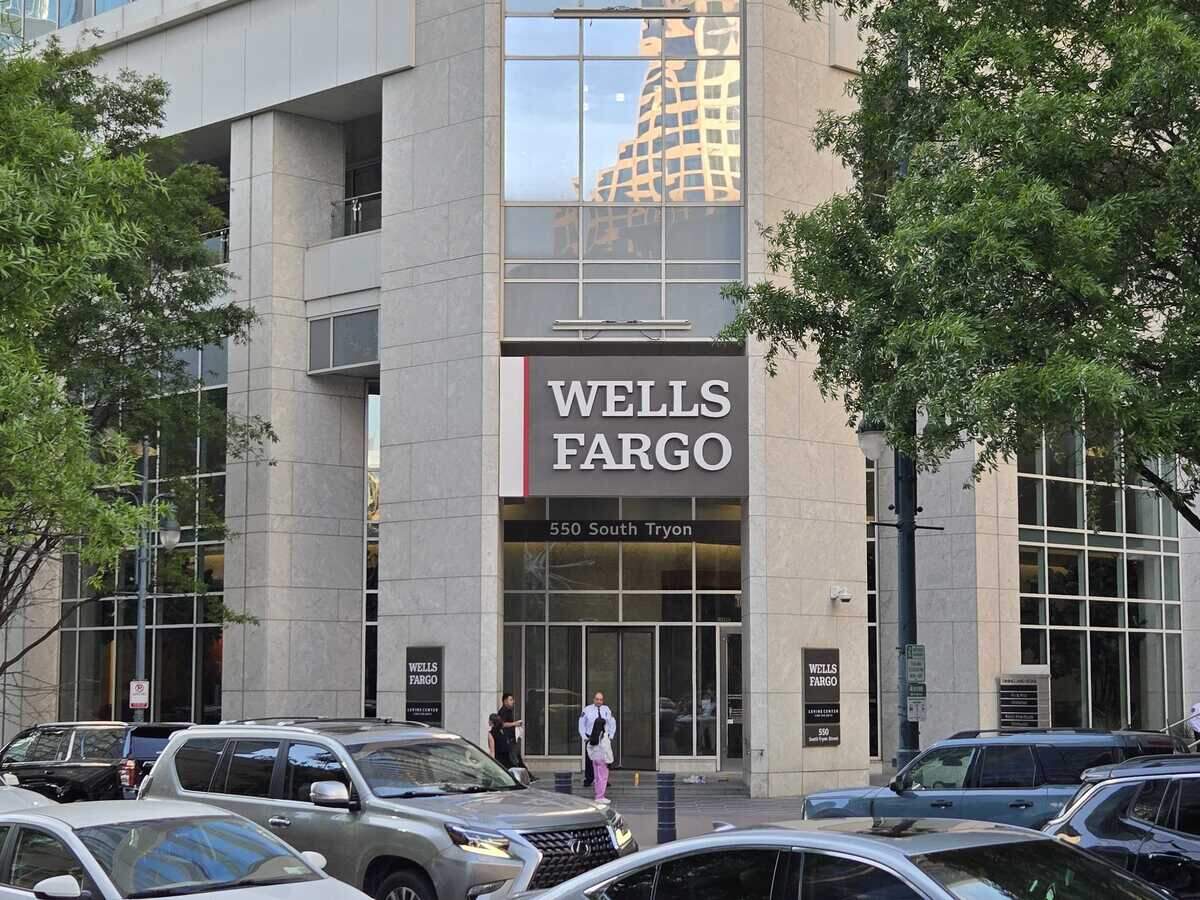
The San Francisco-based bank employs approximately 27,000 people in the Charlotte region, its largest employment hub.
A Wells Fargo spokesperson said the bank needed time to review the report before it could comment on it.
Statewide, the bank denied 22.5% of Black, 25.6% of Latino and 20.3% of Asian applicants — compared with 10.1% of white applicants over the five-year period, according to the report.
In Charlotte, the overall denial rate was 12% for the five-year period. The denial rate for Black applicants was 20.5%, 23.5% for Latinos and 16.2% for Asians. Those totals more than doubled the white rejection rate of 7.9%.
Black adults in Charlotte account for 22.9% of the population and represented 8.2% and 7.1% of the bank’s mortgage applications and originations, respectively, in the city, according to the report. Latino adults make up 11% of the area’s population but accounted for 7.4% of applicants and 6.6% of originations.
From 2020 to 2024, Black and Latino borrowers made up 15% of Wells Fargo mortgage applicants, while representing about 30% of the adult population combined (20.7% Black and 8.9% Latino). Over the same period, Wells Fargo made 13.3% of its mortgage loans to Black and Latino applicants — 6.4% and 6.9%, respectively.
The racial disparities were compounded by the bank’s sharp decline in mortgage lending, with North Carolina applications and loan originations dropping by more than 70% during that five-year period, according to the report. The early years of that time period coincided with the onset of the COVID pandemic, where there was little activity of any kind happening.
The report’s overall findings mirror a national debate over the weakening of financial protections for marginalized groups, Woodall added.
“I think we have a real concern right now where the (Trump) administration is rolling back civil rights and fair lending enforcement when we see this kind of pattern of underserving people in communities of color,” Woodall said.
What else is in the report about Wells Fargo lending practices
Here are some other issues the report found:
- AFR reported that Asian, Black and Latino families earning over $87,000 were rejected more frequently than moderate-income white families earning as little as $36,000.
- Even when applicants were approved, Black families often had to pay more. Middle-income Black borrowers were charged interest rates 5% higher than white borrowers with similar backgrounds. This disparity costs the average Black borrower an extra $10,500 over the life of the loan.
- Nearly half of the bank’s applicants (47.3%) and loans (49.3%) came from upper-income white neighborhoods, which make up only 13.2% of the state’s areas.
AFR is asking the bank to address signs of unequal lending.
Its recommendations include stronger outreach to Black, Latino and Asian communities, a review of AI/algorithmic underwriting for hidden racial bias, and better labor relations. This includes stopping alleged anti-union efforts to allow workers to flag discrimination.
It calls on regulators and local officials to investigate whether Wells Fargo is complying with fair-lending and civil rights laws, evaluate the bank’s track record in specific metro areas and reconsider public-sector business ties if needed.
Officials should also examine whether borrowers of color are being steered into certain mortgage types or face similar barriers in small business and farm loans.
Wells Fargo and mortgage discrimination claims
This is not the first time Wells Fargo has faced discrimination claims about its home-lending practices.
In 2022, Bloomberg published a story stating that its analysis found that Wells Fargo rejected more than half of Black homeowners who applied to refinance their mortgages in 2020. The report drew the attention of U.S. senators, who demanded further investigations by federal regulators, and attorneys seeking to file suit over the issue.
At the time, Wells Fargo told the Observer that the report “ignored critical information about Wells Fargo’s lending to Black homeowners and the full range of our efforts to help meet the homeownership needs of diverse customers.”