Charlotte airport workers call for transparency as lease negotiations continue
Airport workers at Charlotte Douglas International Airport are calling for more transparency as airlines negotiate a new contract.
Members of the Service Employees International Union 32BJ joined workers outside the Charlotte-Mecklenburg Government Center on Tuesday to urge the city to implement a 45-day public review period before any new agreement is signed.
Last week, the airport announced a one-year extension of its current Airline Use and Lease Agreement with its airlines, including American Airlines. American accounts for about 90% of the flights in and out of Charlotte Douglas International Airport.
The current agreement began on July 1, 2016, and was expected to run through June 30.
“This negotiation isn’t the end of the fight, it’s the beginning of the next chapter,” said Niecy Brown, district director of SEIU Workers United North Carolina. “The next chapter is all about making the city do right by the airport workers, the passengers and the Charlotte community as a whole.”
The workers in attendance hold jobs like attending to unaccompanied minors, wheelchair agents and cabin cleaners. According to the union, it only represents the workers who are employed by the third-party vendor ABM.
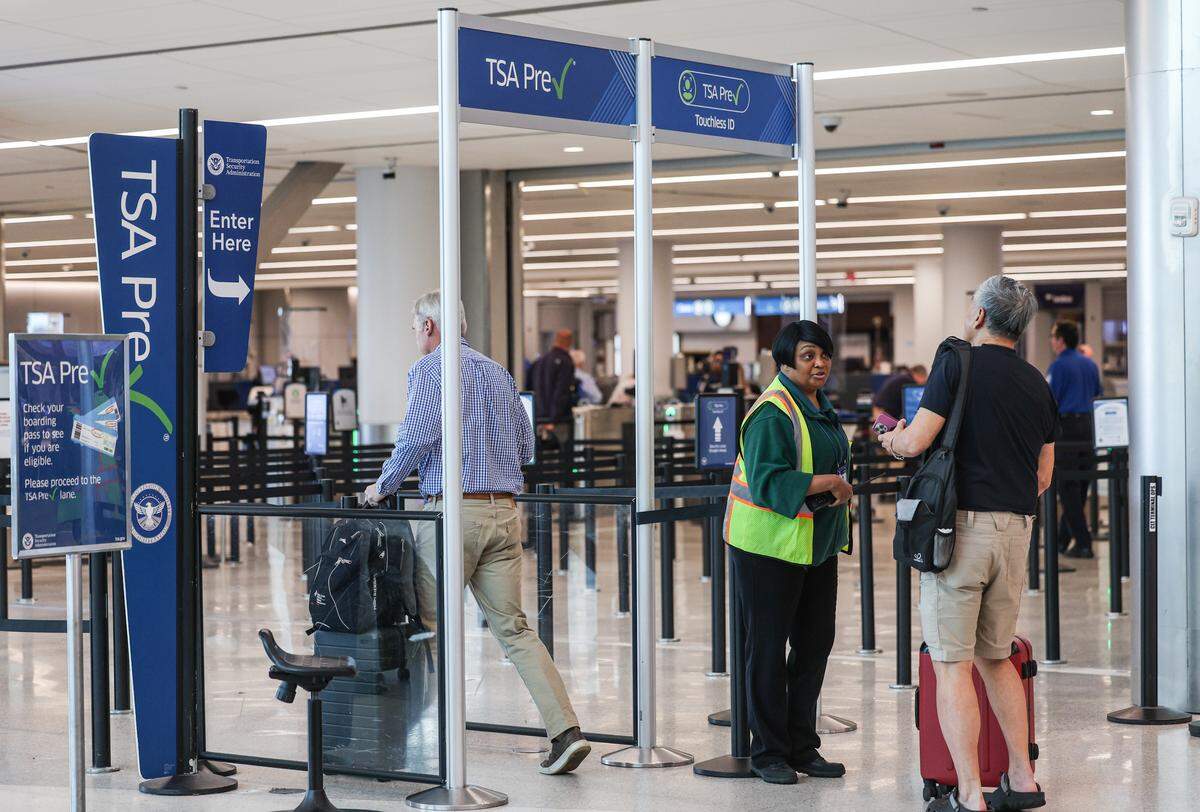
The lease agreement governs the business relationships between the Charlotte airport and its partner airlines. It focuses on airport and airline operations, maintenance and repair obligations, assignment of property rights and financial commitments between parties.
But the union and workers say this is a moment for transparency.
“The review period will allow the city council, the residents of Charlotte and the workers who make this airport run, the opportunity to give an input on the new lease,” Brown said.
Diane Kyser, an unaccompanied minor escort at the airport, said the work she and her colleagues do is essential. But low pay and a lack of benefits has led to high turnover and her team being short-staffed.
“We take care of the airport’s most vulnerable passengers, but we are not treated like essential workers,” she said.
The city’s role
32BJ SEIU previously pushed for the city council to pass an ordinance to boost pay and improve working conditions. The council voted down placing the ordinance on its agenda last year, citing concerns it could violate the state’s Wage and Hour Act.
The law prevents cities from enacting ordinances that dictate wage levels or working hours for employers. The airport also pointed to the law in a statement.
“The Aviation Department does not have a role in private employment relationships,” the airport said. “Under North Carolina law, including the North Carolina Wage and Hour Act, local governments such as the City of Charlotte are not authorized to establish wages or benefits for private employers or their employees.”
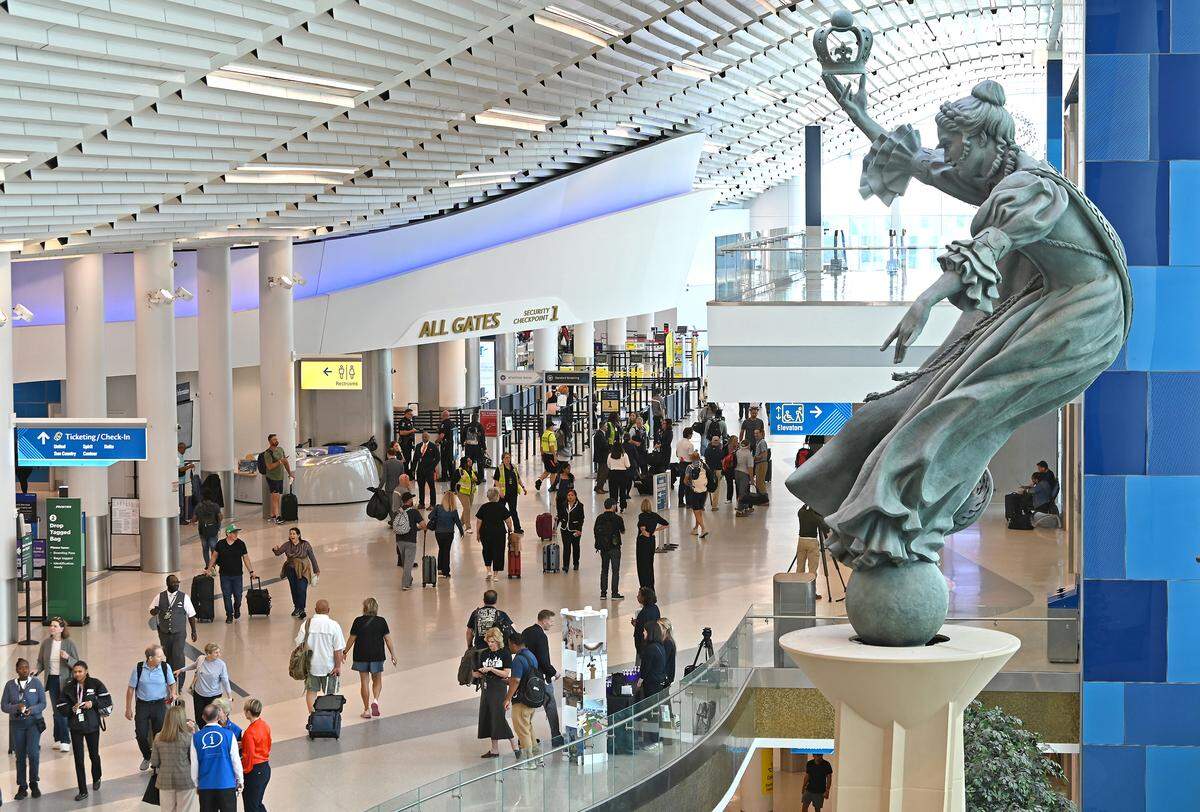
The airport also said all discussions related to the lease negotiations are protected under North Carolina General Statute 132-6(d), which governs economic development records.
“As such, related records are not considered public until negotiations are complete,” the airport said. “The Airport will share the terms of the negotiated agreement in advance of requesting any City Council action.”
But that hasn’t ended the debate on the role local officials can or should play.
Eric Fink, associate professor of law at Elon University, said at a city council meeting Tuesday that the city has the ability to lease its properties on terms that are mutually beneficial.
“The important thing that distinguishes a lease from the kind of measures that are restricted under the Wage and Hour Act is that a lease is a voluntary, negotiated and mutually agreed on provision,” he said.
Impact of Low wages
Workers have continued to call for better work conditions, with a similar rally held earlier this year. Recent polling conducted by Public Policy Polling shows 73% of respondents support requiring airlines to provide living wages and paid time off as part of the lease agreement.
Workers say they make wages as low as $12.50 an hour without sufficient benefits.
Enrique Lopezlira, director of the low-wage work program at the University of California, Berkeley, said workers are earning wages that fall short of what it costs to live in Charlotte. He said at San Francisco’s airport when wages were set higher, turnover fell by more than 60 percent for every 10 percent of wages raised.
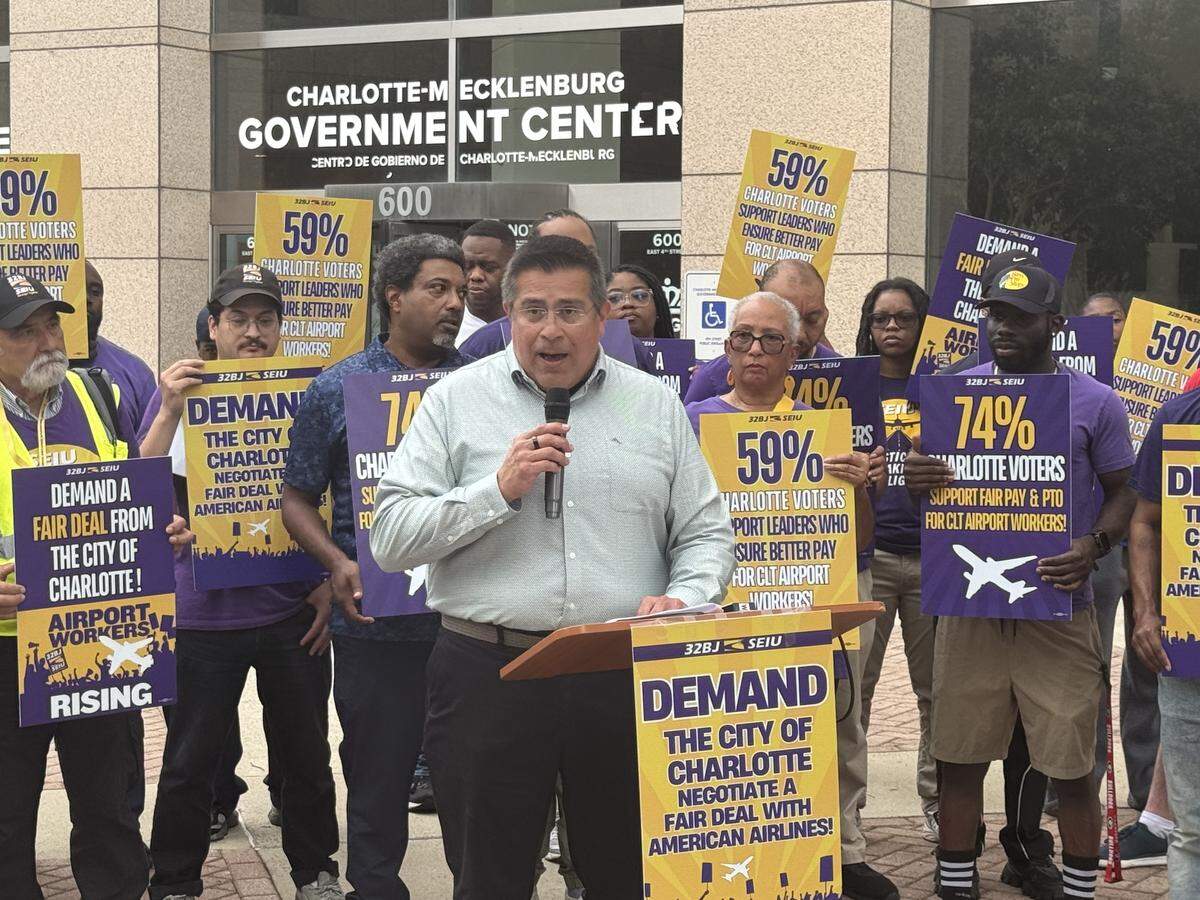
“Low wages drive high turnover and turnover is a safety problem,” he said. “A less experienced workforce is less familiar with security and safety procedures.”
Low pay has also heightened the precarious living situation for workers like Kyser, who said she makes $14.50 an hour.
She said it’s a bigger struggle than ever to survive in today’s economy when rent and gas prices continue to surge. At the city council meeting following the press conference, she called on local leaders to step up.
“For years the airport workers have been telling you we need a better deal,” she said. “We need standards at the airport.”
Editor’s note: This story has been updated to reflect which workers the union represents.
This story was originally published May 28, 2026 at 6:00 AM.