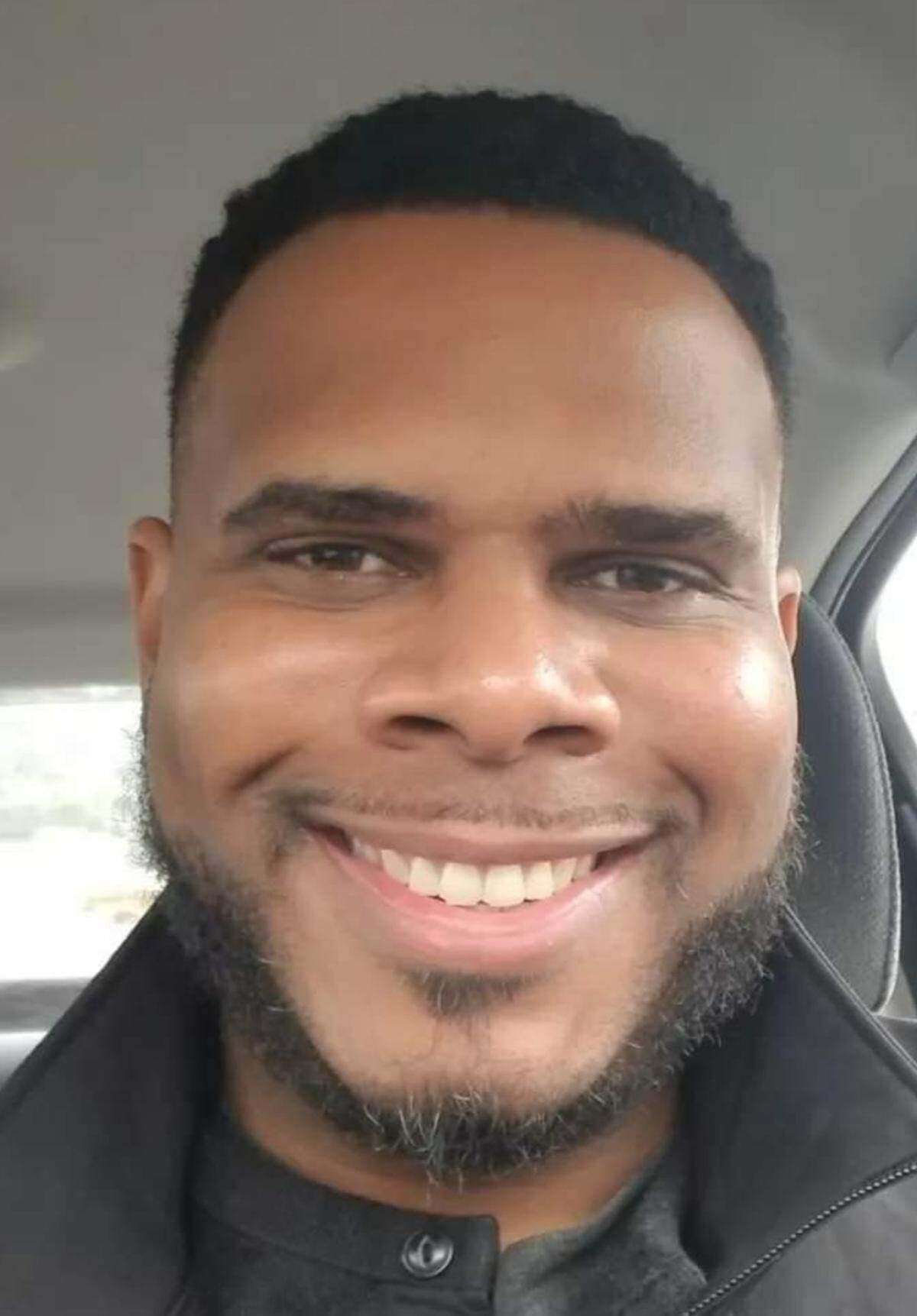
Lake Norman man accused of fraud involving Napster music shares. Yes, Napster.
A Mooresville man and his lawyer are facing a lawsuit from the SEC, claiming they fraudulently obtained 239 million shares of stock from a company that took over Napster, a pioneer of peer-to-peer music sharing.
A fraction of those shares were then used to trick an outside lender into giving 57-year-old Charles Cole and his lawyer a $1-million loan, according to the U.S. Securities and Exchange Commission lawsuit. The SEC filed the suit against Cole and attorney Torben Welch on June 11 in a New York federal court.
According to court documents, Cole is accused of orchestrating a scheme to trick Boca Raton, Florida-based digital tech business Infinite Reality, Inc. (now known as Napster) to provide him with the stock shares after he promised to invest up to nearly $3.4 billion into its business through shell companies.
Welch, a 51-year-old attorney from Utah, worked as Cole’s legal counsel and partner in the scheme, according to the SEC. Together, they told Infinite Reality that Cole or Avranoc, LLC, one of Cole’s entities, controlled at least $55 billion in assets.
Based on the false information sent to Infinite Reality, that company issued more than 239 million shares of stock to Cole and two entities he controlled in late 2024 and early 2025, according to the SEC. Infinite Reality never received the promised money, and court documents did not detail the value of the shares.
Infinite Reality is a privately-held company but last year, it announced it had partnered with Nasdaq Private Market to create a secondary trading program for its private securities.
In May 2025, Welch and Cole pledged nearly 45 million shares of Infinite Reality stock to secure a $1-million loan from a third-party lending institution, according to the lawsuit. The SEC alleged that Welch provided forged documents about Cole’s assets and made misleading and false statements to the lender to secure the loan.
Cole kept more than $552,000 of the loan after it was wired to Welch’s firm, while the remaining amounts were distributed to other entities, according to the lawsuit.
How the alleged Napster stock scheme unfolded
Founded in the late 1990s, Napster upended the music industry as a free file-sharing service that drew tens of millions of listeners before copyright lawsuits eventually shut it down. Infinite Reality acquired and reinvented the company last year as an AI-powered platform that lets users create and polish original music and podcasts from simple text prompts.
A New York-based broker introduced Cole to Infinite Reality in August 2024. A month later, Infinite Reality received a fabricated letter claiming Cole had 49 billion euros in “immediately spendable cash” (equivalent to about $53.5 billion in 2024), according to court records
Later that month, Cole and his shell companies, Beacon Heart, LLC, and Heart of Humanity, entered into agreements to receive Infinite Reality shares in exchange for $500 million of Cole’s funds, $350 million from Beacon Heart and a fake $2.5 billion bond, according to the lawsuit. Cole had started the shell companies just a few days prior.
After promising to deliver the money in November 2024, Cole later claimed that $11 billion of his funds were stuck in a Malaysian investment bank, the SEC alleged.
In early November 2024, Cole sent a fabricated bank letterhead falsely claiming he held $11 billion in cash, according to the lawsuit. Later that month, Infinite Reality received a welcome email with login details to a fake website created by Cole to make the company believe an account had been opened for it.
Welch also sent a backdated letter and video to Infinite Reality during the summer of 2024, making false claims that Cole controlled $55 billion, according to the lawsuit.
In December 2024, Infinite Reality issued more than 187 million shares of stock to Cole and his entities, representing more than 20% of the company’s outstanding shares at the time. Later that month, Welch wrote a false letter confirming an $860 million transfer and claiming that another $1.6billion was on the way, the SEC claimed.
What the SEC is seeking in the Napster fraud case
The interactions continued into last year.
In February 2025, Cole and Welch exchanged emails with Infinite Reality falsely claiming that billions of dollars were “in process” of being transferred, including to Welch’s law firm escrow account. No such funds existed, according to the lawsuit.
The next month, the SEC claimed, Cole showed Infinite Reality a fabricated screenshot from a fraudulent Malaysian bank website purporting to show an $860 million deposit, prompting Heart of Humanity to sign another agreement for additional stock.
In April 2025, Infinite Reality issued another 51.2 million shares — bringing Cole’s total to more than 239 million shares, or about 25% of the company, according to the lawsuit. (As part of a detailed look at Infinite Reality and its finances last year, Forbes noted that Infinite Reality said its valuation was close to $16 billion.)
The SEC lawsuit also lists relief defendants: Derek A. Thiess, 45, of Fort Ripley, Minnesota; Barry Taylor, 63, of Norfolk, Virginia; and The indigenous Nations’ Bank, which is based in the Charagua Norte territory of Boliva, according to the bank’s website. A relief defendant is a person or entity named in a lawsuit who isn’t accused of wrongdoing, but holds assets obtained through the illegal acts of others.
The SEC aims to recover money from each of them, plus interest. Prosecutors allege they received a share of the illegally obtained money without providing legitimate goods or services in return.
TiNB describes itself as an international bank organized as a “sovereign confederated financial institution” under the laws of the KiKiallus Nation, which describe itself as “nomadic sovereign people indigenous to the Pacific Northwest,” according to court records.
The SEC said Thiess claimed to be the bank’s chief managing director and Taylor claimed to be the TiNB legal director and attorney general of the KiKiallus Nation. From the $1-million loan, Taylor received more than $22,000, while $200,000 was converted into cryptocurrency for Thiess and the bank, according to the SEC lawsuit.
The suit does not mention whether Welch received any of the loan money when Cole allegedly kept more than $550,000 for himself.
The SEC is seeking an order to permanently bar the defendants from violating federal securities laws. It also wants to largely prohibit Cole from participating in the offering, purchase or sale of securities, except for trading in his own personal account on a national exchange.
The agency is also seeking an order requiring Cole, his shell companies and other named parties to repay any alleged illegal gains, plus interest. And the SEC wants the court to impose civil financial penalties on both Cole and Welch. Specific dollar amounts were not detailed.
The SEC declined to comment beyond its public filings and its litigation news release about the lawsuit.
Attorney information for the defendants was not immediately available. The Charlotte Observer was unable to reach Cole or Welch using online records.
The U.S. Attorney for the Southern District of New York also charged Cole on Thursday with wire fraud, conspiracy to commit wire fraud and conspiracy to commit securities fraud.
More about Napster
Napster started in 1999 as a free, peer-to-peer service that let people share MP3s. More than 80 million people used the service, but it was shut down a few years later following major copyright lawsuits from the recording industry.
Napster has changed owners several times. It was sold to music streamer Rhapsody in 2011, then to virtual reality concert app MelodyVR in 2020, and again in 2022 to Hivemind Capital Partners and the cryptocurrency company Algorand.
In 2025, Infinite Reality acquired the Napster brand for $207 million. It was rebranded as an AI-powered creation app that helps users make and polish original music and podcasts using text prompts, absorbing Napster’s identity.
“We have cooperated with law enforcement since the company initially reported it was the victim of misconduct,” a Napster spokesperson told The Charlotte Observer. “We are continuing to support this process.”