
Lancaster County scrambles to develop data center rules before SC imposes them
If Lancaster County doesn’t set up a moratorium on data centers, it’s largely because officials don’t have time for one. They’re in a race with state legislators to set rules on where data centers should go.
A sweeping, years-long review of county development code is now weeks from completion. It doesn’t include rules on data centers. The updated development rules are expected to come up for final vote this fall.
Meanwhile, state legislators have options proposed to set data center standards statewide. They could become the standard for communities like Lancaster County that don’t already have data center rules. State legislators could take up debate early next year.
But county officials don’t want to leave decisions on data centers up to the state.
“We don’t want to be subject to whatever the state decides is in our best interest,” Lancaster County Administrator Brian Tucker said.
A county subcommittee met Thursday afternoon, considering data center options from a moratorium to an outright ban to hurrying new regulations into the pending development rules.
A decision isn’t just a race against the state, said Lancaster County Councilman Stuart Graham. “What if somebody comes in and puts in an application (to build a data center) next week?” he asked.
Lancaster County joins communities across the Rock Hill and Charlotte regions in search of answers for how to deal with data centers.
York County, backed by months of public outcry in opposition to them, began a nine-month data center moratorium this week. Last month, Chester County set up a six-month data center moratorium. And late last month, Charlotte enacted a five-month data center moratorium.
None of those efforts are meant to permanently stop data center construction.
Instead, they’re intended to give communities time to set up regulations on when, where and how data centers should be approved.
Data center locations is a hot national issue
Those discussions mirror larger ones across the country.
New York just became the first state to set a statewide data center moratorium on large projects. In April, a bill was introduced in South Carolina to prohibit communities from approving data centers until the state sets its own oversight rules, including defining what a data center is.
It’s in committee review and hasn’t passed either side of the state legislature.
Area residents have protested data centers for a range of reasons, including water and electricity use, noise, traffic, vibrations and landscape changes they create in rural areas.
President Donald Trump, though, focused on the financial possibilities with data centers in a Truth Social post Wednesday responding to New York’s moratorium. Trump called tax revenue and jobs from data centers “liquid gold,” saying data centers are “tremendous wins for the states and communities that are lucky enough to get them.”
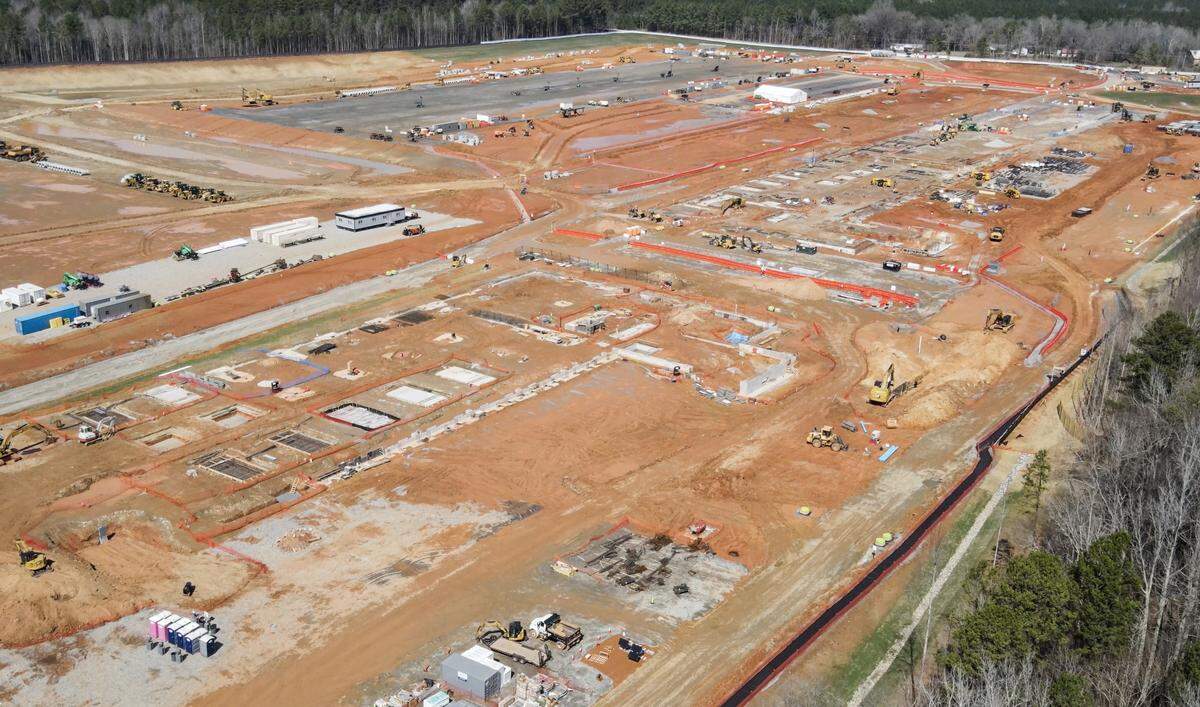
In this region, the only announced data center project is the $8 billion QTS data center in Lake Wylie. It’s under construction at 2143 Hands Mill Hwy. York County approved a tax incentive deal three years ago.
QTS has held several public meetings in recent months, where company officials offered details on how they’ll reuse water on a closed loop system, and pay for power upgrades that shouldn’t impact existing utility customers.
Still, York County Council has seen a steady flow of neighbors speaking up at public hearings and open meetings against allowing more data centers.
Lancaster County data center options
Lancaster County hasn’t received any data center proposal within its jurisdiction, Tucker said, which covers unincorporated areas. There have been rumors of a proposal in the county, Graham said. County officials aren’t looking to ban data centers entirely.
“A complete prohibition against data centers anywhere in any zoning district is going to put us in a bad position,” Tucker said. “We have to come up with some allowance for them to exist.”
The likeliest spot would be in heavy industrial areas, Councilman Steve Harper said.
Those spots have the most water and electric capability, two primary needs for data centers. The county could require a special exception, meaning any data center would have to come to the county for a full public review.
“You’ve got to have some site in the county that’ll work,” Harper said.
Trying to wedge complicated data center rules into the county regulations coming up for vote this fall could risk further delaying them, something Lancaster County Councilman Jose Luis wouldn’t support.
The likeliest plan is to work quickly on data centers and amend the new county regulations soon after they pass this fall, but before the state legislature could make its decision.
That option concerns Graham, due to the possibility of a new project coming to the county before regulations are ready. He instead pitched the moratorium option.
Yet if the county uses a moratorium that runs into next year, Tucker said, it risks the state beating local officials to set new rules.
There’s a question of whether the county needs to do anything immediately, since its code doesn’t list data centers. There’s an argument that because it doesn’t, they wouldn’t be allowed until new regulations are ready that show how and where they could go.
County officials, though, don’t want to lean on that interpretation any longer than they have to.
“Denying it by omitting it is going to be problematic,” Tucker said.
This story was originally published July 17, 2026 at 5:04 AM with the headline "Lancaster County scrambles to develop data center rules before SC imposes them."