
Why the FAA says you’ll spend less time on the tarmac in Charlotte
Passengers departing from Charlotte Douglas International Airport can expect this year to begin seeing shorter wait times for their planes to take off, an FAA official Friday in outlining the latest changes coming to the airport as part of a federal initiative.
Planes will spend less time sitting on taxiways under a plan that will replace decades-old voice communications between air traffic controllers and cockpits with a text-messaging system, said Edward Bolton, an assistant administrator with the Federal Aviation Administration. The change is part of the agency’s NextGen project, a multibillion-dollar effort to modernize the nation’s air transportation system.
At Charlotte Douglas, the text message system is designed to help alleviate congestion that can form on taxiways and hold up departing flights, officials said. Text messaging is expected to speed up the flow of instructions from air traffic controllers to pilots. That, in theory, should reduce big waits for departures – long a sore spot with travelers.
Work remains to implement the changes, but passengers should benefit this year, Bolton said.
“They’ll see a difference,” he said.
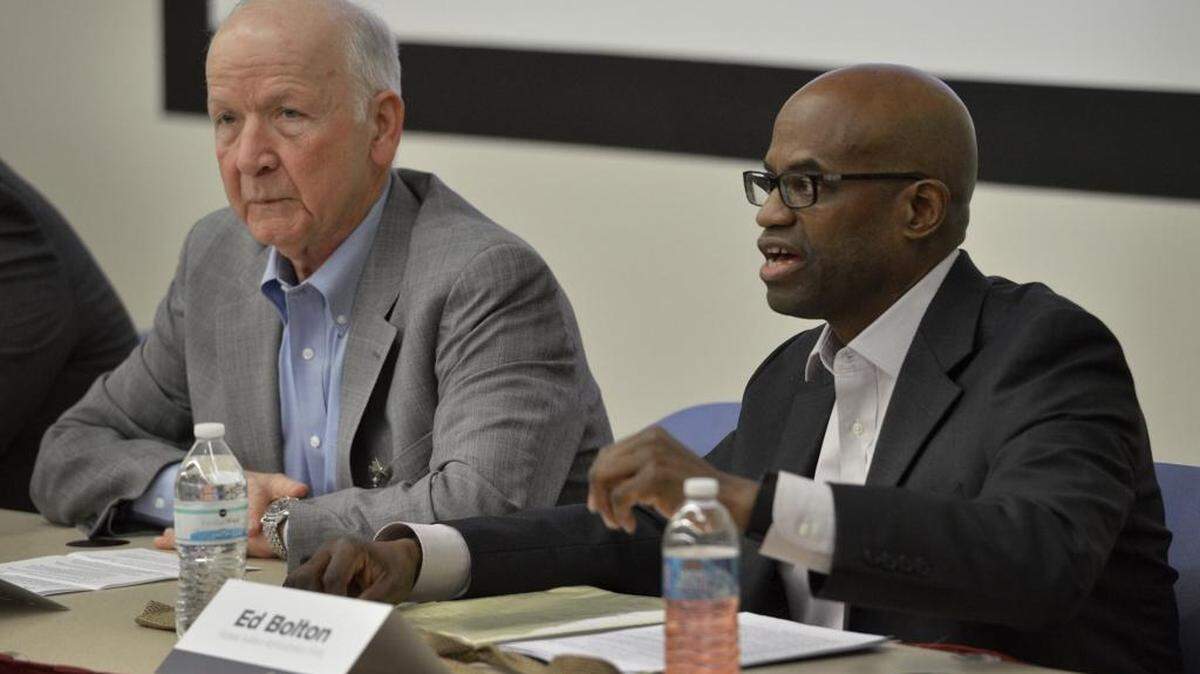
Bolton was among other officials who held a media briefing on efforts to implement NextGen at Charlotte Douglas.
The new text-based system is among other plans for the airport under NextGen, which has already brought other changes to the airport. For example, some of the airport’s flight paths have been altered to follow more direct routes, officials said. Other U.S. airports have also received NextGen upgrades.
In addition to speeding up departures, officials said Friday that switching to voice-based communications should also reduce the possibility for misinterpretation. Spoken communications can be misheard, posing a safety issue or creating delays.
Officials also noted that a text message can be transmitted in seconds, while spoken messages can take minutes to deliver.
Such steps are seen as helpful toward improving the pace at which planes depart from Charlotte Douglas, which officials said Friday presents unique challenges to aircraft – such as limited space for planes to maneuver after they push back from their gates.
“For us it’s a very complex airport because of the physical layout,” said Lorne Cass, vice president of American Airlines’ Integrated Operations Center. Charlotte Douglas is American’s second-busiest hub.
“When you’re running a lot of airplanes in and out on the ground at the same time, sometimes the surface environment is not as efficient as we would like it to be,” Cass said.
Bringing NextGen’s projects to life has taken years. In 2003, Congress mandated that the FAA create a plan for implementing NextGen by 2025. Some critics have complained about the pace of the project’s roll-out.
Plans have included replacing an air traffic system based on World War II-era radar technology with a satellite-based network. In addition to making air transportation more efficient, changes such as direct flight paths are expected to lower fuel consumption by airlines. That move is expected to reduce airlines’ carbon emissions.
The airport and the FAA are also working with NASA to develop technology to alleviate congestion as planes move to and from gates.
Charlotte Douglas is the only airport where that tool is being tested, although plans call for it to be rolled out at other airports. It is expected to be implemented in Charlotte next year.
“Charlotte is really the first NextGen city, because every major NextGen initiative is coming or already is in Charlotte,” Bolton said.
Deon Roberts: 704-358-5248, @DeonERoberts
This story was originally published January 8, 2016 at 5:56 PM with the headline "Why the FAA says you’ll spend less time on the tarmac in Charlotte."