
An inside look at why Bank of America will use $1 billion to fight racial inequality
For over a year, Bank of America had quietly been developing a program to help end the racial wealth gap.
It had been crafting the program behind-the-scenes, consulting with the bank’s minority employee groups on what a push would look like.
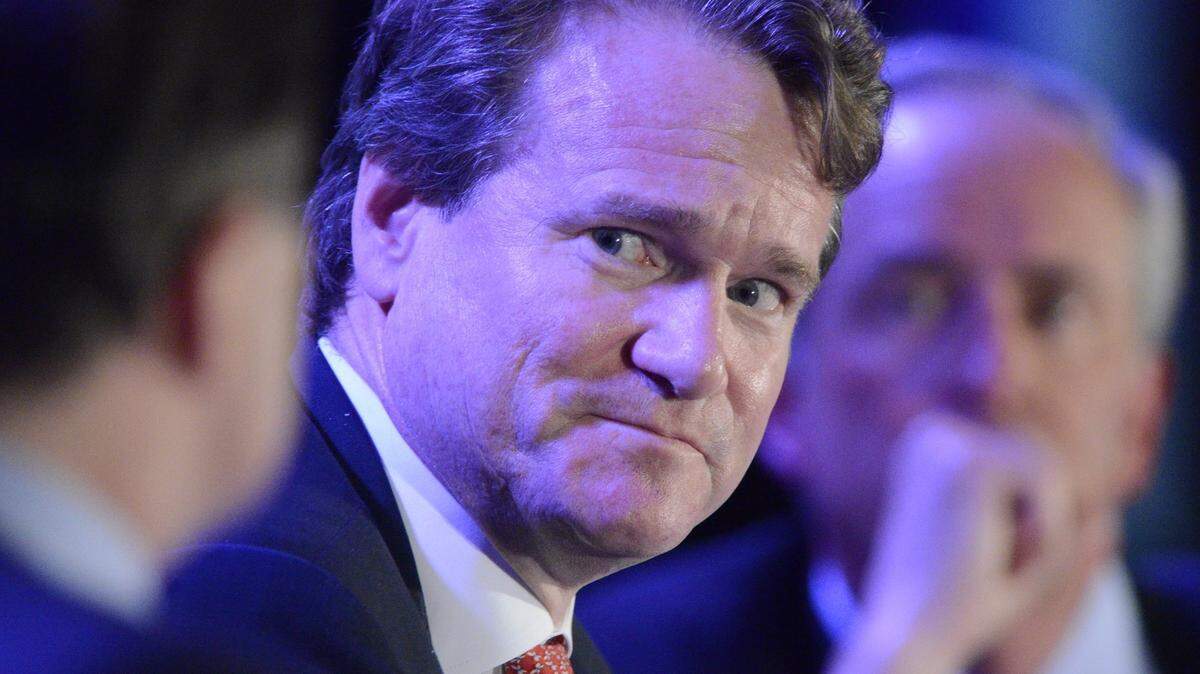
But on May 25, George Floyd was killed by Minneapolis police. As protests and the wrenching video of the Black man’s death spread, CEO Brian Moynihan went to his deputies and asked what the bank was going to do, according to Andrew Plepler. He is the bank’s global head of environmental, social and governance, or ESG.
Anne Finucane, the bank’s vice chairman, took the racial equity program to Moynihan, who gave it the green light with a key change. The then-$500 million program would be doubled.
That’s how on June 2, Bank of America announced a $1 billion program to address racial inequality in the U.S. It was one of the largest programs from a U.S. company on the issue, and many of the bank’s peers in corporate America followed in its footsteps.
The program, and how Bank of America got to the point where it was working on a massive racial justice program before recent unrest even began, represents a tectonic shift at the bank.
It’s a demonstration of how, over a period of 30 years, the bank has reckoned with its challenges on race, and emerged with a sense of responsibility that advocates begged corporations to have for years.
‘What’s my opportunity?’
It was hard to be a Black banker in the 1990s. There were few peers and even fewer who were running things.
“There weren’t a lot of people that looked like me,” said Steve Boland, head of consumer lending at Bank of America and one of the highest-ranking Black employees at the bank. He joined the bank in 1990, when it was known as North Carolina National Bank, or NCNB.
The management structure at the time, as it was for most banks in the U.S., was mostly white. Boland wasn’t sure if there was a career path for someone like him.
“You’re coming into the beginning of your career and you’re 22 years old, carrying with you the experiences you had to date,” Boland said. “You question what you want. What’s my upward trajectory? What’s my opportunity? I don’t see people that came before me.”
But the 1990s were also a time when people of color started to organize at the bank.
In Atlanta and Charlotte, Black leaders began to create formal networking groups, and the first chapter of the bank’s African-American Networking Initiative was formed in Charlotte in 1999. The group is now known as the Black Professional Group. Those efforts gave Black employees a community at the bank, as well as an organized voice to influence policy and programs.
A complex legacy
While modern-day Bank of America is the combination of many different banks, the tent pole is the Charlotte-based entity originally known as NCNB, which changed its name to NationsBank in 1991. That bank had a mixed legacy in how it treated minorities as an employer and as a bank.
The U.S. Department of Labor found that in 1993 the bank unlawfully rejected over 1,000 Black applicants who had sought jobs in Charlotte.
That sparked a wider audit of the bank’s hiring practices which NationsBank vigorously fought. It sued the Labor Department in 1995 to stop parts of the audit. With the bank fighting almost every step of the way, the dispute was settled over two decades later in 2017, when the bank agreed to pay $1 million in back pay.
NationsBank also was accused of discriminating against Black mortgage borrowers in the 1990s. Fair-lending advocates, though, said the bank was a leader in lending to minorities.
“It certainly wasn’t perfect, but I do think the commitment was there,” said Milton Jones, a longtime Bank of America executive who retired from the bank in 2009. To date, he is the last Black person to report directly to the CEO.
The bank was committed to diverse recruiting across lines of business, Jones said, and when there were issues, the response was swift.
Echoes of the financial crisis
The bank’s most recent issues with race, as well as a key change that set it on a different course, stem from the 2008 acquisitions of Countrywide and Merrill Lynch.
Among Countrywide’s many flaws were allegations of racial discrimination. The mortgage firm charged about 200,000 Black and Hispanic home-buyers higher interest rates because of their race, according to the U.S. Department of Justice, and steered over 10,000 minority borrowers into subprime mortgages.
After it bought the mortgage giant, Bank of America settled the allegations with the government for $335 million in 2011.
Merrill Lynch had discrimination issues, too. The firm was accused of discriminating against its Black brokers in pay and resources; the suit was settled for $160 million in 2013.
But the financial crisis also ushered in a change that many analysts and executives believe set Bank of America on the right path: the 2010 appointment of Moynihan as CEO.
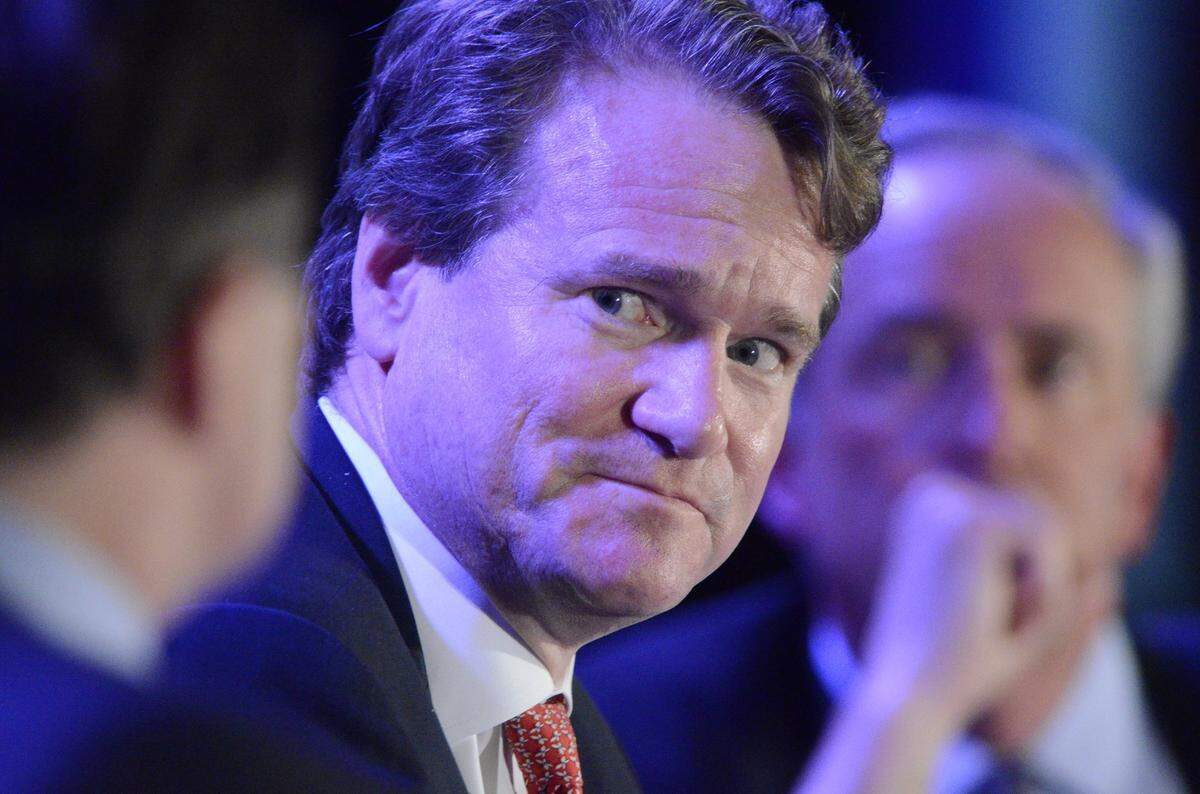
Born to a middle-class midwestern family, “he didn’t come from the gilded class like a lot of the CEO class comes from,” said Bruce Marks, CEO of the Neighborhood Assistance Corporation of America. His organization advocates for affordable home ownership and offers mortgages, working with Bank of America and other banks.
A strident critic of banks and mortgage lenders in the financial crisis, Marks said he noticed a change at Bank of America about five or six years ago.
Moynihan had reorganized the bank and gotten through the worst of its problems from the financial crisis. He’d led diversity efforts at the bank, and Marks considered him more agreeable to work with than his predecessor as CEO, Ken Lewis.
But Moynihan also had to deal with the protests against banks that the financial crisis had ushered in. Bank of America was targeted by protesters for financing coal mining and private prisons, among other issues.
But instead of pushing back against the protesters, or simply ignoring them like some other banks had, Bank of America would make the changes. In 2015, it cut back its coal industry lending. And last year, the bank severed ties with private prisons.
“At the bank’s annual meetings, you would see these concerns brought up, and then you would see the next year those (activists) standing up and saying ‘Thank you,’ ” Marks said. “It’s not just one particular issue. Bank of America is probably one of the most progressive corporate institutions in this country.”
Stakeholder capitalism
Moynihan is a top proponent of stakeholder capitalism: the idea that corporations serve all stakeholders in their communities, not just their customers and shareholders.
It’s a complex idea that balances the profit-seeking nature of a company and the potential impact an activity can have on a community.
What’s happening at Bank of America is the realization, at least partially, of that vision of capitalism.
“If the communities aren’t being served, I think we have failed our stakeholders under the new, expanded vision of what successful capitalism really looks like,” said Plepler, the ESG executive. “If you look at our own company, the way that we talk to our investors is dramatically different than five years ago, with this expanded view of our role in solving societal problems.”
Bank of America’s version of stakeholder capitalism manifests itself in programs like the one announced after Floyd’s killing.
While specific components are still in flux, the four pillars of the billion-dollar program are health, jobs, small business lending and housing. The funds will be doled out over four years.
Through the program, the bank is considering financing prisoner re-entry projects, criminal justice reform initiatives and job training programs, Plepler said.
Bank of America knows that this won’t end criticism of it. The bank still charges overdraft fees and finances oil and gas firms, among other practices that have drawn disapproval. Stakeholder capitalism doesn’t mean activists will always win out over profit and shareholder returns. It just means that they will be heard.
‘We’ll have to do better’
Despite Bank of America’s efforts to foster racial equity outside of the bank, there still aren’t many Black leaders in the bank. It’s a reflection of the financial services industry’s ongoing struggle to foster Black leadership in banking.
Today, only 4.8% of executive or senior level officials at Bank of America are Black, according to the bank’s 2019 diversity data. The bank employs 16,000 people in Charlotte. None of its top leadership is Black; there are two Black members of its 17-member board. The data are similar at Wells Fargo.
One potential reason for this, according to Jones, the former executive, is that banks heavily promote from within and reward long tenure and patience. Many rising Black leaders in banking will get offers to become executives outside of banking, while the path to promotion within the industry might take longer. Currently, three heads of the bank’s eight lines of business are black.
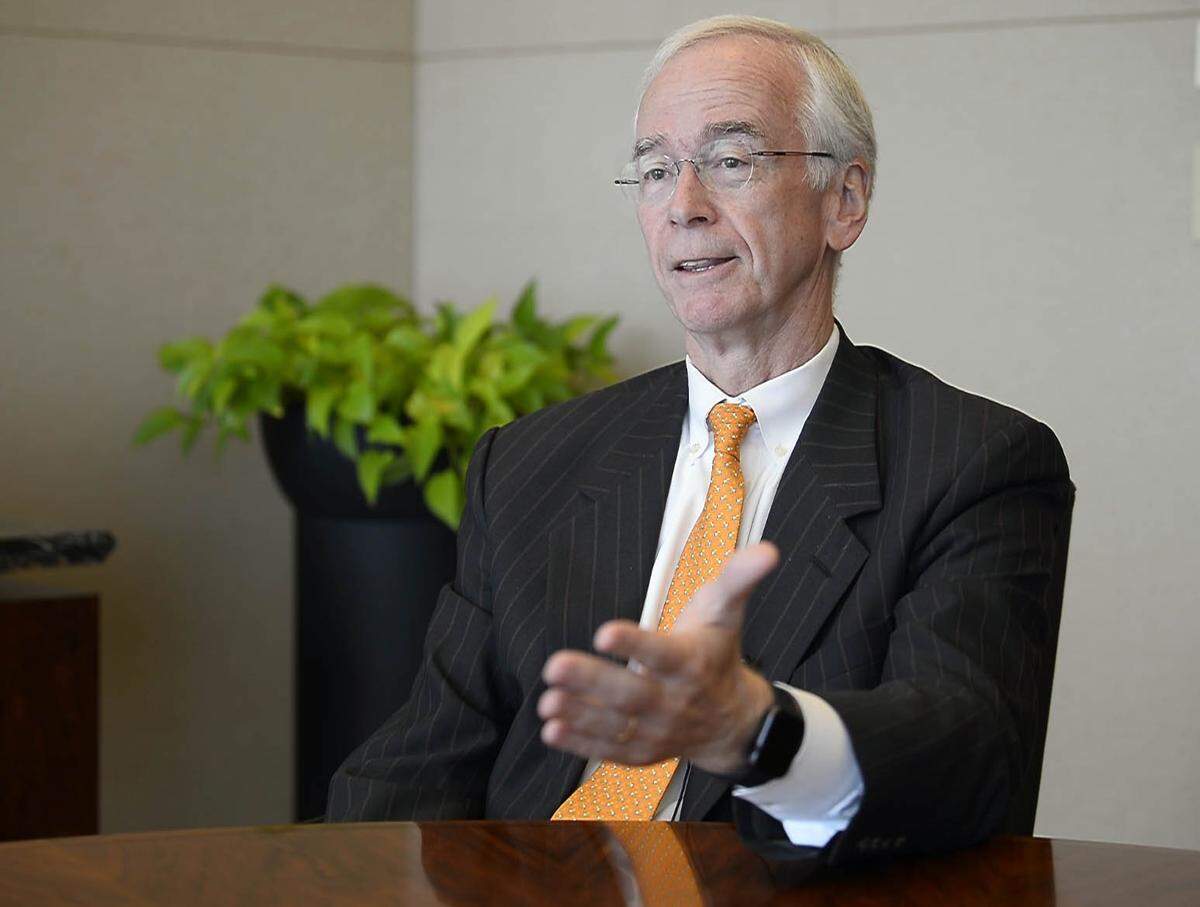
“We’ve always had good, fair hiring practices and promotion. But we’ll have to do better and other companies will have to do the same,” said Charles Bowman, the longtime Charlotte market president for Bank of America.
Part of that comes from mutual understanding and awareness, Bowman said, through informal and formal conversations on race that are ongoing throughout the bank.
“I think it’s human this time. It’s not corporate,” Bowman said. “Just in my small team today, I’ve learned more about them as people in the last week than I’ve known in years. That’s different.”
Boland, the consumer lending chief, has been a part of a lot of those conversations this month. He’s vice chair of the bank’s global diversity and inclusion council.
He hopes the conversations will lead to a heightened awareness about the impact of race on his and his colleagues’ lives.
“I’m 51 years old, and I would tell you that I feel confident saying that I have been stopped by the police significantly more, certainly, than white colleagues that I’ve talked to,” Boland said. “We have to confront that bias if we’re going to do something about it.”
This story was originally published June 24, 2020 at 8:49 AM.