
Who is Truist CEO Kelly King? He’s not the banker you think he is
By all measures, Kelly King is an American success story. He grew up in striking poverty to become the CEO of a bank, a father, a husband and a deacon.
King is 6’-4”, blue-eyed, a devout Baptist and has the last Carolina accent on Wall Street. He has worked for the bank that used to be known as BB&T since 1972, and has run it since 2009.
Had his career ended years ago, like it was supposed to, he would’ve left the stage as an unassuming, respected Southern banker. King, now 72, ran a bank well, grew it modestly and was considered by his peers to be an honest man.
But that’s not where his story ended. Instead, faced with the twilight of his life’s work, he led the biggest bank merger since the financial crisis, when BB&T merged with SunTrust in a $66 billion deal last year to create Truist.
The Charlotte-based bank he now leads is the sixth largest commercial bank in the U.S. When King joined in 1972, it was 262nd.
He does not have the public profile of a Sandy Weill or Hugh McColl, the executives who marshaled Citigroup and Bank of America, respectively, into existence. Yet, if this merger is a success, he will deserve similar acclaim. Not only for his success in business, but for the demons that he overcame and how they fueled him.
Even among some of his longtime colleagues, King’s upbringing is spoken of in hushed tones. He’d occasionally tell stories about growing up in tobacco country, but people often sensed there was a deeper conflict behind them.
The merger he led was described as a necessary move that both banks needed to make to survive in the long run.
In several dozen interviews with colleagues, friends and family, as well as one of the first in-depth interviews that King has given on his life story, it’s clear that survival is something that King knows better than most.
Scared to death
His youth was defined by poverty.
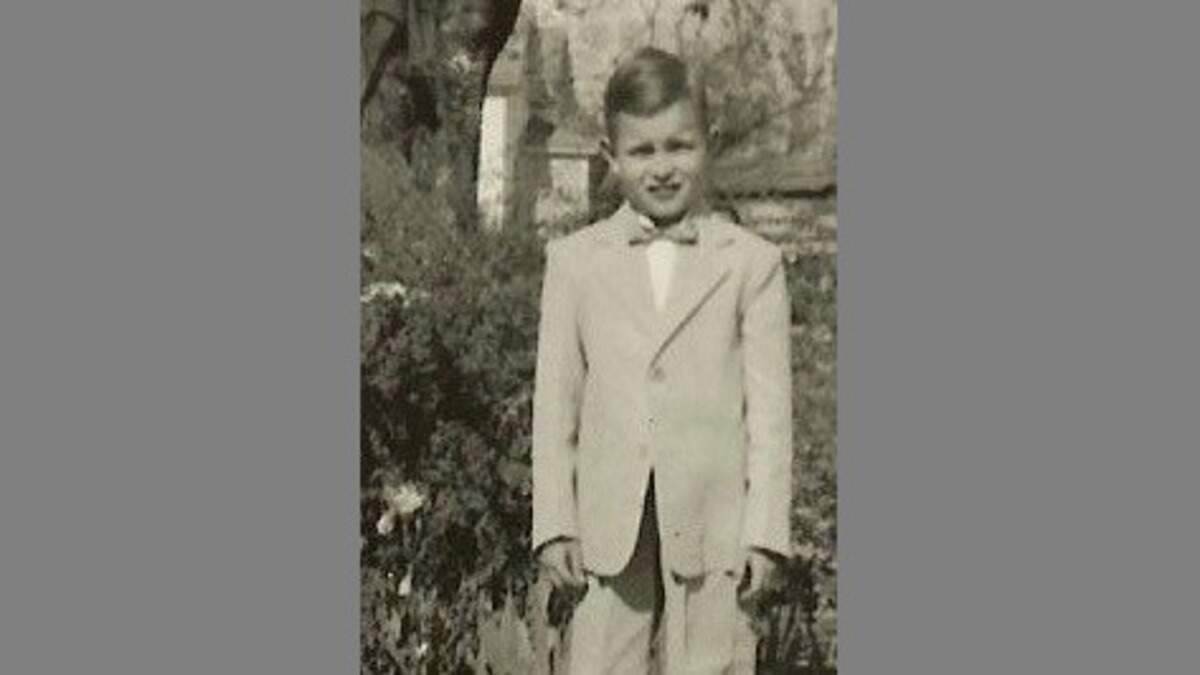
King was born in Raleigh in 1948, and his first home was the now-demolished Halifax Court public housing complex. In a recent interview, King described the place, which would grow a reputation as one of the worst housing projects in the state, as “one of the better houses I lived in in the early parts of my life.”
His family later moved out to the country and lived in a series of shanty-like farmhouses.
“All you had was a pot-belly stove right in one room in the middle of the house,” King said. “When it was really cold, you would build a wood fire, and everybody would congregate around that fire until you got ready to go to bed. Then you’d go hop in your bed with four or five big, thick quilts on you to stay warm because there was zero heat.”
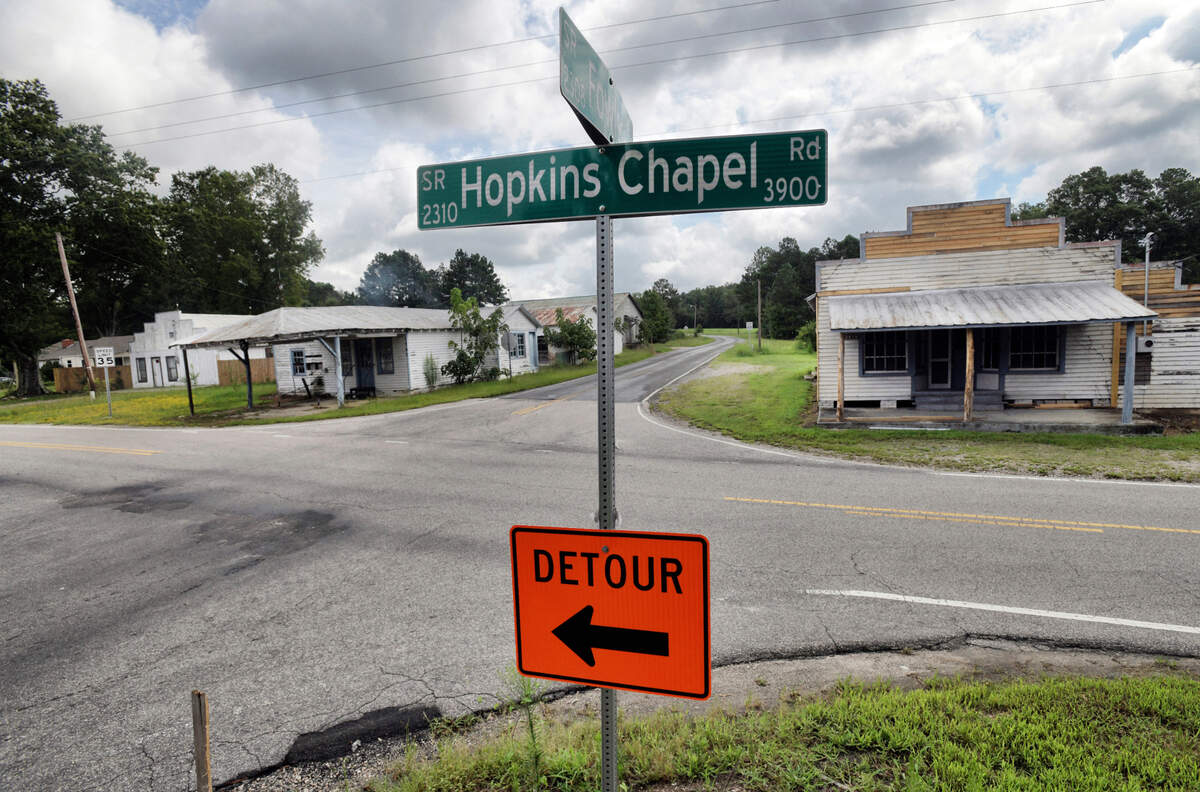
Eventually his family settled on a tobacco farm outside Zebulon near a small farming community called Hopkins Chapel Crossroads. His father, Millard, was an alcoholic at that time, King said.
“When I and my siblings were growing up, he was a really bad alcoholic, the kind that would go on three-, four-week binges, beat our mom. He wouldn’t show up for days and days and days. My mom was always scared to death to be there by herself,” King said.
His mother, Maxine, was loving, but the abuse she suffered contributed to a lifelong depression, King said. His father never physically hurt Kelly or his siblings, King said, and later stopped drinking in his 40s. Both of King’s parents died more than two decades ago.
Kelly’s older brother, also named Millard, remembers the impact this home environment had on his psyche: “I spent so much of my life wondering how bad things were growing up, I had to remember that not everything was bad.”
He doesn’t clearly recall if his father hurt his mother, but he remembers his father’s drinking binges, the family’s poverty and the fear he felt. “I hated what it did to us kids in terms of our perceptions of ourselves,” Millard said.
That fear, more than many other things, made his brother Kelly who he is today.
“Deep down inside the little Kelly is a lot of fear, a lot of sadness and just a lot of worry,” Kelly said.
‘So you never have to go back’
Poor but driven, King went to East Carolina University. He paid his way through school with scholarships, grants, loans and selling vacuums. After completing his MBA, he joined BB&T in 1972, then a staid bank with long-standing ties to tobacco and hog farming.
King was successful. He got promoted. A reputation developed: He was stern, intimidating, hard-charging. He had a short fuse. People were scared of him.
At a typical company, a guy like King would climb, undeterred, gaining a reputation as the boss no one wanted. But BB&T was an unusual bank, and this didn’t happen.
As it rose into one of the country’s largest banks, BB&T developed an eclectic culture that at times mixed Ayn Rand, Christianity and psychology. Rising BB&T managers like King were made to attend a behavioral psychology retreat decades before they became commonplace. That’s where Kelly learned about his reputation.
In part of the retreat, peers could anonymously tell him how they viewed him. They all said they were not comfortable making mistakes around him. That surprised King, who thought of himself as an exemplary young-gun banker, and made him reassess who he was.
The personality that scared his coworkers was built by those cold, scared nights outside Zebulon, King said. It was a survival mechanism.
“I didn’t think I could hurt anybody if I wanted to,” he said. “I’m still acting out of my 4-year-old, scared-to-death little boy seeing his dad beat his mom in the middle of the night, shooting a gun in the air.
“The way people psychologically deal with that, if they get through it, is they cover it up,” he said, citing books he’s read on children of alcoholics. “You come out as a strong, go-getter achiever at all costs. Climb the ladder, whatever it takes, get to the top so you never have to go back to where you came from. And so you develop as this dominating, controlling charger.”
He said he didn’t want to intimidate people, but he had not noticed what he was doing.
King said he changed his behavior in little ways that he thought would help make him less frightening to work for. He would take his coat off in meetings and lean back in his chair. Even if he was furious on the inside, he would look relaxed. Eventually, he actually was relaxed.
“Kelly’s improved a lot over the years,” said former BB&T CEO John Allison, King’s longtime boss. “He’s big and strong and enthusiastic, but it was to the point of scaring people.”
BB&T would buy the company that hosted the retreats, Farr Associates, and turn it into a management training program. The training campus is now named after King.

The ascent
As McColl was building his bank in Charlotte, Allison, King and a core group of executives navigated BB&T through the same rapid consolidation in American banking that happened in the last two decades of the 20th century. For the most part, the bank stayed out of the headlines in Winston-Salem, as Wachovia and Bank of America feuded just four counties south.
BB&T bought up scores of mostly small banks across the Eastern Seaboard, keeping costs low and not taking risks. That kept its share price high, making the bank too expensive to be bought. It helped make them an ideal buyer for banks on the market, too.
“BB&T had a game plan where they treated employees well. They had excellent training programs. They had a philosophy that was very much customer-centric,” said Glenn Orr, who was CEO of Lumberton-based Southern National Bank. The bank merged with BB&T in 1995.
“It just became, when somebody wanted to merge, you’d ask ‘maybe BB&T wanted to merge with us,’” Orr said. In total, the bank bought or merged with about six dozen banks since Allison became CEO in 1989.
King succeeded Allison as CEO in 2009. He continued much of Allison’s strategy, buying up banks in Pennsylvania and Kentucky.
The strategy had limits. BB&T never had invested much into investment banking, making it essentially a gigantic community bank. Businesses that wanted to go public or issue large amounts of debt would have to go elsewhere. At the same time, BB&T didn’t have the scale to create the technologies that other banks were rolling out.
Both Allison and King had long seen a future where a handful of banks controlled a vast majority of the country’s dollars. If BB&T was going to be one of those banks, something big had to happen.
The merger
Merging with SunTrust had long made sense.
The Atlanta-based bank had a very similar market footprint to BB&T. And it was in the same awkward not-big-enough position as BB&T.
“The financial part was always there,” said former SunTrust CEO Bill Rogers. “Anyone could sit and think about those two enterprises and fit it together.”
It wasn’t until Rogers and King talked in August 2018 that they realized the idea had potential. They broadly agreed on things like strategy and culture, and they could negotiate away everything else. While they didn’t formally discuss a merger, according to securities filings, the subtext was clear.
Later in 2018, they hashed out the details. They met in anonymous hotels and motels in cities in central North Carolina, where no one knew them. They figured out who would get the headquarters (Charlotte) and if they would use one name or the other (neither). Surprisingly, those details often derail mergers.
Who would run the new bank also had an easy solution.
As a condition of the merger, King, 72, must retire as CEO on Sept. 12, 2021, his 73rd birthday. A decade younger, Rogers will take over as CEO when King retires. That way you could limit how much the executives’ egos played into the merger.
The negotiations continued into the next year. Bankers and lawyers were brought in, a price was agreed to. On Feb. 7, it was done. They had sewn up two of the country’s largest banks in an era when big bank mergers did not happen.
Coming challenges
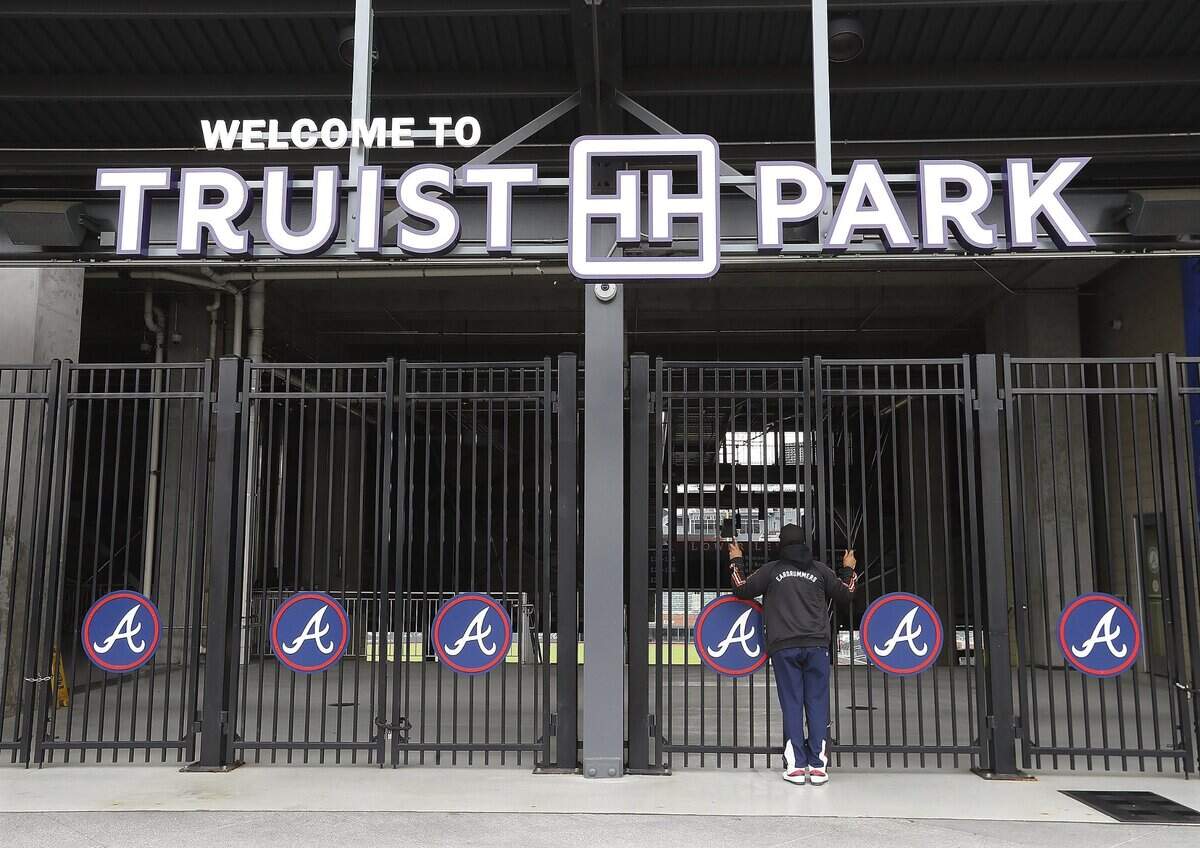
After the merger, the stakes are even higher. Truist has signaled that it wants to compete with the nation’s big banks, who have billions more to spend. Taking market share from Wells Fargo or Bank of America will require executing better than them, with less.
On top of that, the pace of planned cost cuts has shifted often, frustrating bank analysts that cheered the merger. And executives from SunTrust and BB&T feuded over control, portfolios and seniority, according to two executives who are not authorized to speak publicly.
Add to that the ongoing pandemic, which already has complicated the bank’s merger timeline and could lead to thousands of bankruptcies among the bank’s middle-class clients.
King’s concerned about all of it. But his life has afforded him a perspective, and a skill-set, that many other bankers lack.
“Any time I think I have a hard day in banking,” King said, “my memory goes back to those August days when it’s 95 degrees, priming that tobacco.”
Farmers would harvest each other’s crop because that was the only way all the tobacco could be harvested in time.
“You literally worked six days a week priming that tobacco,” King said. “You’d be out at the field when the sun came up enough that you could see the color of the leaves. The plants were still wet. It was messy work. And you’d work until dark. And I had some kind of allergy to tobacco, and literally most every day I would literally be throwing up.
“There was no choice to say, ‘Hey dad, I don’t want to do this. I don’t feel good.’ You just couldn’t do that,” he said. “You did what you had to do to survive.”
This story was originally published October 12, 2020 at 8:34 AM.