
‘No precedent’: In building Truist, the bank got to keep a regulator it likes
When SunTrust and BB&T merged last year in a $66 billion deal to form Truist, one of the first people that CEO Kelly King told was a career bureaucrat in Raleigh. His name is Ray Grace, and he has been the commissioner of banks in North Carolina since 2012.
King gave Grace welcome news: When the two banks merged, the final bank would be based in Charlotte and keep BB&T’s state charter.
It meant that Grace would keep monitoring the largest bank under his purview, and that the bank would nearly double in size to become the sixth biggest commercial bank in the country. Georgia, where SunTrust was chartered, would lose the fees the state received to regulate the Atlanta-based bank, and North Carolina would gain them.
The move was an unprecedented test of the way America regulates banks. Typically, when banks grow past a certain size, they switch from state regulators to a federal regulator, usually the Office of the Comptroller of the Currency, or OCC.
At the time of the merger, BB&T and SunTrust were the first and second largest commercial banks regulated by their home states. After the merger, they became the largest by far.
With roughly $500 billion in assets, the bank is more than three times larger than its next commercial peer that’s state-regulated, Alabama’s Regions Bank.
Regions, though, is a member of the Federal Reserve System and subject to greater regulatory scrutiny from the Fed. Truist is not. That means it’s regulated, for most purposes, by North Carolina and the FDIC.
That Truist did not shift to solely federal regulation is significant, as it tests the capacity of a local regulator whose funding is heavily tied to maintaining the good relationship it currently has with the bank.
“There’s no precedent for this anywhere in the country,” said Arthur Wilmarth, professor emeritus at George Washington University Law School. “It must be the North Carolina banking commissioner and the FDIC have done a really excellent customer relations job to keep BB&T.”
A friendly relationship
The choice to stay as a state-regulated bank makes use of a quirk in the American bank regulation system: a bank can choose its regulator.
Thanks to legislation from the early 20th century, a U.S. bank can be regulated by its state regulator in cooperation with the Federal Deposit Insurance Corporation or Federal Reserve, or replace those regulators with the OCC, which is a department of the U.S Treasury.
Using the OCC as a regulator is considered simpler, as it replaces two regulators with one.
Truist’s choice to stay with its state charter came down to its relationship with the regulator, according to two people familiar with the arrangement.
BB&T had worked with the local banking commissioner for decades, the examiners that oversaw the bank were veterans and switching to a new federal regulator posed an unnecessary risk that it didn’t need to take. A new regulator could take a harsher look at the bank, the people said.
Cost was a consideration but not a driving factor, according to the people, who were not authorized to speak publicly about confidential regulatory information. The fees a bank pays to state regulators are roughly 25% smaller than the fees that the OCC charges for its assessment, according to one of the people.
Ultimately, the fees a bank pays for assessments are dwarfed by the potential cost of a regulator cracking down on the bank.
Wells Fargo, once it caught the ire of federal regulators for its sales practices, paid billions of dollars in fees, settlements and lost growth for its conduct, all of which were far greater than the cost it paid to its regulators to be assessed.
“The FDIC and the North Carolina Office of the Commissioner of Banks provide strong leadership and appropriate regulatory oversight for Truist and this arrangement was a natural transition from the relationship already in place for BB&T,” Truist spokesman Kyle Tarrance said in a statement.
BB&T had studied moving to the OCC in the past, according to former CEO John Allison, who ran the bank from 1989 to 2008.
“The cost would be even higher and converting would take considerable management attention,” he said. “We thought there were more productive ways to spend our time.”
The multiple banking regulatory systems in the U.S lead to what critics call regulatory arbitrage, the practice of picking your regulator based on which will be least harsh.
State banking regulators are funded by the fees they charge banks to assess them. That can lead regulators to be wary of being perceived as tough on a bank, Wilmarth said, for fear of the bank leaving and taking their fees with them.
Cincinnati-based Fifth Third Bank ditched its Ohio state regulator last year to be regulated by the OCC, which has enticed multiple banks to come under its regulation after struck the agency struck a bank-friendly tone under President Donald Trump.
Tip off the Feds
The bank stands out from the other firms that Grace regulates: Truist accounts for 87% of the banking assets that he oversees. Almost all of the other banks that are state chartered in North Carolina are small community banks.
That size difference has significant implications: if Truist were to move to federal regulation, Grace’s agency would lose a significant amount of its revenue. That’s one reason why he was relieved when he learned that Truist would keep its charter in North Carolina.
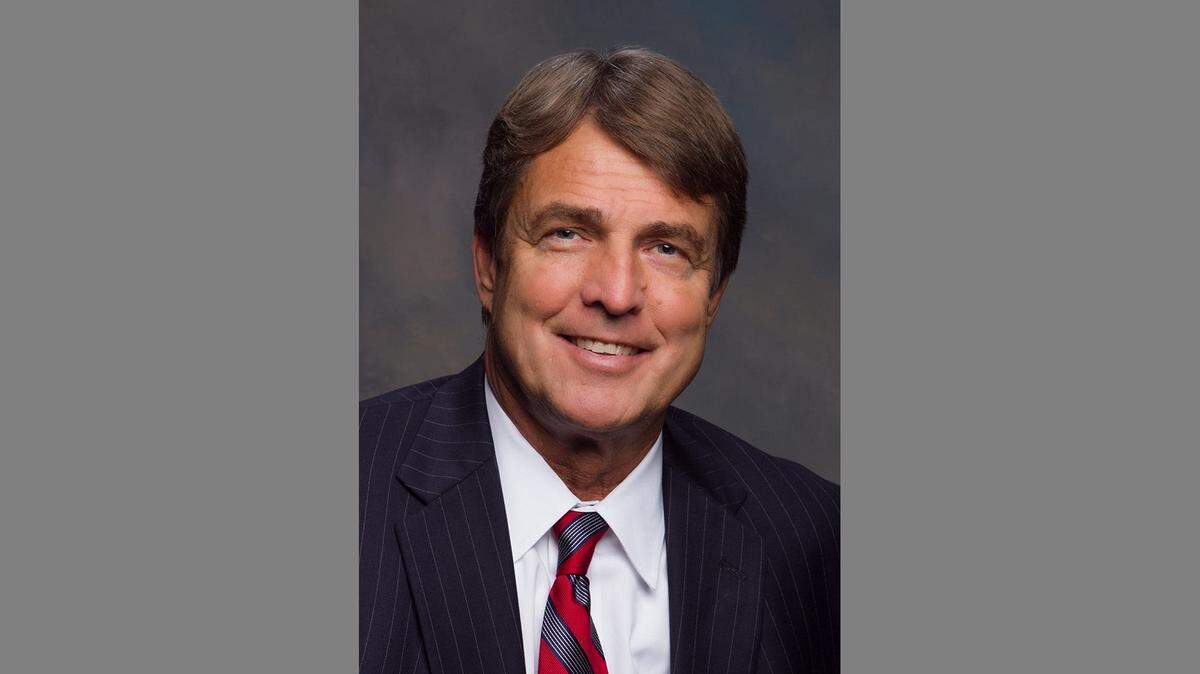
Grace isn’t concerned about fears of cozy regulation.
“I don’t know that we do them any favors,” he said.
His examiners attend the same classes as those at the OCC and the Fed, and spot issues that lead to federal action. North Carolina’s examiners, he says, caught issues with the bank’s compliance program that led to a censure that federal regulators joined in on in 2017.
North Carolina has about 40 bank examiners, with seven to eight assigned to Truist full-time, Grace said. The FDIC has examiners inside the bank as well, he said. The FDIC did not respond to requests for comment for this story, but they work closely with North Carolina examiners.
To be sure, a bank as large as Truist has more than just two regulators. The Fed oversees the business done solely out of the bank’s holding company, as well as its overall impact on the financial system. Securities regulators handle the securities components.
Ultimately, the bread-and-butter banking examinations are done by North Carolina and the FDIC.
‘More productive ways to spend our time’
Grace wanted to expand the Truist team this year, as it’s a much bigger bank than it used to be, but the COVID-19 pandemic complicated that effort.
He says the agency faces unique recruitment and retention struggles: His examiners have the same skills as those at the Fed and OCC, yet North Carolina can’t match federal salaries. He recently lost two examiners to federal jobs.
In some ways, Grace is lucky that Truist is the bank testing out this state model. BB&T, despite its growth, was never a troubled bank.
It was one of the few banks to eschew subprime mortgages during the housing bubble, and seldom considers risky products. Before purchasing SunTrust, it lacked much capital markets heft and generally ran as if it were a gigantic community bank.
The addition of SunTrust, though, created a much more complex bank, with a developed investment bank. The scale gets bigger, as does the challenge of regulating them. It will be up to Grace to meet it.
This story was originally published September 3, 2020 at 6:30 AM.