Local cannabis shops cheer on NC medical marijuana bill, but share one big concern
Kim Delaney started using CBD products while battling a rare blood cancer nearly six years ago. In 2019, she opened My Green House CBD in Concord and started selling those products herself.
Since then, one of her biggest challenges is one faced by many others in the legal cannabis industry: Finding a bank that will work with her.
And even as N.C. legislators move forward with a bill to legalize medical marijuana, Delaney and other cannabis business owners fear that obtaining the bank loans and services they need to grow their companies will continue to be problematic.
“Small business loans, funding, credit — things like that are not readily available to us,” said Mike Sims, co-owner of Charlotte CBD. “The minute you tell them your industry, the conversation stops right there.”
What’s more, regardless of how North Carolina approaches medical marijuana, Charlotte’s major banks say they won’t do business with marijuana companies as long as the drug is prohibited at the federal level.
Certain cannabis products are legal in North Carolina as long as they contain less than 0.3% Delta-9 THC. THC is the psychoactive compound that causes the high typically associated with marijuana use.
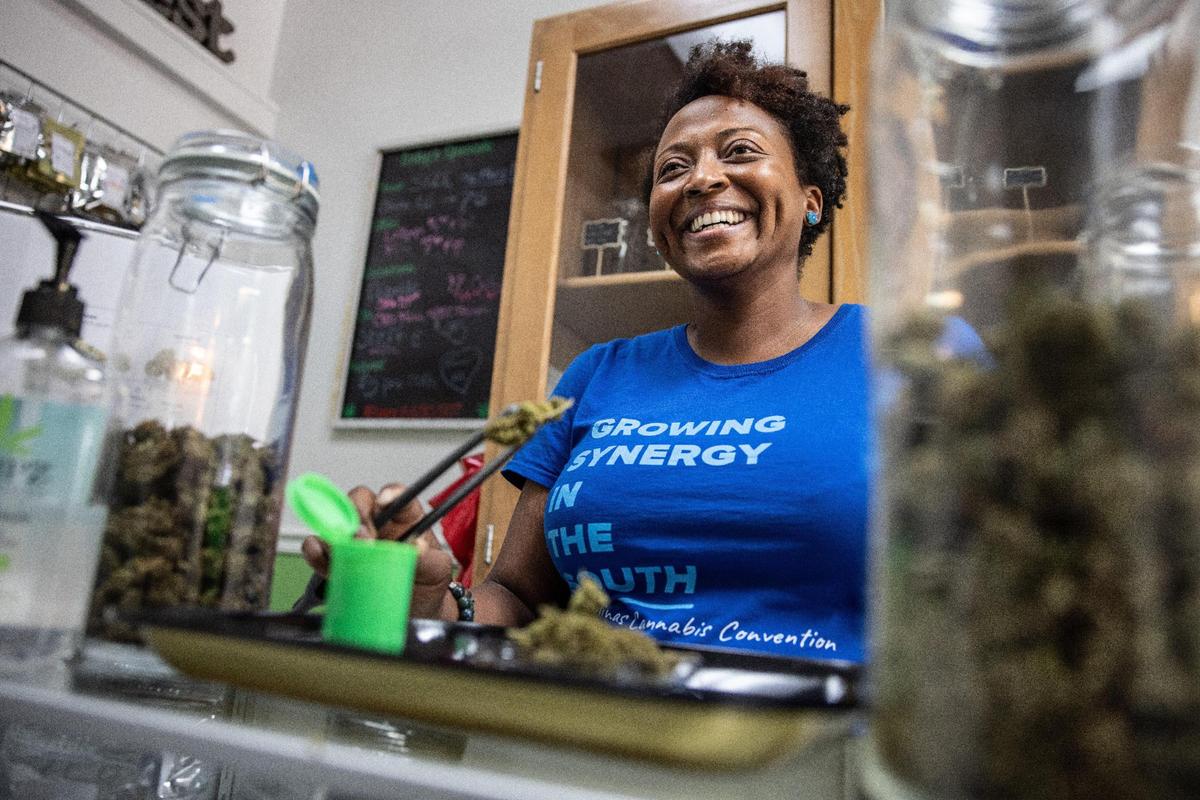
CBD is a chemical that can be extracted from the cannabis plant and used in products like oils, lotions and dietary supplements. It’s become popular with consumers who believe it relieves a host of ailments, including insomnia, anxiety, chronic pain and post-traumatic stress disorder.
Sims said that he and his co-owners designed their business in the hopes that the state eventually would legalize marijuana.
“We’ve set up our business model from day one to adjust seamlessly to the medical industry or adult-use industry, depending on which way North Carolina goes,” Sims said.
With the pending legislation, Senate Bill 711, moving forward in Raleigh, some of those CBD and hemp businesses could expand their offerings to include medical marijuana for the first time.
The bill would award up to 10 medical cannabis supplier licenses statewide, with each licensee owning and operating no more than four medical cannabis centers. The state senate continued advancing the legislation last Wednesday.
‘A high-risk business’
Medical marijuana is legal in 36 states, according to the National Conference of State Legislatures. And 18 states and the District of Columbia have legalized the drug for adult recreational use.
But marijuana remains illegal at the federal level, and most banks won’t lend to cannabis companies, said Morgan Fox, a spokesman for the National Cannabis Industry Association.
Big banks in Charlotte — Bank of America, Wells Fargo and Truist — all told the Observer that they adhere to federal law and don’t do business with companies that produce, distribute or sell marijuana, even in states where the drug is legal.
The banks declined to clarify how those policies impact businesses that produce, sell or distribute legal cannabis or cannabis-based products.
“Since federal law prohibits the sale and use of marijuana, national banks like Wells Fargo may not knowingly bank or provide services to marijuana businesses or for related activities,” Wells Fargo said in a statement.
Truist called the issue a complex one for the banking industry, and said that it welcomes clarity from lawmakers and regulators as more states move to legalize the drug. Bank of America stated that it adheres to federal law.
“We are considered a ‘high-risk business,’ ” said Lorenzo McNulty, co-owner of Keep it Hemple in Charlotte. That’s the reason he’s heard from many banks that have turned him away, he said.
McNulty is a producer and online retailer of hemp-based products — items like teas, textiles and lotions made with hemp, a variety of the cannabis plant that can’t get you high.
He currently banks with a small financial institution but keeps his business primarily cash-based, worried that his account will be flagged and shut down. McNulty declined to name his bank.
McNulty also said he has had trouble processing customers’ credit cards and even keeping a banking account open. Despite the legitimacy of his business, he said, financial institutions are still wary of violating the law by providing services to him.
“We were kicked out of pretty much every bank in Charlotte,” McNulty said. “As soon as we mention that we are an industrial hemp company, the conversation tends to stop, and banks don’t want to hear anything further from us.”
Struggling with the bottom line
It’s not just banks in Charlotte that are reluctant to make loans to cannabis companies.
“Traditional lending is pretty much unheard of in the cannabis industry,” said Fox, the industry spokesman.
Charlotte CBD has worked with smaller banks or credit unions, Sims said, although he still has run into problems with those institutions. Many companies in the cannabis industry, he said, opt for a completely cash-based business, which comes with a slew of security concerns.
Even as a growing number of states legalize marijuana, Fox said, “there is definitely a cap or limitation” on the industry’s growth as long as banks won’t lend to cannabis companies.
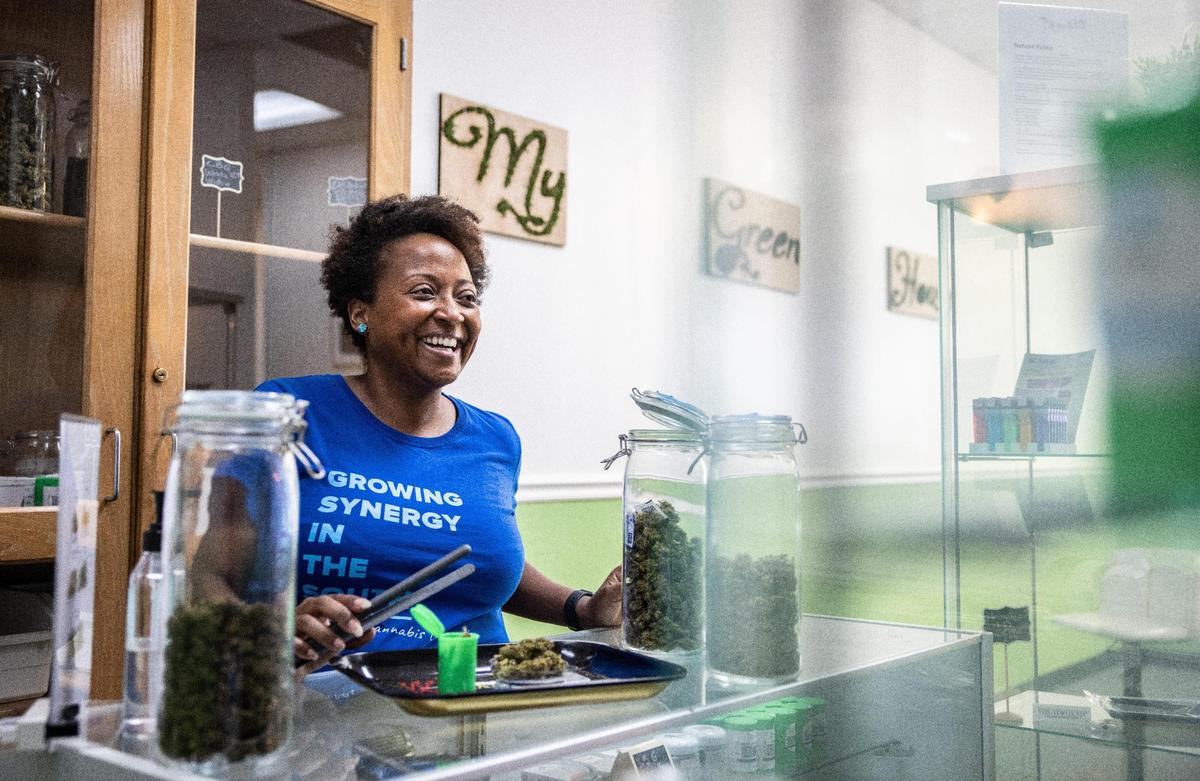
The ‘No. 1 roadblock’
Like others in the cannabis industry, McNulty said he would like to see medical marijuana legalized in North Carolina. But he acknowledges that it also could create more challenges for businesses like his.
“That is the No. 1 question when starting a CBD or hemp cannabis related business: How do I take credit cards, or who do I bank with?” he said. “If or when this bill passes, that is our No. 1 roadblock” as a dispensary trying to find a bank that will work with him.
For Sims, who designed his business with marijuana legalization in mind, serving as a medical marijuana dispensary would significantly expand the company he and his partners have built. “If we’re included (as a dispensary), then the upside is limitless.”
Ultimately, it will take a shift in federal policy to change the relationship between banks and the cannabis industry, Fox said.
In April, the U.S. House of Representatives passed the SAFE Banking Act, which would allow banks to provide services to cannabis companies in states where it is legal. And in July, Democratic senators unveiled a draft of a bill that would end the federal prohibition on marijuana.
But until a bill like that becomes law, there will be barriers for cannabis companies in all states, Fox said. “It makes it a whole lot harder for small businesses to survive.”
Business owners who can’t get a loan from the bank may need to borrow funds from friends, family or others.
When that’s one of their only options, it shuts out many would-be owners from marginalized groups, said Delaney, with the Concord CBD shop.
“It’s really hard,” she said. “We are a Black-owned business. That is a hurdle in itself... The traditional male caucasian has different connections and the ability to attract capital in a way that us in the other part of the sector cannot.”
This story was originally published July 26, 2021 at 6:30 AM.