All that talk of Bank of America’s CEO as treasury secretary? It wouldn’t be a first.
It looks like Charlotte won’t be losing a key bank executive to Washington anytime soon.
Fox Business reported last Friday that Brian Moynihan, CEO of Charlotte-based Bank of America, was on the Biden administration’s short list of potential replacements for Janet Yellen, the current Secretary of the Treasury. The story cited “people with knowledge of the Biden administration’s thinking.”
But White House press secretary Karine Jean-Pierre called the report “pure speculation” on Friday, and Moynihan said in an interview with CNBC that he has no plans to leave the bank.
“I’ve got the best job in the world. It’s not on my mind — I like what I do,” he said.
Moynihan was in Charlotte on Tuesday to speak at an event hosted by the Charlotte Regional Business Alliance, but wasn’t available afterward for questions from reporters.
Yellen is an economist by trade whose long resume includes a five-year stint as the chair of the Federal Reserve, the country’s central bank.
But if Moynihan were to change his mind, he wouldn’t be the first bank executive to make the jump from the private sector to the presidential cabinet level. Quite a few former Treasury secretaries have come from the upper echelons of U.S. banks.
The Observer compiled a quick list. Here are a few secretaries over the last century or so who brought a stacked Wall Street resume to Washington:
- Franklin MacVeagh (1909-1913): MacVeagh was a lawyer and oddly enough, a grocer before serving as director of the Commercial National Bank of Chicago for nearly three decades. He was tapped for the treasury slot by President William Howard Taft, where he demonstrated a surprising lack of “real banking experience” — at least according to the Treasury Department’s own website.
- Andrew Mellon (1921-1932): Mellon ran his father’s bank, T. Mellon and Sons, for about four decades before he was recruited by President Warren Harding. When Mellon took the job, he was one of the wealthiest men in the U.S. Later, his reputation would be tarnished by his conservative approach to the Great Depression.
- C. Douglas Dillon (1961-1965): Dillon had a career as a Wall Street banker that included a role as vice president and director at investment bank Dillon, Read & Co before pivoting to government in the 1950s. He served as treasury secretary under President John Kennedy.
- David M. Kennedy (1969-1971): Kennedy was the chairman and CEO of Continental Illinois, the fifteenth-largest bank in the world when he was appointed to the treasury under President Robert Nixon.
- William E. Simon (1974-1977): Another banker by trade, Simon was a vice president at bygone investment bank Saloman Brothers before taking the treasury job under Nixon and President Gerald Ford.
- Donald Regan (1981-1985): A key advocate of President Ronald Reagan’s “Reaganomics,” Regan had an investment banking resume that dated back to 1946. Regan was the CEO of Merrill Lynch from 1971 to 1980. He’d later serve as Reagan’s chief of staff, too, still championing the president’s steep tax cuts.
- Robert Rubin (1995-1999): Rubin started his career at Goldman Sachs and held a number of executive roles there before serving as secretary of the treasury under President Clinton. His first employer would eventually earn the nickname “Government Sachs” for the sheer number of bankers there that went on to work federal jobs.
- Henry Paulson (2006-2009): Paulson was CEO and chair of Goldman Sachs, working at the Wall Street firm for more than 30 years before George W. Bush picked him to lead the Treasury Department. Paulson was best known for leading federal efforts to support the U.S. economy during the financial crisis of 2008 and orchestrating the government bailout of several Wall Street firms.

- Jack Lew (2013-2017): The second Obama-era secretary worked as chief operating officer at Citigroup from 2006 to 2008. His resume also included such varied roles as special assistant to President Bill Clinton and executive vice president of New York University.
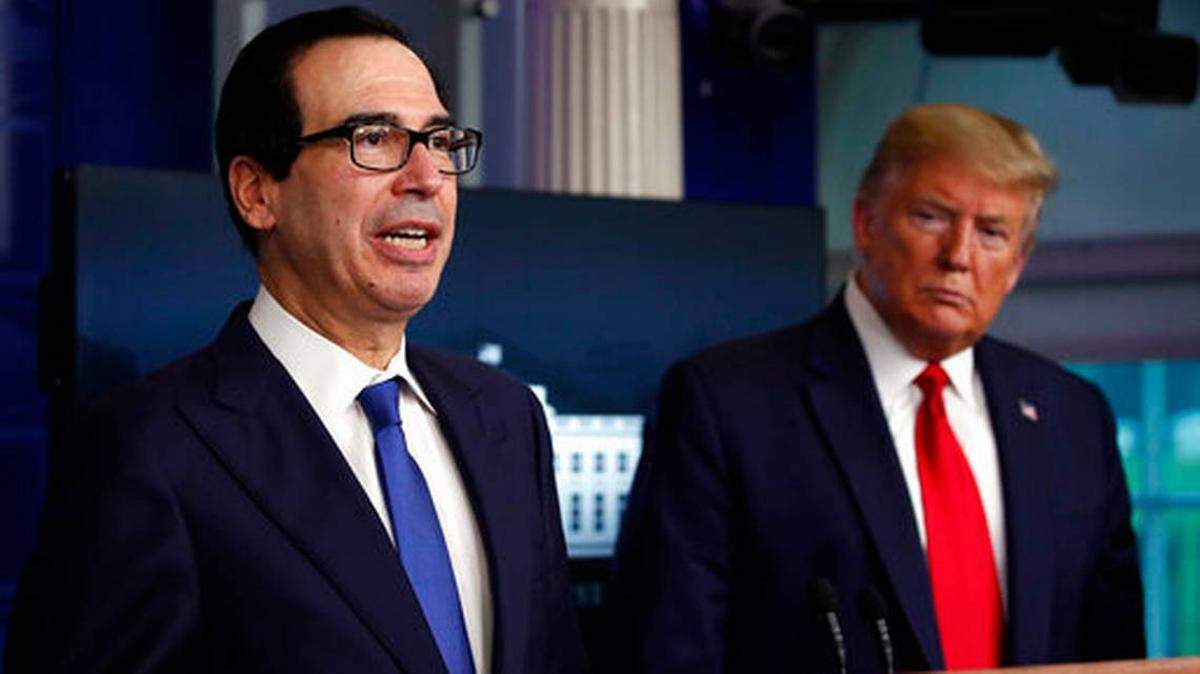
- Steven Mnuchin (2017-2021): Another Goldman Sach alumnus, Mnuchin was President Donald Trump’s pick for Treasury Secretary. Mnuchin worked at the investment bank for nearly 20 years, eventually becoming Chief Information Officer, before leaving to start his own hedge fund and produce a few Hollywood films. Mnuchin was the finance chair for Trump’s campaign before being nominated to his cabinet.
Then there was the nation’s very first Treasury Secretary, Alexander Hamilton, the “ten-dollar Founding Father.” He served President George Washington from 1789 to 1795.
While Hamilton was not a banker before he took the job, he is widely credited with designing plans for the first Bank of the United States, which helped stabilize the finances of the nascent nation.
CORRECTION: A previous version of this story had the wrong years for when Donald Regan was Treasury Secretary. He served in that role from 1981-1985.
This story was originally published December 15, 2022 at 5:50 AM.