From cubicles to wide open spaces: How COVID could change the future of local offices
Inside an old industrial facility in west Charlotte, now home to marketing firm Wray Ward, cubicles are aligned in rows. But around them are benches, couches and a “town hall” auditorium.
Brooks Runkle, a partner and principal architect with Redline Design Group, helped design the headquarters building on Thrift Road with a “1-to-8” ratio: for every desk, there are eight spots in a collaborative space, whether it’s on a bench or the rooftop deck.
Wray Ward opened its offices at the end of September in the midst of the COVID-19 pandemic that sent thousands of workers home. Nearly all of the office towers uptown are empty, and big and small employers continue to delay when they might bring people back to the workplace.
Still, businesses haven’t abandoned physical offices altogether. And many real estate experts say, despite the chatter about the rise of remote work, offices will still be in demand in a post-coronavirus world.
But the future of workspaces may look very different.
Offices with large open spaces and fewer desks like Wray Ward’s are increasing in popularity, real estate experts say.
Companies may allow for a hybrid of remote and in-person work. And some firms are starting to look outside of uptown, where parking and access to facilities involve fewer interactions with people.
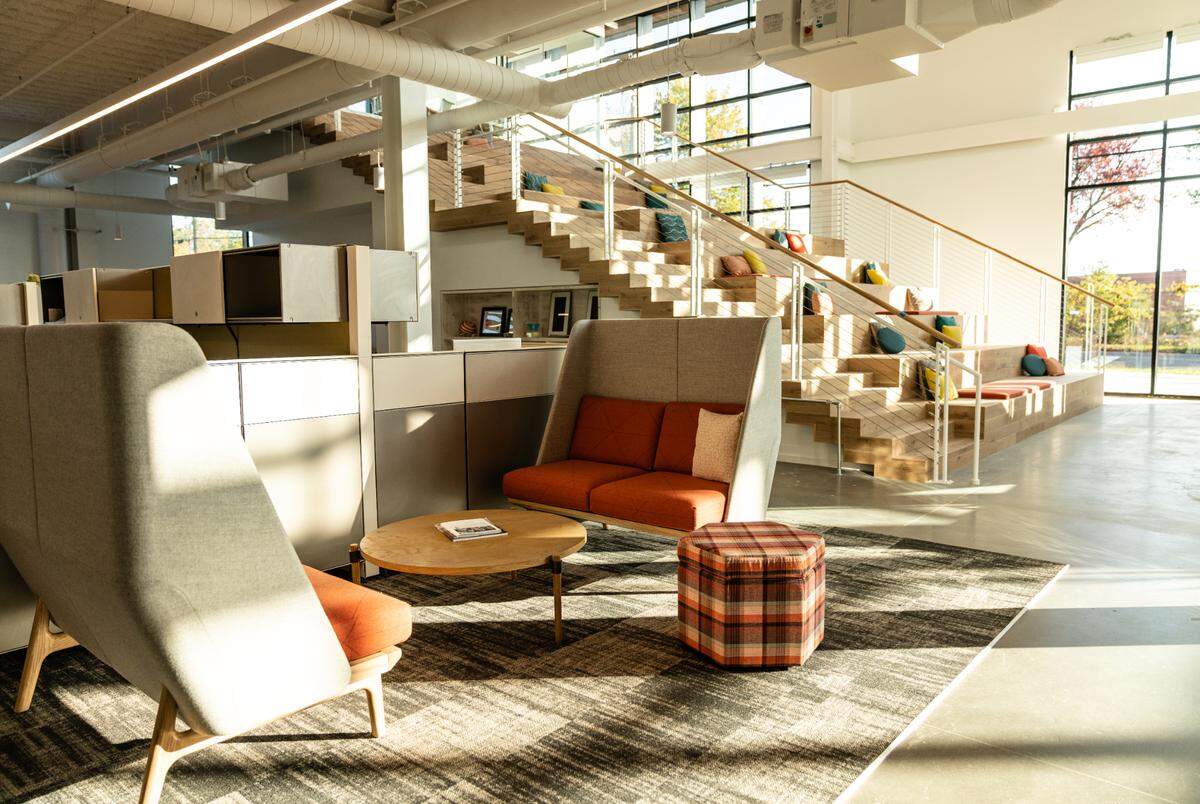
Wray Ward was already underway with its new building before COVID-19 struck, said Jennifer Appleby, the company’s president and chief creative officer. But the pandemic led the company to tweak certain aspects of the project, she said, such as adding a new air purification system and rearranging furniture.
“We did want to think about, how does COVID inform the decisions that we’re making for our employees?” she said.
What will work look like?
Just 10% to 15% of offices in Charlotte are actually occupied by employees now, according to Brian Landes, director of research for the Carolinas with commercial real estate firm JLL. Though a few tenants uptown have exited their leases, such as The Charlotte Observer, most are holding on to their offices even if they are vacant.
“Rent is still being paid,” Landes said. “But we don’t necessarily have butts in seats.”
Charlotte’s vacancy rate for office space is around 12%, according to JLL’s fourth quarter research, a 4 percentage point increase from the beginning of 2020. But that’s still much lower than cities like New York and Houston.
It’s unclear when companies plan to bring people back to the office, but many are looking to when the vaccine will become available for employees. That means demand for office space will likely remain flat through 2022, Landes said, though he predicts it will pick back up after that.
Workers may split their time between an office and working from home, real estate experts say.
“The larger share of employees want to be in the office, but want that flexibility,” Landes said.
Chris La Mack is co-founder of Elevation Real Estate Group, which is developing office buildings that contain private suites for small businesses with one to 10 employees. The firm opened the first complex in Huntersville in November.
Elevation started construction before the pandemic hit, but the company made some changes, such as upgrading the air filtration system. Each suite has its own HVAC unit.
La Mack said the pandemic has demonstrated that small business owners need a separate, more professional space outside of their home to work from.
“The trend toward working at home has been prevalent for probably the past decade,” he said. “I think what COVID has done is kind of highlighted that, and really made people look at what does and what doesn’t work as far as working out of the home.”
Flexible spaces
Landes expects a transition to less density in offices, as employers space workers out more due to COVID-19 safety precautions. That means moving away from packed-in cubicles lining the floors of uptown towers.
Runkle, the architect for Wray Ward’s offices near Wesley Heights, said a number of his clients are re-examining how to design their workspaces.
“I think that cramming (workspaces) in and trying to make the most out of real estate ... is going to be a thing of the past,” he said.
The coronavirus accelerated the shift toward what’s known as flexible and creative office space, experts say. Those offices typically have desks arranged in a large, open floor plan, and collaboration spaces with couches, tables and other workstations.
In December, Charlotte developer Greg Pappanastos announced plans with two Atlanta-based firms to redevelop an old west Charlotte mill into 200,000 square feet of creative offices, with apartments and retail alongside it.
Despite the pandemic, he is moving forward with the project eight years after buying the mill, parts of which are over a century old. Pappanastos is working with Portman Holdings and Portman Residential, two separate but related companies, on the $200 million revamp.
.jpg "200916 SavonaMill_Exterior_01 (1).jpg")
Pappanastos, president of Argos Real Estate Advisors, said in the long run there will still be a market for workspace in Charlotte, even if there is a combination of work-from-home and in-person work. He pointed to the expansions of companies like health insurance giant Centene Corp. into the Charlotte market.
“The influx was happening before the pandemic showed up,” he said, “and we don’t see any reason why that shouldn’t continue post-pandemic.”
Argos is one of a slew of developers converting older, often industrial buildings for a new purpose, a concept known as adaptive reuse. It’s a trend that brokers and developers say is becoming more popular because of COVID-19.
The industrial facilities are often single-story and don’t require taking an elevator or parking in a deck, which is seen as less of a risk for contracting the coronavirus.
Wray Ward’s headquarters has fewer individual offices and more open space. The conference rooms are set up as “Zoom rooms,” with large screens so that remote employees or clients can join in on a meeting.
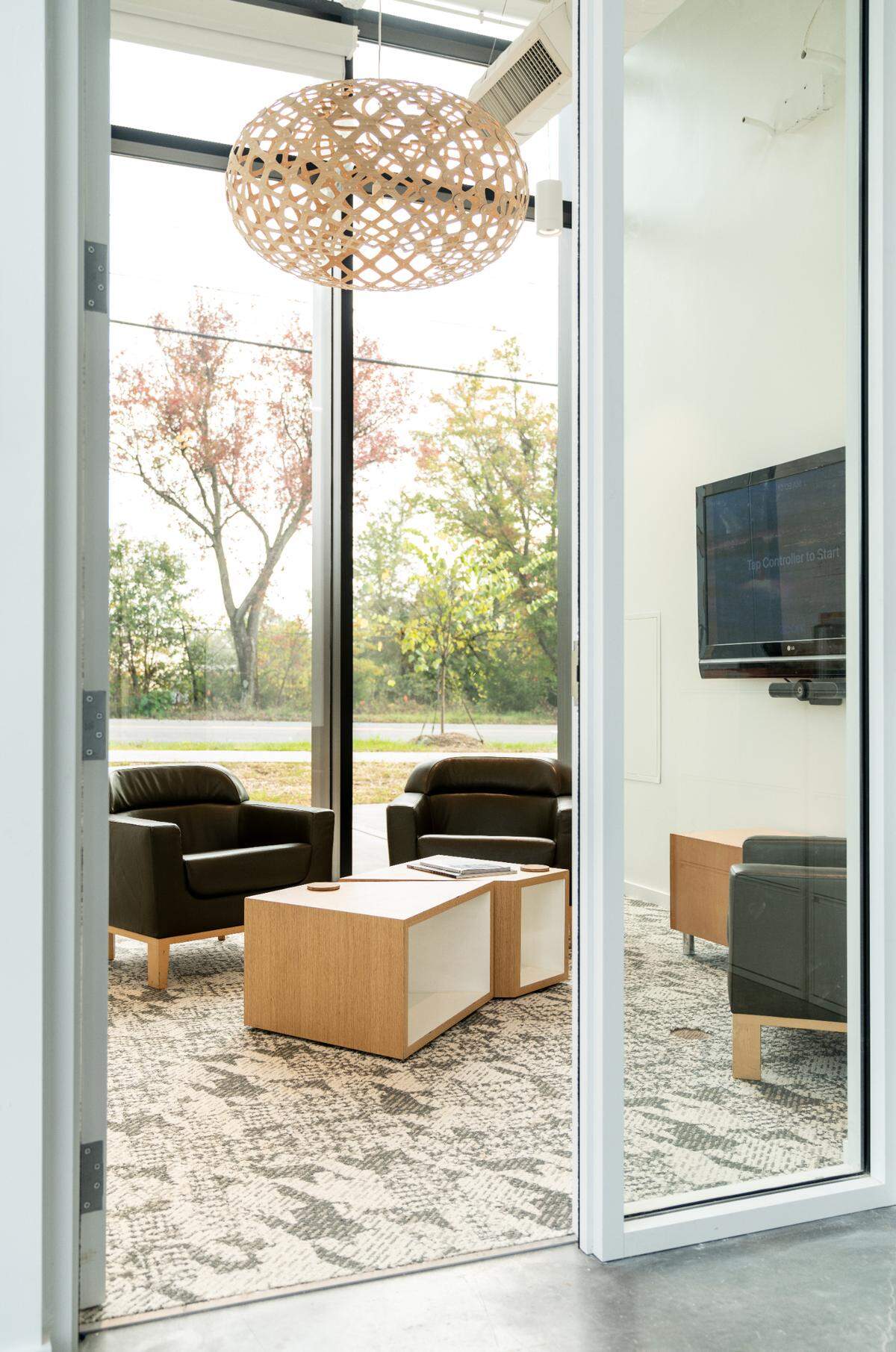
The company has been allowing employees to return to the new office on a staggered schedule, but it’s not required.
Appleby said she was not sure at first whether employees would return to work.
“There were some nervous nights,” she said. “Here we are building this big new space, of course we are concerned.”
But, she said, “We’re building for a longer term future.”
This story was originally published December 30, 2020 at 6:00 AM with the headline "From cubicles to wide open spaces: How COVID could change the future of local offices."