
Charlotte high-rise, once home to LGBTQ+ businesses, gets historic landmark status
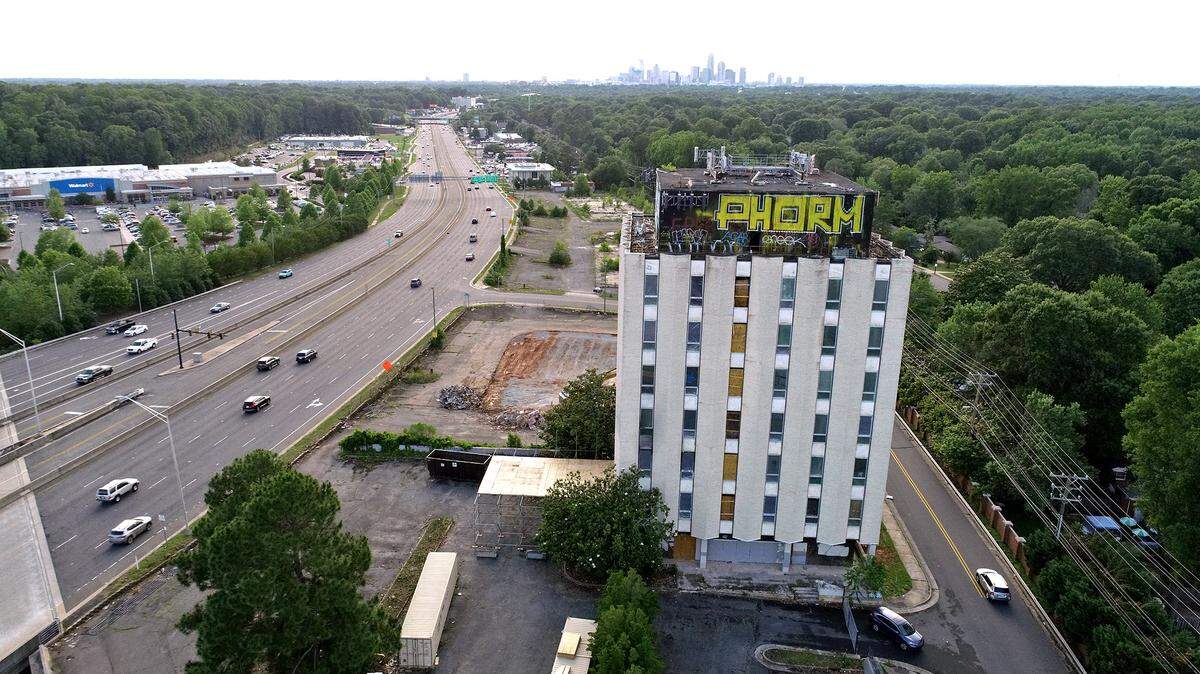
A tall, cubicle-looking building off Independence Boulevard in east Charlotte, most recently home to LGBTQ+ groups and businesses, is now an historic landmark.
Charlotte City Council members unanimously voted on the designation Monday night for the Ervin Building, also known as the Varnadore Building.
The structure at 4037 E. Independence Blvd. bears the name of Charles Ervin, one of the most prolific developers in the region by 1958.
But his firm, the Ervin Company, has a complicated history. Many of the neighborhoods he built turned away Black homeowners due to deed restrictions, the Observer previously reported.
The Varnadore renaming, from 1992, is for Jim Varnadore, whose real-estate firm occupied two stories of the now-dilapidated tower. In recent years, neighborhood leaders have rallied support to renovate the building and spur economic growth on the east side of the city.
Earlier this summer, the Charlotte-Mecklenburg Historic Landmarks Commission voted unanimously in support of the Ervin Building’s designation.
The building’s history
Built in 1964, the seven-story high-rise was Charlotte’s “first skyscraper east of downtown, an intentionally strategic decision by Ervin as part of his vision for the city’s future, placing the structure on the decade-old Independence Boulevard, a crosstown corridor designed for better access to the city’s suburbs,” according to the historic landmark ordinance.
Ervin “capitalized on the building boom following World War II,” the ordinance says.
The office tower has a modernist, mid-century design, with interior features that were meant to improve employee interactions, according to the ordinance. That included public spaces and open floor plans.
A small, modernist-style bank was originally on the lot next to the Ervin Building, but it was demolished in the early 2000s, according to a report from the North Carolina Department of Natural and Cultural Resources.
Also in the vicinity was the North Carolina Savings and Loan Association Building and Amity Gardens Shopping Center, the report says.
“The property generally maintains its integrity of location, design, workmanship, feeling, and association,” the report says. “Currently vacant, the material integrity of the Ervin Building has been compromised by a lack of maintenance, vandalism and boarding over the first story.”
In May, Pineville-based developer Gvest Capital announced it would demolish the Ervin Building’s interior, while preserving the exterior. The revamped high-rise would feature about 30,000 square feet of office space and a rooftop bar, the Observer previously reported.
A planned mural will honor Dorothy Counts-Scoggins, the first Black student to integrate Charlotte schools. The building’s lobby will also offer historical information about Charles Ervin.