A Charlotte NIMBY tale with a twist — homeowners aren’t the ones doing the complaining
In one corner of Charlotte’s historic Elmwood and Pinewood cemeteries, tall trees clear out to views of Charlotte’s growing skyline — a secluded space to take in the views in one of the country’s fastest-growing cities.
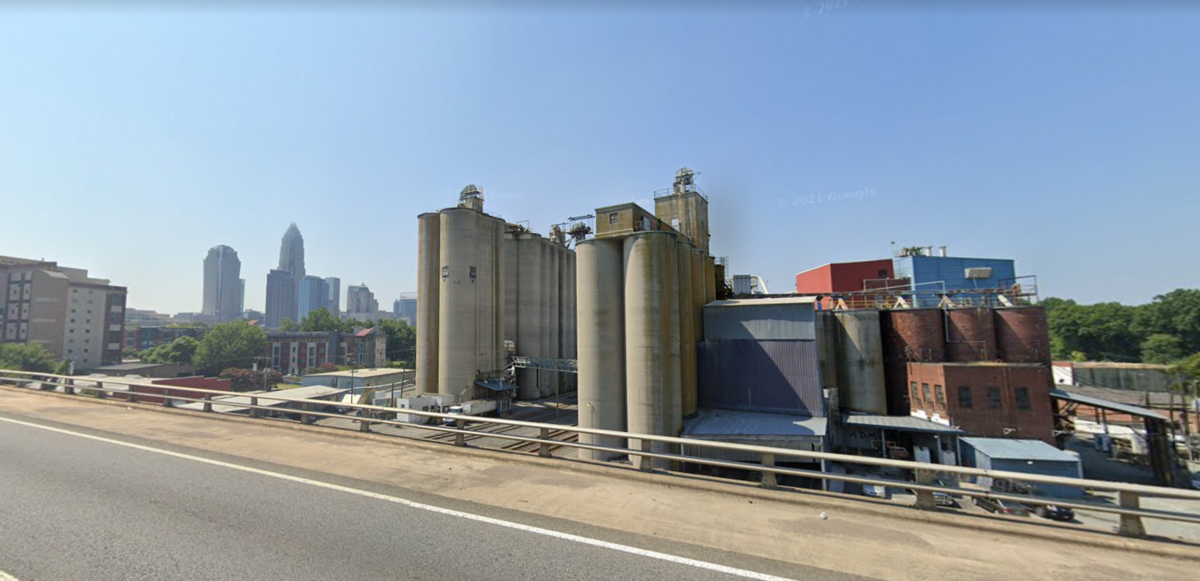
Nearby, more towers rise into the air, although they aren’t home to office workers or apartment dwellers. The complex — and its accompanying low, whirring noise, much like a monotone hum — is a century-old mill.
For the past three decades, a company called ADM has been producing flour and animal feed there. Many in Charlotte likely know the site from driving by it on Interstate 277, just before Exit 4 for Graham Street. The large, tube-like structures greet you as you drive into town.
It’s against this backdrop where the city’s latest controversial rezoning petition has bubbled up.
But rather than residents getting upset about an industry trying to come into their neighborhood, owners of an industrial site are worried about the encroachment of residents. Such concerns have continued to surface in recent years in Charlotte, especially as the city has grown and land prices have shot up, land-use experts tell The Charlotte Observer.
This issue also speaks to a broader challenge of balancing the need for more types of housing and how close these uses should go to existing industrial sites.
Plans for near the mill
A developer wants to rezone a 5-acre parcel at the corner of West 9th and Johnson streets from industrial to mixed use. Plans call for 82 townhomes as well as an adaptive reuse of an older brick building on site that would be converted into commercial space.
Lennar Carolinas’ petition could help fill a gap of needed housing in the growing city.
But the flour mill, which has about 70 full-time workers and operates around the clock, is “extremely concerned” with having people live so close. If people start complaining about the noise and dust, the plant could be forced to relocate, an attorney for ADM told City Council members at a rezoning hearing last month.
“They’re extremely concerned about putting about 80 relatively high-end townhomes in close proximity to such a large and noisy and dusty industrial facility,” the attorney, Marsh Prause, said.
No vote was taken at the May 23 hearing. A vote could come as soon as next month.
ADM’s history in Charlotte
ADM has a network of flour mills across the country. Headquartered in Chicago, the company brings crops to the market on six continents, according to its website.
In 2020, it did $64 billion in net sales.
The mill that operates at 620 W. 10th Street in Charlotte was built in 1915, ADM spokeswoman Jackie Anderson told the Observer in an email. ADM purchased the facility in the 1980s and has been operating it ever since.
Workers at ADM produce around 1.3 million pounds of flour and 300,000 pounds of animal feed each day.
Aside from wheat that is shipped in via the rail lines, local producers deliver about 2 million bushels of soft wheat every year by truck. During the harvest season, that could mean up to 40 trucks delivering wheat to the ADM plant per day.
The flour and feed produced at ADM is then shipped out via truck to local bakeries, restaurants, grocery chains and feed producers in Charlotte and the surrounding area.
On any given day, more than two dozen trucks rumble in and out of the industrial site, just outside uptown. Trains delivering wheat pull in several times a week.
Buyers make the decision
The townhomes that Lennar wants to build will be for sale, not for rent, said Collin Brown, a land use and zoning attorney who is representing the developer’s rezoning petition.
The ADM site and the townhomes would be separated by about 65 feet, mostly from the rail lines.
“Buyers will know what they’re getting into,” Brown said.
There is nearby development, too. The Lennar site is right off North Carolina Music Factory Boulevard and just a couple minute drive to the popular music and entertainment hub that includes the Charlotte Metro Credit Union Amphitheater.
Closer to the ADM plant, there are some condos along N. Smith Street.
In early 2020, the City Council approved a project to build 350 apartments and some commercial space at N. Smith and W. 10th streets. That’s right near one of the entrances to the ADM industrial site.
Will there be complaints?
While buyers may know what they’re getting into by moving next to an industrial site, that won’t necessarily stop them from complaining about it, Prause told council members.
Prause expressed concern that the townhomes set up a scenario that could force the industrial plant to relocate. That would be difficult given its reliance on the rail lines.
“If we keep trading our heavy industrial property for uses like that, we are limiting the ability for these heavy industrial facilities to continue to operate into the future,” Prause said.
Proximity to uptown is key
A lot of residential development has moved into areas that for decades have been zoned and used for industrial purposes, especially north of the center of Charlotte, said Walter Fields. He’s a land development and zoning consultant who worked for the city for 20 years.
Fields is not involved in the Lennar rezoning but is familiar with it.
The same phenomenon can be found in South End, he said, where “higher and better” uses have come along, and vastly increased land values. Most of the industrial uses that were there are now gone, he said, relocated somewhere else.
In Charlotte, people might be more tolerant of the noise that comes with living in a more dense, urban environment, including noise from trains and nearby interstate. The trade off, especially in the case of the Lennar project, is being walkable to uptown, the music and entertainment venue and having views of the skyline.
“People are smart,” Fields said. “When they come and look at that property they will notice ADM is right there, they will ask lots of questions and will make a purchase decision accordingly.”
Brown, the developer’s attorney, understands why ADM wouldn’t want neighbors.
He has represented industrial users before. But, he said, leaving this site undeveloped doesn’t make much sense because of its location.
“I don’t think that’s an option in our uptown area for a site like this to just take it off the table,” Brown told council members.
Council has concerns, comments
The land Lennar is proposing to build on is not owned by ADM, meaning the company can’t dictate whether to build on it, Charlotte’s mayor pro tem Julie Eiselt said at the council meeting.
But the council has approved similar petitions before and residents who moved into new apartments in South End near a manufacturing facility started complaining. “It does present a conflict,” Eiselt said.
At least one council member pushed back on ADM’s concern that it could end up being forced to relocate.
Councilman Ed Driggs described any attempts by residents to make a legal case against ADM would be “tenuous” given that the townhomes would be going up next to an already-existing industrial site.
“The suggestion that you could be driven out by them is a little far fetched,” Driggs said.
This story was originally published June 9, 2022 at 5:30 AM.