Many questions remain after Centene kills $1 billion Charlotte HQ deal, experts say

Health insurance giant Centene’s surprise decision this week to back out of its highly-touted planned $1 billion East Coast headquarters in Charlotte left many local and state officials shocked.
It’s also likely not the last time the region will see companies change up long-term plans for occupying office buildings, several real estate experts tell The Charlotte Observer.
Most Centene employees are working under a fully remote or hybrid model, the company said Friday. It cited these shifts in worker behavior as well as a significant reduction in real estate footprint as the primary reasons it backed out of the Charlotte headquarters deal.
Two years ago, the St. Louis company’s decision to come to the Queen City to open a regional headquarters was heralded as the state’s largest job announcement under the current incentive program. It would have brought at least 3,237 high-paying jobs to Charlotte over the next decade.
Centene did not make any company leaders available for comment Friday.
In the wake of Centene’s latest move, many questions remain.
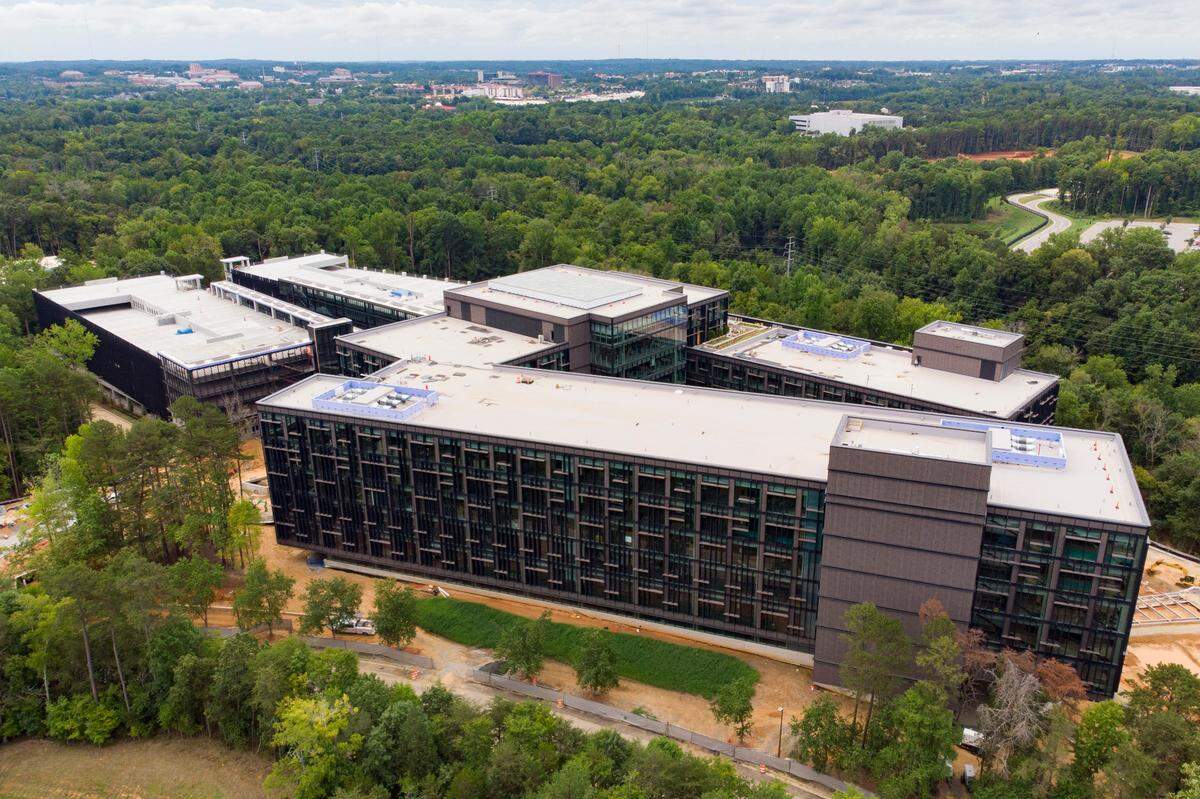
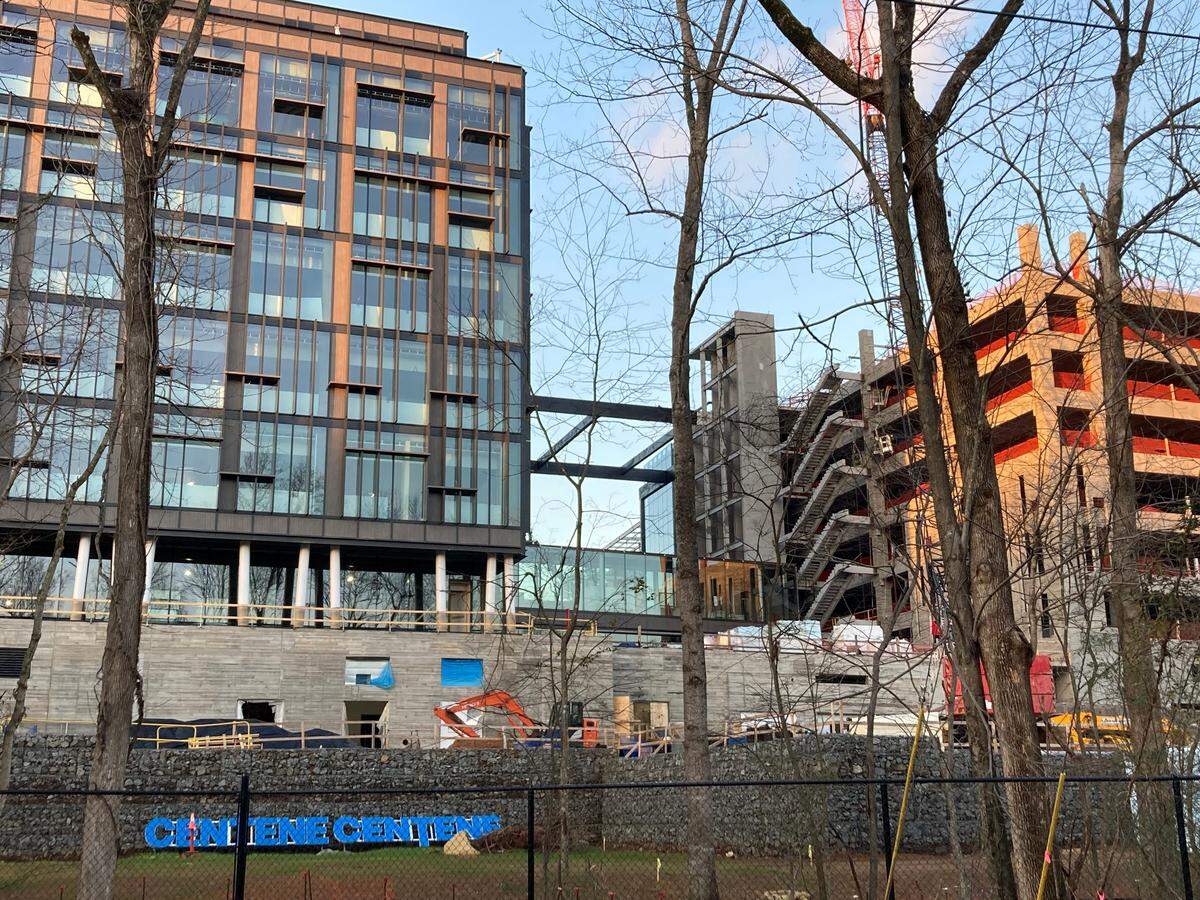
Who in the city and state knew about the deal falling apart and when? What will become of the massive, 770,000 square foot office hub that’s already well under construction? And what does it say about the future of office life as remote work continues to be a popular choice in a region experiencing intense growth?
Such questions become even more pertinent when you consider the companies that signed leases for office space pre-pandemic will soon have to decide: should we stay or should we go now?
It will take a couple years to get clarity on how companies make decisions about how much office space is needed given how many employees are going in to work, said Chuck McShane, director of market analytics at the CoStar Group, a commercial real estate research firm.
”(Centene) is probably one of the biggest announcements in this regard, but I don’t think it will be the last,” he said.
The fate of the property
Over the next few months, Centene is planning to find a new owner or tenant for its property in University City, company president and chief operating officer Brent Layton wrote in an opinion piece for the Observer Friday morning.
Citing the company’s ability for its employees to work remotely or in a hybrid situation, Layton stated, “We intend to reduce our nationwide real estate footprint by 70%, leading to Centene’s decision not to move forward with establishing our corporate East Coast headquarters in Charlotte.”
Many local officials in University City and the city of Charlotte voiced disappointment about Centene’s decision — but remained optimistic about the chance for another tenant to take over the office building.
It’s a modern campus that has open floor concepts and plenty of outdoor amenity space — the kind of features today’s workers are looking for, they say.
Other real estate experts believe Centene’s departure leaves open for the possibility of more than one tenant taking over the property. Aerial photos of the site show a few buildings connected by wings as opposed to one tall office building.
“Charlotte is the beneficiary of lots of people moving here and companies moving here,” said David Dorsch, senior director with Cushman and Wakefield. Dorsch works as a broker for office spaces around Charlotte. “There’s no reason to think that will slow down.”
All about Centene
Centene, a Fortune 50 company, is the largest Medicaid managed care organization in the country, according to its website. It says it serves 13 million people enrolled in Medicaid in 29 states.
The company has contracts to manage some Medicaid care in North Carolina too.
Its WellCare of North Carolina and Carolina Complete Health plans began operations in 2021, according to the company. Also that year, it announced plans to offer health services to North Carolina Medicaid recipients with “significant” behavioral health needs and with intellectual or developmental disabilities.
Centene has witnessed some major changes in recent months.
Its longtime CEO Michael Neidorff died in April after a lengthy illness. Neidorff, 79, had shepherded the company’s expansion for over 25 years, an obituary posted on Centene’s website noted.
Since he took the helm of Centene in 1996, the company grew from a single health plan valued at $40 million to a $125 billion enterprise.
Over the past year, Centene leaders expressed confidence in the company’s growth, especially as it positioned itself to push into new markets across the country in U.S. Securities and Exchange Commission filings.
The corporation has also reported expenses related to claims made against it.
In June 2021, Centene agreed to pay $143 million to settle fraud claims in Ohio and Mississippi, according to one SEC filing. And it was fined over $98 million to settle a case with the Department of Veterans Affairs.
Changing real estate decisions
Centene officials met with North Carolina Commerce Secretary Machelle Sanders Tuesday about the company’s plans to drop its Charlotte headquarters, department spokesman David Rhoades wrote in an email.
This was the first time Sanders had heard about Centene not bringing an office to the property, Rhoades said. The news was unfortunate, Rhoades wrote in an email. But he described Centene as an important employer in North Carolina.
Almost 90% of Centene’s workforce is working fully remote or in a hybrid role, Layton wrote in his opinion piece. This was a rarity before the pandemic as the company did not permit employees to work from home.
“By offering more remote and hybrid work options, we can remain competitive, retain and attract top talent,” Layton wrote.
With the success of a remote and hybrid model, Centene announced recently that it was reducing its real estate footprint by 70% across the country. This led to its decision not to establish the headquarters in Charlotte, Layton wrote.
The news caught some city officials off guard.
Councilman Ed Driggs was surprised by the abruptness of the move, saying he first heard about it on Thursday after reading an article about it. “But it sounds like it was a typical example during COVID of real estate decisions changing,” Driggs told the Observer.
The city will be looking around for other companies to fill the empty office space.
“We have a ready-made opportunity for someone looking for something like this,” the councilman said.
Losing high-paying jobs
The biggest impact about the Centene decision is the loss of jobs for Charlotte, Tobe Holmes, interim executive director of University City Partners, told the Observer.
The area is supported by development happening along the Blue Line, which was extended to UNC Charlotte about four years ago, Holmes said. University City also has a foundation of strong employment centers like Wells Fargo and TIAA.
“I don’t think that other than losing jobs, which would have been filled by workers and talent from across the entire Charlotte region, University City is worse off than we were yesterday,” Holmes said.
Dorsch, the broker from Cushman and Wakefield, agrees. He believes the company that decides to fill the Centene campus will fit similar profiles to those larger companies in University Research Park.
“It’s a good base to start with,” Dorsch said. “Those companies are there for good reasons.”
Holmes pointed to the proximity to the greenway as an added bonus, where people can either walk or bike to nearby amenities. He also said there are over 1,000 residential units — both townhomes and apartments — being built in the University City area.
The office parks that are thriving now are the ones embedded in a mixed-use environment, something the research park area is hoping to deliver.
Vacancy rates
Office vacancy rates in University City area are also a challenge, according to McShane, of CoStar.
In University City, the rate is currently about 13.7%, according to McShane, while uptown is 13% and South End is 8.9%. University City also will be competing with places like South End, which has a strong “live, work, play” environment, McShane said.
For Holmes, of University City Partners, health vacancy rates tend to be around 10%.
“If your vacancy rate is too low that means you don’t have enough office delivering to suit the needs of potential companies,” Holmes said. He’s looking forward to the chance to have a building ready to be leased out for a variety of companies.
Observer reporters Genna Contino and Sara Coello contributed to this report
This story was originally published August 20, 2022 at 6:00 AM.