‘I’ll be the first to go,’ says chronically-ill inmate denied COVID-19 release in Charlotte
During a call from the Mecklenburg County Jail, Kimberlie Flemings shared a COVID-19 rumor being passed pod to pod by her fellow inmates.
Flemings said she has heard that, due to fears about an outbreak of the potentially lethal illness, some of them soon may be released on electronic monitoring to await trial or serve part of their jail time at home.
She doesn’t know if it’s true. But at night, when she says she shivers in the air-conditioned cold of her cell and clinches from the pain racking her body, even a fleeting thought of freedom brings her comfort.
“I’ll take that, thank you God,’” Flemings told the Observer during a phone call this week.
“I’ll think about getting out of here and getting to my home. Getting to my doctor. Lying down with a blanket. Getting out of this cold.”
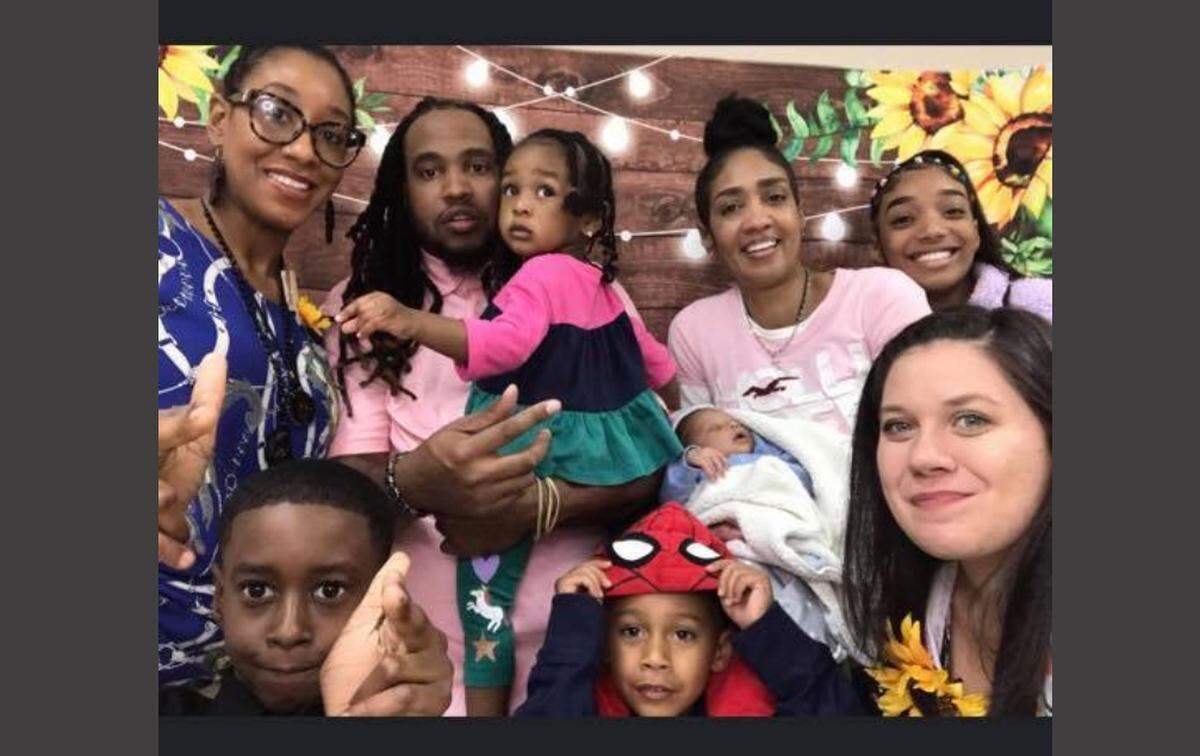
When she’s not thinking, the 56-year-old Mount Holly grandmother, who was convicted in 2018 of a series of financial crimes, says she’s praying.
“I’m asking God not to let me die here,” she said.
Flemings is one of estimated 1,500 inmates being detained Friday at North Carolina’s largest county detention facility.
More than a third, Flemings among them, have been sent there by the federal courts to await upcoming hearings, trials or sentencing.
But Flemings stands apart. She may be the only inmate at the jail wearing a colostomy bag.
For almost a decade, according to court filings in her case, Flemings has suffered from acute Crohn’s Disease, a debilitating condition in which her auto-immune system attacks her intestinal track.
“She essentially has no (normal) immune system,” says Catherine Sevcenko, a lawyer with a Washington, D.C.-based legal advocacy group that has gotten involved in Flemings’ case.
Medical experts say Flemings’ condition makes her dangerously susceptible to contracting and succumbing to COVID-19, especially in the restricted confines of the jail.
It also puts her at the center of an urgent legal fight in North Carolina and beyond over whether keeping medically vulnerable inmates confined in the face of an approaching pandemic violates the constitutional ban on cruel and unusual punishment while also placing the public at greater risk.
Nationwide, multiple states have moved to “decarcerate” their jails and prisons as the threat of mass illness grows.
Local courts, with varying degrees of urgency, are struggling to adapt.
In Mecklenburg County, a consortium of judges, prosecutors and defense attorneys has culled through cases, searching for low-level offenders, the elderly or other vulnerable segments of the inmate population who can be released.
Chief District Judge Elizabeth Trosch also issued an order this week temporarily suspending arrests for failure to appear in court or pay fines, among other misdemeanor categories.
Combined, the steps appear to be making a difference. Despite the inward tide of daily arrests, the inmate population has dropped by about 150, or 10 percent, since March 9, according to the jail records.
Nonetheless, since March 9 the jail population has dropped by about 150.
The courts of the federal Western District of North Carolina say they are dealing with a steady stream of motions from attorneys asking that defendants or inmates — some with health problems, some without — be temporarily removed from custody until the pandemic recedes.
“Everyone knows the storm is coming,” Charlotte attorney Noell Tin, who represents a federal inmate in one of the cases, told the Observer.
“The fear is that the jail will become an incubator that spreads coronavirus to inmates and beyond.”
Through Thursday, about 10 cases seeking coronavirus relief have come before the local federal courts. All have been opposed by the office of U.S. Attorney Andrew Murray of Charlotte and denied by the judges who heard them.
In Tin’s case, Dontay Armstrong of Charlotte, an inmate with “chronic and serious” health problems now in jail custody, has asked the courts to temporarily place him on house arrest.
In a court filing late Wednesday afternoon, Murray’s office announced its opposition to Armstrong’s temporary release, making it less likely that a judge will grant it.
In another example, defendant Bradley Beauchamp, who court documents say suffers from asthma and requires a breathing device to sleep, asked to be released from the medical unit at the county jail to await his sentencing at home.
Beauchamp, according to court records, was convicted of a series of nonviolent, financial crimes linked to the gang, United Blood Nation.
“Whatever minor threat may be posed by release is outweighed by the emerging wave of death and injury predicted in the pandemic,” his attorney, Rick Winiker, wrote in a motion last week.
On the same day of Winiker’s filing, presiding U.S. District Judge Frank Whitney of Charlotte denied it without comment. Winiker has appealed Whitney’s ruling to the Fourth Circuit Court of Appeals.
As for Flemings, she began her 57-month sentence for bank and loan fraud on March 16 when she was booked into the Mecklenburg jail. The federal Bureau of Prisons has assigned her to a minimum-security facility in West Virginia to serve out her punishment. Because of the pandemic, it’s unclear when she’ll get there.
For now Flemings waits in the jail. She said Thursday that she’s worried she’s been handed a death sentence.
‘Case by case’
As the numbers of COVID-19 cases continue to increase in Western North Carolina, federal judges in Charlotte and Asheville use Skype to meet with prosecutors from the U.S. Attorney’s Office, federal public defenders and other court officials to discuss the pandemic-related motions and related issues that have arisen during the week.
“They are considering these motions on a case-by-case basis,” said Frank Johns, the federal clerk of court in Charlotte.
“In federal court the charges are quite serious, and the courts are balancing the health needs of inmates against the general security of the public as they try to continue with the administration of justice to the best of our ability. These are unusual times for everybody, as we all know.”
A spokeswoman for Murray said Thursday that although his prosecutors have opposed all coronavirus relief motions up to now, Murray has not enacted a blanket policy.
“All motions filed have been reviewed, and will continue to be reviewed, on a case-by-case basis,” the spokeswoman said. “Ultimately, it’s up to a judge to decide.”
Flemings was convicted in October 2018 for a series of financial crimes tied to her role in a three-year, $1 million fraudulent loan scheme with two male co-conspirators.
Prosecutors said Flemings and her partners submitted dozens of fraudulent car and personal loan applications in their own names and others, including a dead person and an elderly disabled veteran.
U.S. District Judge Bob Conrad placed her on house arrest as she awaited her sentencing, which was delayed for three months after Flemings underwent emergency Crohn’s-related surgery in November to remove her colon.
On Jan. 30, Flemings was sentenced to just under five years in prison, with Conrad noting her “many acts of fraudulent conduct” and the need to protect the public from future crimes. Flemings was placed back on house arrest and ordered to report to federal custody on March 16.
Three days before her report date, her new attorney, Jeremy Smith of Indian Trail, filed a motion to delay Flemings’ sentence for three months so she could start a new treatment for her Crohn’s Disease, which was not responding to her current medication, Smith said.
Smith also noted that Flemings and others “with underlying serious medical conditions are much more likely to suffer complications or even death” from COVID-19.
At the time of Smith’s filing, there were no reported cases of the illness in the U.S. Bureau of Prisons. As of Thursday, according to the prison website, there were six.
A day after the filing, Conrad rejected it. He noted the seriousness of Flemings’ crimes, and said she had “adequate opportunity to seek medical treatment for a chronic problem with which she has suffered since 2011.”
He added: “… (H)er concerns about coronavirus do not warrant a delay.”
Smith filed an immediate appeal to to the Fourth Circuit. Again, the office of U.S. Attorney Andrew Murray opposed it — arguing that Flemings was a possible flight risk and safety threat, even though she had been on house arrest for years without incident and had been given the option of self-reporting to prison.
While “the United States appreciates the dangers of COVID-19,” Assistant U.S. Attorney Amy Ray concluded in her filing, those concerns did not permit the appeals court to grant Flemings’ temporary release.
Without comment, the three-judge panel considering the case agreed.
‘First to go’
Catherine Sevcenko, senior counsel with the National Council for Incarcerated & Formerly Incarcerated Women and Girls, which assisted in Flemings’ appeal, said the fact that she and other inmates with health problems remain confined signifies that the courts are lagging behind the pandemic.
“These motions are coming. … But as far as I know they are not being granted,” she said. “Particularly in the federal system we have not seen any movement of a broad understanding that the coronavirus is particularly dangerous in prisons.”
She called for a mass release of vulnerable prison and jail inmates, as well as those accused of misdemeanors.
“All of these people were sentenced to serve a number of years. None of them received a death sentence,” Sevcenko said. “In prisons, you can’t clean. You can’t disinfect. You can’t socially isolate. People are going to die.”
On Thursday, Flemings said she was still struggling to get the go-ahead from her doctor and the jail to get her medications. For now, she says, she’s relying on an occasional dose for pain that she described as a “12” on a 1-to-10 scale.
Under the jail’s no-visitation order to guard against the spread of the virus, Flemings is cut off from her family. Her son, Darryl Flemings, also a Crohn’s sufferer, said he has made repeated calls in an effort to get his mother her medications and bring attention to her case.
“If she is hurting, she wouldn’t tell me,” he said Thursday. “She’s the strongest person I know.”
Throughout the day in the jail, Flemings said, she hears inmates and guards coughing. A recent shortage of toilet paper (a shortage that the sheriff’s office denies) made safely cleaning herself and her colostomy bag next to impossible, she said.
“If someone brings something into this pod, everybody is going to get it, and I’ll be the first to go,” she said.
Meanwhile, Flemings said, she continues to pray.
“I know God is listening. He knows,” she said. “I don’t want to be strong anymore. When I need help, there is no one here to hold my hand.”
Ames Alexander contributed.
This story was originally published March 27, 2020 at 6:00 AM.