‘Producing in your own backyard.’ Companies in NC race to make masks for coronavirus
In the last economic crisis, manufacturing was Morganton’s downfall. In the current one, it’s a lifeline.
The longtime industries of this city in the foothills of the Blue Ridge Mountains, textiles and furniture, shed thousands of jobs in the last recession, and unemployment shot up to 15%.
Still, manufacturing survived. Some local mills and furniture makers finally started to grow. And last week, a furniture factory and sewing facilities shifted production to make masks to help limit the coronavirus outbreak.
As a manufacturing powerhouse of the South, North Carolina plays a key role in the push to produce needed medical supplies to combat the coronavirus.
The consortium of Morganton area businesses, led by the Carolina Textile District manufacturing network, is using reclaimed furniture fabric to make N95 mask covers, which they say will help extend the life of the masks. Because of the limited supply of masks, healthcare workers often wear them longer than recommended.
Other manufacturing companies based in North Carolina or with operations in the state also have accelerated or shifted production of masks and other supplies to help address the outbreak. President Donald Trump has praised two of them, Honeywell and Owens & Minor, in his daily press conferences.
Honeywell, a Charlotte-based Fortune 100 firm, expanded production in Rhode Island and Arizona facilities that will allow it to make over 20 million N95 masks per month, the company has said.
“Our soldiers of today are the doctors and nurses,” said Alan Bagliore, CEO of New York-based Strong Manufacturers, which has a medical mask production facility in Pineville.
“When you see them going through what they’re going through and knowing they don’t have adequate supplies... your heart breaks for those people.”
Large players
In a Rose Garden briefing Monday, Trump brought Honeywell CEO Darius Adamczyk to the stage. There, Adamczyk announced the company would hire 500 people to make N95 masks in Arizona. That’s in addition to a Rhode Island facility the company is setting up, where it is hiring another 500 people.
In total, Adamczyk said Honeywell, which moved its headquarters to Charlotte last year, will have five times the production capability for the masks than it does today.
Federal legislation signed in March allows companies that make N95 masks for industrial uses, like Honeywell, to sell them to hospitals without legal liability.

“We’re an industrial technology company,” Adamczyk said during Monday’s briefing. “And one of the businesses that we’re in: We protect the industrial worker. But what we’re doing today is we’re re-purposing a lot of that equipment to serve the healthcare worker.”
It’s not the first time the White House has touted Honeywell’s efforts, even as the company has made internal cutbacks amid the economic impacts of the virus. Workers in some divisions are taking unpaid leave, while others have shorter hours or staggered work schedules.
When the virus started to hit China and other countries, Honeywell doubled its mask production capacity, said Will Lange, president of the Personal Protective Equipment division of Honeywell.
“All of our factories are running full out to meet the demand,” he said, “and there’s still just not enough masks going into the market right now.”
Honeywell’s expanded facilities in the U.S. are part of a contract it signed with the federal government, through which it will sell masks to the U.S. Department of Health and Human Services. The government will then distribute the masks to the hardest hit areas, Lange said.
The Rhode Island site will be up and running in April, Lange said, and the Arizona plant will be ready in May. The company also produces other personal protective equipment, such as gloves and other masks, and has boosted production for the surging demand, he said.
Virginia-based Owens & Minor, a healthcare logistics company, is ramping up manufacturing, including at a plant in Lexington that specializes in a fabric used in surgical gowns, N95 respirators and face masks, a spokeswoman said in an email.
The Lexington facility, which employs 400 people in Davidson County, is running “24/7 at full capacity,” and also makes 52,000 isolation gowns per day, the spokeswoman said.
During a press conference with Trump held Sunday, Owens & Minor’s CEO, Edward Pesicka, said the company is manufacturing an additional 40 million to 50 million masks per month for the U.S. healthcare system.
Production in NC’s backyard
Machines whir in Morganton as they cut fabric into pieces. Workers sew the seams of mask covers, which soon will be worn by healthcare workers.
It’s an operation that the Carolina Textile District put together in a matter of days, along with furniture maker EJ Victor and local sewing facilities.
Less than two weeks later, there are more than 100 companies with cut and sew capabilities that have signed on to help make mask covers and hospital gowns as soon as they receive raw materials, said Sara Chester. She is director of the Carolina Textile District and co-executive director of its umbrella organization, The Industrial Commons.
A shipment the group ordered that is scheduled to arrive this week has enough fabric for around 300,000 mask covers, Chester said, and 20,000 hospital gowns. If they can obtain the raw materials, they likely would have a production capability of 500,000 mask covers per week, she said.
While N95 masks are difficult to manufacture, Chester said the group decided to make covers for the masks after meeting with local doctors. They’ve already produced 2,000 covers, which can also be washed and re-used.
Chester is no stranger to working local supply chains.
Her organization’s mission is to retain wealth locally through manufacturing, after a reliance on large, multinational companies for jobs hit Morganton particularly hard during the last recession.
As other manufacturers face shortages and disruptions in supply from China and other countries, that local focus has been critical to the Carolina Textile District’s success.
“It speaks to the real need for everybody to be thinking more about producing in your own backyard,” she said. “These hospitals have a need, and these manufacturer can meet it, and it’s going to help keep manufacturing workers employed ... It’s just a microcosm of how a locally-rooted economy can change a community.”
Supply shortages
Bagliore’s company, Strong Manufacturers, is one of those companies dealing with the scarcity of materials.
The firm’s Pineville facility is able to produce 9 million masks per month, he said, although they are not N95s. While the N95 provides the best protection against the coronavirus, Bagliore said the goal is to provide the masks to consumers, since the government is focused on supplying N95 masks to healthcare workers first.
Bagliore decided to move his production back to the United States from China, and brought the machines to the Pineville facility about four months ago. But while the machines are ready to go, the shipment of materials needed to make the masks is stuck in Wuhan, China, he said.
He said they’ve found some supplies domestically to run the machines on a limited basis, but they need more materials to reach their full capacity.
The crisis has exemplified the country’s over-reliance on manufacturing abroad, Bagliore said.
“If we leave ourselves totally exposed by having sole dependence on somebody else, whether it be China or Vietnam or South America, what help are we doing (for) ourselves in times of need?” he said.
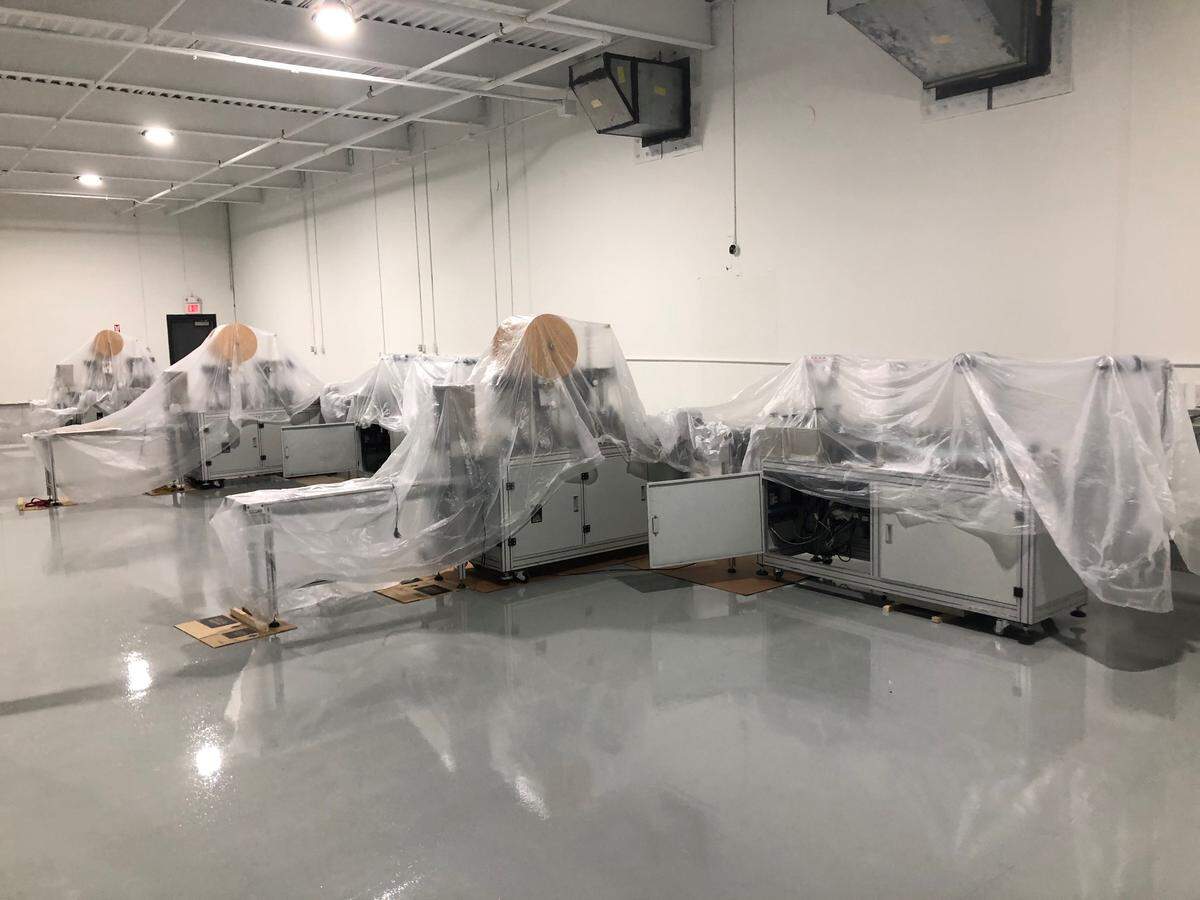
Bagliore hopes to set up a complex in the Charlotte area that would produce the masks, gowns, shoe covers and eventually, N95s. If he can receive government funding, he said he would build an even larger facility.
Large companies like Ford and General Motors have announced they’ll make much-needed ventilators. But Bagliore said it’s small companies like his that can help prepare the country for the next pandemic.
“It’s very similar to World War II, when car manufacturers started making planes and jeeps,” he said. “Will they continue to do it? No, they’ll shut down their lines when this crisis is over. ...
‘The question is, what else will we need when the next one hits?”
This story was originally published April 1, 2020 at 4:22 PM.