
As NC coronavirus cases top 1,500, Cooper prevents disconnection of household utilities
Cases of coronavirus topped 1,500 in North Carolina on Tuesday, as residents hunkered down under statewide stay-at-home restrictions and Gov. Roy Cooper signed an executive order prohibiting utility companies from shutting off service to people who are unable to pay.
“Today’s action orders that electric, gas, water and wastewater services can’t be shut off for the next 60 days,” Cooper said in an afternoon news conference, adding that telecom companies that provide phone, cable and internet services are “strongly urged to follow these same rules.”
The order also encourages banks not to charge customers for overdraft fees, late fees and other penalties for the next 60 days, while landlords are “strongly encouraged to follow the spirit of” an order previously enacted by Chief Justice Cheri Beasley, which delays evictions already in the court system.
The governor also said that he has activated additional National Guard personnel for state active duty, which will bring the total by the weekend to 180. Those guard members will help move supplies and conduct engineering assessments in the event that the state needs to start building alternative hospital facilities.
The state continues to push for additional medical supplies and protective gear for healthcare workers, Cooper said, noting that to date, North Carolina has received just over 17% of what it has requested from the Strategic National Supply.
While waiting for those requests to be filled, Cooper said, the state is searching for ways to get medical supplies from other sources.
NC coronavirus cases continue to rise
Meanwhile, reported cases in the state kept climbing. The state Department of Health and Human Services reported 1,498 cases, an increase of nearly 200 cases over Monday’s total.
The News & Observer is keeping a real-time count of coronavirus cases announced by counties updated throughout the day. The N&O reports the number of cases at 1,536.
Two fatalities were reported in the Triad area: one in Forsyth County and another in Guilford County. The Guilford patient had underlying medical conditions.
Cherokee County reported its first death, a person in their late 80s.
North Carolina’s death toll is now at 10.
New figures from DHHS showed 23,106 tests for the virus and 157 receiving hospital care.
At least one case of coronavirus has been reported in 82 of the state’s 100 counties, as of March 31. DHHS Secretary Mandy Cohen said this week that the state expects there to be a confirmed case in every county in the coming days, or at least by the end of the week.
Wake County figures for COVID-19 were at 193, and Durham County was at 124.
Among those in Durham are multiple cases that have been linked to a March 22 event at Millennium Hotel Durham. People who attended the event hosted by Faith Assembly and who have a fever, cough or shortness of breath, should call the Durham County Department of Public Health at 919-635-8150.
Wake County also circulated a phone number for public transit customers Monday evening after a GoTriangle bus driver, who drove a bus for three days while sick, tested positive for COVID-19.
The driver operated the bus from March 18 to March 20, while experiencing coronavirus symptoms, working two shifts from 5:25 a.m. to 9:35 a.m. and 3:05 p.m. to 7 p.m. The driver worked on Route 300, traveling between the Regional Transit Center in Durham, the Cary train station and the GoRaleigh station at Moore Square in downtown Raleigh; and Route 305, traveling between Apex at Lake Pine Drive and Waverly Place and the GoRaleigh station.
Passengers who rode those routes during the listed times and are experiencing symptoms should call the GoTriangle information line at 919-857-9375.
The state stays home
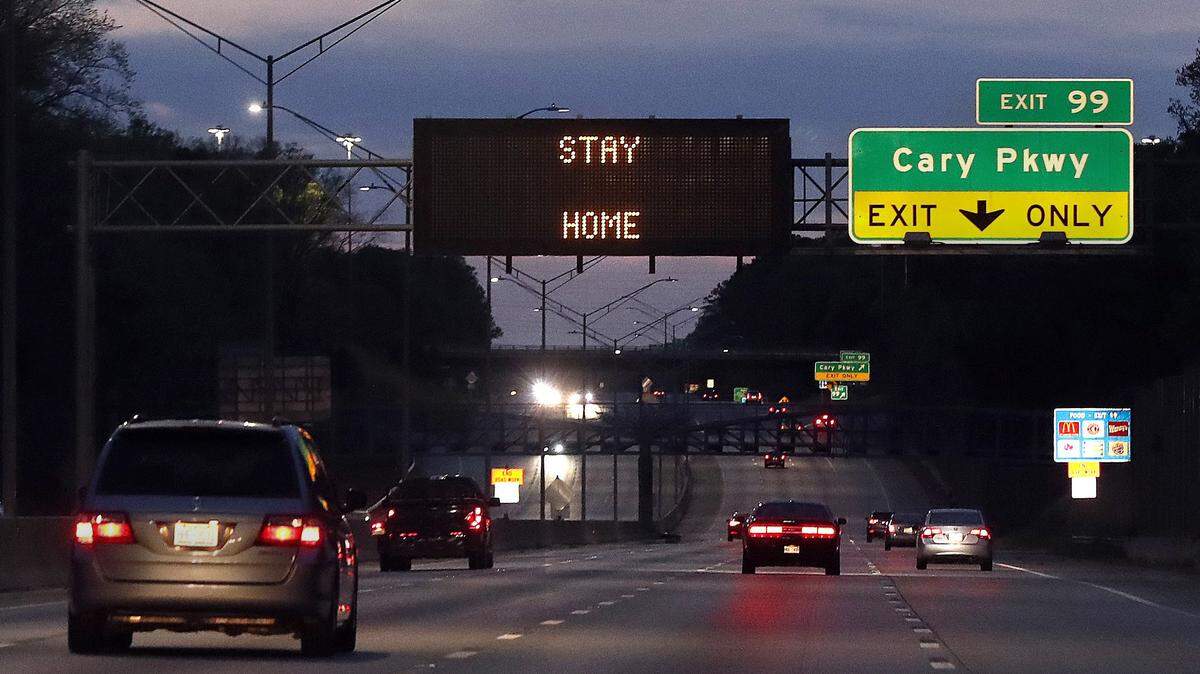
Gov. Roy Cooper’s statewide stay-at-home order officially went into effect at 5 p.m. on Monday.
For counties such as Wake, Durham and Mecklenburg, which are already under stay-at-home orders, Monday’s statewide order changed little. Businesses deemed essential remained open, and people can still go out to get food and groceries, receive health care and be outside as long as they maintain at least 6 feet of social distancing.
To make sure families are getting enough to eating during the shutdown — during which North Carolina children are not getting meals at school — DHHS said Tuesday it will increase benefits to families receiving Food and Nutrition Services for both March and April.
FNS, also known as food stamps, is a federal program aimed at helping low-income families keep an adequate diet.
Local bakeries are also doing their part to help keep families fed by offering fresh loaves of bread to help fill gaps left by barren grocery shelves.
Neomonde Bakery, Union Special Bread and Yellow Dog in Raleigh, as well as Strong Arm in Durham, are all working to make sure people have access to bread.
Neomonde is selling a few of it breads at below wholesale prices, while Union Special is letting customers buy loaves that are sent to Interfaith Food Shuttle and the Food Bank of Central and Eastern North Carolina, to be distributed to families in need. So far, Union Special customers have donated more than 700 loaves of bread and several thousand rolls.
Yellow Dog said on Instagram that their bakery is making weekly bread deliveries to the Parkview Manor senior home for the next month. Strong Arm, which delivers throughout Durham, will donate a squishy loaf of white bread to the Area Churches in Ministry for every loaf customers donate themselves.
Schools and the arts feel impact
Two weeks after an order from Gov. Cooper shut down North Carolina public schools to help stop the spread of coronavirus, the Wake County system is running into delays in getting computers to students who need them.
Hoping to salvage some of the school year through distance learning, Wake leaders committed to getting computers and hotspot devices to students who don’t have them at home, but they are still trying to identify the families in need. They hope to begin widespread distribution of computers next week.
And the arts community took another hit Tuesday, when the nationally renowned Durham-based American Dance Festival (ADF) announced the cancellation of its entire 2020 season.
Staff writer Drew Jackson contributed to this report.
This story was originally published March 31, 2020 at 9:38 AM with the headline "As NC coronavirus cases top 1,500, Cooper prevents disconnection of household utilities."