
NC Gov. Roy Cooper extends Phase Two of coronavirus restrictions into September
North Carolina Gov. Roy Cooper announced Wednesday that Phase Two of the state’s reopening plan will be extended until at least Sept. 11, keeping coronavirus restrictions in place through the Labor Day weekend.
Cooper said health experts need that additional five weeks to look at trends as schools — universities and K-12 — reopen over the next few weeks.
His Wednesday announcement comes as Dr. Mandy Cohen, secretary of the state’s Department of Heath and Human Services, said the four major metrics the state uses to analyze the virus’ spread show stabilization. She said the number of cases is still too high and she wants to maintain that stability.
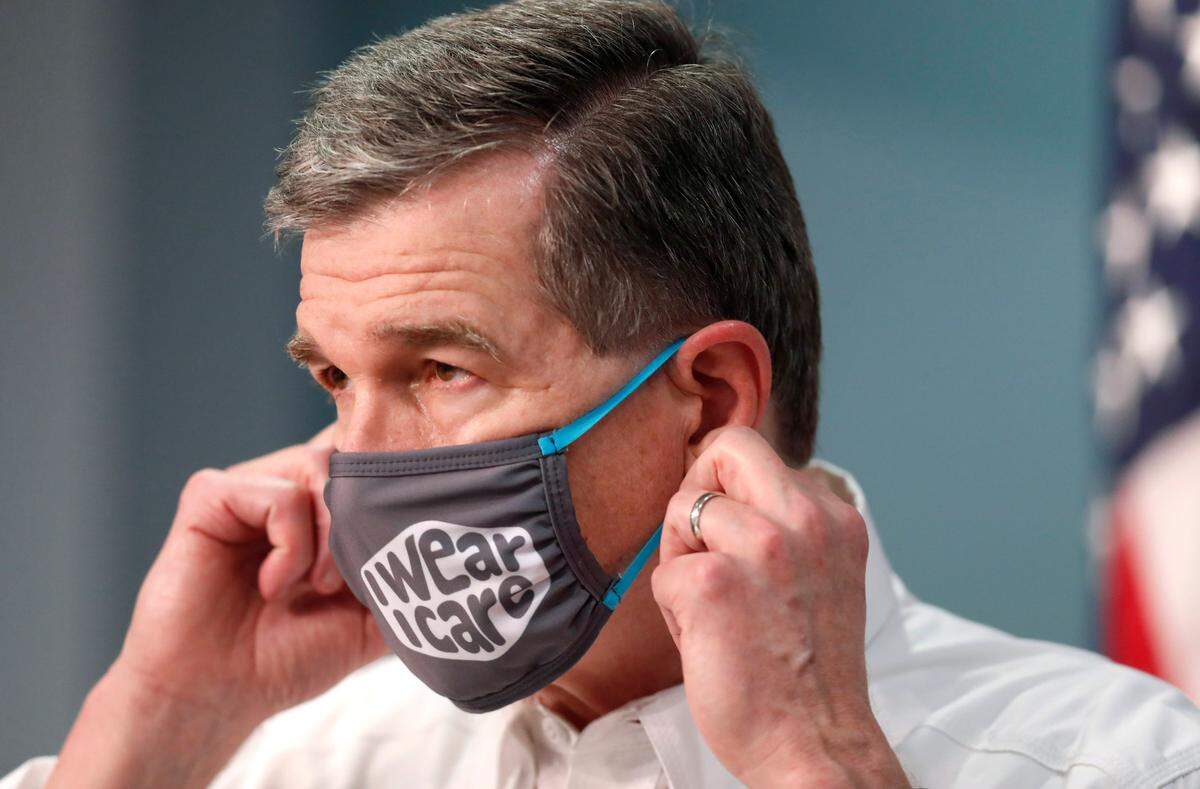
“We know what works, we’re going to continue to stick with it,” Cohen told reporters at a news briefing Wednesday. “I know it takes a lot of vigilance,” she said, to follow wearing a mask, keeping social distancing and washing hands.
“As I said last week,” Cooper said during the press conference, “stable is good, but decreasing is better. And while we are seeing stabilization of our numbers, that doesn’t mean we can let up. You only have to look at hospitals in other states that have been overwhelmed when reopening occurred too fast.”
This is the third time Cooper has kept restrictions that limit the size of gatherings indoors and outdoors in retail stores, restaurants and other businesses. The restrictions also keep bars, gyms, entertainment venues and some other establishments closed in the pandemic.
The state has been in Phase Two of COVID-19 restrictions on business and leisure activity since May 22. Restaurant dining rooms are allowed to have 50% occupancy, as are personal care businesses such as barbershops, salons and tattoo parlors.
Cooper did say a move to Phase Three isn’t dependent upon an effective vaccine being available.
“We would hope that we could move along in our phases, even before a vaccine is in effect,” Cooper said.
Students prepare to begin school
Cooper’s decision comes as students in public schools prepare to begin school later this month, many with only virtual classes.
“The opening of schools and colleges is an important one — education must go on, even in a pandemic,” Cooper said. “In-person learning has benefits. But it means challenges for our state, especially as our higher education campuses draw students from around the country and the world.
“With the opening of schools, people will move around more and so will the virus. Other states that lifted restrictions quickly have had to go backward as their hospital capacity ran dangerously low and their cases jumped higher. We won’t make that mistake in North Carolina.”
Cooper has delayed further loosening restrictions, pointing to metrics such as raising coronavirus case rates and increased COVID-19 hospitalizations.
Reported average daily case growth has declined in the last week. But Cooper last week said the rate was still too high when he mandated a statewide ban on alcohol sales after 11 p.m. at restaurants and other businesses with on-site consumption in an effort to cut the growth in cases.
This week, the state DHHS reported more than 2,000 COVID-19 deaths in the state since the pandemic reached North Carolina in early March.
“Every single one of them represents a family in mourning and a community grieving their loss,” Cooper said Wednesday. “They are more than numbers on a chart – they are North Carolinians who are missed dearly.”
As Cohen showed during Wednesday’s news conference, the state’s trends in people going to emergency departments with coronavirus-like symptoms, lab-confirmed cases, percent of tests coming up positive and hospitalizations have stabilized.
While that’s an improvement over the increases in those areas seen since Memorial Day, a decrease is needed.
“Our cases are still too high,” Cohen said. “It is still straining our resources whether they be testing resources, hospitalizations or contact tracing. We want to see a low level of new cases spreading across the state here.”
Republicans have said reopening is too slow
Republicans in the legislature have criticized the reopening as too slow. Cooper vetoed bills earlier this summer that would have reopened bars, gyms, bowling alleys, amusement parks and other venues.
Since then, Agriculture Commissioner Steve Troxler canceled the State Fair for the first time since World War II because of the pandemic, and the Orange County health director asked UNC-Chapel Hill to use only online instruction for at least the first five weeks of the semester, The News & Observer reported.
Lt. Gov. Dan Forest, the Republican running against Cooper this year, sued Cooper over the pandemic emergency orders, arguing Cooper should have had agreement from a majority of the Council of State before issuing all of them.
A judge heard the case in Wake County Superior Court on Tuesday. Judge Jim Gale is expected to issue his ruling soon.
Cooper maintains the North Carolina Emergency Management Act allows him to issue several of the executive orders without Council of State concurrence. The Council of State also includes the attorney general, labor commissioner and other statewide elected offices.
This story was originally published August 5, 2020 at 4:10 PM with the headline "NC Gov. Roy Cooper extends Phase Two of coronavirus restrictions into September."