
NC legislature sends governor a $1 billion COVID-19 relief bill with checks for parents
The North Carolina state legislature passed a nearly $1 billion spending bill on Thursday that would use the rest of the state’s share of federal COVID-19 relief money.
The Coronavirus Relief Act 3.0 would give all North Carolina households with parents of children 17 and younger a $335 stimulus check to help offset costs associated with remote learning at schools. The proposal would spend about $440 million of the $903 million of federal CARES Act money that North Carolina must allocate by Dec. 30.
The Senate passed the bill quickly on the first day of a brief session Wednesday. The Senate vote was 44-5, with five Democrats voting against it. The House voted for it Thursday, 104-10, sending it to the governor.
Senate leader Phil Berger, an Eden Republican, said Wednesday that parents are at “their wit’s end.” The checks, called “extra credit grants,” would be given to parents who filed taxes. For those who didn’t file, they would be able to apply for the grant, which is a flat amount regardless of how many children are in the household.
Checks would be issued by Dec. 15.
Berger said he knows the $335 amount isn’t enough to pay off a mortgage but could pay for a babysitter and a dinner out for parents along with other costs.
“All I know is they need it; they deserve it,” he said.
Part of the proposed bill also includes raising income-eligibility caps for opportunity scholarships, which are vouchers for private school. Republican leaders have said private schools opening for all-in-person learning this school year are an important school choice for parents. The state reopened in Plan B, which allows local school systems to decide how to operate with remote or a mix of remote and in-person learning with restrictions.
Democratic Gov. Roy Cooper’s proposed budget calls for eliminating the remaining general budget funds for opportunity scholarships.
The North Carolina Association of Educators and others gathered outside the Legislative Building on Wednesday in support of priorities including student food and housing programs, holding public school funding harmless for COVID-19-related enrollment declines and funding personal protective equipment for students and educators.
The COVID-19 relief spending includes $72 million funding for PPE, $10 million for internet connectivity and $6 million for food banks.
House members debated the bill Thursday morning, with Republicans touting what it does to help North Carolinians.
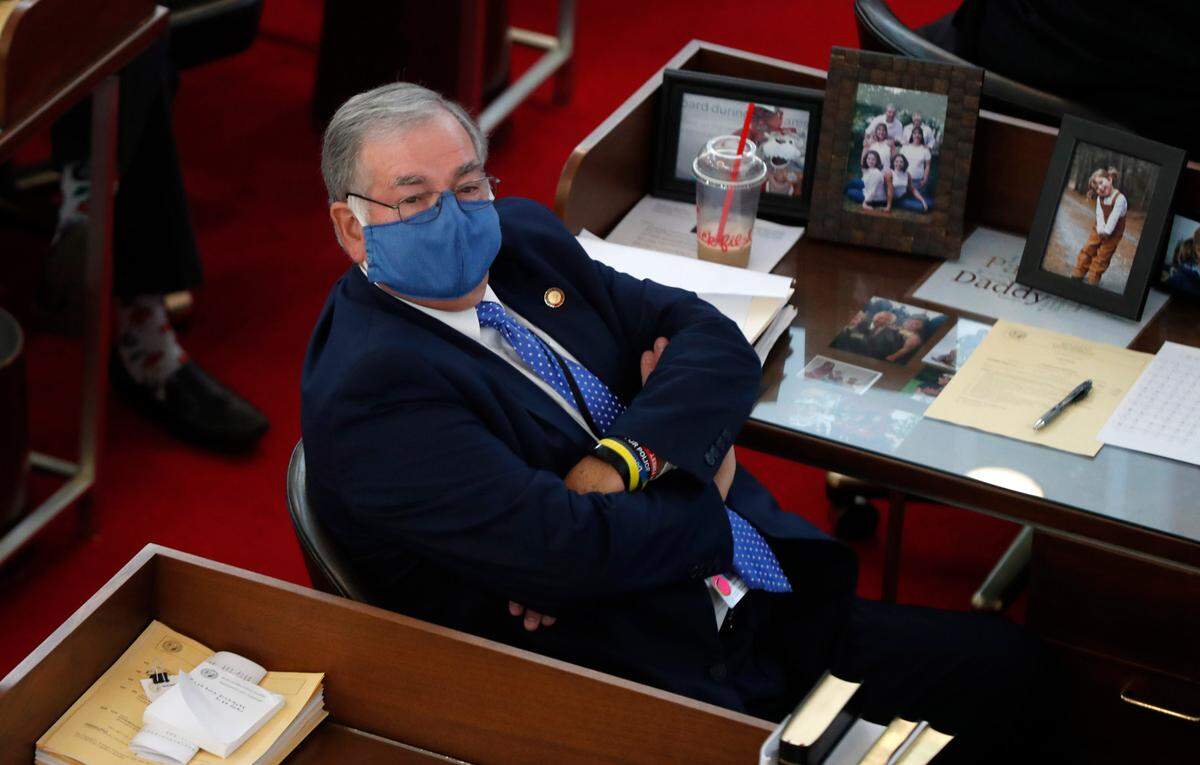
“Can you find something in this [bill] that you don’t like? Well sure,” said Rep. Donny Lambeth, a Forsyth County Republican.
“We do have more work to do. I hope Congress will find more ways to help North Carolina in the months ahead,” Lambeth said.
The state must allocate the CARES Act money by Dec. 30. Lawmakers were hoping to get more flexibility on spending from Congress before the session, but did not. So they went ahead to spend the $903 million during this brief session, which was scheduled primarily to designate that money.
Lawmakers of both parties were glad the bill funded some broadband internet access expansion, but Democrats said they wish it was more.
Democrats still want Medicaid expansion
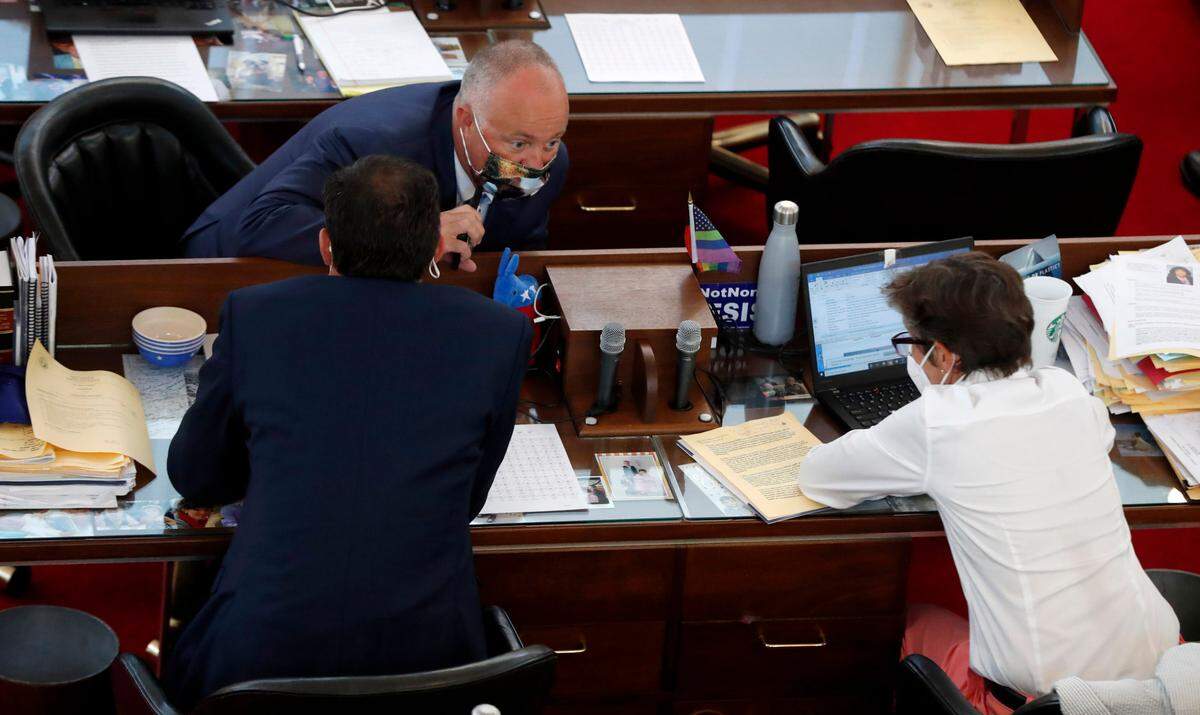
House Democratic Leader Darren Jackson of Wake County lamented the lack of collaboration like the bipartisan process in the spring, when the legislature passed the first round of COVID-19 relief.
“A few people got together in a back room or online in their basement,” Jackson said on the House floor. He said there was no legislative process.
“I will vote no today,” Jackson said. “Not because you chose pork over helping more businesses or teachers, but unanimous votes tell the public something is great or noncontroversial.”
Rep. Jason Saine, a Lincolnton Republican, said the bill included input from the House’s bipartisan working groups ahead of the session.
Rep. Marcia Morey, a Durham Democrat, said the bill could have helped more people with utilities and evictions.
“My problem is we’re just not doing enough for those who we can be helping. And of course, our side of the aisle, Medicaid expansion during a pandemic, to me is a no brainer,” she said. Morey said that people have lost their health insurance along with their jobs.
On the Senate floor Wednesday, Sen. Jeff Jackson, a Charlotte Democrat, also advocated for Medicaid expansion. Expansion has been one of North Carolina Democrats and Cooper’s key issues for the past two years and was at the center of the 2019 state budget battle.
Lambeth, the House Republican who has previously suggested a Medicaid expansion compromise that includes a work requirement, said that the COVID-19 relief bill wasn’t a Medicaid expansion discussion but that they could discuss it again.
“We need to get this money out, quite frankly,” he said.
Cooper spokesperson Dory MacMillan said in an emailed statement Thursday that Cooper “is pleased that legislators followed his recommendations to maintain funding for school enrollment and invested in important areas like broadband, but they could have done much more to help North Carolinians in need.”
“Most important, the bill should have expanded Medicaid to give 600,000 working people health care and done more for struggling small businesses and unemployed people as the Governor’s budget recommended. Legislators are leaving funds on the table and people in the lurch in a time of great crisis. The Governor will continue to review the bill,” MacMillan said.
This story was originally published September 3, 2020 at 11:57 AM with the headline "NC legislature sends governor a $1 billion COVID-19 relief bill with checks for parents."
.jpg)