
Inside a quarantine hotel: Black mold, armed guards and TV dinners
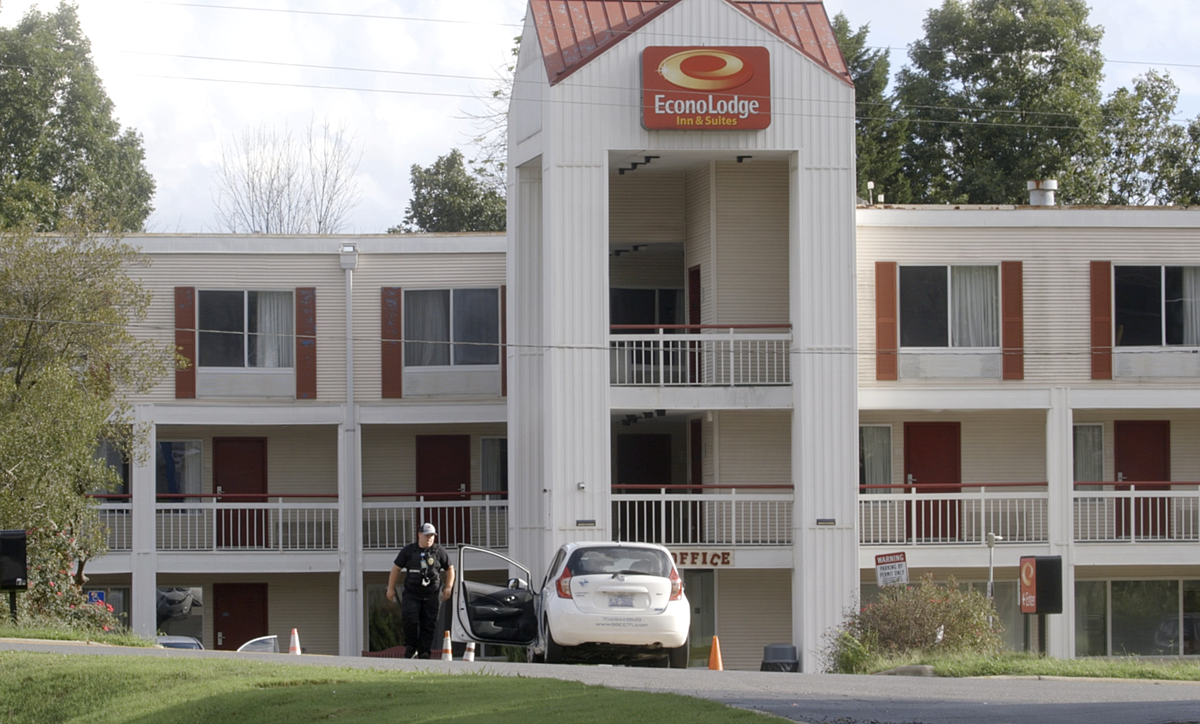
It’s easy to see something’s changed at the Econo Lodge near the Charlotte Douglas International Airport.
Just off Interstate 85, not far from the Waffle House, the parking lot is blocked off by cones and most of the rooms are empty.
Armed guards patrol 24-7, according to packets given to guests during check-in.
But the guests aren’t checking in for vacations or business trips.
The people inside have either tested positive for COVID-19 or are waiting for test results. They come voluntarily but don’t have anywhere else to safely quarantine — most are coming from homeless shelters or multi-family homes.
County health officials have leased the building as a quarantine hotel, taking care of guests there for the past six months, with the help of local health care workers. Largely shut off to the outside world, very little has been known about how many people are inside the hotel or what conditions are like.
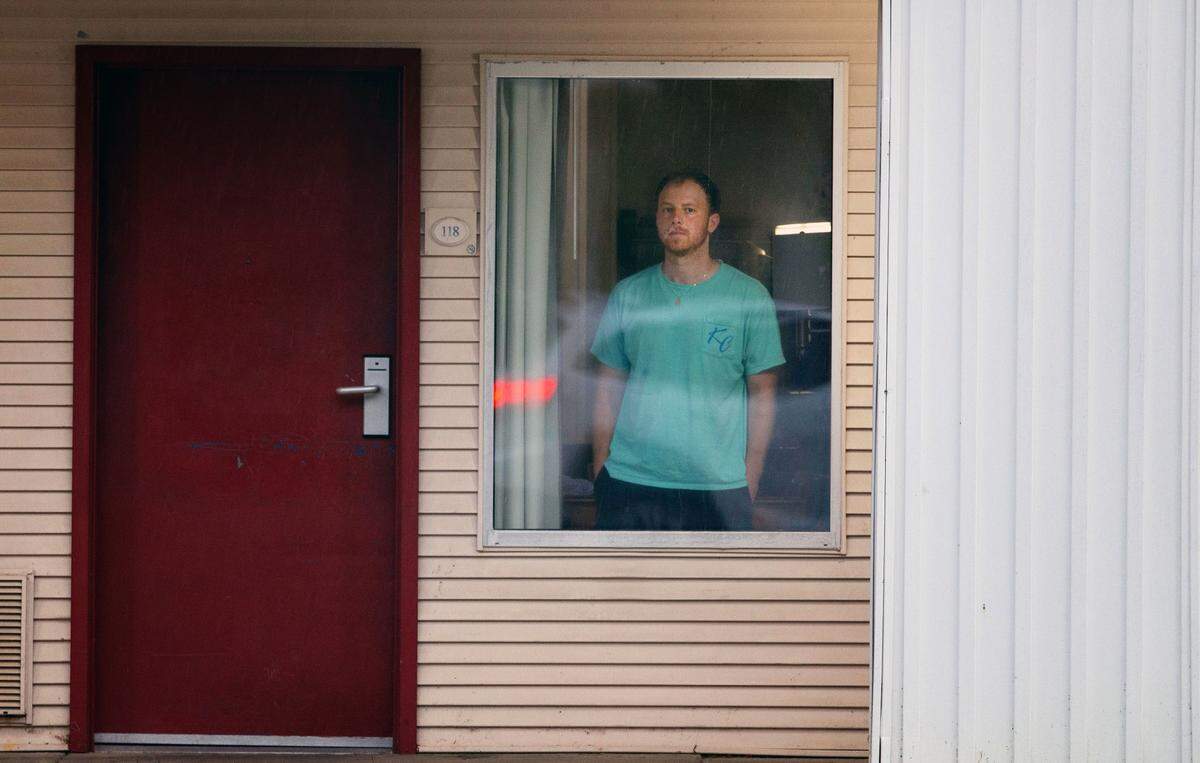
The Charlotte Observer conducted hours of interviews over several weeks with one of the quarantine hotel’s residents, who offers an inside look at the experience. Aaron Hall, a 32-year-old from Kansas City, stayed there for 10 days and nine nights in August.
His arrival coincided with a welcomed improvement in local coronavirus trends during the fifth month of the virus’ spread in Charlotte. Hall, though, still had trouble finding an accessible place to get tested for COVID-19 before checking in to the hotel.
He says his stay was plagued by black mold on the walls of his hotel room, food he couldn’t eat and inconsistent information about when he’d be released from isolation.
Still, Hall — who was stranded 960 miles away from home — says he was just grateful to have somewhere to stay.
“I didn’t have anywhere else to go,” Hall told the Observer after his first night in the hotel.
“But it is kind of strange – it’s a very strange situation.”
Chicago to Charlotte
Hall flew in to Charlotte from Chicago in early August. He was hoping to purchase a car in Charlotte (for much of the pandemic, he’s been eyeing a Volvo 240). But after a few days, he wondered if the illness he thought was a sinus infection or congestion might be more serious.
When his congestion worsened and he lost his senses of smell and taste — a classic COVID-19 symptom — he decided to find a place to be tested.
“That whole day was like the worst day of my life,” Hall recalled.
Hall took an Uber from his Airbnb in NoDa to a testing location near Northlake Mall. Once he got there, though, he found out a test would cost $150. He hung out in the parking lot near that testing center for a few hours, debating where to go next. He says he didn’t want to leave unless he found a new place to get tested — preferably for free.
Finally, he took a bus back to the city. He didn’t have a bus pass and didn’t have any cash, but the bus driver let him take a ride anyway.
“It was like the longest bus ride back to the city — and that was the scariest part,” Hall said.
“Because there were some older gentlemen riding the bus. Some of them didn’t wear their mask at times. And I was just huddled in the corner trying to breathe out the window and just terrified that I was going to infect somebody.”
Hall finally got a COVID-19 test at a StarMed location in Charlotte. But the results, he was told, could take a few days.
He returned to the NoDa Airbnb.
That night, he grew more concerned he might be contagious. His rental ended the next day. He couldn’t afford to pay for another Airbnb or hotel room and he began worrying about how he’d safely quarantine so far away from home.
Check-in at the quarantine hotel
The county health department’s lease at the quarantine hotel runs at least through Sept. 30. In the first five-and-a-half months of operation, nearly 350 people have stayed at the hotel and the county has spent just over $1 million on the lease as of Sept. 11, officials told the Observer.
The hotel operates as a COVID-19 emergency shelter. During one day in early September, there were 18 people staying there, out of about 120 rooms. The Observer was unable to reach the owners of the Econo Lodge, and representatives of Choice Hotels International, the brand franchise owner, did not comment on the use of the hotel as an emergency shelter.
Unlike Hall, most of the people who have stayed there are experiencing homelessness.
Hall has a home in Kansas City but money has been tight lately, he said.
He makes a small stipend working as a worship leader at the International House of Prayer in Kansas City. He lost his second job at Blip Roasters, a coffee shop, when the business closed during the pandemic. After his old car died, his friends and co-workers raised money — over $4,000 — to help him buy a replacement.
Even with the virus a danger across the U.S., Hall began his hunt for a car, starting in Chicago.
But in Charlotte, he began to feel guilty for traveling at all.
The Volvo purchase didn’t pan out. His body felt weaker. And he was running out of time at the Airbnb.
“I don’t really have anywhere to go,” he said. “I’ve been calling friends and family — mostly friends. I don’t like worrying my parents … I kind of realized I needed to start thinking outside of the box.”
Led by his background in ministry, Hall turned to local churches to find a place to stay.
One of the churches (he can’t remember which one) put him in touch with Mecklenburg County Public Health.
Finally, on Aug. 12 — a day after his COVID-19 test — health officials told Hall he could quarantine at the hotel on Queen City Drive.
But once again, he was stuck without a ride.
Mecklenburg health department spokeswoman Rebecca Carter said officials use a transportation service to help patients arrive safely to quarantine at the hotel. Although he was first told he could use that service, Hall says the ride fell through. Instead, he took an Uber.
The driver pulled up to the hotel entrance. Hall remembers seeing the armed guards in the parking lot.
“It was a little tense,” Hall told the Observer.
The county says guards are there for security of guests and workers. The guards also turn away non-COVID guests who are not allowed to rent rooms.
One of the guards, he says, kept her hand on her weapon as Hall and his Uber driver tried to explain he was there for quarantine.
“For the Uber driver, I think he was a little bit alarmed at the situation that he found himself in,” Hall remembers.
During check-in, Hall was given a manila folder.
Inside was the hotel’s Wi-Fi password and information on how to find housing or health insurance after leaving the hotel.
There was also a sheet with all the rules for the quarantine hotel: No alcohol. No drugs. No smoking. No visitors. No deliveries. No leaving the room.
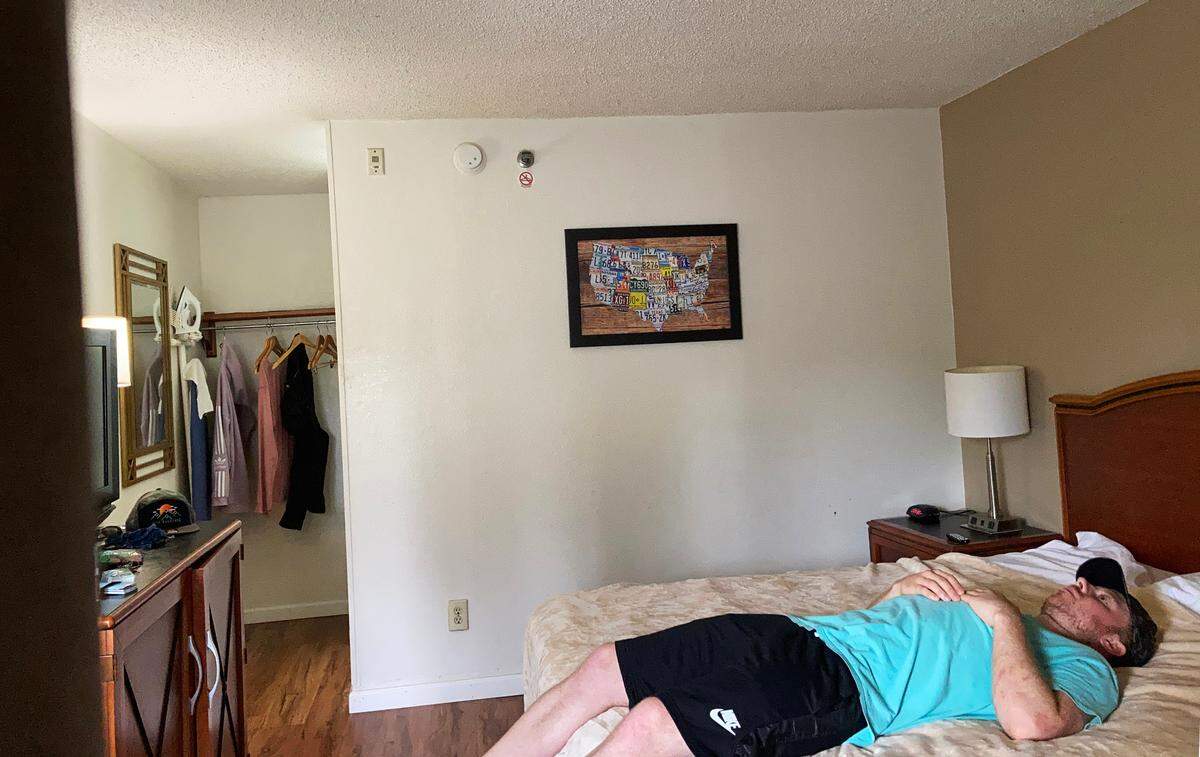
After settling into his new home, Hall found it was a typical motel room, complete with basic cable, a mini fridge and a microwave.
“It’s definitely not a great motel,” he said. “But it’s a place. I’m so grateful that at least I don’t feel like I’m putting other people at risk.”
But he still didn’t know how long he’d have to stay at the Econo Lodge — or when he’d get the results of his COVID-19 test.
The virus
When Hall first started feeling sick, he doubted it was the coronavirus. He felt slightly feverish and congested, but he thought he was just tired.
He was staying with friends in Chicago. They could have all quarantined together.
“I really wish I would have stayed,” he said after his first night of quarantine alone in Charlotte.
Once checked in, Hall began looking up information on his phone about the virus. He started to fill a notebook with information about how to deal with COVID-19, including the use of herbal remedies.
He still didn’t have his test results. But with nothing else to do during the days and nights of quarantine, his research started to weigh on him: “I started feeling a little bit scared,” he said. “… I’m not worried that I’m going to get deathly ill — but people in their 20s, 30s and 40s have become deathly ill from the virus, even in (good) health.”
On the third night, he got an answer when the lab called with his COVID-19 result:
Positive.
“I’m bummed,” he said the next morning. “I was hoping it would be negative so I could leave.
Later, he added: “It’s a creepy old motel, I’ll tell you that.”
The room
With each passing day, time held less and less meaning to Hall inside the hotel.
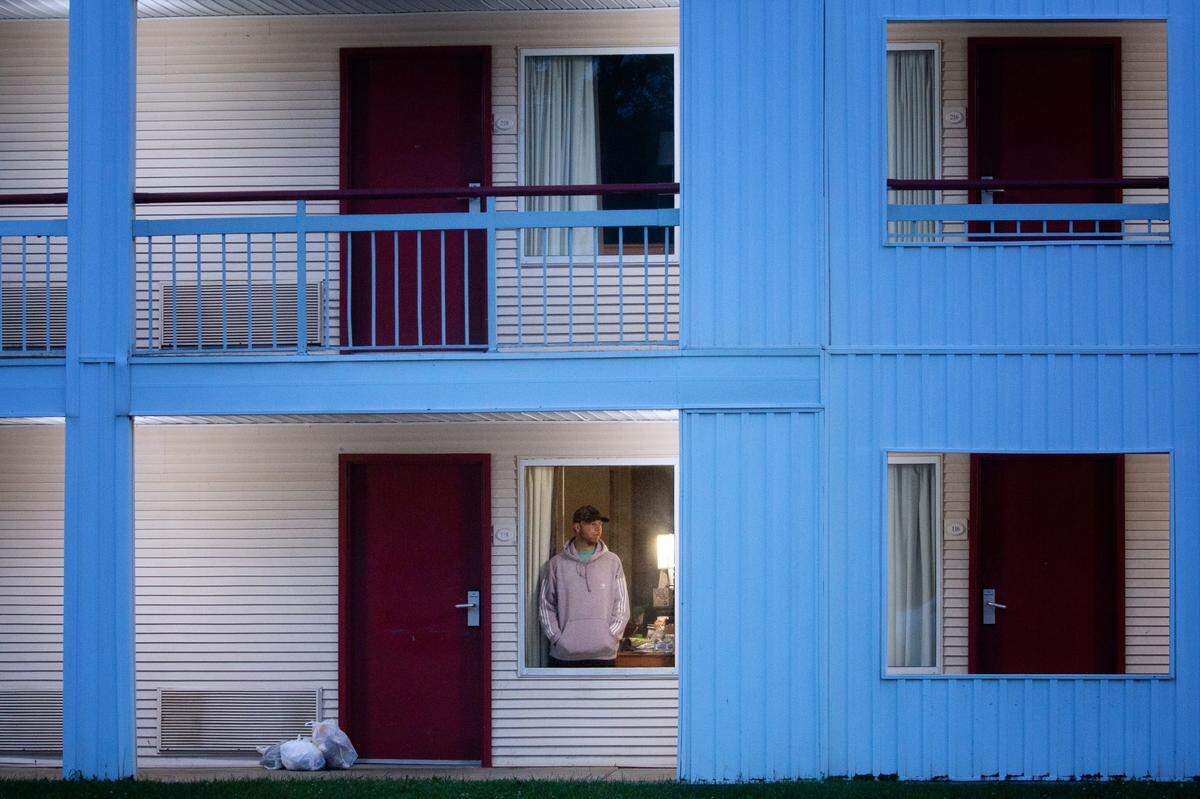
Outside of his first floor room, a flood light kicked on when it got dark.
The glow made it seem like non-stop daylight outside and he rarely left the room.
“Being in this room, it’s like a sense of time gets a little weird,” he said.
Little details started to seem creepy, he says. Like how one of the security guards always parked farther away, toward the back of the hotel. The overhead lights around the guard’s car flickered for several nights in a row — just in that spot.
“I’ve just been stuck alone here for so long, sometimes your imagination gets carried away,” he said.
He watched a lot of thrillers on Netflix to pass the time.
After four nights in the hotel, Hall was moved to a second room. He said he’d found black mold in the first room.
“It’s not good, but you just do the best you can,” Hall said. “I’m still grateful for a place to stay. But that was kind of frustrating.”
After the move, he was happier — mostly because his new room had a chair and he found only one small spot of potential mold. In the old room, he had turned a fold-out luggage stand into a chair.
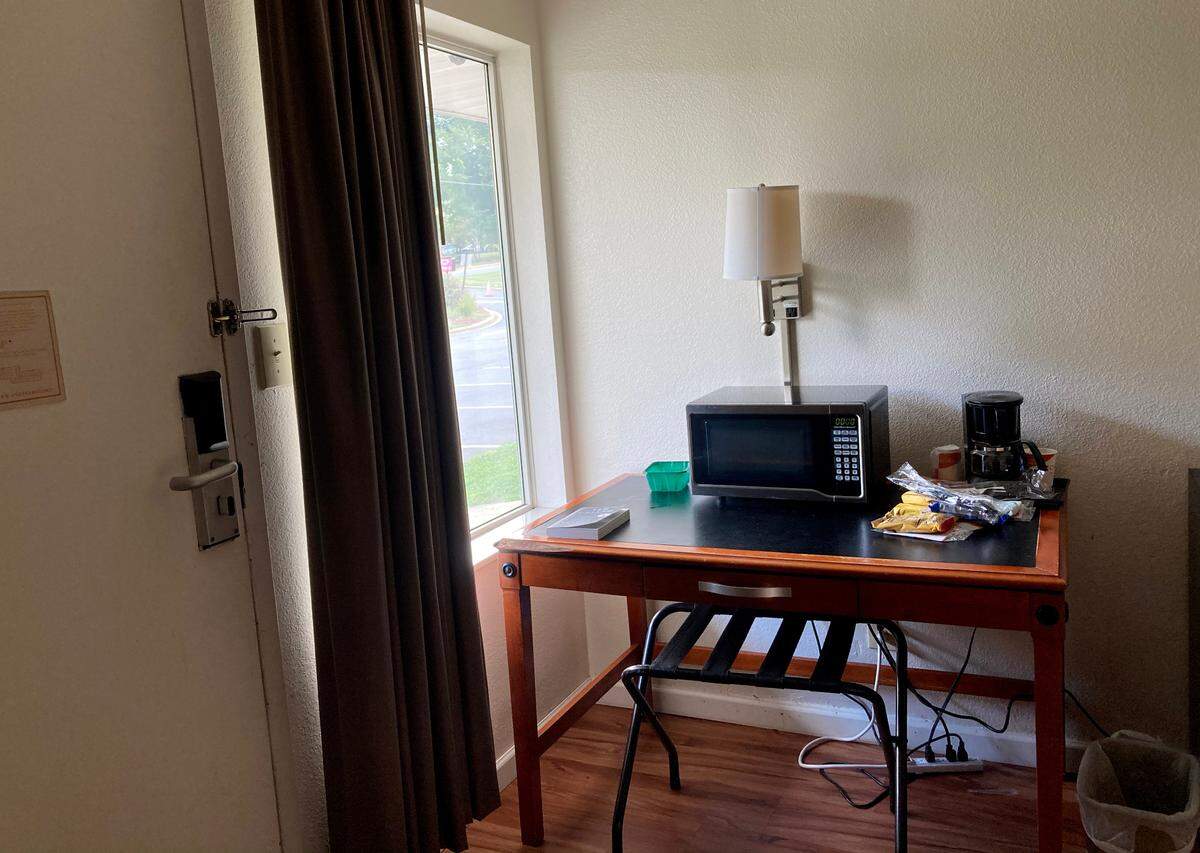
“This room’s a little bit nicer in some ways,” he said. “The refrigerator’s a little older, but I kind of like it better.
“And I like that I have a chair that I can kind of like swivel on and that’s been really nice.”
On his sixth day at the hotel, Aug. 17, he got his first visit from a health care worker assigned to check on quarantined patients.
A worker in a hazmat suit from Atrium Health arrived to check his vitals.
His oxygen levels were good: 100%. And his pulse and temperature were both normal, he said. He didn’t bring a thermometer on his trip, so that was the first time he’d been able to take his temperature since feeling sick.
High-risk patients in the hotel (people with chronic health conditions, those over age 40 and anyone who’s been hospitalized with COVID-19) are visited daily by the health team, according to Carter, the county spokeswoman.
But Hall, who isn’t considered high-risk, says he saw a health care provider only twice in the 10 days of his stay.
Carter said it’s possible some visits are skipped if a patient doesn’t answer the door due to being in the shower or being asleep.
“I’m doing OK,” Hall says after the second health checkup. “I definitely am feeling more frustrated that I’m still here. And I’m feeling sick. But yeah, today — it’s just like a lot of little things are starting to get to me....”
“You know those days where you wake up and you’re not in a great mood? That was today.”
He forgot to bring nail clippers on this trip, he finally ran out of the shampoo he brought from home and he hadn’t washed his clothes since leaving the NoDa Airbnb.
There was no way to do laundry at the hotel, Hall said, adding: “I just feel grimy.”
One night, he washed a few necessities in the sink then hung the clothes up in the bathroom and used the blow dryer to speed the process — hoping he wouldn’t be sitting in damp clothes the next day.
“I was up late just trying to make sure they were drying,” he said.
To make it worse, Hall knew he could count on a loud knock on his door early in the mornings — maybe someone from Atrium checking on him, but more likely someone delivering another tray of food he couldn’t eat.
The food
Guests at the quarantine hotel get three meals a day.
Almost always, Hall was still in bed during breakfast drop off.
He recalls the wake-up knock each morning around 8:30. He wouldn’t jump up to answer the door. Partly because he was trying to sleep in, but also because he was following instructions given at check-in: After the knock, wait a minute before opening the door.
That would give staff time to move on to the next room — away from potentially contagious guests.
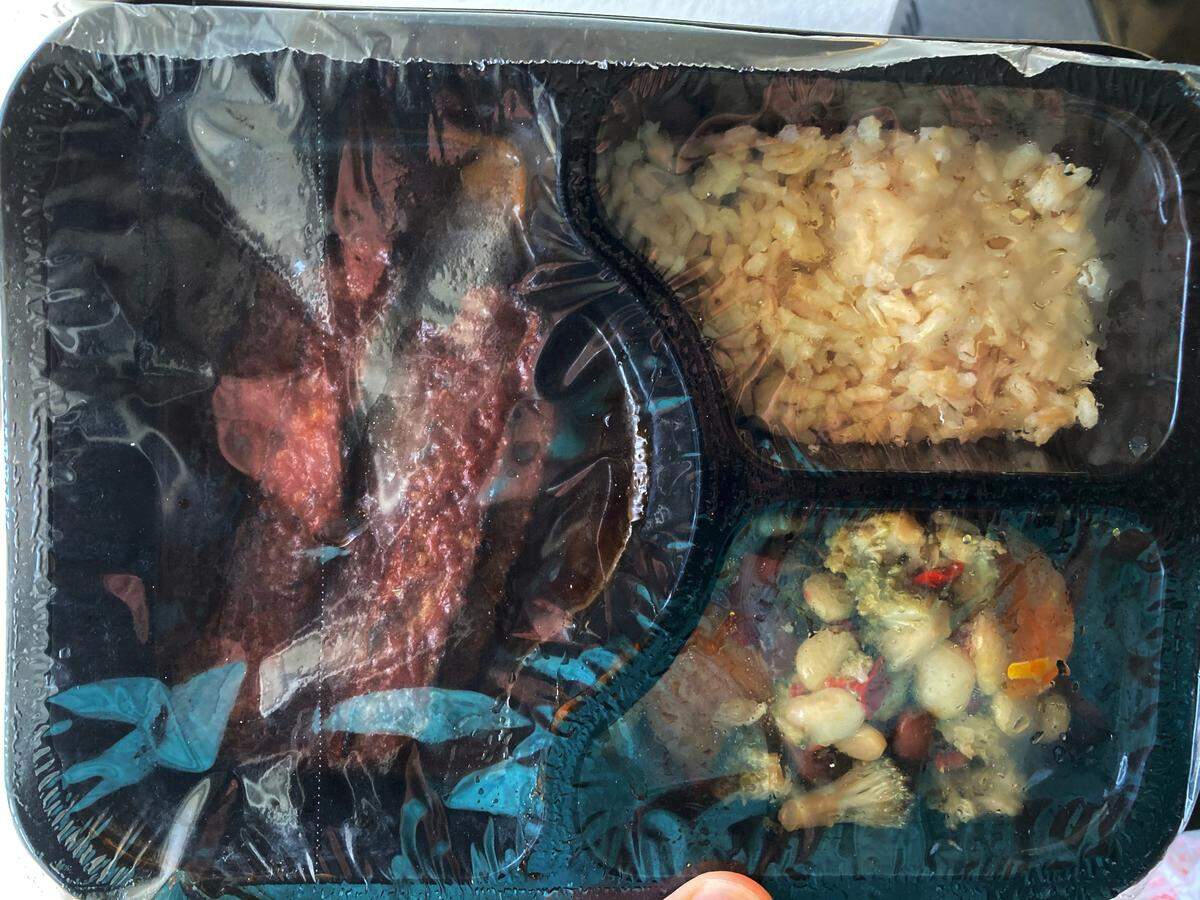
Hall would stick his head out the door to find a bag of food left in a grocery bag, hung on the door knob.
He would bring the bag inside and unpack the food — a TV dinner tray guests would reheat in the microwave. There was usually a water bottle, juice box and snacks, too. Toward the end of his stay, Hall got extra nuts and pretzels.
It wasn’t ideal — the food looked terrible, he said. But Hall made an effort to stay positive — even gushing over the food the day someone delivered two servings of lentils.
“Today was awesome,” he said. “…So protein rich and nutrient dense — this is exactly what I needed.”
Hall said the hotel workers did “their best to help out,” but communication was hard. Especially when he unpacked his breakfast trays day after day.
It was typically eggs, bacon and biscuits. Hall, who is a vegan, usually had to throw the whole tray away.
“I can’t eat most of this,” he says. “I don’t even know if anybody should be eating this.”
One day, he asked staff to stop bringing him breakfast trays. The next morning, they brought three.
He asked several times for an ingredient list or information on where the food comes from. But an employee at the front desk told him she wasn’t allowed to give out that information. Hall says staff told him one other vegan stayed at the quarantine hotel before him.
“I really want to be able to take care of my health as best as I can, especially right now,” he said.
Carter told the Observer the food is prepared locally by food vendor Bateman. The food is packaged in sealed trays that can be reheated in room microwaves, she said in a statement.
“Unfortunately, we do not have the ability to customize our meals for every individual,” Carter said. “We do try to accommodate health needs to the best of our ability.”
Hall worked around the food limitations by calling in outside help.
On his fourth day in the hotel, he reconnected with a childhood friend who lives in Charlotte. “I haven’t seen her in probably over 10 years,” he said. “We all grew up together in New York.”
Even though the rules said no deliveries and no visitors, Hall found out the guards would let his friend drop off supplies — as long as it wasn’t a social visit.
They met in the parking lot. Hall’s friend waited in her car and watched him collect the bags.
Inside, he found a haul from Harris Teeter: Vegan-friendly fresh foods, soothing teas, coffee, tortilla chips, salsa, oatmeal, hummus, fruit and vegetables, tofurkey, vegan cheese and a loaf of Dave’s Killer Bread — his favorite.
She even brought him a tray of sushi.
“Literally, I was so ecstatic,” he said. “It was the best sushi I’ve ever had in my life.”
Once she was back in her car, they were able to talk to each other for a few minutes on the phone — safely separated through a car window, he said.
As his friend drove away, Hall hoped the week’s worth of healthy, vegan-friendly groceries would be enough to get him through his stay.
Checking out
Nearing the end of his stay, everything felt uncertain.
He didn’t know exactly when he’d be released from quarantine, where he’d go next or how he’d get there.
He could head back to Kansas City. But going home without a car would mean his whole trip would be a waste, he says. He kept searching Craigslist, Facebook and CarGurus.com for the perfect Volvo.
He didn’t want to let down the people who helped him raise money for a new car and supported his trip around the country to find the right one.
Three days after he was diagnosed with COVID-19, county health officials told him he’d be able to leave the hotel 10 days after his test date, which would be Aug. 21.
But later, in another phone call, Hall said, a county worker told him he could leave even earlier — 10 days past his first date of feeling sick.
Still another health worker, someone from the lab where he got tested, said he should stay longer in quarantine. Hall believed he’d need a second test before being cleared for check-out. But county officials said that’s not required.
The average guest stays at the quarantine hotel for about 8 days, Carter said. Guests who get a negative test back only stay for a few days, while some stay much longer. If the person tested positive and will be returning to a shelter after their stay at the quarantine hotel, the county asks them to stay for 17 days, Carter said.
Hall checked out the morning of Friday Aug. 21. He decided to stay at least one more night in Charlotte.
“They really didn’t give me too many instructions,” he said of a staffer at the front desk. “They handed me a piece of paper that said I tested negative, which I didn’t take another test.”
He was given a bus pass but no further instructions on returning to normal life, other than advice to always wear a mask and wash hands often.
He recalled the weird moment of passing through the hotel doors for the last time: “Am I really leaving this motel? I’m actually leaving?”
Life beyond the COVID hotel
Hall spent one night at an AirBnb in Charlotte after leaving the quarantine hotel.
“Mostly I was excited to eat a hot meal that wasn’t microwaved,” he said of his first day of freedom. That meant finding a vegan-friendly restaurant in Charlotte — Fern, Flavors from the Garden on East Boulevard — for a meal of pasta, carrot cake and a glass of wine.
But he was still apprehensive.
“I was feeling a little bit like a contagion,” he said. “Am I still contagious? Should I still be out? Even though I wasn’t feeling symptoms, really, it still felt surreal to not be as worried about being infected.”
Hall got on a bus to Charleston. He’d finally found what he was looking for: a 1984 Volvo 240.
He bought it on Aug. 25.
“That was the whole mission, to get this car,” Hall said.
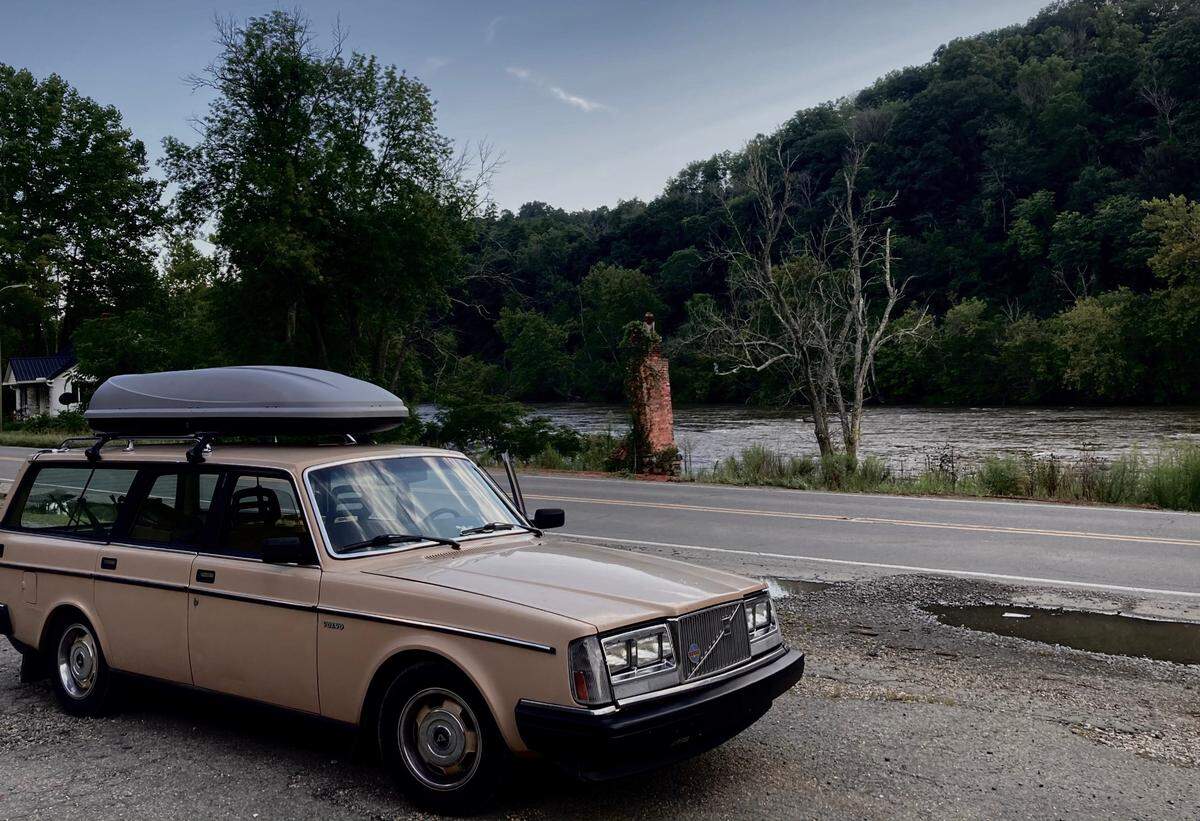
In Charleston, he realized his sense of smell had returned when he smelled the clean linens in his Airbnb. And he could finally walk around without worrying he was spreading the coronavirus, he said.
That night, he took off in his new ride for the nearly 17-hour drive back to Kansas City. He spent nights outside Columbia, S.C., and Asheville (where he took a short hike in the Smoky Mountains) and he had a stopover in Clarksville, Tennessee.
When Hall got back to Kansas City, he said he was focused on getting back to his work with the church as well as figuring out how to return to his day job at a cafe. The cafe, which had only recently resumed full hours since the pandemic began, wanted him to get a negative test before returning.
He acquired an odd collection of souvenirs from his time at the motel: juice boxes from the room, Tylenol, sanitizing wipes and new shirts he bought after under-packing for what he’d thought would be just a short trip to Charlotte.
“Checking out of the Econo Lodge felt like leaving summer camp in a weird way,” he said.
“A lonely summer camp.”
Observer staff writer Lauren Lindstrom and photographer Jessica Koscielniak contributed.
This story was originally published September 18, 2020 at 7:45 AM.
.jpg)