Invisible saliva bursting from lips may explain asymptomatic COVID-19 spread, study says
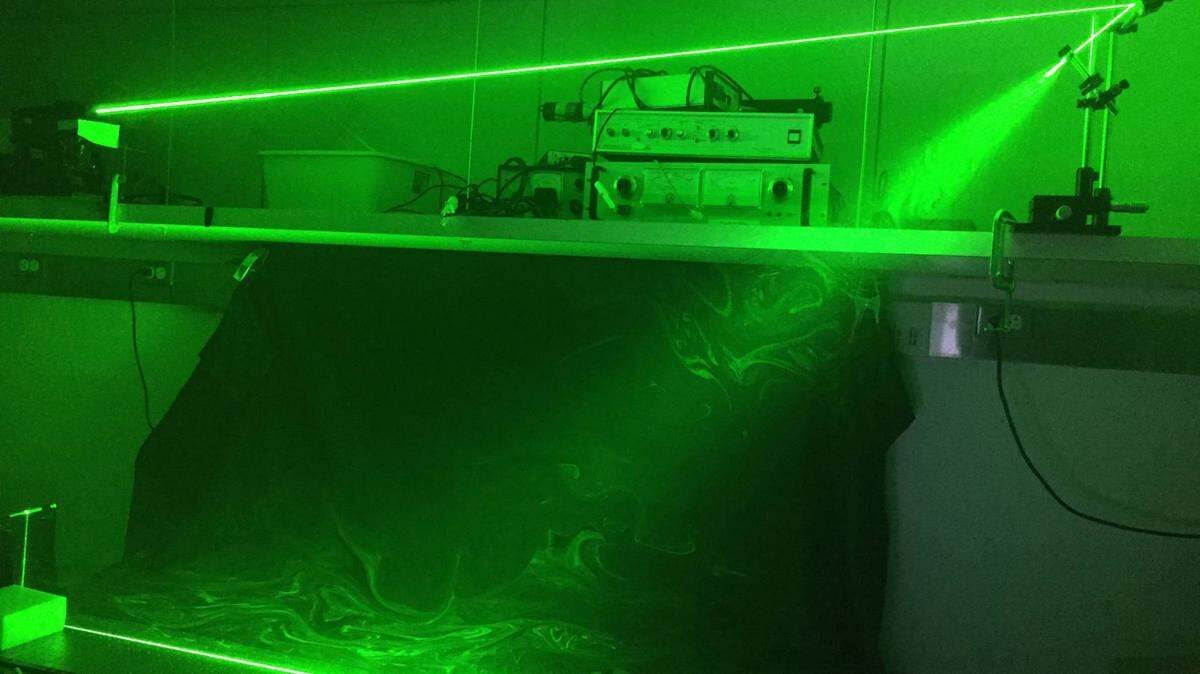
At a revealing 5,000 frames per second, a camera captured how talking produces tiny droplets of saliva that rupture and disperse into the air in the blink of an eye, according to a new study from Princeton University.
It’s these same aerosolized droplets that can carry coronavirus particles and be inhaled by others. Certain sounds can exacerbate this explosive effect, so researchers say a better understanding of the process may inform new ways to mitigate viral spread.
Detailed videos of the speech spittle offer some good news: face masks can “effectively contain a significant portion of expelled aerosols,” and even wearing lip balm can reduce how many droplets form during speaking.
It’s been thought that respiratory droplet formation originates from deep in the lungs or in the upper airway (throat and mouth), but this study reveals bursting saliva jumps from the lips instead.
A study was published Oct. 2 in the journal Physical Review Fluids.
“No one has been able to obtain direct measurements or visualizations of droplet formation in the lungs or upper airway before,” said study co-author Manouk Abkarian, a research director at the French National Centre for Scientific Research who visited Princeton on sabbatical. “Now with our study, there is compelling evidence that the stretching and breakup of saliva filaments during speech is behind aerosol formation.”
Abkarian and co-author Howard Stone, a professor of mechanical and aerospace engineering, wanted to bring their expertise in fluid mechanics to learn more about asymptomatic transmission — viral spread without symptoms such as coughing or sneezing.
So, the pair set themselves up in a room and said specific sounds while facing a flat sheet of laser light. A high-speed camera captured droplets escaping the researchers’ mouths, which the laser sheet made easy to find — a light-scattering effect that looks like flashes occurs when droplets cross the sheet, giving the green light for the camera to snap a photo.
The researchers then counted how many droplets were emitted.
Footage shows that when people open their mouths to speak, a thin layer of saliva spreads across the lips. When the lips part to make sound, the layer breaks into tiny filaments, which eventually explode and disperse when outward airflow from the lungs stretches them to capacity, the researchers said.
The “minuscule” droplets then journey into the air like dandelion seeds floating with the wind — a performance that occurs within a fraction of a second.
This mechanism intensifies when people pronounce “stop-consonants or plosives,” such as words that start with “p” and “b” that involve firmly pressing the lips together. “T” and “d” sounds that require the tongue touching the upper teeth also “produce droplets at a much greater rate than when forming vowel sounds,” according to the study.
On the other hand, few droplets were expelled when pronouncing the sound “Ma” because the airflow for the consonant “m” is directed mainly through the nose, the researchers said.
The pair also learned that lip balm “destabilizes filament formation on the lips” and can be used as a “cheap and effective mitigation strategy,” they said in the study. In one case, lip balm reduced the number of sprayed droplets by four times.
Are superspitters superspreaders of COVID-19?
Just because someone may be a “superemitter,” someone who spits a lot when they talk, that doesn’t mean they can be a superspreader of COVID-19 or other diseases that spread via saliva, the researchers say.
It’s the amount of virus each drop of spit contains that matters most, not the amount of saliva. That’s because not everyone carries the same viral load while infected with coronavirus, experts say.
Stone even speculates that evolution could have favored this droplet formation in the transport of viruses over time, where only those strongest to overcome the virus survive.
Going forward, the pair said they want to explore this spittle formation with more people to make sure it’s a “general characteristic of human speech,” as well as how different languages play a role in this process.
“It is possible that speakers of certain languages with many hard consonants, for instance, will tend to produce more droplets than speakers of languages featuring greater use of softer vowel sounds,” the release said.
This story was originally published October 14, 2020 at 12:35 PM with the headline "Invisible saliva bursting from lips may explain asymptomatic COVID-19 spread, study says."