
NC providers used up their COVID vaccine supply, but some aren’t getting more this week
The N.C. Department of Health and Human Services is guaranteeing providers a minimum number of COVID-19 vaccine doses for the next three weeks after health departments and hospitals across the state complained that pre-planned mass events left them with limited or no shots.
For the next three weeks, 84,000 doses of the state’s expected 120,000 doses will be split among counties based on population, then further divided among providers based on their capacity to use the vaccine, DHHS Secretary Mandy Cohen said during a Tuesday press conference. The remaining 36,000 doses each week will be used to “balance” vaccine distribution across the state, both geographically and by ensuring that vaccine reaches marginalized communities.
“At this moment, we’re making that shift from that push to get rid of the backlog to this more steady state where we can give our providers some certainty,” Cohen said.
In an effort to guarantee that the federal government will continue sending the same number of vaccine doses to North Carolina, DHHS had asked providers to ramp up their vaccine distribution to work through a backlog of first doses. Providers did that, giving first doses to more than 275,000 people since Jan. 18 and virtually clearing their shelves.
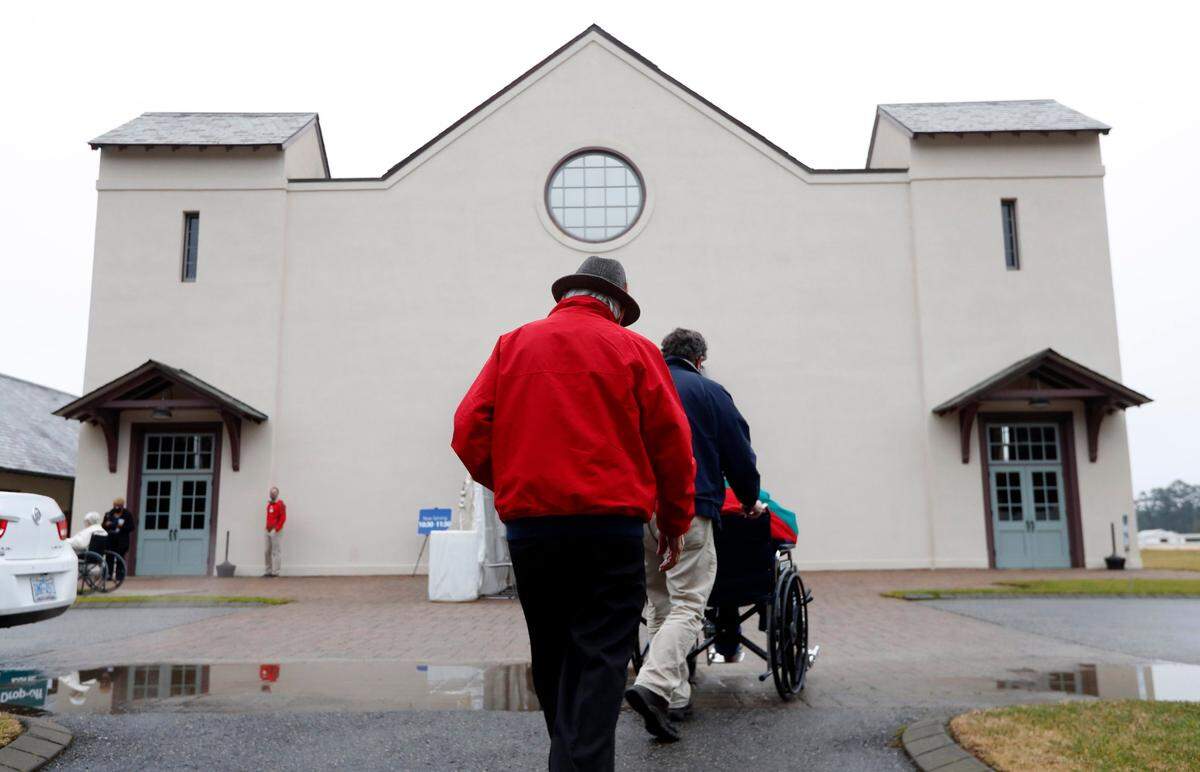
“Together, they got 95% of first doses into the arms of North Carolinians across the state, an incredible achievement that demonstrates to the federal government that North Carolina is ready to take on more vaccine, and we need those additional doses now,” Cohen said.
Much of this week’s supply is being sent to pre-planned mass vaccination events, such as one planned for Charlotte’s Bank of America Stadium next weekend. As a result, providers like Greensboro-based Cone Health will not have their supply of first doses replenished this week, The News & Observer reported. Others will receive very few first doses of vaccine.
The Orange County Health Department said Monday it used the last of its first doses of COVID-19 vaccine on Sunday and likely won’t receive more until next week.
“Until the vaccine supply is significantly increased, it will be weeks or perhaps months until we can complete vaccinations for (Groups) One and Two,” Orange County Health Director Quintana Stewart said in a news release.
“We understand this must be frustrating for our community members to hear and we want let you know that we share in your frustration,” Stewart said.
Orange County advises people to contact other providers, such as UNC Health or Duke Heath.
In an update to the UNC Health Board of Directors on Tuesday, Tony Lindsey, the system’s chief medical officer, said it had used the last of its first doses Monday. The system expects to receive 10,000 more doses this week, but has the capacity to give 30,000 per week.
“We’re very hopeful there will be a third or a fourth vaccine available to help boost our supply,” Lindsey said, referencing the fact that only two vaccines have received emergency approval from the U.S. Food and Drug Administration.
Public health officials have repeatedly said it will be months before everyone who wants a COVID-19 vaccine will be able to get one. Tuesday, Cohen said North Carolina will likely continue to have more capacity than doses of vaccine.
“Even if we get a 10% or a 20% bump up from the federal government, that’s going to be nowhere near 260,000 first doses in a week,” Cohen said.
Particularly tight week
The N.C. Association of Local Health Directors sent a letter to Cohen on Sunday criticizing the decision to prioritize large-scale vaccination sites this week, saying many health departments had to cancel appointments.
“NC DHHS decided to move vaccine away from local communities where, in many cases, travel to a large mega site is prohibitive to access for many North Carolinians creating inequitable distribution of this limited resource,” wrote Stacie Turpin Sanders, the Buncombe County health director and president of the health directors’ association, and Katye Griffin, the group’s executive director.
“While DHHS leadership intimated on January 20 that speed is the priority, NCALHD believes it should not be at the expense of equitable distribution to local communities,” they wrote.
The N.C. Healthcare Association, which represents the state’s hospital systems, also penned a letter to Gov. Roy Cooper on Monday, calling for DHHS to create a more transparent and equitable allocation process.
“When our members scaled up their operations based on being asked to push more vaccines through their facilities or through their community partnerships and then there’s no reliable distribution formula, methodology or sequencing, then we’ve got these really expensive endeavors that have been stood up that are not being used,” Stephen Lawler, the group’s president and CEO told The News & Observer.
Lawler called the allocation revamp announced by Cohen “a good start.”
During Tuesday’s press conference, Cohen said that this week is an exception, with the state caught between the scaled-up efforts meant to reduce the backlog and the reality of about 120,000 new doses coming in.
“This week is going to feel particularly tight, with many providers getting small or no allocations,” Cohen said.
The Orange County Health Department has not had to cancel any appointments, Todd McGee, a county spokeswoman, wrote in an email to The News & Observer. The county only makes appointments based on the doses it has in hand, he added.
So far, Orange County has provided about 3,300 first doses, McGee said.
The county could “ramp up distribution” using a list of volunteers if the supply is available, borne out by its requesting 3,000 doses of vaccine from the state for next week’s allocation.
“We know we will not receive that much,” Stewart, the Orange County health director, wrote in an email to The News & Observer.
More vaccination information online
Also Monday, DHHS launched an online tool to help people find out which vaccination group they fit into by answering a series of four questions.
DHHS’ Find My Vaccine Group tool at findmygroup.nc.gov asks whether someone works in health care or a long-term care facility, their age and if their job falls into certain categories.
At the end of the survey, the tool tells the user their vaccine category, as defined by the NC DHHS. People can sign up to receive an email letting them know when their group becomes eligible for vaccination.
North Carolina has defined vaccine eligibility into five groups.
The state is currently vaccinated people in Groups 1 and 2. Group 1 includes any health care workers or staff who come into contact with patients as well as residents and staff of long-term care facilities. Group 2 includes anyone who is at least 65 years old.
Group 3 is made up of front-line essential workers, including teachers, farmworkers, grocery store employees and anyone working in public safety, among others.
After that will come Group 4, including retail workers, information technology staff and bankers, among others.
Group 5 is set to include anyone in the state.
DHHS plans to update the tool with an additional feature that helps people find where vaccine is available, according to a press release.
News & Observer reporter Richard Stradling contributed to this report.
This story was originally published January 25, 2021 at 5:49 PM with the headline "NC providers used up their COVID vaccine supply, but some aren’t getting more this week."