As COVID vaccine arrives at meat, poultry plants in NC, challenges remain to help workers
The country’s meat and poultry processing plants were among the hardest hit last year when the coronavirus pandemic surged, with thousands of workers contracting COVID-19 as they filled essential roles in the food supply chain.
Now, the coronavirus vaccine is making its way to plants in North Carolina with companies giving shots on-site, shuttling workers to vaccine clinics and organizing mass vaccination events. Some plants are even offering financial incentives to workers who get vaccinated.
But there are logistical challenges in vaccinating workers while relying on the state’s limited vaccine supply and overcoming language and cultural barriers to reach a large Latino immigrant workforce.
Under North Carolina’s vaccination distribution plan, people who are 65 and older are eligible for the vaccine in Group 2. Front-line essential workers, which includes people who work in manufacturing plants, farms and food distribution, are in Group 3, who became eligible March 3. On April 7, all adults will be eligible.
Vaccinating those essential workers lowers a vulnerable workforce’s risk of both serious illness or death and the chances of virus-induced production slowdowns.
Among workplaces in North Carolina, meat and poultry processing plants have reported the highest number of coronavirus cases, far surpassing manufacturing, construction, retail and other industries. At least 4,735 COVID-19 cases have been reported in processing plants since April, when the N.C. Department of Health and Human Services started tracking clusters of cases in workplaces. There have been 22 deaths connected to the plants, according to NCDHHS.
North Carolina’s cases represent roughly 21% of the 22,000 recorded cases linked to meat packing plants nationwide, according to the United Food and Commercial Workers International union.
As the virus began to spread across America’s processing plants last spring, former President Donald Trump ordered them to accelerate production under the Defense Production Act. Some plants neglected to enforce safety measures like social distancing and masks, with some workers even being initially neglected from paid sick leave, The N&O reported previously.
Nathan Wilkins who works at the Pilgrim’s Pride poultry plant in Sanford was one of those workers who got COVID-19. A father of three, his infection put his family at risk while he dealt with a strong case of the virus at home, missing about a month of work in the process.
“We’re essential workers so we really have to go to work,” Wilkins, 42, said. “(Pilgrim’s) pretty much doing as much as they can so they can keep their employees safe, so they can come and make money for them.”
Pilgrim’s Pride is majority owned by JBS USA, the largest beef and pork producer in the world. Now, JBS USA is paying their workers $100 to get vaccinated, in addition to taking them to clinics and paying them for the time spent getting it, the company said recently.
Many of Wilkins’ coworkers have been able to get vaccinated with the company’s help, he said.
“If they make it readily available for someone if they want to take it, I think that’s really (the company’s) responsibility as the employer trying to take care of the employee,” he said.
Wilkins said he is hesitant to get it after hearing about the vaccine’s side effects, which can range from a sore arm to tiredness, fever and chills. People may experience more intense side effects after the second shot.
“I just want to make sure that I’m fully informed before I take the vaccine,” he said.
JBS USA said earlier this month a third of its national workforce of 60,000 will be vaccinated by late March. Workers have started to get the shot at its plant in the Union County town of Marshville, the company said.
“While we are making good progress, there is much work left to be done,” said Andre Nogueira, CEO of JBS, in a news release.
The N.C. Department of Health and Human Services has been supporting organizations and community health workers who are providing vaccine information to front-line essential workers, said department spokesperson Catie Armstrong in an email.
“In recent weeks, NCDHHS coordinated early vaccination efforts with four meat processing companies (11 facilities) and their vaccine providers, with support from local health departments and hospitals,” said department spokesperson Catie Armstrong in an email.
At least 3,100 workers received the shot in this effort, Armstrong said.
“NCDHHS’ goal is to vaccinate as many people as quickly and equitably as possible while supply of vaccine remains limited. It is the Department’s expectation that all doses be distributed based on our state’s equity principles,” she said.
Meat packing plants’ response
Like the rest of the country, meat processing companies have to wait for vaccine supply to increase to meet the pressing demand. They can’t buy vaccines directly from drugmakers and must comply with regulations in individual states, Reuters reports.
Perdue, a major poultry and pork processing company with a presence in North Carolina, wrote a public letter in December to the federal Centers for Disease Control and Prevention and 15 states, including North Carolina. The company ask that their employees and families be among those prioritized for early vaccination doses.
In North Carolina, the state started with health-care workers and people who live and work in long-term care facilities and nursing homes. Older adults followed, and then teachers and child-care workers before other front-line essential workers became eligible.
North Carolina plants have responded accordingly. Smithfield Foods employs roughly 4,500 workers at its facility in Tar Heel, a town south of Fayetteville — the largest pork processing plant in the world. The company is actively working to distribute vaccines to this plant, Smithfield Foods chief administrative officer Keira Lombardo told The N&O in an email.
“Smithfield is partnering with medical and clinical expertise to ensure its U.S. team members have the opportunity to safely and efficiently receive the vaccine at each location and at no cost,” said Lombardo.
That means employee education and counseling, Lombardo said.
“Clinical experts are onsite at Smithfield facilities, handling vaccine administrative logistics such as vaccine storage and distribution and answering questions and concerns,” Lombardo said.
Nationwide, the company has seen “a low incidence” of the virus across their roughly 40,000 employees as a result of safety measures and testing strategies, Lombardo said.
Its Tar Heel plant had at least 102 confirmed cases as of May 2020, according to emails from the N.C. Department of Health and Human Services obtained by the Documenting COVID-19 project at the Brown Institute for Media Innovation. The state health department neglected to make these numbers across plants public, citing fear of harming relationships with companies, the NC Watchdog Reporting Network reported last summer.
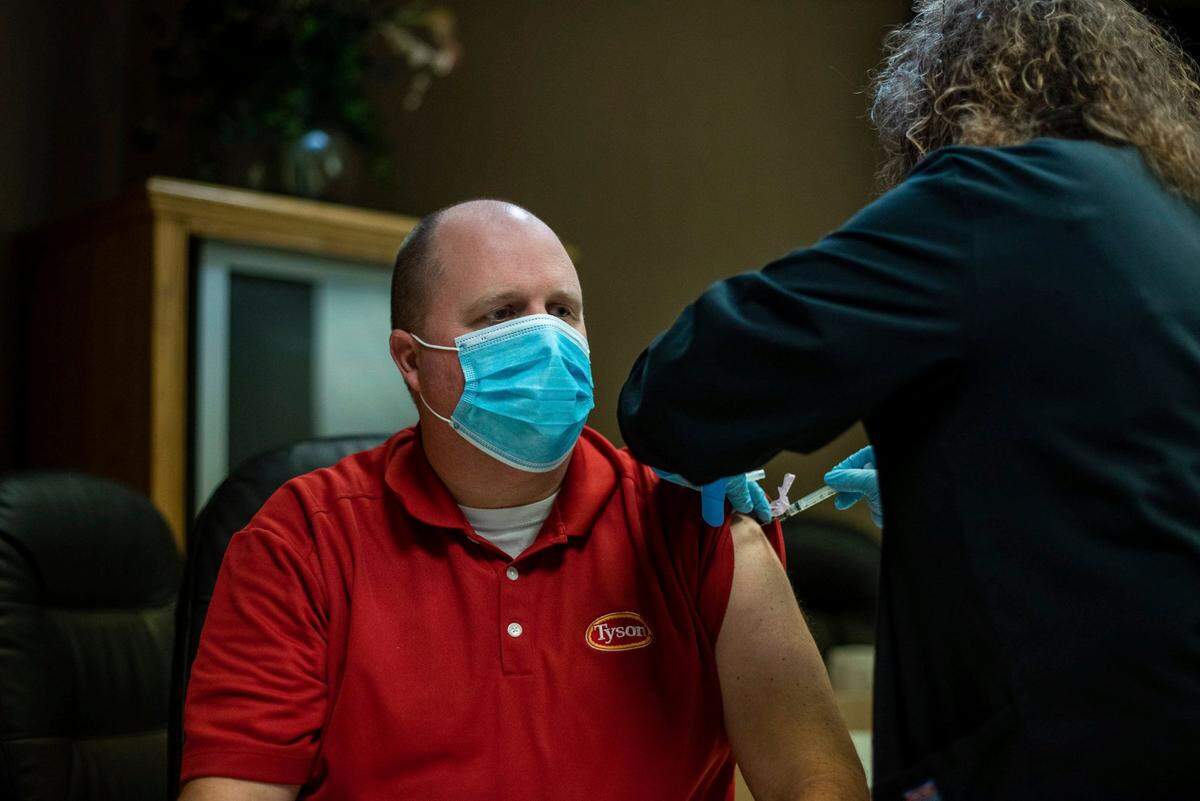
The Tyson Foods poultry plant in Wilkesboro, which employs around 3,000 people, is collaborating with Wilkes County health officials to administer the vaccine, said Derek Burleson, a Tyson spokesman. The company has been providing key information to workers in various languages and access to a company-run vaccine information hotline.
“In preparation for the vaccine, we’ve been providing resources and education about the vaccine to our team members, and the vaccination efforts are really just the latest in a series of measures we’ve taken to fight COVID-19 in the past year,” Burleson said.
Nearly 600 workers in Wilkesboro tested positive for the virus last May, the largest publicly reported outbreak of its kind in the state, The N&O reported.
At least 250 workers were inoculated in early March, including 44 who received their second dose through an on-site vaccination event, Burleson said.
Tyson is paying workers for the time they take to get the shot. More vaccination events are planned for their Wilkesboro plant and other Tyson facilities in Claremont, Sanford and Monroe, Burleson said.
Similar efforts are underway at the large Mountaire Farms poultry company, which employs thousands across plants in the towns of Siler City and Lumber Bridge. Workers have been inoculated at on-site health clinics at the plants and are being given $40 gift cards for getting the shot, according to a press release.
Perdue, a major poultry and pork processing company, has a big plant in Rockingham as well as other facilities across the state. The company has prepared its on-site health clinics for vaccination rollout.
As of late March, at least 700 of their employees have been vaccinated in the state, Perdue communications director Diana Souder told The N&O.
Butterball, the nation’s largest turkey producer headquartered in Garner, has been vaccinating eligible workers at their large plant in Mount Olive in collaboration with the Duplin County Health Department, according to a news release.
Low Latino vaccination rates
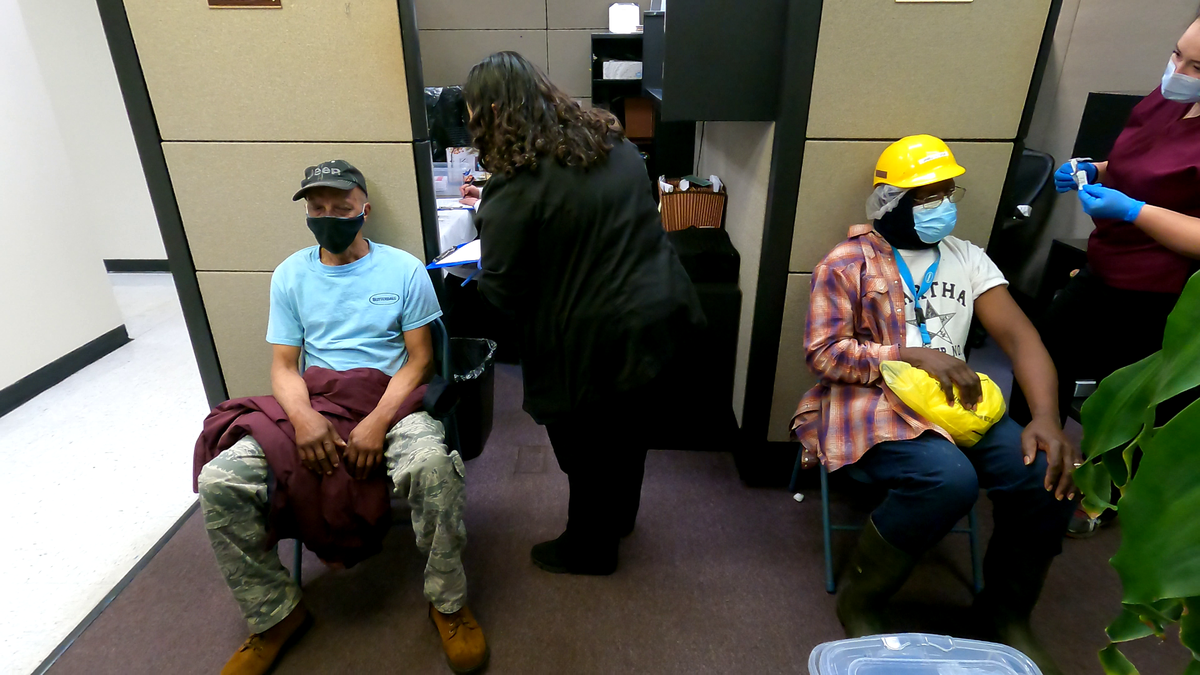
The companies, like public health officials and community partners, are trying to vaccinate people while navigating cultural stigma about the virus, distrust of the vaccine and lack of access to healthcare — some of the same factors behind the low Latino vaccination rates North Carolina so far.
In North Carolina, over 4.3 million people have received at least one shot of a COVID-19 vaccine, according to NCDHHS. Of those, 4.3% of them identify as Hispanic or Latino, while 9.8% of the state’s population identifies as Hispanic, according to recent state data.
“Unfortunately, many workers here have doubts about the vaccine,” said Bacilio Castro, an organizer at the Western NC Workers’ Center based in Morganton.
Morganton is home to Case Farms, another major poultry processor in the state. The company employs thousands across facilities in Morganton, Dudley, Goldsboro and Mount Olive.
“There are many myths surrounding it here in the Morganton area. A majority of the workers are indigenous Guatemalans and there isn’t much information readily available to them,” Castro told The N&O in Spanish.
A company spokesperson said the company has started workforce vaccinations. Case Farms workers have told the Western NC Workers Center that the company will set up weekend vaccination events, Castro said.
The Western NC Workers’ Center is aiming to dispel misconceptions by educating Case Farms workers about getting the shot. The organization and a local Catholic church have planned a community vaccination event for workers and their families later this month, Castro said.
“Much of the information used for outreach to workers is thanks to LATIN-19,” said Castro, referring to the coalition of state officials, healthcare workers and community members organizing around outreach to the Latino population.
This story was originally published March 26, 2021 at 7:00 AM with the headline "As COVID vaccine arrives at meat, poultry plants in NC, challenges remain to help workers."