I was sure I’d never had COVID. Then I made the mistake of asking an infectious disease expert.
For a long time, there was a part of me that wanted to get COVID.
And please don’t take this the wrong way. I know the virus has, for many families, been devastating. It devastated members of mine, during the earliest stages of the pandemic, by taking the life of my father’s youngest sibling.
But it’s just that by early 2021, I felt as if practically everyone in my social circle had had it; and although, yeah, it was unpleasant for some, they’d all survived; and now they had some level of immunity to it; and could therefore worry a little bit less about going to the store, or walking into a coffee shop; or dropping by to see a friend.
Plus, I’m relatively young, and I do things like ride 60-plus miles on a bicycle on a Saturday then wake up the next morning to run for two hours.
So I figured, let’s GOOO. Let’s get this over with.
I mean, it’s not like I was going around licking public toilets or anything (I was wearing masks in places that required them, I got the vaccine as soon as I was eligible), but I also wasn’t at home or going out of my way to avoid enclosed spaces outside the home. ...
... Well, fast-forward to 2022, and one thing’s been for sure for the past few months: I have NOT wanted to get COVID.
Because, almost 2-1/2 years into the pandemic, it started feeling as if I was one of the only people I know who had seemingly dodged it every time, and I was like, I’d rather not break my streak, thankyouverymuch. It was kind of fun belonging to the no-COVID club, since it’s fairly exclusive at this point — even if membership doesn’t really come with any perks other than being able to brag about something that’s, admittedly, a little bit awkward to brag about.
Of course, I wasn’t positive I’d never had it. I was just positive I’d never tested positive.
Three tests related to a vacation in May 2021: all negative. Two tests related to another vacation this past New Year’s: both negative. A half-dozen drive-thru swabs, which I’ve gone to get for various reasons: nope, nope, nope, nope, nope and nope. A handful of the at-home tests sent to us by the government: ditto.
Which, earlier this month, brought me to a series of questions that were burning holes in the N95 masks at the bottom of my sock drawer: People who believed, like me, that maybe they’d never had COVID, were they most likely wrong? Was there any way, definitively, to determine whether I’d had it or not? If I hadn’t had it, was it possible it was partly because of my obnoxiously healthy lifestyle? And if so, how much of a factor was all that working out?
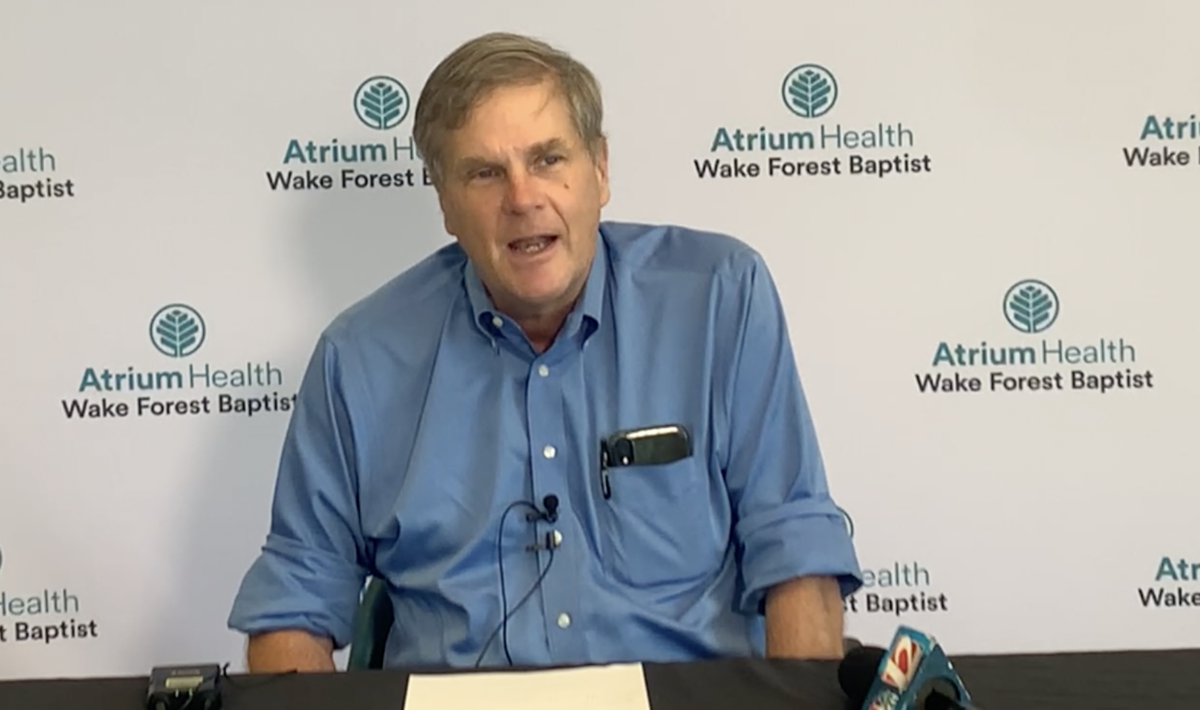
For answers, I turned to a man named Christopher Ohl, who — as an infectious disease expert at Atrium Health Wake Forest Baptist and a professor of infectious diseases at Wake Forest University School of Medicine — has a Fauci-like reputation in North Carolina.
And I have to say: I wish I had NEVER talked to him.
Our conversation has been edited for brevity and clarity.
Dr. Ohl: So you want to know why some people don’t get COVID, huh?
Me: YES. Some background: I’ve never tested positive for COVID. Even though I haven’t always been the most mindful of precautions. Even though I initially got the J&J shot, which isn’t supposed to be as good as the others. I’ve probably taken 15 tests in the past two years, including last winter when I had close to full-blown cold-like symptoms. But I’ve never tested positive. Is it possible that I’ve never had it, or have I likely had it and just was asymptomatic and didn’t test at the time?
Dr. Ohl: It’s kind of a complicated thing. It’s a little unclear exactly how many, but maybe somewhere between 10% to 20% of people who’ve had COVID don’t know they did. If you do antibody testing of populations, it looks like maybe 70% to 75% of people probably have had it. But if you go out and interview people, not that many were aware of it. Our tests aren’t a hundred percent, you know — so maybe you had a cold and you took a rapid test and it was negative and you said, “Aah, it’s just a cold.” But maybe if you had a PCR test, or waited another day, or tested again, maybe you would have been positive. So, some people who say, “I’ve never had COVID,” actually have.
But there’s a lot of other things to sort out, too. Wearing masks works. If while you’re traveling you’re wearing a mask, you’re just much less likely to get it. And some people are just kind of hermits, naturally. We now call that “social distancing,” but they’re not as out and about as much as others, and so they just don’t have a chance to get exposed.
Some people don’t have kids. A lot of people have gotten COVID from their kids. So there’s a lot of behavioral things that also enter into it.
Though probably the one thing that really interests us as scientists is there’s actually something that’s intrinsic to the person — and how they’re made up, genetically, and how their biology is — that might make them less likely to get it. And we see that with other viruses. So it’s reasonable to speculate or hypothesize that it could be the same with COVID, too.
One of the theories with COVID is there’s something about the ACE2 receptor — which is the receptor that COVID binds to — that’s different in people who haven’t gotten COVID. They may not have as many of them in their nose, or the back of their throat, which is where the virus first latches onto when we catch it from someone else. Or maybe the receptor is built a little bit differently, so the virus doesn’t latch onto it as well.
Or it could be that somebody has had a virus before that kind of looks like COVID. There are other coronaviruses out there, and it may be that they built an antibody to that coronavirus that also cross-reacts to the COVID coronavirus.
And some people have just a stronger natural — what we call innate — immunity.
When you put it all together, it’s probably a combination of some of that natural stuff, based on our genetics, combined with social and behavioral. Then probably a few people who got it just didn’t get that sick and don’t remember it, or didn’t know they were sick.
Me: Well, one of the pieces of background information about me that I withheld is that for the past 14 years, I’ve probably averaged 10 to 12 hours a week of training for marathons and long-distance triathlons.
Dr. Ohl: Sounds like you’re a healthy guy.
Me: Does that —
Dr. Ohl: Yeah, that probably helps. All those things that Mom told us to do to not get sick probably have some roots, you know? Eating well, good nutrition, exercising. Yeah, that all helps.
Me: How much?
Dr. Ohl: Oh boy, that’s hard to speculate. I don’t know. It’s not a hundred percent, but I think it really does help. I’m trying to think of an adjective. “Marginally” is too weak. “Substantially” is too strong. But something in between there. And not only does it contribute to keeping you from getting sick, but if you do get sick, it’s gonna contribute to you not getting as severely sick. There’ve been a lot of studies about nutrition and exercise and how it contributes to immunity.
But there’s no one, solid answer to your question of why there are people who seem to have trouble getting COVID. It’s a little bit of everything.
And the other thing is that by having this conversation, we may have just jinxed you. You may get it in three days. I mean, I just talked to somebody this week who’d never had COVID. I said, “Well, you’re probably gonna get it.” Three days later they texted me and said, “I just tested positive.”
The virus — even though you may have trouble getting it — if you get a pretty hefty dose of it, in the right place, you’re probably still gonna get it. I don’t think any of these things are a hundred percent. Even then, there are differences in the virus now, too. So if you dodged COVID in the first year and a half because you were being really careful, and then you let up and you’re not so careful now...
Me: OK, but for the record: There is no way to know whether I’ve had it, right?
Dr. Ohl: Not a hundred percent. We can look at antibodies, and if they’re positive at a very high level, that’s pretty suggestive that you’ve had it. But if you walked down to your doctor’s office and said, “Hey, can you do an antibody test and see if I’ve ever had COVID?” That test that you get won’t differentiate between vaccine and COVID itself. Because obviously the vaccine makes antibodies, you get COVID you make antibodies — those antibodies are pretty close to the same.
There are some antibody tests we can do that are a lot more sophisticated that can differentiate between vaccine and having had COVID. But those are really available only in research studies. You’d have to call the researcher, talk them into doing the test.
Then the other thing is, when people say, “Hey, can I go get an antibody test?” I say, “Well, what are you gonna do differently? If you test positive, that doesn’t mean you’re not gonna get BA.5.” Because reinfections are happening with BA.5. I talked to someone the other day who just had their third bout of COVID. So if your antibody test is really high, it should not be reassuring to you. You should still change your behaviors based on how badly you want to not get sick. And if the antibody test is negative, that doesn’t a hundred percent sure mean you never had it. So I try to talk people out of getting that test.
If you don’t want to get sick — if you don’t want to get COVID, and you’re flying on an airplane with a bunch of snotty-nosed people — wear a mask. Your behavior really shouldn’t change. If you’re healthy, and you’re young, and you figure, “Working out to me is really, really important, and I’m gonna go to the gym,” then go to the gym.
That’s the thing now about COVID, which is different from the beginning: People can start to make their own decisions about their level of risk, and how badly they don’t want to get it. If you’re married, and your wife had a bone marrow transplant, you probably have a pretty good incentive to not get it. Whereas if you’re young and otherwise healthy and you’re not around a lot of very vulnerable people, you know, getting COVID is not the end of the world. Particularly if you’ve been previously vaccinated, it’s not all that nasty.
Me: Well, sir, I appreciate all of your expertise. I sincerely hope you didn’t just jinx me.
Dr. Ohl: Stay healthy. And good luck with the next marathon.
-
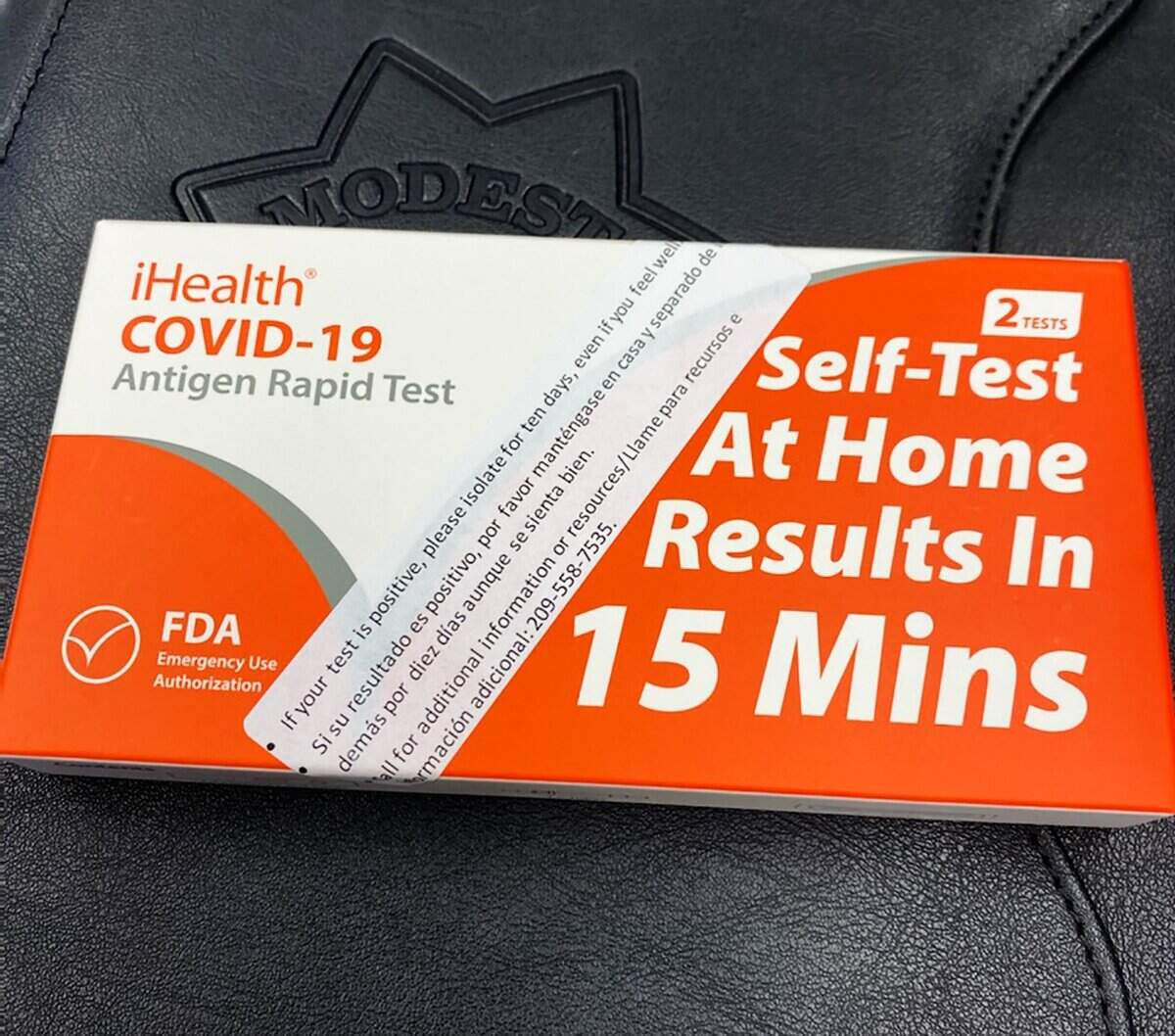
The epilogue: On Saturday afternoon, I started feeling crummy. On Sunday morning, I took a COVID test.
It was — yup, you called it, Dr. Ohl — positive.
This story was originally published August 30, 2022 at 6:00 AM.