Charlotte wastewater samples show rise in COVID levels. How much is the virus spreading?
COVID-19 virus levels at wastewater treatment plants in Charlotte have been on the rise since early March, state health department data show.
According to the N.C. Department of Health and Human Services, rising levels of COVID-19 virus particles in wastewater can be an early sign of community spread.
At the Millard Creek plant, an average of 7.36 million viral gene copies per person were recorded on March 9, according to the most recent data available from NCDHHS. By March 28, that number climbed to 42.23 million.
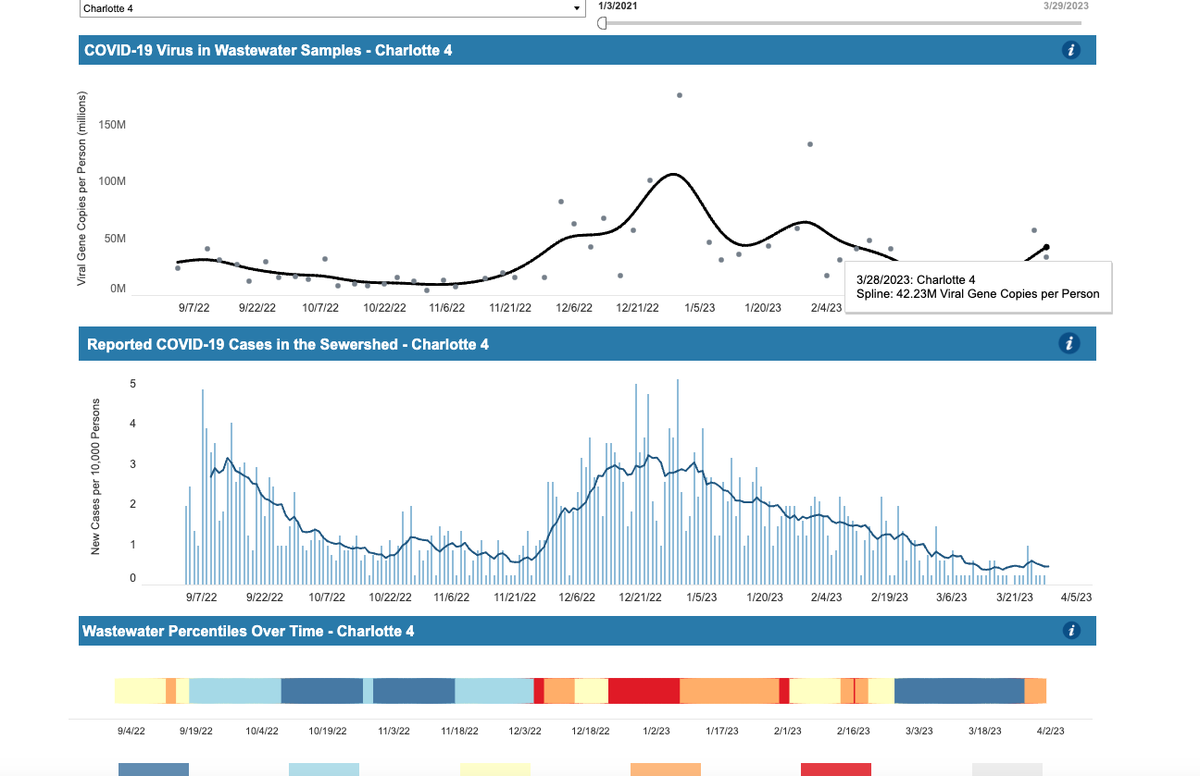
Three other Charlotte-area plants have seen minimal but steady increases in COVID-19 wastewater levels, data show.
For comparison, nearly 70% of wastewater treatment sites saw declines in COVID-19 virus levels throughout March, according to data from the Centers for Disease Control and Prevention.
COVID-19 in Mecklenburg County
While virus levels in wastewater are rising, the number of COVID-19 cases reported in Mecklenburg County has declined.
The number of cases reported in Mecklenburg County dropped each week from March 4-18, according to NCDHHS data.
During the week of March 25, there were 466 cases reported, up from 402 the previous week. Less than 400 cases were reported during the week of April 1.
The inconsistencies between COVID-19 case data and wastewater data could be due to the prevalence of at-home tests, David Freedman, who chairs Clemson University’s Department of Environmental Engineering, told Kaiser Health News.
Since at-home COVID tests are widely available, very few positive results are reported to public agencies, he said, adding that wastewater surveillance is considered the most accurate way to predict virus trends.
How does wastewater surveillance in North Carolina work?
According to the CDC, people infected with SARS-CoV-2, the virus that causes COVID-19, can shed viral RNA in their feces that can be detected in community wastewater.
To test for the virus, samples from wastewater treatment plants are sent to public health laboratories. The testing data is then sent to the CDC and made available to the public through their COVID Data Tracker.
Virginia Guidry, the branch head for occupational and environmental epidemiology at NCDHHS, said wastewater monitoring is one of the most reliable ways to track trends in community transmission.
“We’re pretty confident in our wastewater data as a way to measure what’s going on in the community,” Guidry told The Charlotte Observer in July. “And it captures both symptomatic and asymptomatic folks, regardless of whether they get tested, and that is one the real advantages of wastewater monitoring.”
This story was originally published April 7, 2023 at 11:19 AM.