Someone in Charlotte is pooping a new COVID variant. Is it you? Asking for a virologist.
If you’re a Charlotte resident who has experienced long-term symptoms after contracting COVID-19, researchers need your help – and your poop.
In an X thread on March 2, Marc Johnson, a professor of molecular microbiology and immunology at the University of Missouri, revealed a new “cryptic lineage” his team found in Charlotte, at the Sugar Creek Wastewater Treatment Plant.
A cryptic lineage is a “unique evolutionarily advanced SARS-CoV-2 (the virus that causes COVID-19) lineage found in wastewater from an unknown source,” Johnson said.
According to Johnson, the sample is most likely from a B.1 strain of COVID that circulated more than three years ago.
Those who have experienced persistent gastrointestinal issues since contracting COVID – people Johnson refers to as “cryptic hosts” – could be eligible for a study to find out more about the virus.
“In all likelihood, it is one person,” Johnson told The Charlotte Observer in an email, referring to the “host” of the new lineage. “The simplest explanation (which fits with everything we have learned about these lineages) is that it is a single person that has been infected for a very long time who is shedding a TON of viral material.”
How to participate in the study
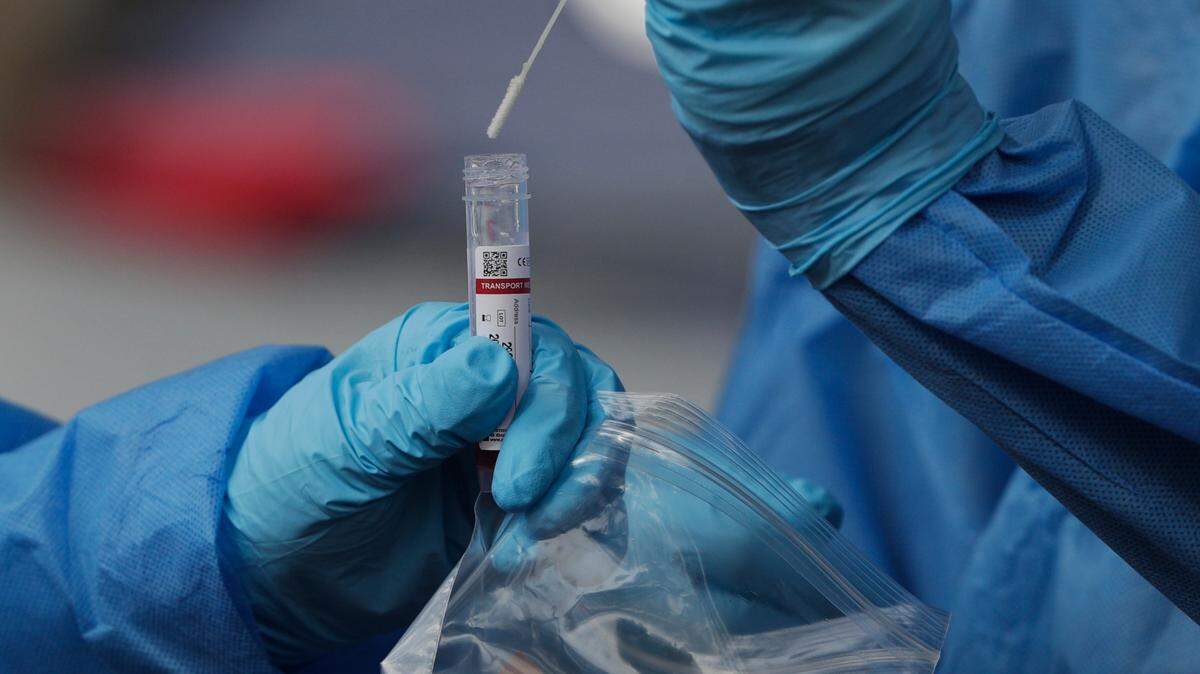
Researchers at the University of Missouri are conducting a study to “examine the characteristics of viruses, specifically persistent SARS-CoV-2 infections, in stool samples,” Johnson said.
You must be at least 18 years old and have persistent gastrointestinal issues to participate in the study, Johnson said.
If you want to participate, you should send an email to gicovidstudy@missouri.edu.
Once you send an email, you’ll get a link a secure portal where you can complete a short survey. After completing the survey, you’ll be sent a kit for collecting a stool sample.
For more information about the study, you can call 573-884-5159.
What wastewater tells us about COVID in Charlotte
According to the Centers for Disease Control and Prevention, wastewater can be an important tool for scientists who study SARS-CoV-2, since small changes in the level of virus in wastewater can be an early signal that the number of people with COVID-19 in a community is rising or falling.
COVID virus levels are trending downward at each of the four wastewater treatment plants in Charlotte, according to the most recent data from the N.C. Department of Health and Human Services.
Those numbers coincide with weekly COVID hospitalization numbers in Mecklenburg County, which dropped from 7.1 to 6.3 admissions per 100,000 people between Feb. 17 and Feb. 24, according to CovidActNow, a nonprofit that provides data on COVID in the U.S.
This story was originally published March 11, 2024 at 5:30 AM.