
Parents worry that Cardinal will cut daughter’s education
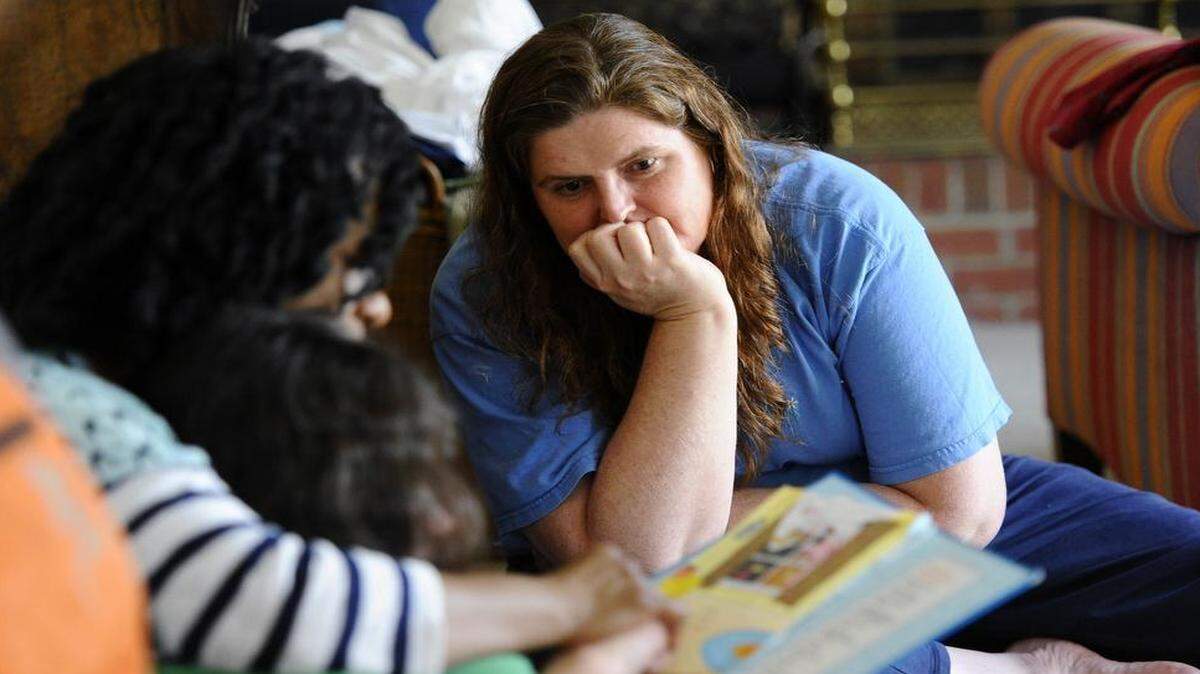
Bewlay Koury looks like a typical 12-year-old, yet her educational needs are anything but average.
She was reading a few words and counting to 30 as she approached her third birthday, but her progress abruptly reversed. She was diagnosed with mitochondrial disease, a cellular disorder that left her profoundly autistic.
Carol Summers, her caregiver for the last seven years, helps her get dressed, set the table or read along with a children’s book. She watches constantly lest Bewlay endanger herself by running into the street or eating something inappropriate.
Medicaid pays more than $73,000 a year so Summers and other aides can help Bewlay live at home in Matthews with her parents and two younger sisters. It’s not only better for Bewlay than living in an institution, it’s cheaper for taxpayers.
Cardinal Innovations Healthcare Solutions, a managed care group that assumed responsibility for Mecklenburg County last spring, pays the bills and monitors her care. President and CEO Pam Shipman says ensuring access to quality care is the group’s goal, while “significant Medicaid savings” have been a fortuitous side effect.
North Carolina legislators made Cardinal the model for managing behavioral health services across the state, in large part because they wanted to control spending.
Christy Koury, Bewlay’s mother, is skeptical. “The focus is on saving money in the short term. Everyone loses when this is the focus,” she wrote after signing a compromise plan for her daughter’s annual care.
Conditions uch as Bewlay’s pose a special challenge. People with autism, intellectual disabilities and cerebral palsy have lifelong needs, and progress can be hard to measure.
Medicaid pays for caregivers to be with Bewlay five hours after school and eight hours on weekends. She also gets physical, occupational, speech and music therapy, and Medicaid has paid to send her parents to conferences on her condition and to fence their yard to keep Bewlay from running off. Koury calls the program a godsend.
But she took issue when Cardinal proposed shifting some of Bewlay’s hours from instruction to lower-paid personal care. Instruction, in this case, doesn’t mean academics, but life skills such as being able to navigate a grocery store or go to a restaurant without grabbing food from a stranger’s plate.
Her parents feared the change in payments would scale back Bewlay’s time with Summers, a former special education teacher who has learned to understand Bewlay’s speech and recognize signs of life-threatening physical problems that Bewlay can’t communicate. While Bewlay will never live on her own, Christy and Ken Koury hope the skills Summers is teaching her will let her live in a group home after they’re gone.
They also understand that taxpayers can’t write a blank check, and that others are on a waiting list for the kind of help Bewlay receives. “I get that we need to save money,” Christy Koury says, “but my job is to be her advocate.”
The Kourys appealed Cardinal’s decision. They went into mediation, and Cardinal agreed to pay the same rate for personal care and instructional time. That ensures that Summers can keep working with Bewlay as her full-time job – at least for now. Christy Koury worries that the compromise plan sets the stage for a future cut in pay.
“I don’t think the plan covers what she needs,” Koury said, “but we can make it work.”
Helms: 704-358-5033;
Twitter: @anndosshelms. This article is done in collaboration with Kaiser Health News, an editorially independent program of the Kaiser Family Foundation.
This story was originally published April 27, 2015 at 2:00 AM with the headline "Parents worry that Cardinal will cut daughter’s education."