
He's Mecklenburg's only wildlife officer in a county with over 1 million people
The only wildlife resource officer in Mecklenburg County is crouched in the trees, waiting for the man at the edge of the water to make a move.
Sampson Parker Jr. moves just slightly off the path at the edge of Mountain Island Lake. The truck he drove is nearby — once he saw someone standing by the edge of the water, he backed up and cut off the ignition. A tree branch snapped underfoot, but the wildlife is loud enough that the sound goes unnoticed.
He waits for the fishing line to enter the water, then steps out of hiding.
“Hey, y’all,” he says to the father and two daughters fishing by the lake. “How are you?”
The father didn’t have his fishing license on him — the girls, wearing Disney princess arm floats, weren’t old enough to need licenses. Parker checked to make sure the dad had one on file (he did) and told him to find it or pick one up from Walmart before he went fishing again.
Parker, 29, is a law enforcement officer, a category that also includes police, fire marshals and post office inspectors. But there are a lot of differences between him and a member of CMPD: His patrol area is the entire county, and he's the only officer assigned to it.
As a wildlife resource officer, Parker regulates hunting, fishing, trapping and boating. Since it's summer, he's focused on the fishing and boating parts of his job.
He gets back into his "North Carolina Wildlife Resources Division" truck that, along with his house, serves as his office. There's a computer resting on the center console, a box of paperwork in the backseat. He’s wearing a uniform and state-mandated body armor in 94-degree weather as he drives from one point to another on Latta Plantation, a public park and nature center in Huntersville.
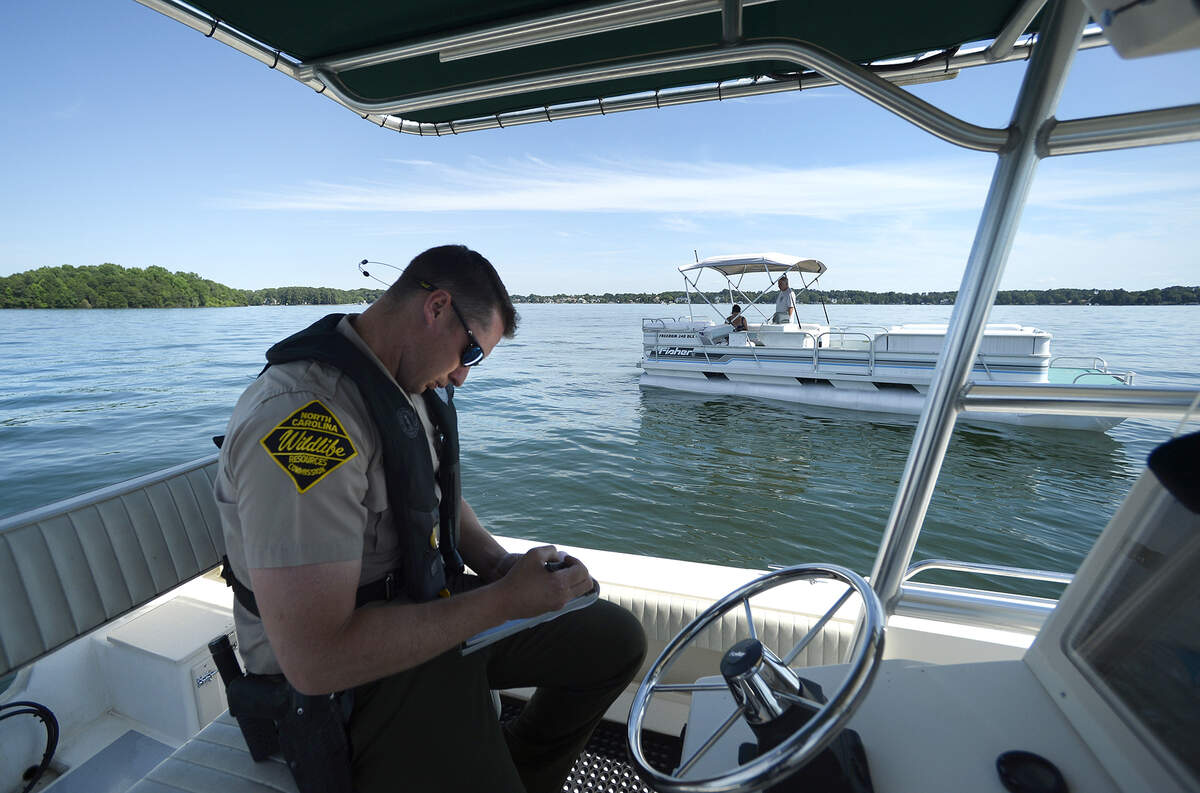
People litter, block boat launches and fish without licenses around the park lake — along with several more serious crimes, like boating while impaired or swimming in boating zones, which can result in injury and death. During other seasons, he patrols for illegal hunting or trapping, which can mean anything from hunting on other people's property to not tagging kills properly to not wearing hunter orange while hunting with a gun.
The challenge is that he has to catch people in the act of doing these things.
“Our job is almost like cat and mouse," Parker said. “If they're just walking around a bank with a pole, they're not technically fishing."
Some of the offenses Parker sees lead to arrests and jail time. But most are infractions that he can write up during a patrol for fines that can end up costing more that $100. The way he sees it, that costs a lot less than the consequences for dangerous activity in Mecklenburg's parks, farms and lakes.
"Citation's a small factor when we think about losing a life or someone drowning," Parker said.
At the next stop, he pulled out a pair of binoculars before approaching another father and his daughter. They had a license — and nine fish, seven of which had been caught by the daughter. Parker congratulates her and keeps trekking through the wooded edge of the lake.
Parker began hunting and fishing at the age of 6, going along with his grandfather in Cabarrus County. By high school, it was his biggest passion. He started going out by himself. He had a license, but he got caught without it once by a wildlife resource officer. Now, they're co-workers.
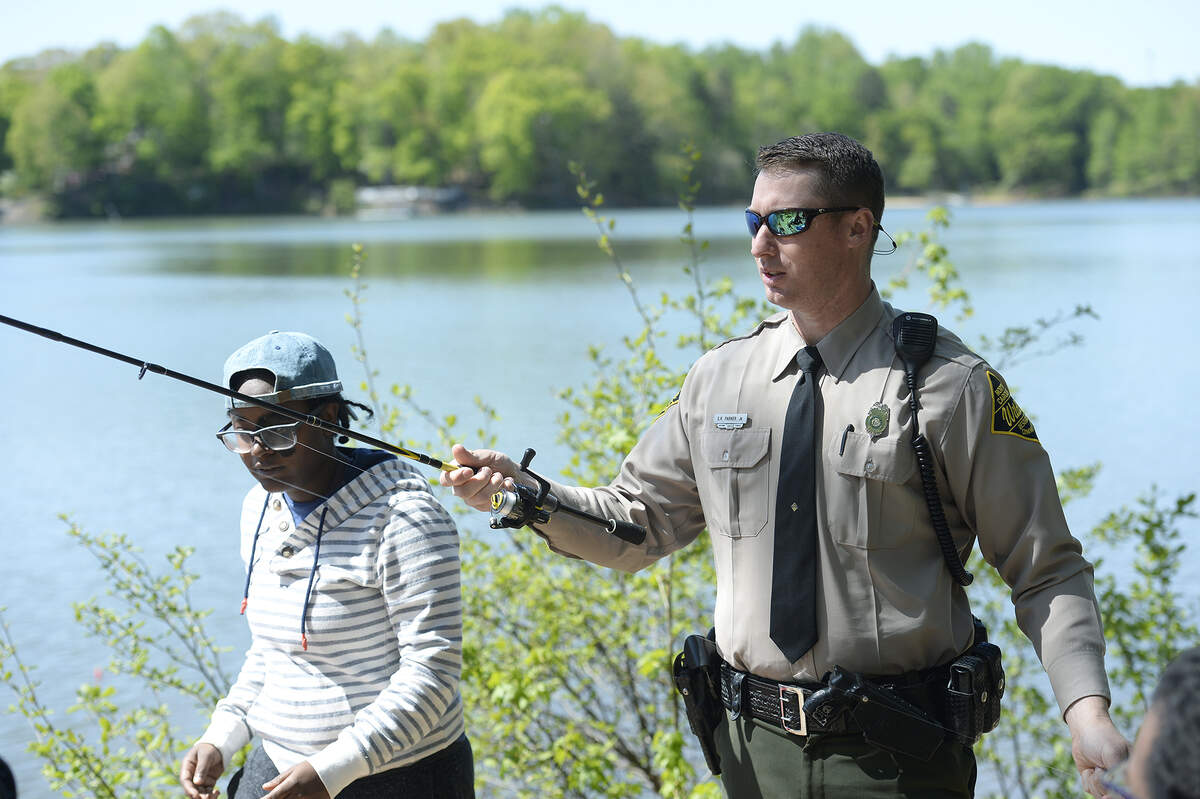
Parker loves being outdoors, loves showing other people how beautiful nature is. He gets to keep an eye on the places that bring him joy, and show other people how to find that — a lot of his job is showing people how to fish and hunt properly.
"You always hear people tell you — if you find a job that's truly your passion then it's not a job. To be out here and be able to protect the resources, it's..." he trails off and smiles.
Parker is the only Mecklenburg officer, but he often goes on patrol with officers from the neighboring counties.
He's worked in Mecklenburg for a little over a year. For training, Parker was stationed in Northhampton County, where the population is barely above 20,000 — about 50 times smaller than Mecklenburg’s.
“It's big,” he said. “Lot of variables. Lot of people. It's just different working here than any other county.”
Parker gets more calls now. It takes him about 45 minutes to get from Latta Plantation to Lake Wylie, which straddles the S.C. border. Traffic is irritating, and sometimes people hunt illegally in the suburbs or near the airport. It’s harder to track hunters’ cars when they’re parked at the edge of a cul-de-sac or an empty lot instead of a dirt road.
Still, most of his job is the same. In late summer dove season begins, then deer and duck season in the fall. In the span of this season, he can check farms for crop circles made to bait migratory birds, stake out at night to catch poachers and talk to Cub Scout troops about the importance of respecting nature. In the winter, he patrols for hunting and trapping. In spring he writes permits for farmers to hunt deer that terrorize their crops, and begins to patrol for fishing again. Boating patrols begin to pick up in May.
Parker likes the variety. He likes that there’s no set schedule. He’s seen grizzly stuff on the job — boating accidents, especially. He’s also seen some bizarre park activities — people will do drugs and hook up in the woods, sometimes in the parking lots. But most of the job isn’t making arrests, it's just making sure the land is safe.
He keeps trekking through the woods. There’s a hammock with two people in it, a thermos next to a beach towel and a radio playing country music as kayaks bob across the lake a few hundred feet away. Nobody’s doing anything wrong. They still haven’t seen him when he slips back into the trees.
This story was originally published June 28, 2018 at 1:05 PM.