
He went to a segregated high school. For decades, he's fought for education equality.
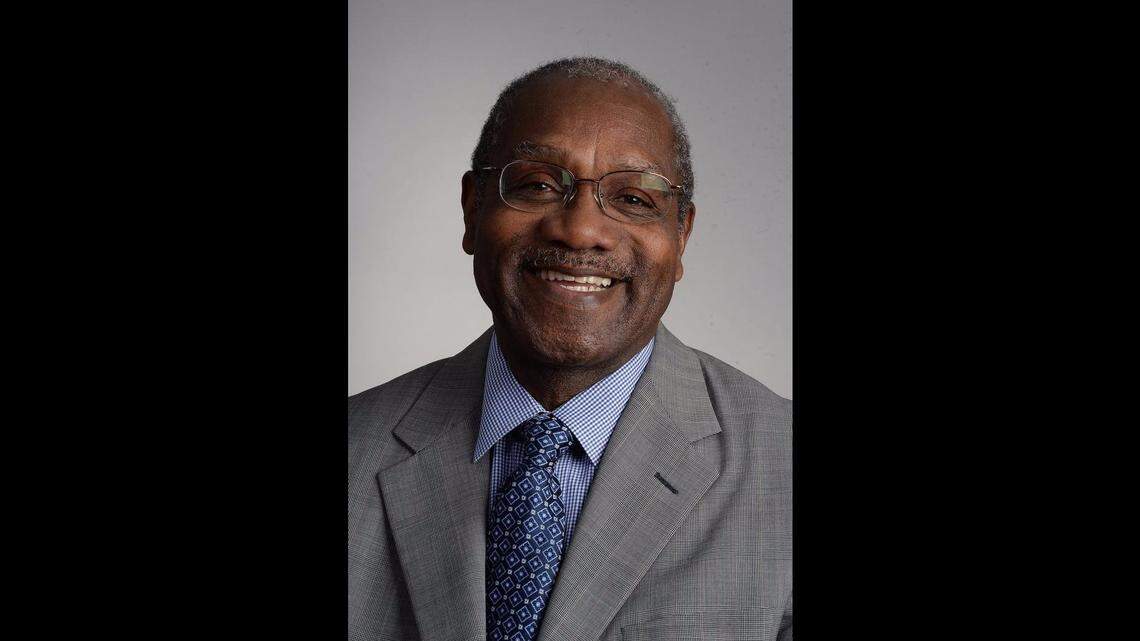
While he was growing up in Charlotte public housing, Arthur Griffin's parents didn't have the resources or power to fight institutional racism, he says.
But now, he does. And he intends to use it.
"I (have the resources). You do. We do," he told the Observer earlier this month. "And we need to stand up and fight institutional racism."
This is exactly what Griffin has worked to do. He's spent over 30 years fighting for equality and inclusion in education— an achievement that won him the Charlotte Post Foundation's 2018 Luminary Award on Thursday.
The Luminary Award is given annually to individuals in the Charlotte community who fight “tirelessly” for equality and inclusion within institutions, said Charlotte Post publisher and foundation president Gerald Johnson in a press release.
“Arthur clearly exceeds this criteria," Johnson said.
Working as a paralegal in Charlotte, Griffin regularly attended school board meetings. He began working for equality in education, criticizing the Charlotte-Mecklenburg school system for its disproportionate suspensions of black students.
He won a seat on the school board in 1988 and served as chair from 1997 until 2002. During his time as chair, he fought for equal facilities among schools and became known for his passion for racial equality.
Griffin's advocacy for diversity made some board members and parents "nervous," he told the Observer upon his departure from the board. He remained vocal regardless.
"Segregation in and of itself creates a broader problem," Griffin told the Observer at the time. "Separate is not equal and we can't be a United States if we're separated."
After leaving the board, Griffin continued to speak out on topics in education. Among them was privately funded education initiative Project LIFT, a five-year project that aimed to improve academic performance at struggling Charlotte schools. Griffin said the project was poorly designed and "born out of charity, not justice" in a 2017 editorial piece for the Observer.
Most recently, Griffin has publicly opposed House Bill 514, a controversial charter school bill. Griffin has stated that the bill, which would allow four majority-white towns outside Charlotte to create their own charter schools, would perpetuate institutional racism. The bill passed on June 6.
Griffin grew up living in Fairview Homes and attended now-demolished Second Ward High in the Brooklyn neighborhood. He graduated and began college at N.C. A&T University, but later dropped out and entered the army, serving in Vietnam.
When he returned to Charlotte, he began working as a paralegal at what became Legal Services of Southern Piedmont, representing public housing tenants.
“He was making contact with people in housing projects and referring their questions to us,” former executive director Terry Roche said in a press release of how Griffin got the job. “Eventually, I asked him, ‘Would you like to get paid for that?’”
Griffin currently chairs Charlotte’s Black Political Caucus, and remains as passionate as ever about quality public education.
“I am more focused and articulate about education,” Griffin said in a press release, “Because if you’ve got a great education, you’ll do well in this country.”
Griffin will receive his award at the Charlotte Post Foundation banquet on Oct. 13 at the Hilton Center City.
This story was originally published June 22, 2018 at 4:59 PM with the headline "He went to a segregated high school. For decades, he's fought for education equality.."