
‘Take what you need.’ Little Free Food Pantry takes a page from free books movement
Luke Tingler stood in his garage, scraping layers of paint off of the old cabinet.
It was hard work for the 12-year-old. He didn’t know much about building, but with the help of his dad and two months of tedious labor, the old cabinet looked dramatically different from what hung on the wall of his garage when he first hatched his plan to build a food pantry as part of his church confirmation.
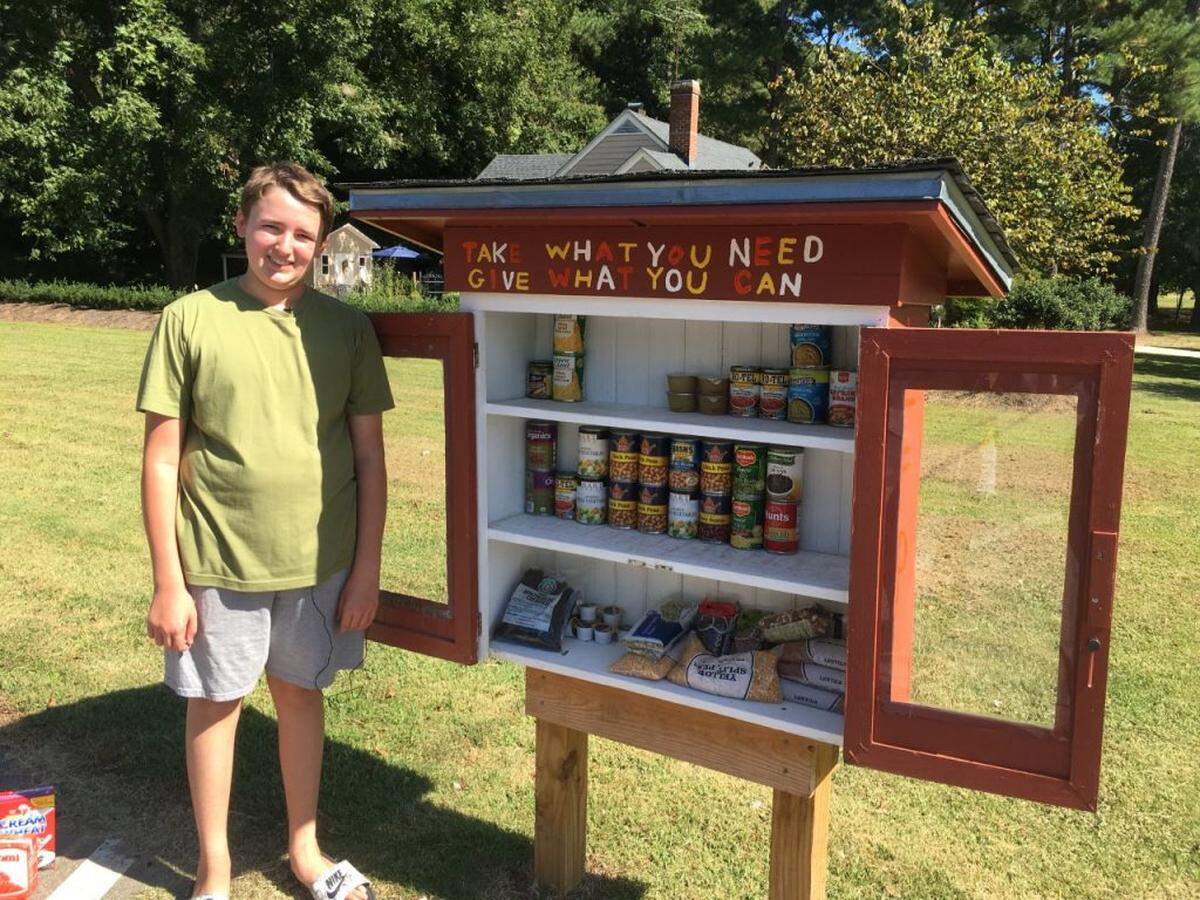
Covered with five layers of rust-colored weatherproof paint, outfitted with a newly-fashioned plexiglass door and protected by a shingled sloping roof, Luke’s project was finally ready for its community debut.
Spring Hope’s smallest food pantry opened for business last spring. The Nash County town near Rocky Mount is about 45 minutes east of Raleigh and 3 1/2 hours east of Charlotte.
Luke strategically positioned the pantry in the parking lot of Gibson Memorial Church on one of the towns’ busiest streets. It’s stocked with a mix of canned goods donated by members of Tingler’s church and items he picked out.
Across the top in block lettering reads the phrase: “Take what you need, give what you can.” The motto, said Tingler, now 13, is at the core of the Little Free Food Pantry movement — a grassroots network of mini pantries fighting food insecurity in communities across the world.
Hundreds of sites
A Little Free Pantry is just what is sounds like: a small pantry, usually the size of a standard kitchen cabinet, with free nonperishable items available for anyone. Modeled off of the Little Free Library movement, there are more than 800 Little Free Pantries registered on the official website.
Anonymity is at the core of the movement. Unlike traditional brick-and-mortar food pantries, recipients don’t need to provide paperwork, proof of residency or financial need.
An estimated 11.1% of U.S. households were food insecure in 2018, according to a recent report by the U.S. Department of Agriculture. Food insecurity is defined as the lack of access to enough food for all household members.
In North Carolina, which ranks 10th in food insecurity nationwide, people in nearly 590,000 households don’t have enough to eat. There are 29 registered Little Free Pantries across the state, according to the movement’s website.
Not just one solution
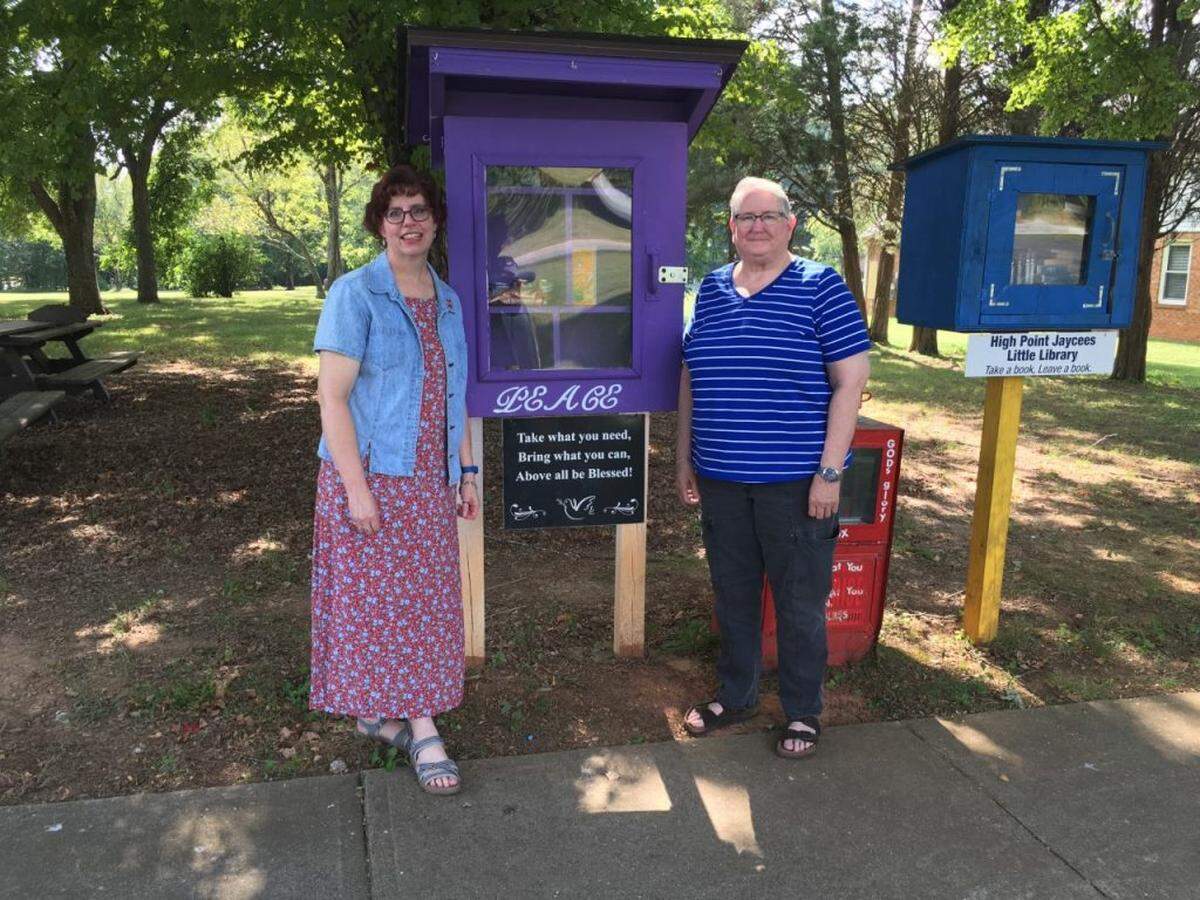
Two hours from Luke Tingler’s pantry, Heidi Minor’s Little Free Pantry in High Point is known as the “Little Free Peace Pantry,” the “pole pantry” or the “purple box on a pole.”
Both Minor and pantry co-founder, Dawn Pugh, were original fans of the Little Free Library movement. The two friends saw a post on Facebook about the Little Free Pantries, and each went to their pastor at Deep River Friends Meeting in High Point asking to pursue the idea.
“I just thought this was something really neat to do for our community, something that says to the community, ‘We may not know you, but you might be having a struggle. And we care, and we want to have this out and available for you,’” Minor said.
They got a box and painted it bright purple, with the word “peace” lettered across the front. In September 2016, the Little Free Peace Pantry opened. The pantry is so popular that is has to be refilled every other day.
“Food insecurity isn’t a problem that’s going to be solved overnight, there’s no one-ticket solution or one plan to fix that,” Minor said. “Maybe over time we’ll get over the stigma that people who need food, it’s not that they’re lazy or not working, it’s not that they’re bad people. It’s just that they need a little help to get by.”
Providing flexibility
Macaroni and cheese, peanut butter and proteins go fast, said Frances Browne, one of the many community volunteers working to stock the Little Free Peace Pantry.
When she’s out grocery shopping, Browne will toss in a few additional items to bring to the pantry. Usually, she can purchase enough food to fill all three shelves for $20, which she does at least once a month, sometimes more frequently if the pantry is running low and another volunteer hasn’t already restocked the items.
Little Free Pantries provide additional flexibility that brick-and-mortar pantries can’t, said Dean Jordan, coordinator of Hand to Hand food pantry in High Point.
The Little Free Peace Pantry is on the same property as Hand to Hand pantry. It’s available 24/7 and unlike traditional pantries with set hours, recipients can access the free pantry any time they’re hungry.
“You never know who you’ll encounter at the pole pantry,” Jordan said. “You don’t know at a regular pantry, either, but it’s especially true at the Little Free Pantry. You see people from all walks of life.”
Worth the work
Every day, Tingler goes down to his Little Free Pantry to make sure things are in order.
He checks for expired goods and makes sure there are enough items stocked at any given time. If things are running low, he draws from a bin of goods donated by members of his church, or pulls items from a separate shelf in his house designated for the pantry.
It’s a lot of work, but it’s worth it to see his project come to life, Tingler said.
He rarely sees people coming to get food, as they tend to come early in the morning or late at night. But even if he doesn’t interact with those using his project, he knows people are benefiting from the support of the community.
“A lot of people can’t afford a meal, and the pantry will really help them be able to afford their next meal,” he said. “I’m glad they found this, because I don’t want people to go hungry, I want people to come to the pantry and get the food that they need.”