Cernyak-Spatz survived the Holocaust — and then made sure others couldn’t forget
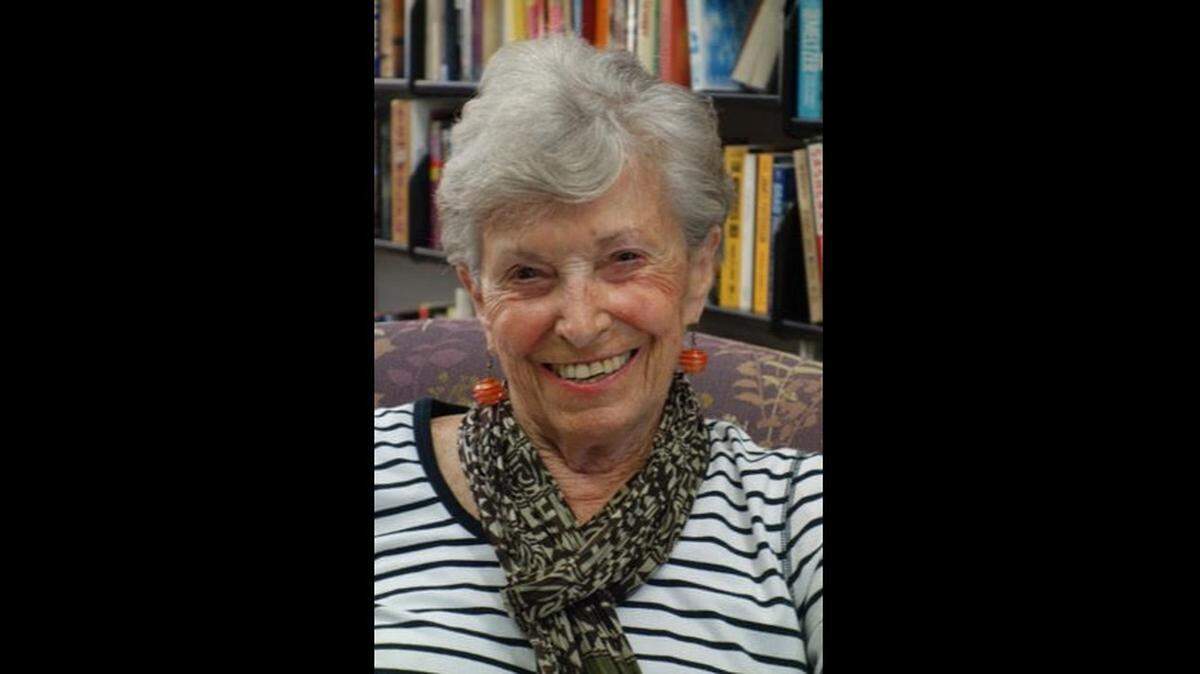
She endured three years in Nazi concentration camps as well as the infamous death march through a bitterly cold Polish winter, surviving only on her wits and will to live.
For the rest of her life Susan Cernyak-Spatz bore witness to the Holocaust to audiences around the world.
Cernyak-Spatz, 97, died Sunday at her Charlotte home.
Over the decades she helped pioneer the Holocaust as a field of academic study. She spent more than 20 years at UNC Charlotte, where she founded Holocaust Studies and helped establish the Center for Holocaust, Genocide & Human Rights (HGHR) Studies.
Her memoir — “Protective Custody: Prisoner 34042” — was turned into a play that premiered just this month with Three Bone Theatre’s production at Spirit Square. A documentary, “Surviving Birkenau: The Dr. Susan Spatz Story,” also debuted this year.
“She was a survivor who endured the worst of historical times,” Rabbi Judith Schindler said Tuesday. “She was a professor who used her experiences and wisdom to teach and transform the world for the better.”
Cernyak-Spatz was one of Charlotte’s last Holocaust survivors. Henry Hirschmann, who had shared his own stories of brutality for decades, died last month at 99.
For Cernyak-Spatz, the lessons of the Holocaust — which killed 6 million Jews — didn’t end with the fall of Nazi Germany in 1945. She worried about the rise of white supremacists and anti-Semitism in the United States and around the world.
“She definitely continued to feel an urgent necessity to talk about the experience and alert people to the danger of anti-Semitism and bigotry,” said John Cox, director of UNCC’s Holocaust center. “She felt even more . . . passionate about that in very recent years as she witnessed the rise of far right political movements.”
‘Dying was easy’
Susan Eckstein was born to an upper-middle class family in Vienna in 1922. They moved to Berlin in 1929, four years before Adolph Hitler came to power.
They eventually made their way back to Vienna. But when Nazi armies moved in in 1938, her father left for Brussels, she fled with her mother to Prague. They were, she later wrote, “sucked into the maelstrom.”
In 1942 Cernyak-Spatz and her mother were taken to Theresienstadt, a transit camp for Jews near Prague. The following year she boarded a train to Auschwitz-Birkenau, the concentration camp in Poland where more than 1.1 million people were killed.
“When the train drove into the camp the only thing you could see was one chimney,” she once told a UNCC audience. “It was the first crematorium. There was an incredible smell. A stink. Nobody could identify it because who in his right mind would have known that there were at least one thousand human corpses burning under these flames.”
Cernyak-Spatz, who spoke several languages, managed to make herself useful to her captors and escape the fate that befell so many others.
“Dying was very easy,” she said at UNCC. “If you wanted to live, you had to work very hard.”
In January 1945, as the Soviet army closed in, Cernyak-Spatz was forced to join 60,000 other prisoners on a 39-mile march from Auschwitz to Ravensbruck, Germany’s largest camp for women. An estimated 15,000 died along the way. American GIs found her at Ravensbruck.
“The Germans were trying to impress the liberators and handed us to the American soldiers and Red Cross,” she would later write.
‘You could hear a pin drop’
After the war, Cernyak-Spatz married an American soldier and moved to his home in southern Illinois. She went to college in Missouri and earned a PhD in German Holocaust literature from the University of Kansas. She took a job at UNCC in 1972.
For Cernyak-Spatz, her Viennese heritage came through in her love of the arts, from ballet and opera to film. At UNCC, she started the course, “German Holocaust in German Literature and Film.” She was never afraid to speak about her experiences with candor.
German professor Anabel Aliaga-Buchenau remembers watching Cernyak-Spatz speak to a class.
“On the first day she would slide her sleeve up and show the students her tattoo,” Aliaga-Buchenau recalls.
The professor once took her class along with Cernyak-Spatz to the U.S. Holocaust Memorial Museum in Washington. At one point she saw her sitting in her wheelchair in a corner recounting stories to the UNCC students sitting around. Soon, Aliaga-Buchenau, said, a crowd of dozens of bystanders had gathered around.
“She was a tiny, diminutive woman,” said Aliaga-Buchenau. “But when she talked you could hear a pin drop. On a personal level, I really think it was her therapy of dealing with that kind of trauma.”
Cox said Cernyak-Spatz had another motive.
“She felt . . . it was urgent and important to educate people not only about the acts of the Holocaust but about the moral lessons that she drew,” he said. “She challenged people to think more deeply about their moral and ethical conduct every day.”
Memorial service
A memorial service for Cernyak-Spatz will be held Nov. 24 at 1 p.m. at Temple Beth El, 5101 Providence Rd. The family will also receive guests at Shiva services at the temple that day at 7 p.m. and Nov. 25 at 7 p.m.