
Outer Banks seashell hunter finds one that was still moving ... and it was ticklish
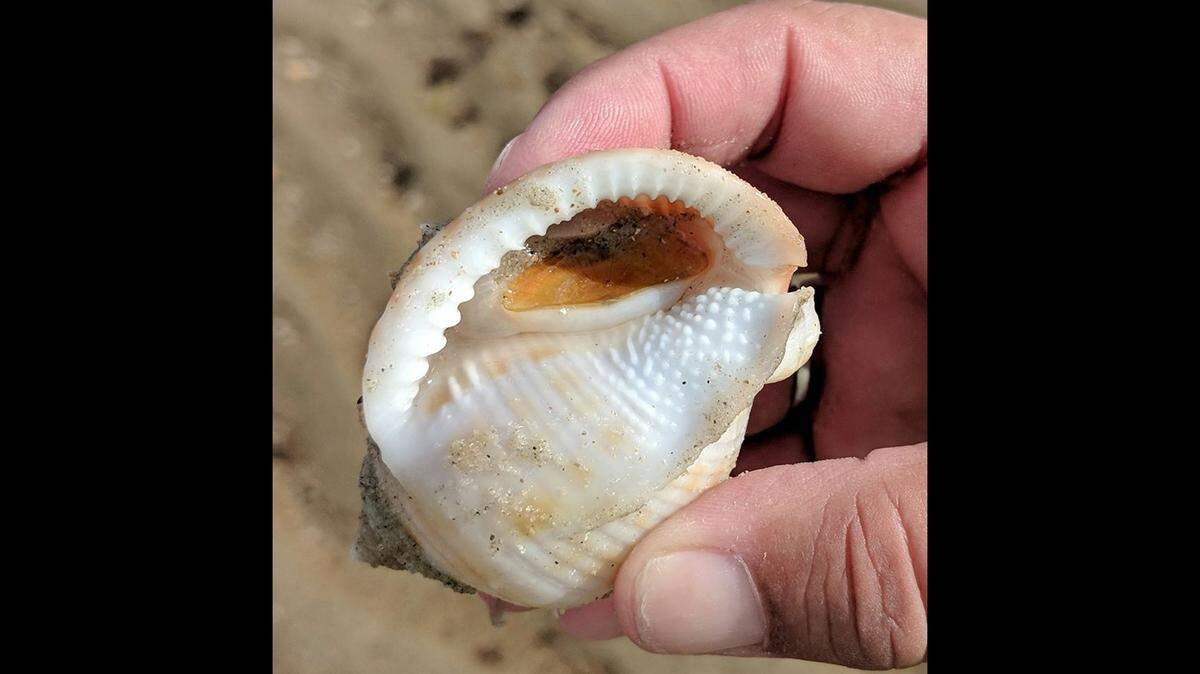
Seashell hunters know the Outer Banks are prime turf after a storm, but a recent visitor to Cape Lookout National Seashore got a rare surprise when the shell’s occupant was still alive — and ticklish.
National Park Service officials posted details on Facebook and identified the shell as a scotch bonnet, a popular species with collectors.
“Did you know that living Scotch Bonnets are ticklish?” the park wrote on Facebook.
“One of our volunteers got a surprise recently when she was trying to excavate a Scotch Bonnet shell out of the sand. When she finally managed to pull it free, the living snail pulled back into its shell. ... Curious, she very gently poked a finger through the aperture to touch the snail, only to watch the snail wiggle and jiggle as it tried to avoid the tickling finger.”
The shell — with the living snail intact — was returned to the sand, the park posted.
”Finding a shell with the living snail inside is very rare,” officials said on Facebook. “Be sure to check all snail shells to make sure they are empty before taking them.”
Egg-shaped scotch bonnet shells grow to about three and a half inches, and are “characterized by short spires, large body whorls, and thickened outer lips,” according to NCPedia.org.
The name is derived from the fact the shell resembles “the caps and plaid worn by the Scottish peasants,” OuterBeaches.com reports.
“This shell is produced by a marine snail that lives in shallow water,” according to Ereferencedesk.com. “The snail that grows inside the shell looks much like a typical garden snail.”
Cape Lookout National Seashore is known as a spot where large and unusual seashells wash ashore, particularly after storms like the nor’easter that struck a week ago.
The National Park Service reported in September — after Hurricane Dorian — that a 2-pound prehistoric clam shell was discovered on the beach, the Charlotte Observer reported. It was nearly 6 inches across and deep enough to be used as a bowl. The park service didn’t give an estimated age for the shell, but told the Observer it had been around long enough to be fossilized.
Earlier this month, wave action at the park also uncovered shells long buried in the mud, including some rare lightning whelk shells that were more than a foot long, the Observer reported.
This story was originally published November 25, 2019 at 12:38 PM.