
As 2020 begins, many Lake Arbor residents still looking for new homes
The initial deadline for tenants to leave their apartments at Lake Arbor passed as the new year began, but the slow work to find stable housing for some of Charlotte’s most vulnerable residents is far from over.
Dec. 31 was supposed to be the last departure date for 177 households in the west Charlotte complex besieged by code violations, after owners this summer announced they were removing all residents to renovate. Removing and relocating residents, however, has been slow and complicated. Resident complaints of substandard conditions and the July order to leave highlighted an immediate crisis in a city already grappling with a severe affordable housing shortage.
More than six months later relocation work continues, said Laura Yates Clark, president and CEO of United Way of Central Carolinas. The United Way’ s most recent data shows 84 households have moved into a new unit or have a scheduled move-in date, many with assistance from a team of nonprofits assembled to help with relocation.
About 126 households completed an assessment for relocation services, though their participation with the nonprofits varied. Clark said it is difficult to know what has become of families that did not participate in relocation services or who dropped out of contact.
Several former residents described a range of outcomes since leaving Lake Arbor.
One, a mother of five young children, had been at Lake Arbor for two years before moving into a three-bedroom apartment in the University area in early December with help from a local nonprofit.
Most of their furniture at Lake Arbor had been destroyed by flooding and mold and they’d made several moves within the complex in a fruitless hunt for better conditions, she said. The new apartment, which she called “a miracle,” was the first time her kids all had a bed of their own.
Others are still searching for stability, and reported staying with friends and family or living in other temporary situations like hotels.
Longstanding complaints
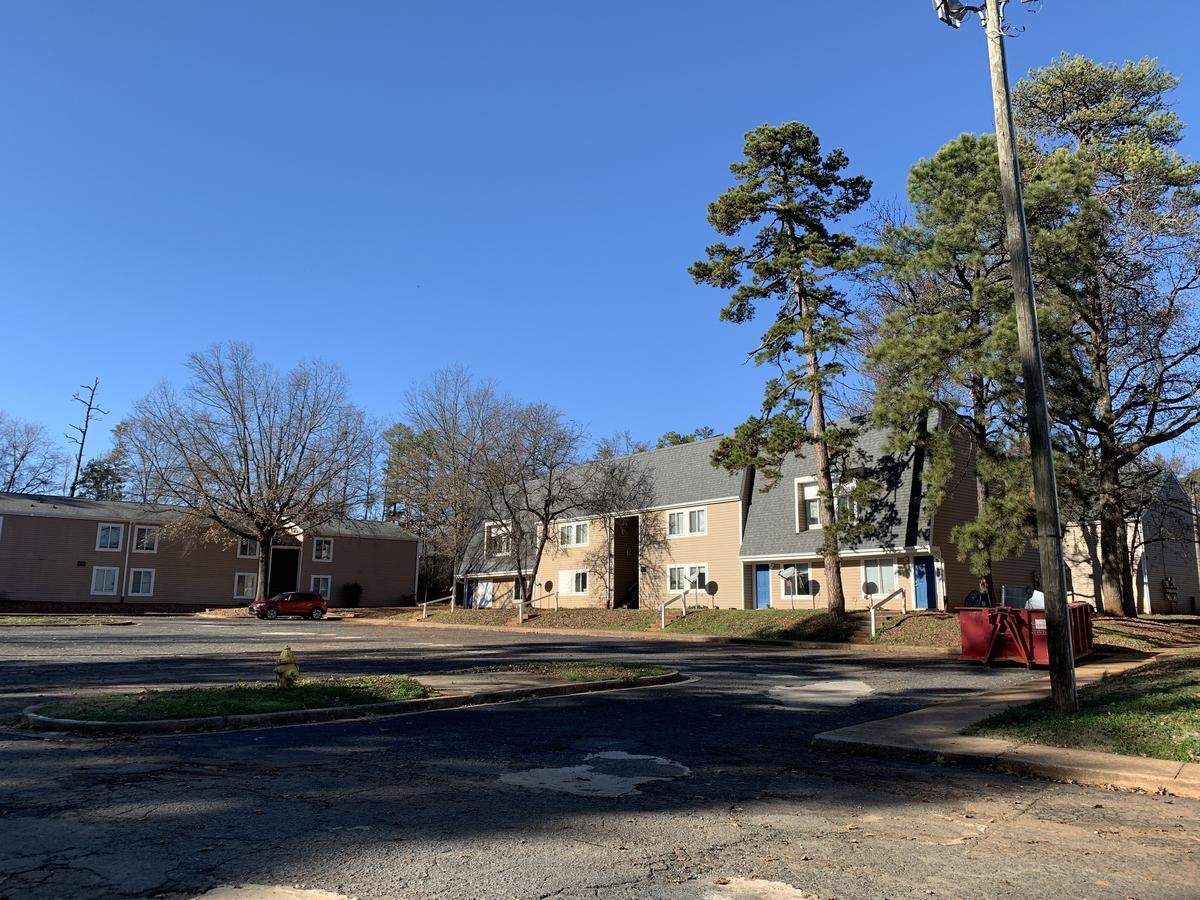
Numerous resident complaints and housing code violations have dogged the nearly 300-unit complex off of Tuckaseegee Road for more than a year. Tenants complained of mold, rats, roaches, unsafe wiring and out-of-order appliances in their apartments, owned by Lake Arbor Dean TIC LLC.
In July owners told tenants they must leave by year’s end. Weeks of confusion, pleas to public officials, court removals and a fundraising drive to assist residents followed. By late December, the sprawling complex was mostly empty parking lots and full dumpsters.
Katie Hedrick, spokeswoman for Charlotte’s Housing and Neighborhood Services Department, said there were 136 open code enforcement cases at Lake Arbor as of Dec. 20, including 93 under appeal. The city doesn’t stop enforcement action even if no one is living there.
Rosenwood, the attorney for the owner, said renovations are expected to begin shortly after the last residents leave, but there is not a projected reopening date.
The goal, he said: “Get it empty, get it all fixed, get it all up to code and turn it back into an operating apartment complex.”
Relocation reflects broader housing crisis
When removal notices arrived on every front door, hundreds of residents suddenly found themselves forced out as soon as a couple weeks.
“Our agencies have worked basically around the clock to try to resolve these issues, but this is the face of the affordable housing crisis,” Clark said. It presented a large-scale, immediate crisis for residents there, many who were low-income or had previous evictions, credit issues, or other financial hurdles to relocation.
“Those are all real systemic problems that are getting in the way of us being able to house people,” she said.
Public fundraising netted nearly $270,000. That covered immediate relocation: moving costs, deposits and clearing existing utility or other debts.
Deronda Metz, director of social services for the Salvation Army Center of Hope Shelter, said she had little to compare the scale of immediate need. The closest she could come up with was the disaster response to Hurricane Katrina when evacuees arrived in Charlotte.
“That is the way I approached it (as a disaster response),” she said. “This is how we need to respond: as quickly as possible to make sure people get into the best situation that they can be in and stay in.”
Meeting the most immediate needs for Lake Arbor residents doesn’t address the Charlotte’s systemic housing problems, nonprofit leaders said. Despite its often squalid conditions, rents at Lake Arbor were well below average in Charlotte.
“United Way was thrilled to come in and provide this sort of stopgap measure, but the money we raised is going to be spent and you’re still going to have a group of families or households that are precarious because of their financial situation,” Clark said.
“As a city we’ve got to wrestle with that. As we focus on the wonderful progress we’ve made around affordable housing — and we have — we’ve got to reckon with and we’ve got to make sure these families have the other supportive services around them they need to be successful.”
This work was made possible in part by grant funding from Report for America/GroundTruth Project and the Foundation For The Carolinas.
This story was originally published January 21, 2020 at 2:58 PM.
%20Cropped.jpg)