
Housing supply lacking for people with disabilities in Charlotte, report says
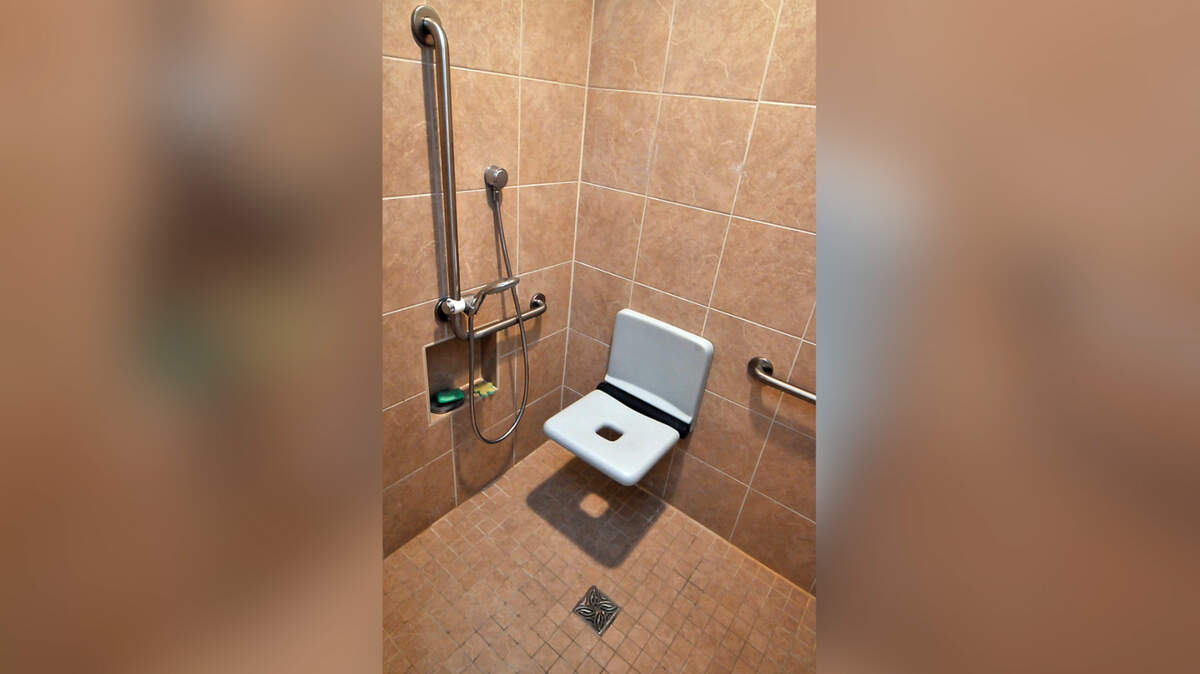
Only a sliver of Charlotte’s housing stock is accessible to people with disabilities, with far fewer units than the number of households who need them, according to a new report.
Just 5.5% of the Charlotte metro’s housing stock meets a federal accessibility standard for residents with mobility disabilities, according to real estate listing site Apartment List, which used Census data to compare supply and demand of accessible units.
However, 11.6% of Charlotte metro households contains someone with a disability. That mismatch is a financial stressor on these households, said the report’s author Rob Warnock.
“It’s something people want, naturally,” he said. “As long as this continues to be something that isn’t built into the vast majority of homes, as long as it’s a commodity, we expect it to continue to carry a price premium.”
The national rate for accessible units was 6.4%, according to the report.
The report used a federal definition for accessible, meaning the unit must have a stepless exterior entry, a bathroom and bedroom on the entry level or an elevator, no steps between rooms or steps with grab rails, and an accessible bathroom with grab bars.
While property owners sometimes are required to pay for modifications like grab bars — including in cases when the property was developed with federal funding — there are instances when renters must foot the bill to make these changes.
Newer multi-family apartment complexes are more likely to have accessible features than older apartments or single-family homes, Warnock said. The data, which is from 2011 — the most recent year the Census surveyed communities on the prevalence of disability-accessible housing units — doesn’t reflect fully the recent apartment construction booms like in Charlotte’s, Warnock said.
“It’s the story of housing right now,” he said, noting the trend toward more residential density in multi-family units. “With accessible features becoming more of the norm than a rarity, then hopefully the tide will start to turn.”
In all but three of the top 100 U.S. metros, households with a member who has a physical disability were cost-burdened — spending more than 30% of their income on housing — at a higher rate than those who are not, the report found.
In Charlotte, 57% of households with disabilities are cost-burdened, compared with 42% of households without a disability. Those residents may have more limitations for employment or have increased medical costs in addition to fewer housing choices.
The low rates of accessible housing units are not surprising, said Corye Dunn, director of public policy for Disability Rights North Carolina. Housing is connected to numerous challenges for people with disabilities, including employment and health care. In addition to physical barriers to housing, she said discrimination can shut out people with disabilities.
“None of it works without stable, affordable, accessible housing,” she said.
This work was made possible in part by grant funding from Report for America/GroundTruth Project and the Foundation For The Carolinas.
This story was originally published February 21, 2020 at 6:00 AM.
%20Cropped.jpg)