
She started city’s first Planned Parenthood chapter in her home. The calls poured in.
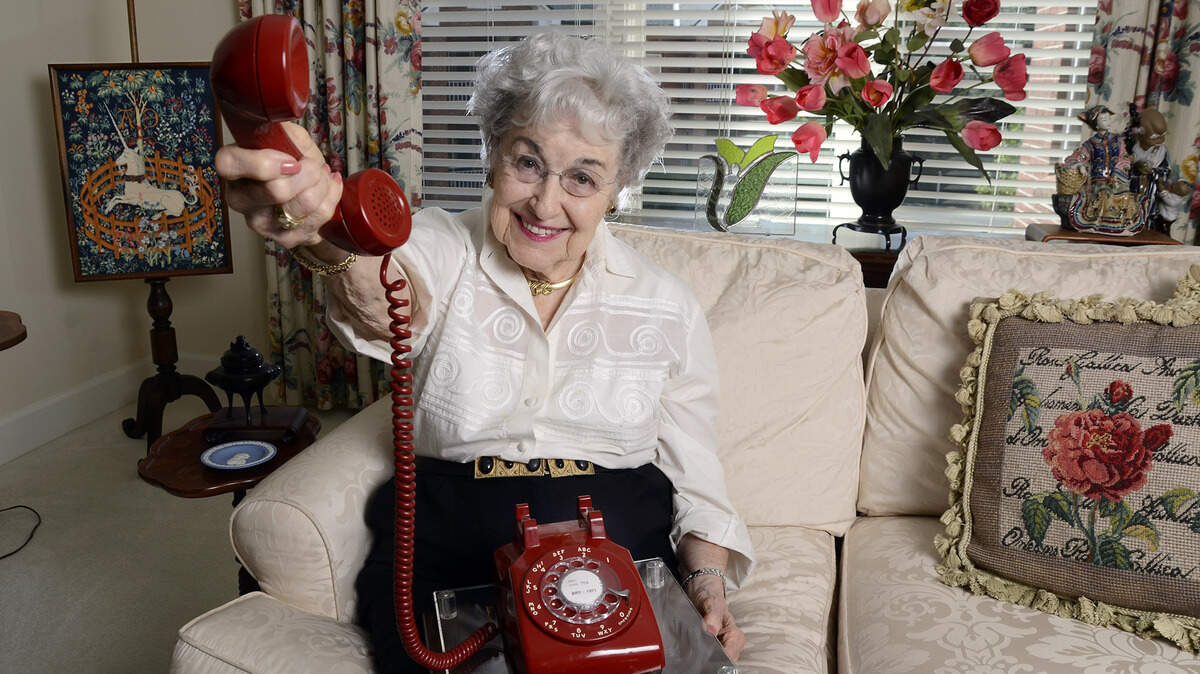
Genteel, cultured, and a lady to the core. That was Sarah Bryant. And in an era when many in the South still whispered the words “birth control,” she used the art of gentle persuasion to establish Charlotte’s first chapter of Planned Parenthood — right in her own home.
Bryant died Monday in Charlotte. She was 98.
“Sarah always had a white-gloves look about her,” said former Observer publisher Rolfe Neill, who with his late wife Ann Neill were early supporters of her efforts. “But she put on her work gloves to create a much-needed home for family planning.”
Through the years, Bryant received numerous awards for her dedicated service to young women, including the Algernon Sidney Sullivan Award from Davidson College, the Margaret Sanger Award from the National Board of Planned Parenthood, the Sarah Bryant Award from the local chapter of Planned Parenthood, and the Lucille Giles Award from Florence Crittenton. She was also honored, with the late Elizabeth Corkey, by the Charlotte Women’s Caucus.
In 1980, she was appointed chair of the board of managers of the old Charlotte Rehab Hospital, making her the first woman to head the board of a Charlotte hospital. She was also the first woman to serve on the executive committee of the Charlotte-Mecklenburg Hospital Authority.
It all began in 1971 with a red rotary telephone in the den of Bryant’s house on Overhill Road.
‘Sweet reason, gentle toughness’
The calls poured in to this makeshift local chapter of Planned Parenthood of Greater Charlotte. The voices on that phone often crackled with desperation. A father worried sick about his pregnant teen. A 13-year-old confused about her boyfriend’s advances. A married woman terrified of conceiving yet again.
A nervous 16-year-old called one day from the school pay phone: “He says that if I really loved him, I would. Do I have to?”
Bryant soothed and counseled, and she referred callers to physicians or to the Florence Crittenton Home.
She used her “sweet reason, tenacity and gentle toughness,” as the late Charlotte lawyer Sydnor Thompson once described her strengths, to help young women negotiate the difficult channel between passion and pragmatism.
An odd pursuit for someone like Bryant, who, as a teen, once sat weeping in an uptown drugstore because she’d ordered a 20-cent banana split and had only a dime in her purse.
Before Planned Parenthood, her life had revolved around her husband Bob Bryant, a funeral director, and her two sons, Frank and Jamie. She led Cub Scout troops, headed up a women’s circle at Myers Park Baptist, taught Sunday school and served on local boards.
It was while serving on the Florence Crittenton board that the sad reality of teen pregnancies hit her.
“Here was this 11-year-old child – pregnant – and carrying her stuffed animals,” Bryant once said. “That child didn’t even know what had happened to her.”
With the encouragement of the late Art Jones and Wallace Kuralt, Bryant and her friends raised $7,500 to open a clinic in a retired doctor’s office on East Morehead. That was in 1971, two years before abortions were legalized.
Bryant advised teens and young women: “Have all the babies you want, but want the babies you have.”
In 1979, she said: “Abortion is an issue the board wrestled with more than any other. It’s not clear-cut. And we’re certainly not for abortions.”
The most important issue, she emphasized, is the “human right to choose.”
Bryant also believed in honoring and valuing what made human beings human, and that included their sexuality, even if the individuals had disabilities.
Wilma Asrael, who with her husband, urologist Gerson Asrael, led sexuality workshops for those with disabilities, often consulted with Bryant. The Asraels wanted suggestions for how to approach people about ideas for making sex easier.
“I felt she was sensitive to that community, and that she had her feet on the ground,” said Wilma Asrael. “She wasn’t going to let me get myself into trouble.”
In 1988, Bryant wrote in an Observer Viewpoint column: “As a community that cares about its children, we all have a responsibility to help them to experience pregnancy as a welcomed blessing instead of a private tragedy. The vision of Planned Parenthood is a time when every pregnancy can be a celebration and every birth a time of deepest joy.”
“Sarah represented the best qualities of a Southern woman,” said Laurie Johnston, a former president of Planned Parenthood. “Warm and loving, polite and caring, committed and determined, smart and wise. I have been with Sarah when she has charmed the toughest opponents with her convincing and practical views about the need for family planning services.”
A Charlotte native
Sarah Brownlee was born May 8, 1922, at Charlotte’s St. Peter’s Hospital on North Poplar Street, the first of four children of Warren Francis Brownlee and Grace Rutledge Brownlee. She grew up on Lexington Avenue in Dilworth and graduated from Central High in 1940.
Bob Bryant, whose family had moved to Charlotte from Greenville, S.C., spotted Sarah at Pritchard Memorial Church, where both families were members. He commented to a friend about her “good-looking legs.”
Soon, he was inviting her to fraternity parties at Davidson College, and in January 1942, “worried that the Davidson boys would be sent away to war,” Bob and Sarah married. Sarah was a student at the Woman’s College (now UNC Greensboro). She later finished her degree at Queens College, now Queens University of Charlotte.
The Bryants were living in Wichita Falls, Texas, when World War II ended, and they returned to the Myrtle Apartments in Dilworth. Soon after the birth of their second son, Frank, they moved to Overhill Road.
Bob Bryant died in 1999, and a decade later, his widow moved to Southminster.
Looking back over her life, in the spring of 2011, Bryant said that “the happiest, most wonderful decades” were when Bob, her parents and his parents were alive, and when their children were growing up.
“I’ve been so blessed with a wonderful life all the way through,” she said.
Said Rolfe Neill: “We are the beneficiaries of Sarah Bryant’s vision and vitality.”
This story was originally published August 4, 2020 at 12:18 PM.