
Pioneering surgeon ‘fixed hearts but now leaves so many broken’ with his passing at 94
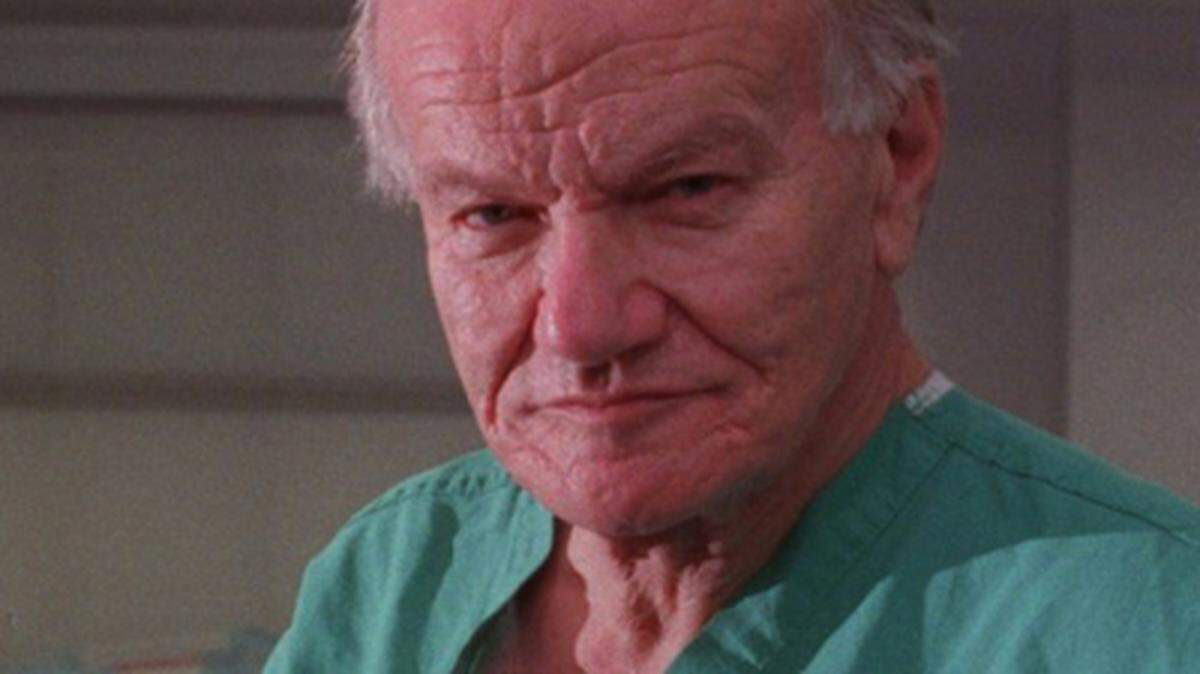
Dr. Francis Robicsek, who fled his native Hungary as a young man in 1956 and became a world-renowned heart surgeon in Charlotte, died peacefully at his home Friday, April 3, surrounded by his family. He was 94.
A pioneer in cardiac surgery, Robicsek was one of the first doctors at Carolinas Medical Center to perform heart bypass operations in the 1950s and the first heart transplant in 1986. He founded the Sanger Clinic, now Atrium Health Sanger Heart & Vascular Institute, and spent more than 50 years working to advance cardiac care.
“He was an international giant,” said Jim Hynes, chairman-emeritus of the board of Atrium Health, which owns Carolinas Medical Center. “He was one of a kind.
“A lot of the new people in Charlotte may not know who he is,” Hynes said. “But 30 years ago, when he started open-heart surgery, virtually everyone in the community knew who Dr. Robicsek was because he had saved the life of a friend or family member.”
In recent online memorials, many patients and colleagues remembered him fondly.
Kelly Ray Terry, a retired sales rep for a medical device company, called Robicsek “a great innovator,” having invented many instruments and techniques used in heart surgery. “He fixed so many hearts, but now leaves many broken with his passing.”
Robicsek never lost his Hungarian accent or his creative drive. Starting in the 1960s, he helped establish heart surgery and pediatric intensive care programs in Guatemala, Nicaragua, El Salvador, Honduras and other Central American countries.
Despite undergoing triple heart bypass surgery in 2007, he continued to visit Central America and Europe, giving medical lectures, receiving honors and attending medical conferences.
Francis Robicsek was born Ferenc Robicsek in Miskolc, Hungary, on July 4, 1925.
He graduated from medical school at Pazmany Peter University in Budapest in 1949, at age 22. By 28, he was chief of the University of Budapest Department of Cardiac Surgery.
During the Hungarian revolution, Robicsek and his young wife, six months pregnant, fled Soviet control. On Oct. 26, 1956, they traveled to East Berlin and defected to West Berlin by eluding guards on the subway. They spent time in an Austrian refugee camp before flying to Camp Kilmer, N.J. From there, they took a train to visit Robicsek’s uncle, Andrew Roby, a Charlotte contractor, who helped them get visas.
In 1957, Robicsek went to work for Dr. Paul Sanger, a thoracic surgeon at Charlotte Memorial Hospital, now Carolinas Medical Center. Sanger, Robicsek and their partner, Dr. Fred Taylor, performed the city’s first open-heart operations.
To do that surgery, they needed a heart-lung machine to keep hearts beating during surgery. Robicsek visited the Cleveland Clinic to observe the one used there. Then in Charlotte, he and an engineer friend built their own heart-lung machine in the friend’s garage. For years, Robicsek loaded that homemade unit onto a pickup truck every week and ferried it between Charlotte Memorial and Mercy Hospital (now Atrium Health Mercy).
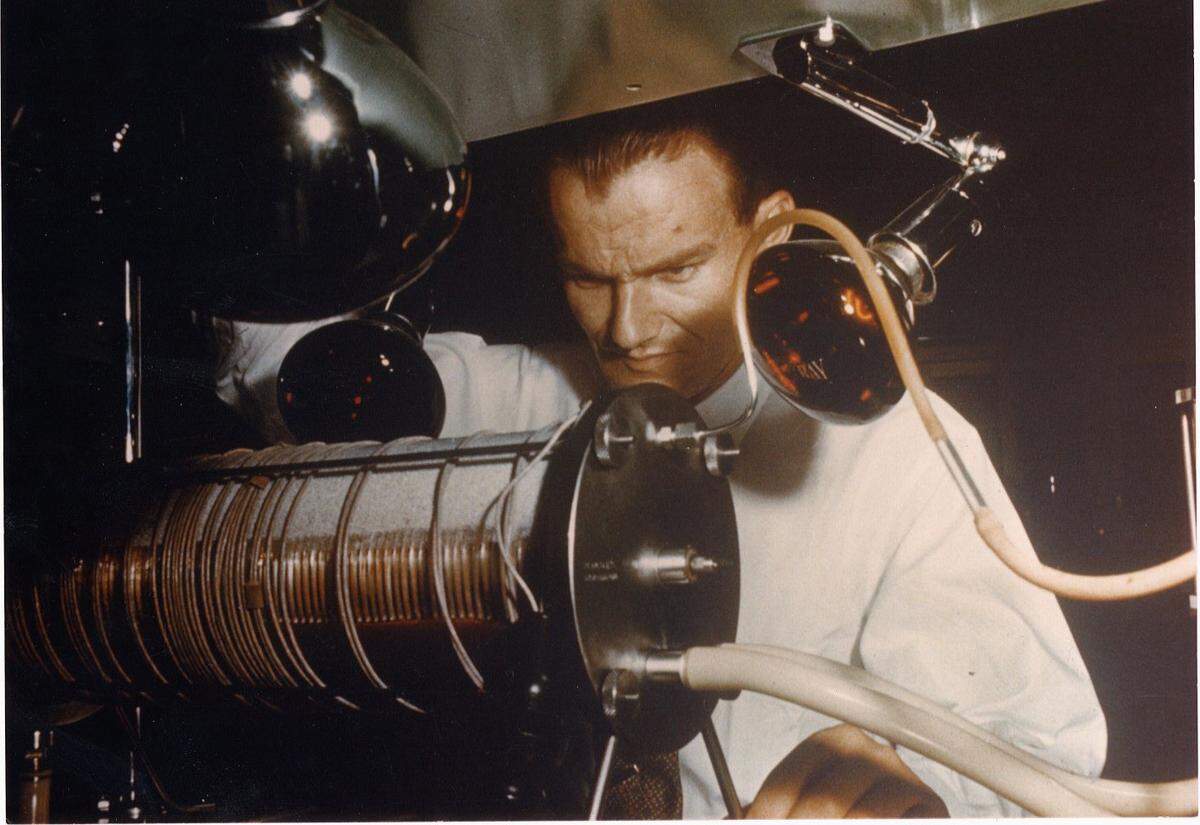
In 1986, Robicsek and another Sanger partner, Dr. Harry Daugherty, performed Charlotte’s first heart transplant, the beginning of what is now one of the busiest transplant centers in North Carolina.
Robicsek was committed to racial integration in the days when Charlotte’s African American patients were treated separately at Good Samaritan Hospital. Robicsek couldn’t perform heart surgery there, but he arranged to have black heart patients admitted to a special tuberculosis hospital in Huntersville, even though they didn’t have TB. He had arranged to do heart surgery there. “He was proud that he found ways to deliver the care that was needed,” said Robicsek’s son, John.
Robicsek was already famous for his take-charge attitude when, on New Year’s Eve 1964, a fellow Charlotte doctor, Archie Coffee, collapsed beside him in a hospital elevator. His heart had stopped.
This was before the use of mouth-to-mouth resuscitation or chest compressions. But Robicsek, who had trained where medical equipment was often inadequate, knew how to improvise. On the elevator floor, without gloves or anesthetic, he grabbed a suture scissors from a nurse and opened Coffee’s chest, reached inside and massaged the dying heart.
Robicsek and others carried Coffee to a patient room, where Robicsek yanked the cord out of a table lamp. Then, in a primitive version of the electric shock used today, he zapped the heart into rhythm. Coffee recovered and lived 31 more years.
At international conferences, Robicsek often shared the podium with such eminent heart surgeons as Michael DeBakey and Denton Cooley, both of Houston.
Cooley, who performed the world’s first artificial heart transplant in 1969, visited Charlotte in 1998 and called Robicsek “one of the top 10 best-known cardiac surgeons” in the world.
Robicsek was a self-taught expert on Mayan culture and the author of five books on the subject. His interest in Central America began in the 1960s with a two-week trip to Honduras, when he performed free surgery on tuberculosis patients. He could operate only once a day because the hospital was short on supplies. So between operations, he explored the ancient Mayan ruins.
Over the years, he amassed a large collection of pre-Columbian pottery, from perfectly preserved pieces to broken fragments that had to be restored. He donated most of the collection, more than 1,000 works, to Charlotte’s Mint Museum of Art on Randolph Road, where it is displayed in the Lilly and Francis Robicsek Galleries.
On one of his trips to Guatemala, he met then-President Carlos Arana, and they hatched a plan to bring the country its first heart surgery program. It was the first of many projects Robicsek engineered to bring state-of-the-art health care to Central America.
His volunteer efforts ramped up after 2009 with the creation of the International Medical Outreach Program, a partnership between Carolinas HealthCare System (now Atrium Health) and Heineman Medical Outreach.
As part of that project, Robicsek got his choice of equipment that would otherwise have been discarded by the hospital system. He then raised money to have the equipment refurbished and shipped to Central American countries.
Over 50 years, the program Robicsek led provided mobile cardiac catheterization labs to Guatemala, Honduras, Belize, Nicaragua and El Salvador. Equipment has also been sent to build pediatric and neonatal intensive care units in Guatemala, Honduras and Nicaragua.
“He’s deified in a lot of those places,” Dr. Jim McDeavitt, a former head of the international program, told the Observer in a 2009 interview.
When Robicsek retired from surgery in 1998, he objected to using the word “retirement.” When people asked if he was going to take up golf, he would say, “If the point of the game is to get the ball in the hole, it makes a lot more sense to pick it up and drop it in the hole and move on to something more interesting.”
Robicsek’s office walls were filled floor-to-ceiling with plaques and honors from organizations around the world. One of the latest, in 2017, was the Surgical Humanitarianism Award from the American College of Surgeons.
During one of his medical mission trips to Nicaragua to in 2007, Robicsek said he had an odd feeling and a “hunch” that led him to catch the next plane home.
Two days later, he was having open-heart surgery — the same surgery he had performed thousands of times — at Carolinas Medical Center. This time, the surgeon was Dr. Eric Skipper, Robicsek’s one-time surgical fellow.
Robicsek had never had heart problems, but then 81, he wasn’t surprised to finally be the patient. “Considering an alpha personality and my age, odds are a minimum 50-50 that you either will be operated on or die — or both — from coronary artery disease,” he told the Observer at the time.
Most patients take three to six weeks to return to work. But Robicsek was back in his office eleven days later. Five weeks after surgery, he left for previously scheduled trips to Munich, Venice and Barcelona.
Robicsek was well known for his quick wit and love of pranks. In his younger years, he would slather petroleum jelly on telephone receivers and remove the letters “WO” from women’s restroom doors at the hospital. He often stuffed his bulging briefcase with a raccoon tail that hung curiously out the side.
For years he teased his longtime partner, Daugherty, by listing a fictitious patient, Maya Bisser, on the surgery schedule. One day, Daugherty got back by arranging to have a woman march into the doctors’ morning conference and introduce herself as Maya Bisser. In a 1998 interview with the Observer, Daugherty said that was the only time he ever saw Robicsek speechless.
A stern-looking man, tall and broad-shouldered, Robicsek could be intimidating. His temper was legendary. And his deep voice with its thick accent only added to the mystique. In an online memorial, Gayle Thomas Butler, a nurse for 35 years at CMC, said he had “the roar of a lion and the heart of a lamb.”
“I was petrified when he was on the floor,” nurse Wendy Shank told the Observer in 1998. But she got to know Robicsek’s softer side when she was eventually hired to work with him closely.
One of her many jobs was to comfort patients who were depressed or struggling by delivering a teddy bear. She said Robicsek told her “if I ever ran out of teddy bears, I would be fired.” She took him literally, and Robicsek was later astonished to find that Shank had stored 1,300 teddy bears, just in case.
Robicsek is survived by Lilly, his wife of 67 years; four children, Dr. Steven Robicsek (Dr. Melissa Vu) of Gainesville, Fla.; and Susanne Robicsek, Frances Robicsek Furr (Charlie Furr) and John Robicsek (Caroline Robicsek) of Charlotte; and five grandchildren.
Robicsek requested to be buried in his scrubs. A private service will be held for the family, and a public service will be announced at a later date.
This story was originally published April 5, 2020 at 6:31 PM.