They felt safe climbing aboard this cruise ship. Now, they’re afraid they’ll die on it.
The world was a much different place — or, at least, it sure felt to them like it was — when Lewis and Shirley Buckler left Huntersville to fly to Santiago, Chile, where they would get on a cruise ship bound for the southernmost part of the Americas.
That was March 3. On March 5, the Bucklers were among the 1,020 guests who left Chile’s Puerto San Antonio on the Coral Princess, which also was carrying 878 crew members.
But before they could reach what was originally supposed to be their final port, in Buenos Aires, Argentina, a global pandemic erupted and left them all essentially banished to the sea.
Now, 32 days and thousands of extra miles later, the Bucklers are among many passengers still on board — hanging in limbo as government officials grapple with how to handle the massive ship that arrived at the Port of Miami on Saturday with more than a dozen people who tested positive for COVID-19, the disease caused by the new coronavirus. Three passengers now have died of it.
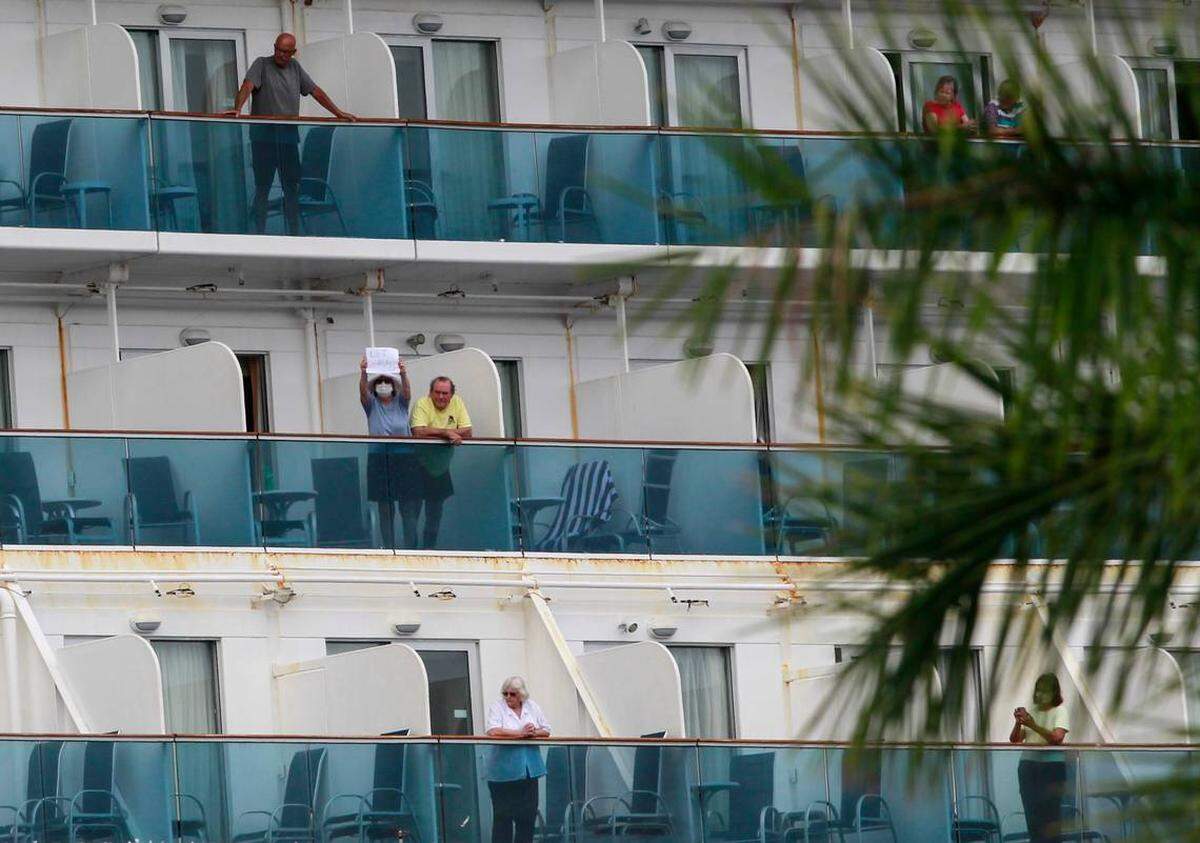
And Lewis and Shirley Buckler (who are 72 and 70 years old, respectively) fear a similar fate.
“We are more concerned,” Lewis said in a Facetime call with the Observer on Monday, “because we’re in a demographic that, if we get it, it could easily be fatal. Too easily.”
Lewis, who has a pacemaker and multiple heart conditions, said he’s running low on his prescription medications. Shirley, who suffers from severe lactose intolerance, said the kitchen — which for most of the trip was able to adapt to her food sensitivities — has of late been bringing them meals she can’t eat.
They’ve been self-isolating in their stateroom since last Wednesday, and now only have the clothes on their backs and their overnight bags, since the crew took the majority of their belongings over the weekend to be sanitized.
“I don’t know how they’re gonna get us home. I have no idea,” Shirley Buckler said. “But ... we can’t stay on this ship.”
“Some people may think that we’re not young, but we have a lot of living left to do.”
‘We were in about the safest place’
The Bucklers had only recently moved to North Carolina, having relocated from Virginia to be close to their son Richard, their daughter-in-law Cindy, and their grandchildren Devin (14) and Averi (10).
They said their move in January didn’t go smoothly — their new Northstone home had undergone a significant remodeling project, then they said the movers damaged several family antiques and scratched up the hardwood floors. So they booked the 14-day cruise for themselves in the hopes of relieving some of that stress.
When they left Charlotte on March 3, the U.S. had only 125 confirmed cases of the coronavirus, and President Donald Trump was still more than a week away from announcing significant travel restrictions; Chile, meanwhile, had seen just one case by that point, and its government was still more than two weeks away from shutting the country’s borders.
The messaging was that the risk “was in Asia,” Lewis Buckler said. “South America looked clear. In fact, that’s one of the last things we said to people was, ‘At least we’re going to a continent that doesn’t have COVID.’ ”
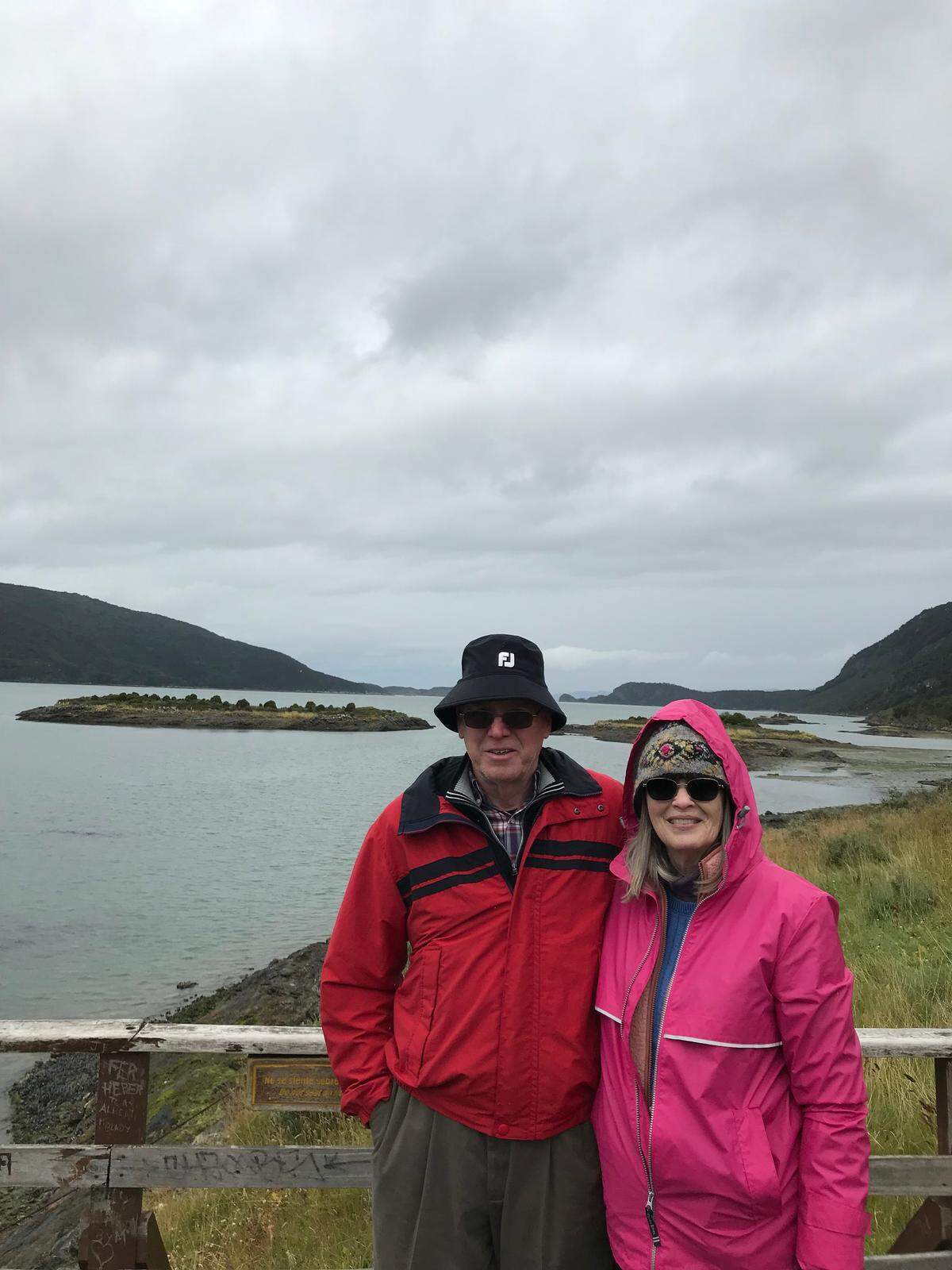
The majority of the original part of the trip was wonderful, the Bucklers said. They cruised through Chile’s incredible southern fjords, into Punta Arenas (where they saw penguins) and out to Stanley on the Falkland Islands (where they saw more).
Even as news reports about the spread of the disease were becoming more dire, “all of the passengers were saying that we were in about the safest place,” Shirley Buckler said.
But as the Coral Princess arrived in Buenos Aires, the Argentine government announced it was closing its borders. A number of people were let off the ship, but after they arrived at the airport to find their flights had been canceled, they were allowed back onto the ship, Lewis Buckler said, “and not quarantined.”
The following day, the Coral Princess stopped in Montevideo in Uruguay, where Buckler said it picked up “a small group of American passengers off of an Antarctica ship, so that they would have a way home. ... To our knowledge, they were not quarantined either.”
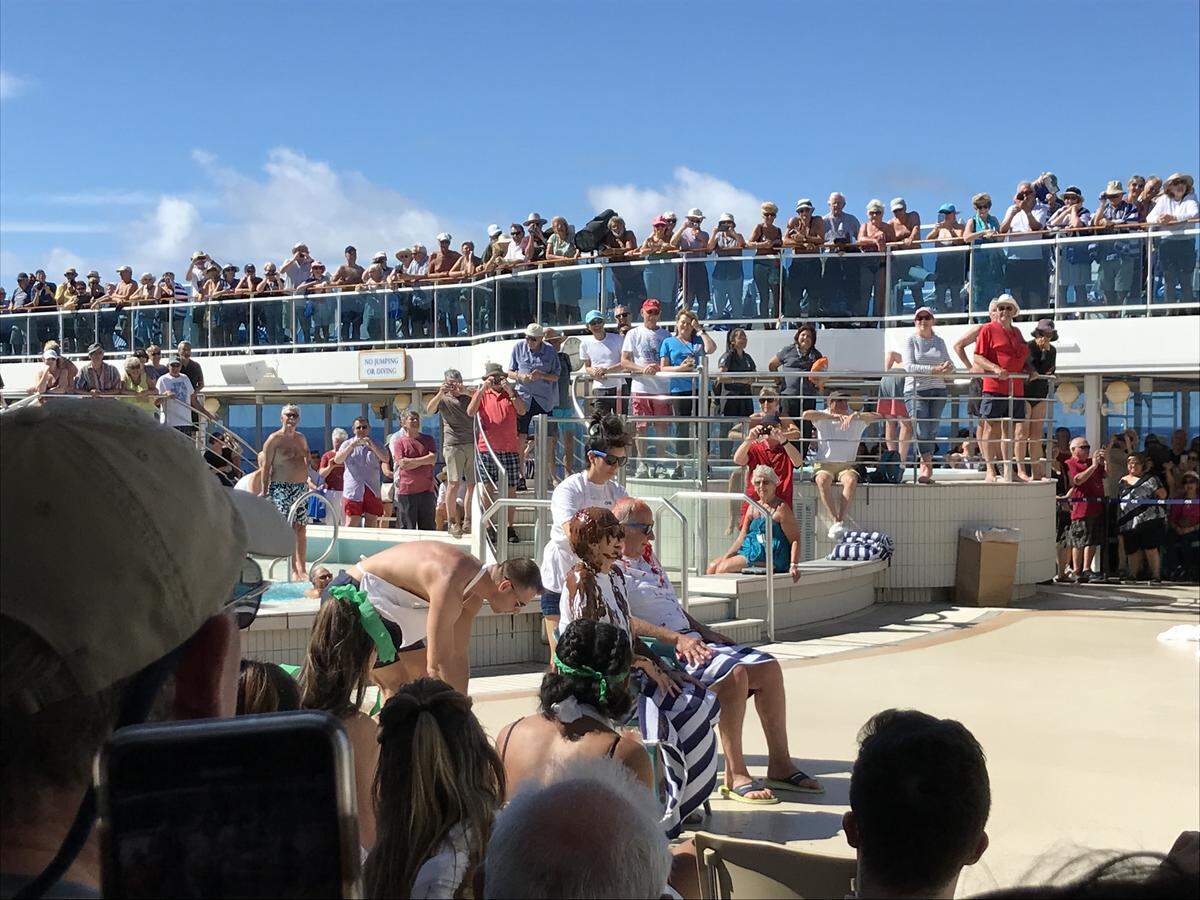
On March 28, there was “a huge celebration” where “almost the entire ship was up on deck” when the ship crossed the equator, Shirley Buckler said.
Three days later — on March 31 — Carnival-owned Princess Cruise Lines issued a statement saying the onboard medical center had reported “a higher-than-normal number of people presenting influenza-like symptoms,” and that “out of an abundance of caution,” guests were being asked to self-isolate in their staterooms with all meals to be delivered via room service.
The next day, Princess Cruise Lines confirmed some guests had been tested and that the results had yielded 12 positive cases — seven guests and five crew members.
When the captain delivered the same news to the passengers, Shirley Buckler said, “We were all pretty angry that we had been allowed to wander around.
“He had talked about ‘an abundance of caution,’” she said, “but it wasn’t applied early enough.”
A long way from home
After the Coral Princess arrived at the Port of Miami Saturday morning, officials began evacuating sick passengers, according to a CNN report quoting Miami-Dade Mayor Carlos Gimenez.
At the same time, the Department of Homeland Security and Centers for Disease Control and Prevention issued new guidelines prohibiting cruise-ship passengers and crew arriving in the U.S. from getting onto commercial domestic flights — even if they’re not showing symptoms.
Princess said on Saturday that chartered flights were arranged to return larger groups to California, Australia and the United Kingdom (350 British citizens arrived back in the U.K. Monday), but acknowledged that disembarkation of the remainder of the guests would “take several days due to limited flight availability.”
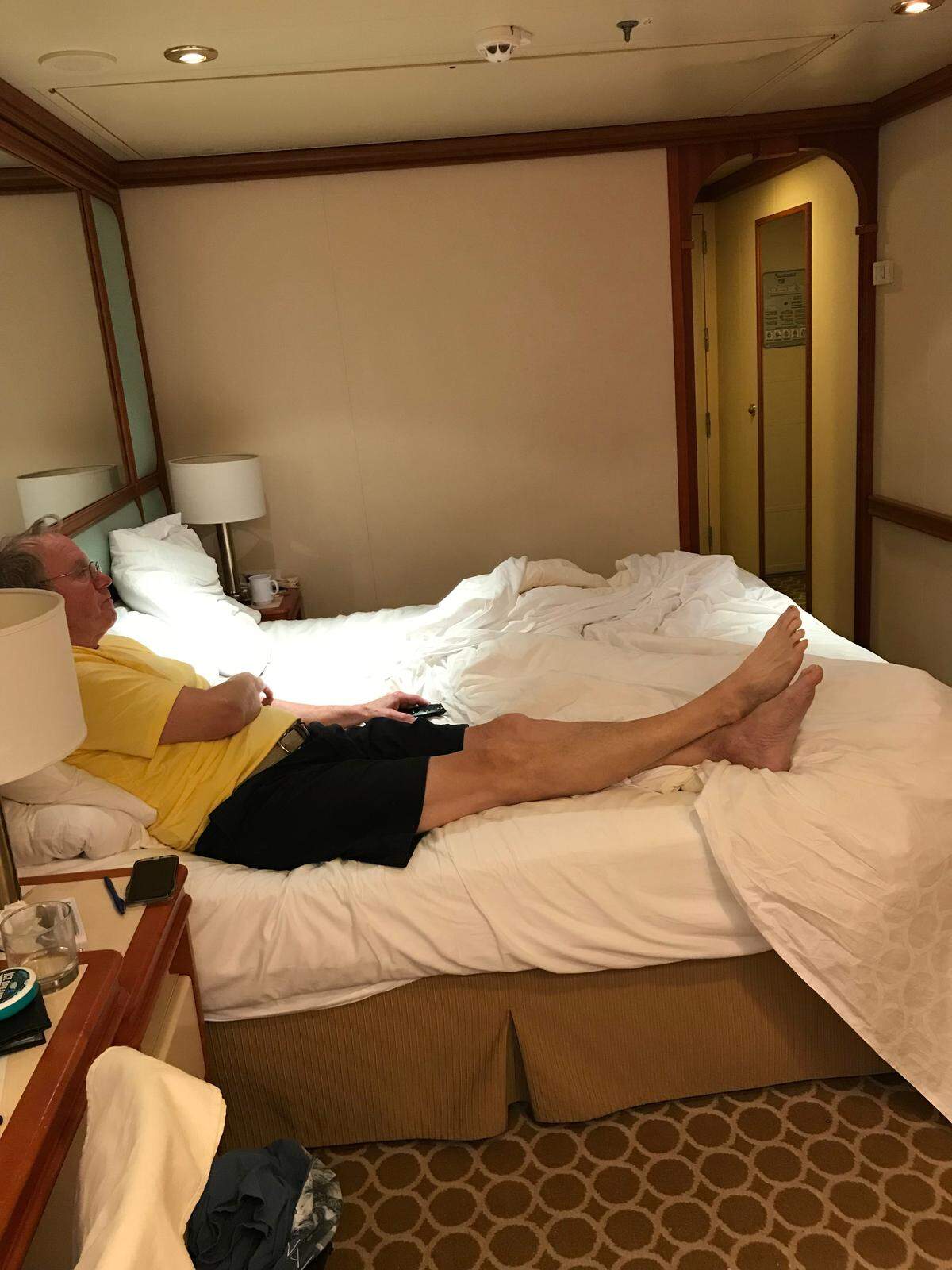
So for now, the Bucklers can only relax on their beds watching television or reading (their stateroom has no sofa) or hang out on their balcony staring off at downtown Miami (they’re on the starboard side, so they have no idea how many are getting off, or how fast or slow the flow of people is).
They’re trying to remain optimistic.
“But a charter flight for two people is not gonna be very high on their list,” said Lewis Buckler, who added that their offer to make the 10-hour drive from Miami to Charlotte in a rented car was denied. “I guess they’re afraid we’ll touch something when we stop for gas.”
They’re trying not to worry too much.
“But right now what comes to mind is the Princess ship in Japan,” Buckler said, referring to the Diamond Princess cruise-ship outbreak in Hong Kong that killed 12 people and infected more than 700. “The longer we stay on the ship, I know, the more risk we have.”
They’re trying not to get too angry.
But, he said, “if our government had been the least bit honest with us, we would have canceled this cruise.”
Amid all the uncertainty, though, one thing is for sure: They’re no longer keen on big boats.
“In July,” Lewis Buckler said, “we had planned to take our whole family to Scandinavia and St. Petersburg (in Russia) on a 14-day cruise. But no, I don’t know when we’ll ever get back on a cruise ship, if ever. I don’t know when I would ever feel safe. This came on so fast, that I’m not sure when I would ever feel safe again.”
Shirley Buckler, meanwhile, put it more bluntly.
“There is no way in hell I am getting on another ship anytime soon.”
This story was originally published April 6, 2020 at 4:31 PM.