Tired of social distancing? NC residents are leaving home more, cellphone data shows
There are signs that North Carolina residents are growing weary of staying at home even as the state’s coronavirus cases and deaths continue to climb. Now there are numbers to back it up.
People in North Carolina left their homes more, left their counties more and traveled longer distances in recent days than in previous weeks, according to data compiled by the University of Maryland. The numbers, however, are much different and indicate much more social distancing than pre-coronavirus data in February.
The state registered a 45 on the study’s social distancing index from April 17 to April 23, its lowest score on the index in four weeks. A 0 means no social distancing is being observed, while a 100 indicates all residents are staying at home and no visitors are entering.
For the same week, Washington, D.C., had a national-best index of 73 with New York (68), Hawaii (67) and New Jersey (67) near the top. Less-populous and large Western states like Wyoming (32), South Dakota (35) and Montana (37) were at the other end.
Nearby states like Virginia (53) and Georgia (50) scored higher on the index, while others like West Virginia (44), South Carolina (43) and Tennessee (42) scored slightly worse.
The index is a formula that factors in the percentage of residents staying at home, reduction in trips compared to pre-COVID-19 benchmarks and other trips. The university said it is using “privacy-protected data from mobile devices, government agencies, health care systems, and other sources” to compute its numbers.
North Carolina has more than 8,800 lab-confirmed cases of coronavirus and more than 300 deaths.
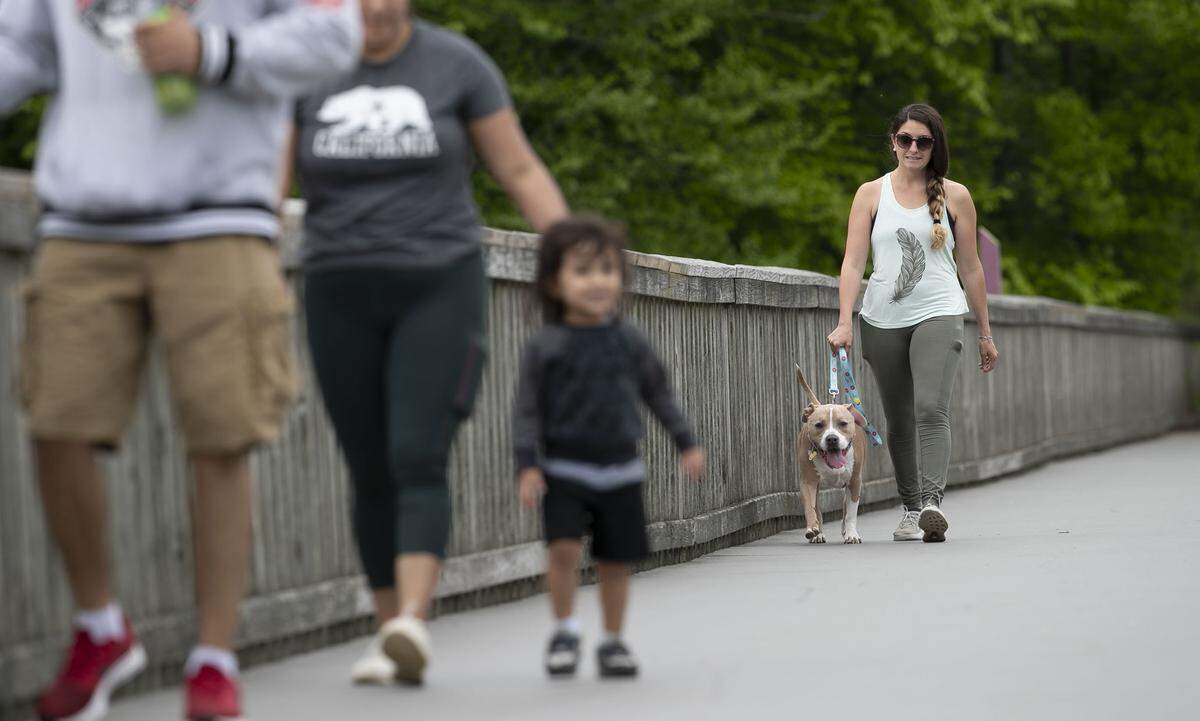
Gov. Roy Cooper’s order to stay at home, with exceptions for going to an essential business, exercising outdoors or helping a family member, went into effect on March 30 at 5 p.m. Cooper has extended the order through May 8. Public school buildings were closed March 14. NC Health and Human Services Secretary Mandy Cohen had said repeatedly that, in the absence of a vaccine or therapeutic drugs for coronavirus, social distancing is the best weapon.
North Carolina residents, according to the data, began traveling less and staying home more in March and early April.
NC’s drop in social distancing
But The Washington Post reported that in a comparison of data from April 10 and April 17, North Carolina and Louisiana showed the biggest drop in social distancing.
“We saw something we hoped wasn’t happening, but it’s there. It seems collectively we’re getting a little tired. It looks like people are loosening up on their own to travel more,” Lei Zhang, lead researcher and director of the Maryland Transportation Institute at the University of Maryland, told The Washington Post.
North Carolina’s index number had improved or remained even for five consecutive weeks before dipping in the period from April 17-23, the last day for which data is available.
“I know there is a lot of frustration with the steps toward extreme isolation that North Carolina and other states have imposed,” Mark McClellan, director of the Duke-Margolis Center for Health Policy, told The News & Observer in an interview April 21.
“We are getting tired of it. It’s having a big impact on the economy,” said McClellan, a former Food and Drug Administration commissioner under President George W. Bush.
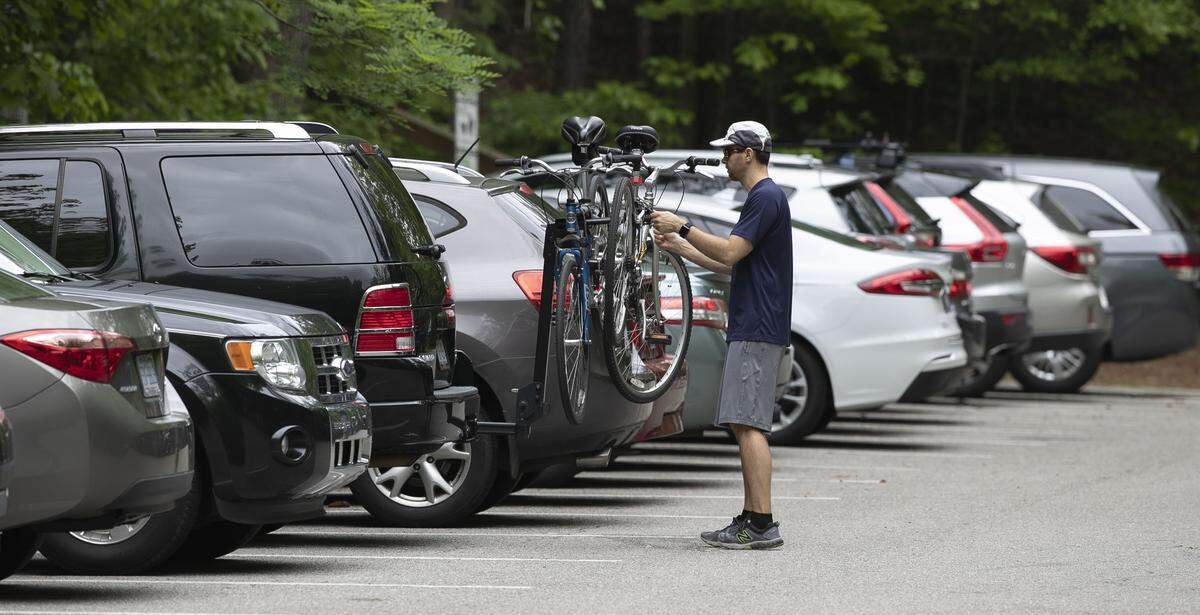
“We have been able to make a substantial impact on slowing the spread and reducing the number of cases and getting to the point where we can actually seriously think about containing this virus in the months ahead to be enable seriously reopening because so many people have taken steps to respond to the governor’s orders and municipal orders to stay in place. It’s working.”
But not everyone agrees.
About 1,000 protesters, including Republican U.S. Rep. Dan Bishop, converged in Raleigh on April 21 to call on Cooper to end his order and re-open the state’s economy. Since March 15, more than 730,000 people in North Carolina have filed to apply for unemployment benefits.
“Let the governor know we need to operate our businesses,“ said Leonard Harrison, a protester from Mebane, according to previous News & Observer reporting.
Other Southern states, including Georgia and South Carolina, have been more aggressive in reopening businesses or lifting restrictions.
Cooper and his administration have laid out benchmarks for moving into a phased re-opening of the state’s economy, borrowing from President Donald Trump’s guidelines for states.
“We have to figure out where we want to live in terms of deaths per day and social distancing response to match where we can live morally, ethically, socially, individually, collectively,” said Pia MacDonald, the senior director of applied public health research at RTI International. “That’s a tough question to wrangle with.”
“None of us want to live under the wet blanket,” MacDonald, a member of the faculty at UNC’s school of global public health, told the N&O in an interview. “I’m tired of this. Everyone is tired of this. Which things can we back away from and keep the morbidity and mortality at a level we can live with where everyone who needs a hospital bed and hospital care can get it? I don’t think it’s one size fits all.”
What the research shows for NC
| Dates | Social distancing index | % staying home | Trips per person | % Out of county trips | Miles traveled per person | Coronavirus cases |
| Feb. 14-20 | 22 | 19 | 3.2 | 31 | 37.5 | 0 |
| Feb. 21-27 | 20 | 19 | 3.3 | 31 | 37.9 | 0 |
| Feb. 28-March 5 | 17 | 17 | 3.4 | 31 | 39.4 | 1 |
| March 6-12 | 17 | 18 | 3.4 | 31 | 39.6 | 14 |
| March 13-19 | 28 | 22 | 3.2 | 30 | 33.7 | 125 |
| March 20-26 | 43 | 27 | 2.8 | 28 | 26.6 | 604 |
| March 27-April 2 | 48 | 30 | 2.7 | 27 | 24.3 | 1,250 |
| April 3-9 | 48 | 29 | 2.8 | 27 | 23.6 | 1,772 |
| April 10-16 | 49 | 30 | 2.7 | 27 | 23.5 | 1,952 |
| April 17-23 | 45 | 28 | 2.8 | 29 | 25.3 | 2,204 |
Source: University of Maryland COVID-19 Impact Analysis Platform
This story was originally published April 26, 2020 at 2:45 PM with the headline "Tired of social distancing? NC residents are leaving home more, cellphone data shows."