Ronnie Long’s last shot at freedom: Judge asks, ‘When did justice leave the process?’
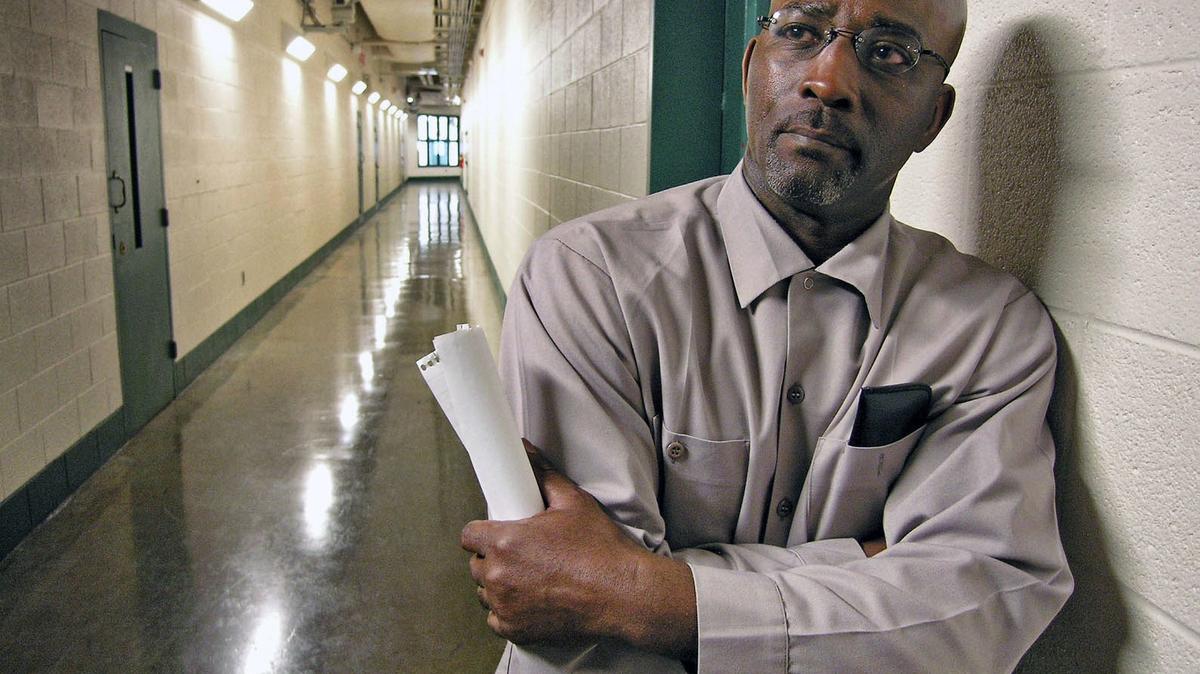
What may be Ronnie Long’s last chance for freedom appeared bolstered by members of a powerful appeals court last week who challenged the state’s continued defense of the Concord man’s 1976 rape conviction despite a mound of suppressed evidence.
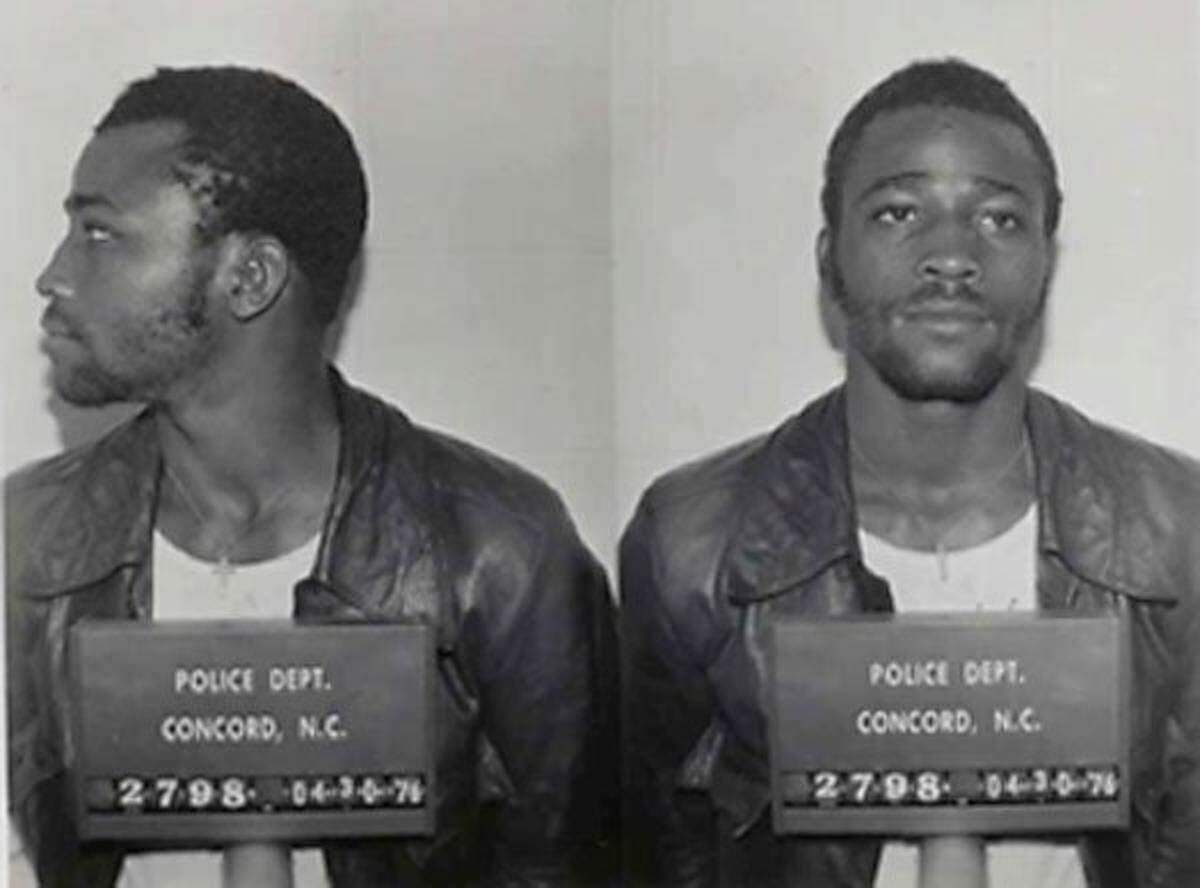
Long, 64, who was found guilty by an all-white jury of raping the wife of a Cannon Mills executive, has consistently maintained his innocence. Now, more than halfway through his 80-year prison sentence, Long’s request to reopen his case went back before the Fourth Circuit Court of Appeals on Thursday.
Whether a majority of the 15 members of the nation’s second highest court decide to give Long a new trial won’t be known until summer. But most of the judges who spoke during the hearing expressed skepticism toward Long’s conviction due to the government misconduct involved, according to a recording posted on the court’s website.
Close to a dozen pieces of evidence tested by the State Bureau of Investigation — evidence that could have weakened the prosecution’s case — were never disclosed to Long’s attorneys or the jury, court documents show.
As recently as 2015 — almost 30 years after the trial — Long’s attorneys learned of 43 fingerprints police collected from the rape scene but never shared. None of the prints matched Long’s.
Semen samples taken from the victim also were never disclosed to the defense and later disappeared.
“No jury would convict Mr. Long today,” Attorney Jamie Lau of Duke University’s Wrongful Convictions Clinic told the judges. “Would we even have had a trial if all the evidence had come forward?”
Lau’s arguments drew a particularly strong response from Judge James Wynn, who like Long is African American and at 66, two years older. Also like Long, Wynn grew up in a small North Carolina town, Robersonville in the eastern part of the state.
Interrupting the presentation of N.C. Assistant Attorney General Phillip Rubin, Wynn alluded to his N.C. roots as well as the state’s long history of “deliberate” police and prosecutorial misconduct toward black men.
In Long’s case, “Prosecutors clearly had evidence that any defense counsel in the world, not only in 1976 but (in) the history of this country, would have wanted or needed and which should have been supplied. And yet, we did not provide it,” Wynn said.
He also challenged the state’s continued defense of Long’s conviction.
“What is it about us that we want to prosecute and keep people in jail when we know evidence may exist that might lead to a different conclusion,” Wynn said. “Why is that so offensive to us now that we want to ... protect (illegal) activity from 44 years ago.”
“What’s the harm of looking (at the new evidence)?” he said. “When did justice leave the process so we let our rules blind us to what we all can see?”
Rubin, while acknowledging the missteps in the original prosecution, also said they were not essential to Long’s conviction. He noted that the victim had identified Long in a courtroom and later during a police lineup, and that clothing she said her attacker had worn — a leather jacket, gloves and a toboggan — were found in Long’s car.
Rubin described the suppressed evidence as “so minimal it would have no impact on the outcome of the trial.”
‘The answer is no’
The hearing for Long’s appeal was an unusual one given that the Fourth Circuit’s courthouse is closed due to the pandemic. Nine of judges followed the arguments remotely through computer video hookups. Six others listened in by phone. Lau made his case from a Duke classroom. Long, who remains imprisoned at the Albemarle Correctional Institute, did not take part.
Early in Lau’s arguments, Judge Harvey Wilkinson of Virginia raised concerns over “what road the case takes from here” because the victim, who the judge said gave a “strong identification,” is now dead and can’t testify.
Judge Paul Niemeyer of Maryland, who had voted down Long’s appeal in January as part of an earlier three-judge appellate ruling, told Lau that the lawyer’s arguments were raising factual allegations that “our court is not well equipped to assess.”
However, Judge Stephanie Thacker of West Virginia were among a number of Niemeyer’s colleagues who pushed back against the state’s defense of Long’s conviction.
During a back-and-forth with Rubin, Thacker got the state prosecutor to acknowledge that none of the clothing found in Long’s car could be tied to the crime scene. Of the suppressed fingerprints, she asked, “Do you think that would have impacted (the outcome)?”
Chief Judge James Gregory homed in what he described as the “the piece de resistance” of the trial — the prosecutor’s assertion to the jury during his closing argument, that “every piece of evidence” presented to the jury proved Long’s guilt.
“That was not true, correct? Yes or no?” Gregory said to Rubin.
“I don’t think it was fully accurate,” Rubin replied, adding that the evidence presented “was still consistent with committing the crime.”
Gregory cut him off.
“The answer is no,” the judge said.
Wynn, noting that Long has already served 44 years, asked Rubin “what would happen if we allowed this case to go back (for a new trial)? How is the government harmed?”
“Rules can allow an injustice that can be cured so easily,” he said.

This story was originally published May 12, 2020 at 6:00 AM.