They’ve already recovered from COVID-19. Now, they’re donating plasma to treat others.
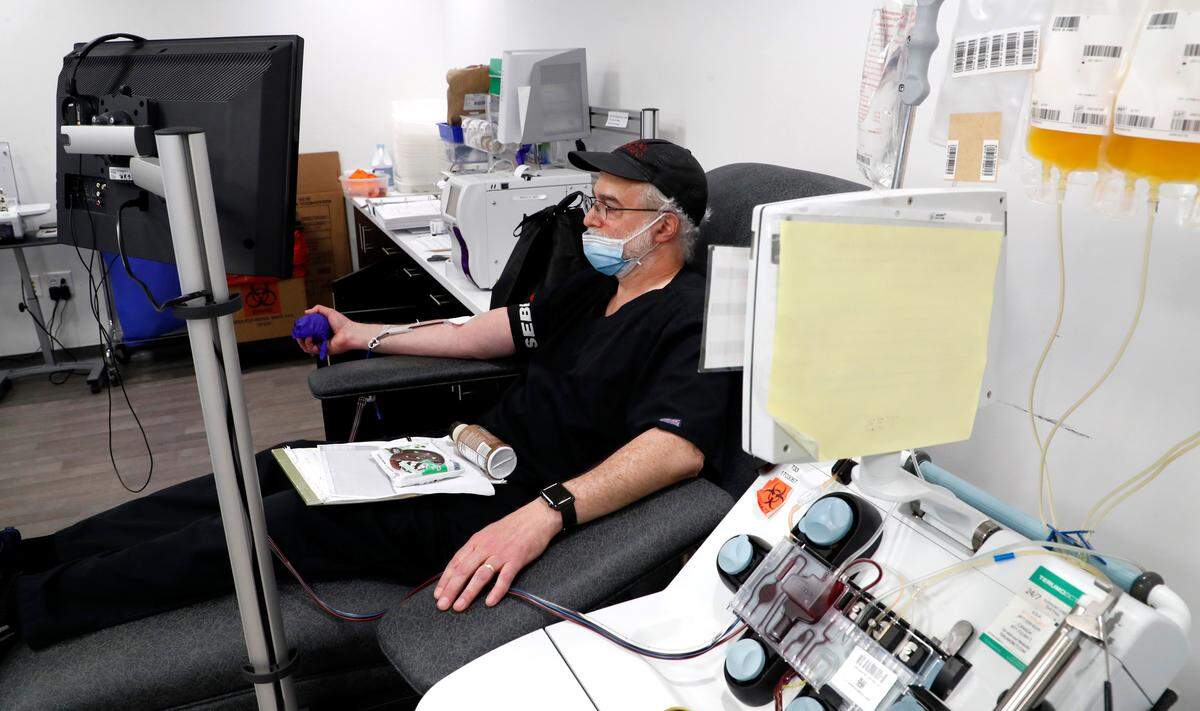
Dr. Charles Gainor, an emergency room physician, had just finished an overnight shift at Vidant North Hospital in Roanoke Rapids as he sat connected to a machine that was pulling blood and 800ml of convalescent plasma from his veins.
The four pouches of plasma donated by Gainor, a COVID-19 survivor, will be used to treat hospitalized patients with severe cases of coronavirus in North Carolina.
“This gave me an opportunity to do something to kind of make a difference for some people,” Gainor said. “That’s why I went into medicine in the first place.”
Gainor, 61, said he thinks he was exposed to the virus in late March while intubating a 16-year-old patient who came into the ER. He said he was wearing a surgical mask and a face shield, but it wasn’t enough to protect him.
About 24 hours later, he was hit with severe body aches, struggled to walk up a flight of stairs and had shaking chills and a cough. He later tested positive for COVID-19.
“It was the worst illness I ever had,” said Gainor, who lives in Lewisville, west of Winston-Salem.
He was isolated in his home for days, fearful of spreading it to his family or his colleagues. It was a mild case compared to what other patients are going through, he said, but everyday he was anxious that things would suddenly get worse and he’d end up on a ventilator.
After several days, his symptoms subsided and he was considered “recovered,” though he never took a second test. Gainor is back treating patients in the ER and every day he sees more patients being admitted who have COVID-19.
As the number of deaths in North Carolina and around the country continue to rise, Gainor said he feels obligated to give back.
The process takes about 45 minutes and each donation provides treatments for four patients. People who’ve recovered COVID-19 can sign up to donate through the Red Cross and The Blood Connection and at the UNC Blood Donation Center in Chapel Hill.
Gainor has donated his plasma twice since recovering from COVID-19, and he plans to be back at The Blood Connection donation center in two weeks to give more.
“I have no choice,” Gainor said. “If it’s something I can do to help somebody’s life, I have to do it.”
How does the treatment work?
The plasma from a recovered COVID-19 patient is full of antibodies that fight threatening bacteria and viruses and help the immune system better defend against the novel coronavirus.
“The antibodies are like a sponge that would soak up and neutralize the virus to impede its ability to replicate,” said Dr. Luther Bartelt, assistant professor at UNC-Chapel Hill’s School of Medicine.
Doctors can give the plasma to patients who haven’t yet developed antibodies to resist the coronavirus and are struggling with the illness. They hope it will reduce recovery time in the hospital, limit the severity of the symptoms, help patients avoid the ICU and prevent death from COVID-19.
UNC Health, Duke Health, WakeMed and Vidant Health are among more than 2,000 hospital systems and medical centers nationwide that are using the treatment as part of a study through the Mayo Clinic. At least 45 patients have received the treatment at those North Carolina hospitals, and more than 18,000 are part of the national program.
Right now, patients who are admitted to the hospital with a severe or life-threatening case of COVID-19 or those who physicians deem as at-risk are eligible for the treatment. These patients are pretty far along in their illness, but doctors hope that time of intervention will change.
“We’re finding that the earlier that we treat this, it seems to be better,” said Dr. Paul Bolin Jr., chair of internal medicine at East Carolina University’s Brody School of Medicine and chief of medicine at Vidant Medical Centers.
Bolin said they need more plasma from donors to give it to patients earlier, when the treatment is more effective.
And once the plasma is collected, it can be frozen and used for up to a year, which could help when the second wave of COVID-19 cases hits, according to Bartelt.
It’s still too early to tell how successful this treatment is, especially without a randomized trial that had a control group.
But some early data from the study has shown that it is safe and there weren’t any signals of negative effects on patients, according to Dr. Nathan Thielman, professor of medicine and global health at Duke University and an infectious disease physician.
Theilman said he doesn’t suspect that convalescent plasma will be the ultimate therapy, but one of the good things about this antibody approach is that it’s readily available, it can be given quickly to patients and it will stop the virus from growing.
“It scales as the epidemic scales,” Thielman said. “As you have more people who recover, all they have to do is donate plasma and then we can give it to others.”
Thielman said this treatment could also progress to pooling donor’s plasma together and then distributing it so that there’s more consistency in each treatment.
Potential of plasma treatment for future outbreaks
This isn’t the first time plasma has been used to treat viral infections, and it won’t be the last. Patients received plasma during the 1918 flu pandemic and more recently it’s been used to treat the H1N1 flu, Ebola and the other coronavirus illnesses SARS and MERS.
Discovering effective drugs and then manufacturing and distributing them takes time. This treatment can be an early defense against the pandemic as the scramble for drugs and vaccines can’t keep up with the speed of the spread of these diseases, Bolin said.
Plasma could be used in places where other treatment options aren’t accessible, whether it’s rural North Carolina or another country. And this time, with the sheer volume of patients in studies like this one, there will be more definitive data about this therapy for the future.
In addition to the clinical study of the treatment, researchers at UNC are testing the plasma to learn more about the potency and quality of the plasma from different donors. UNC resarchers and coronavirus experts are also evaluating the effectiveness of antibodies to neutralize the virus and stop it from replicating in a lab setting.
“It’s pretty remarkable to see how the motivation from a few individuals who had expertise in antibody therapies against infections and viruses came together and the nationwide effort that unfolded to try to provide a therapy when we’ve not had one for SARS-2,” Bartelt said.
More than 11,600 people North Carolina have recovered from coronavirus, according to the state health department. And as more people continue to get COVID-19, survivors could be key to treating future patients.
.jpg "20200501_duke_plasmadonation_01 (1).jpg")
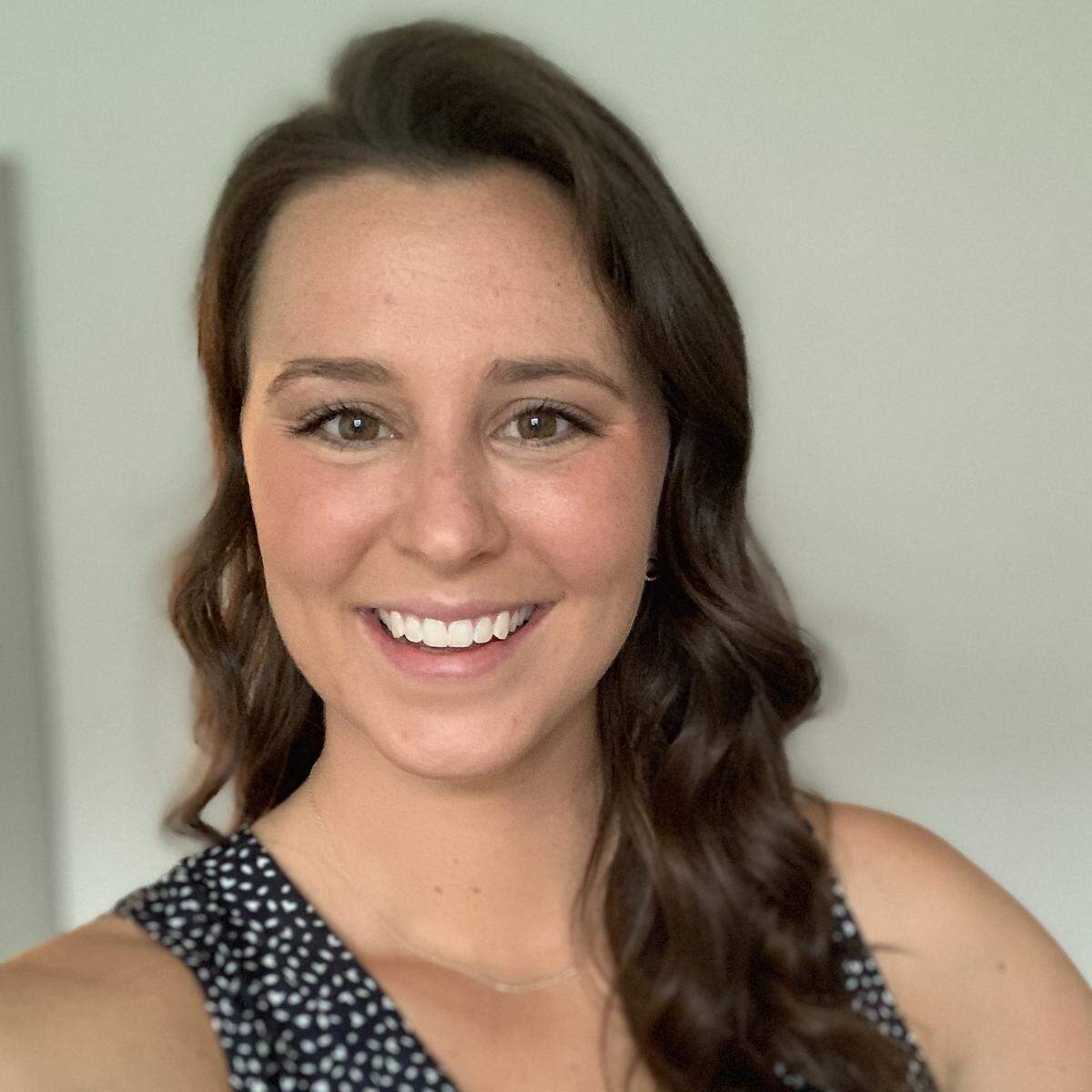
Camille Botts, 30, tested positive for COVID-19 in March after traveling abroad during her final semester at Duke University, where she just earned an MBA.
After her diagnosis, Botts volunteered to join an ongoing research study at Duke that’s focused on monitoring and testing people who’ve been exposed to the coronavirus. That’s how she learned about this treatment option and that she could help other patients suffering from COVID-19.
Botts donated her plasma on a bus in the parking lot of Duke Health Center at Southpoint, which was a mobile donation center set up by The Blood Connection.
“I felt compelled to help be a part of the solution because of all the support I’d been given by the medical team at Duke,” Botts said.
She knows this therapeutic solution doesn’t guarantee that she’ll save someone’s life or even reduce someone’s symptoms, but there’s hope.
“We’ll never figure out if it works if no one is willing to donate,” Botts said.
This story was originally published May 21, 2020 at 8:00 AM with the headline "They’ve already recovered from COVID-19. Now, they’re donating plasma to treat others.."