
After an unusually deadly year in Charlotte, efforts to prevent violence stalled
In 2019, Charlotte city leaders decried violent crime that left more than 100 dead and hundreds more injured.
And at Monday’s City Council meeting, they said Charlotte would address it by piloting “violence interruption” programs, with trained workers who will cruise the streets to defuse potentially dangerous situations.
Yet these plans come after months of delay, during which community activists and public officials say there has been little progress on efforts to prevent the bloodshed. Meanwhile, the city’s violent crime has only intensified.
Activists also question whether local officials have committed enough money to address violent crime effectively. For instance, the city of Charlotte has budgeted far more for beautifying Monroe Road than for violence interruption programs that have been shown to prevent crime elsewhere.
Local leaders point to the recent mass shootings on Beatties Ford Road that left four people dead, contending it is one of many violent incidents that might not have happened if robust prevention efforts had been in place.
Although local officials began crafting a violence prevention plan more than five months ago, they acknowledge that their efforts ground to a halt as they became consumed with the response to COVID-19. But critics question why the work didn’t begin long before this year.
“I don’t know where the urgency is,” said community activist Robert Dawkins, who served on a local committee working to craft a violence prevention plan.
Mecklenburg County commissioner Mark Jerrell acknowledged that “we’ve certainly not performed where we need to be and want to be.”
“It would be difficult to give us a passing grade at this moment,” he said.
Violence on the rise
In 2017, Charlotte recorded 87 homicides, the highest number in any year since 1995. That amounted to roughly 10 murders for every 100,000 residents — about three times New York City’s murder rate.
The situation soon got worse. Charlotte logged 107 homicides in 2019, prompting public officials to look for new ways to prevent violence.
By January 2020, city officials had begun to talk about hiring violence “interrupters” — people who have built relationships and trust in the community and who often know firsthand about violence, having committed or been victims of violent crimes in the past.
On Jan. 22, Charlotte’s Safe Communities committee reviewed a plan that recognized violence as a public health problem and identified violence interruption as one possible solution, according to meeting minutes. In February, the committee approved a framework for reducing violence, including a plan to pilot a violence interruption program.
But the discussions stalled.
Consider:
▪ Until Monday, local officials hadn’t publicly discussed the plan in months.
▪ Local officials have yet to hire a violence prevention coordinator or any violence interrupters.
▪ The city and county have budgeted relatively little money for violence prevention. Charlotte has budgeted $250,000 for its JumpStart community safety program this fiscal year. Compare that to the roughly $500,000 spent for violence interruption each year in the city of Durham, a city less than half Charlotte’s size.
Mecklenburg County has budgeted $325,000 for violence prevention, but has not yet determined how it will spend the money, county public health director Gibbie Harris says.
Harris said the county health department plans to advertise soon for a violence prevention coordinator. She hopes the county will hire someone for that position by August.
“I’m hoping there will be a more solid plan, at the very latest, by Sept. 1,” Harris told the Observer.
At Monday’s meeting, City Manager Marcus Jones said the city would fund violence interruption efforts through the JumpStart program, which gives “micro-grants” to community organizations working to improve public safety.
But Jones said he expects those those programs will launch in the fall. At the meeting, City Council member Braxton Winston questioned why it would take so long.
“We just wanted to make sure, as we do it, we do it in a way that works for Charlotte, and not something off the shelf that may not work for Charlotte,” Jones told Winston, adding “I’d love to beat the fall.”
Numerous public officials and community activists told the Observer they were dissatisfied with how little has been done in recent months to develop a violence prevention plan.
“They’re failing,” said Kass Ottley, an activist with Seeking Justice CLT. “Miserably.”

Charlotte NAACP President Corine Mack agreed.
“I don’t think the city is interested in doing what needs to be done,” Mack said. “People are walking around in fear. Particularly Black people. Because none of us knows who is going to be the next person to get the bullet.”
City councilman Larken Egleston, who chairs the Safe Communities committee, said that while COVID-19 helps explain why the city hasn’t made much progress on violence prevention in recent months, “you can look back and say a lot of this work should have been done a long time ago … I don’t expect us to get a pass for how long this has taken.”
Trouble ahead?
Now, 2020 is shaping up to be another violent year.
As of Tuesday, the city had recorded 55 homicides. If that pace continues, the year’s murder toll will equal or exceed last year’s.
The rise in homicides is part of a broader increase in violence across the city. For the first half of 2020, there were more than 3,500 reported violent crimes, according to data kept by the Charlotte Mecklenburg Police Department. That’s up about 2% over the same period last year, and 21% over 2018.
Shootings are also on the rise. For the first half of the year, CMPD recorded about 225 gunshot cases. That’s up 27% over the same period last year — and 50% over the average for the five-year period from 2015 through 2019, according to CMPD.
If the city doesn’t step up its violence prevention efforts, Mecklenburg Commissioner Vilma Leake predicts trouble.
“We’re going to have problems” Leake said.
How violence interrupters defuse problems
Many cities — including Durham, Greensboro, Milwaukee, Chicago and New York — have turned to violence interrupters to keep a lid on potentially bloody situations.
In Durham, formerly incarcerated people work in two hard-hit neighborhoods, doing dangerous work: They often mediate conflicts between rival gang members, working to help them resolve their conflicts without resorting to violence.
The program, called Bull City United, costs a little over $500,000 a year, and it’s funded with local money. Durham County Commissioners Chair Wendy Jacobs said the investment has paid off handsomely.
The neighborhoods where the three interrupters work have seen a sharp decline in shootings since 2016, when the program began, Jacobs said. It has worked so well that she would like to see the program expand beyond those two neighborhoods.
“I think it’s a model that works,” she said.
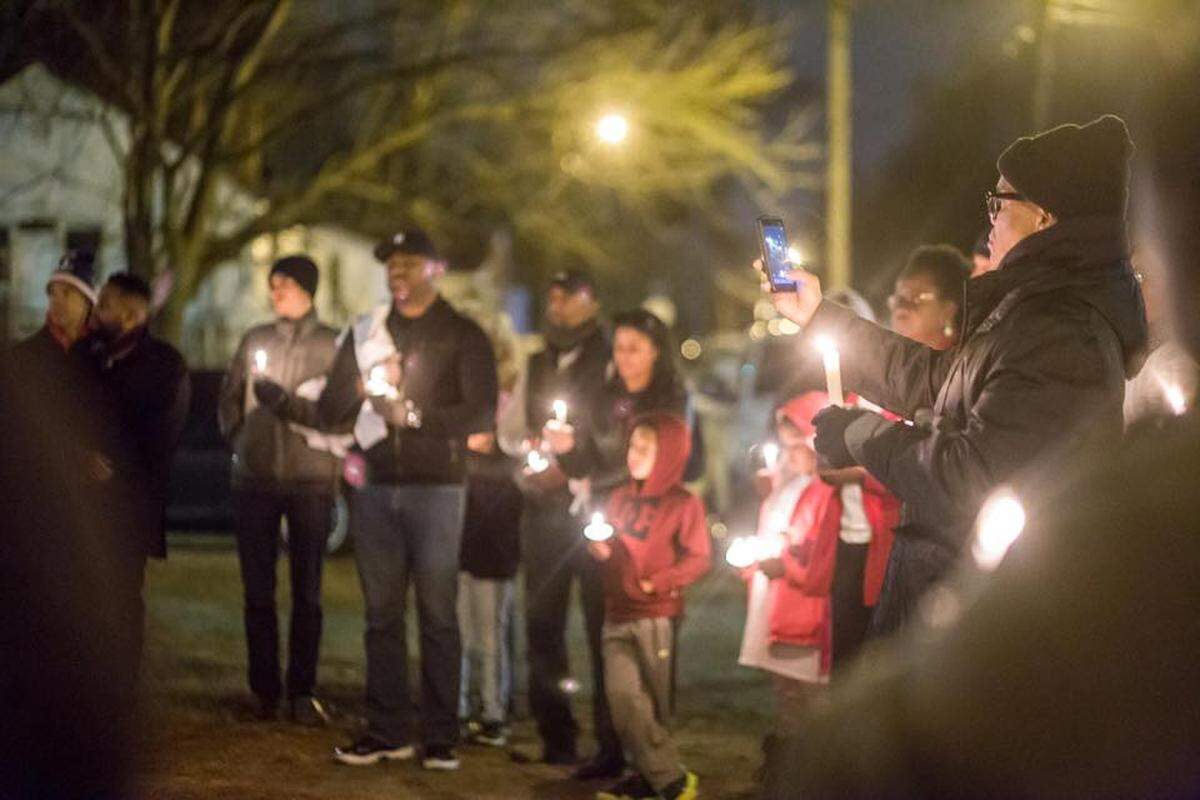
In New York City, organizations have been using violence interrupters for more than a decade, according to Ifé Charles, who works on anti-violence programs for the Center for Court Innovation.
New York’s interrupters include former gang members and people with criminal records. They spend time in tough neighborhoods, developing relationships with residents and defusing situations before they turn violent.
“People have got to value who they are speaking to, and so you’ve got to have those relationships,” Charles said.
These programs show results, Charles said. She pointed to an evaluation by the John Jay College of Criminal Justice, which found that two New York City neighborhoods with violence interruption programs saw 37% and 50% reductions in gun injuries after the programs began.
In Charlotte, Jones told city council members on Monday that two violence interruption programs would launch in the fall. One, a hospital-based program, will provide counseling and support to violence victims. The other, a street outreach program, will provide mediation and mentoring for people at risk of being involved with violence.
People who are already active in the community will do the work, Jones said.
Jones said violence interruption will accompany a larger “holistic” plan to help six low-income neighborhoods. The city plans to invest $24.5 million on infrastructure and other improvements in those areas.
What might have been
If Charlotte already had violence interrupters on the ground, it’s likely that some families would not now be grieving the loss of loved ones, some public officials and community activists say.
They point to the mass shootings on Beatties Ford Road on June 22. Two days before those shootings, as many gathered for a Juneteenth celebration on Beatties Ford Road, there were reports that people there were firing guns into the air, Egleston said.
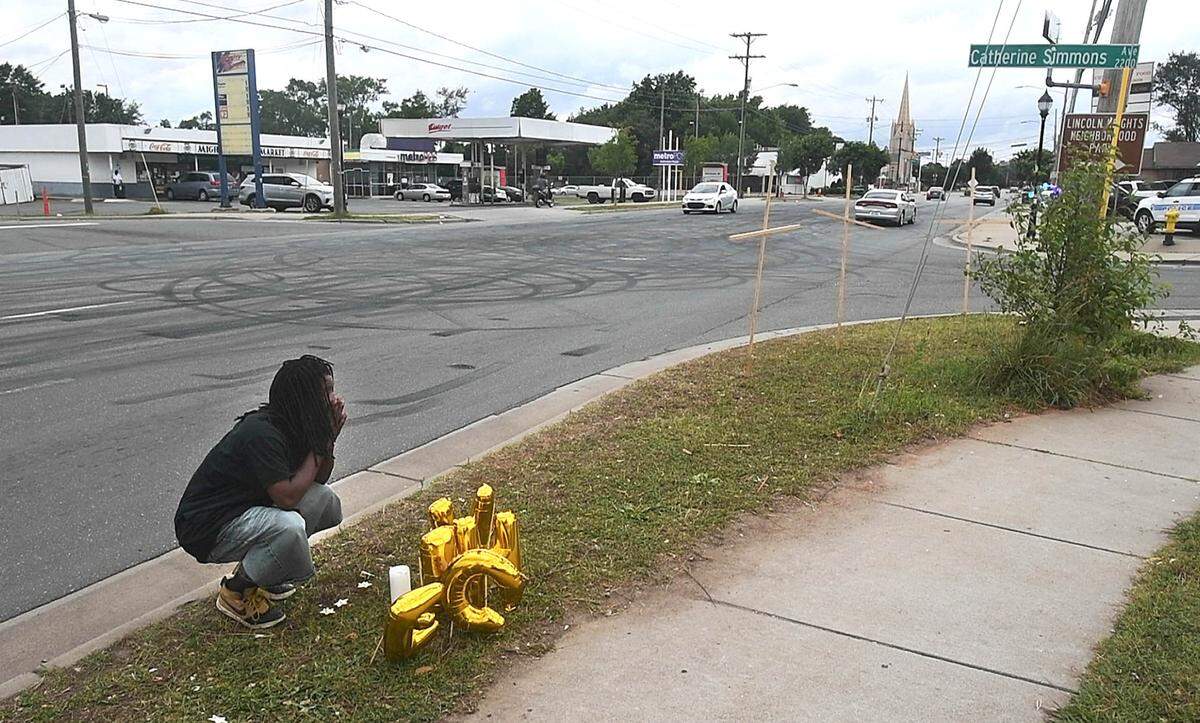
Violence interrupters — trusted voices in the community — could have gone out to talk with young people and help prevent a tense situation from spinning out of control, Egleston and Dawkins said.
“Violence interrupters could have gone out on the next two nights to make sure the embers didn’t turn into a raging fire,” Egleston said.
Agreed Dawkins: “Those interrupters can help people work things out so they don’t always resort to violence.”
Harris, the public health director, said she understands the frustration voiced by community activists — and shares it.
“We’ve got a lot of work to do,” she said.
This story was originally published July 8, 2020 at 11:25 AM.