Chapel Hill to UNC leaders: Take responsibility for your students’ off-campus behavior
Chapel Hill town officials sent a strongly critical letter to UNC-Chapel Hill and UNC system leaders, accusing them of failing to take minimal responsibility for students’ off-campus behavior and heightening community anxiety during the coronavirus pandemic.
The letter from Mayor Pam Hemminger and the Town Council was sent Monday afternoon in an email to Chancellor Kevin Guskiewicz, Provost Bob Blouin, UNC System President Peter Hans and Board of Governors Chair Randy Ramsey. It was posted on the town’s website Monday evening after UNC-CH announced it would be moving all undergraduate classes online. The UNC Law School also announced it will be moving classes online.
Provost Blouin, during a UNC Faculty Executive Council meeting later Monday, responded in part to the letter when he noted UNC has been working with Chapel Hill and Carrboro police and with the county health department to help keep students accountable.
”The community itself is going to have to accept some shared responsibility in that regard, enforcing their own ordinances,” Blouin told the committee.
The town did not know UNC was considering remote-only classes when it sent the letter, Hemminger said in an interview Tuesday with The News & Observer following her weekly meeting with UNC, other local mayors, the county commissioners chair, the Health Department and other agencies.
Those meetings, because they are organized by the Health Department and deal with sometimes sensitive issues, are not open to the public, officials have said.
Hemminger said the university is focused now on helping students who want to leave campus, reinforcing public expectations and helping students in quarantine for possible exposure or in isolation because they are sick.
In its letter, the council cited community concerns that the growing number of COVID-19 cases and clusters in four student housing facilities could have lasting and irreversible effects.
“Unfortunately, this avoidable outcome is the direct result of decisions made by the university administration and exacerbated by many students’ disregard for the University’s Community Standards as well as state and local laws,” the letter stated.
While acknowledging “the University’s hands are currently tied,” the council asked the Board of Governors to let chancellors “make decisions for their campus based on the needs of their individual institutions and local communities.” UNC Faculty Executive Committee Chair Mimi Chapman and Carolina Black Caucus Chair Dawna Jones also have asked the BOG to take that step.
Hopefully, UNC’s decision to take classes online will slow down the clusters of cases and stem the community spread, Hemminger said. It is possible that more clusters could be revealed as testing results come back from the state over the next week or so, she said, but the models show Orange County cases might peak in mid-September.
Carrboro Fire Chief Dave Schmidt told the Carrboro Town Council at its meeting Tuesday night that the county’s health director also thinks more clusters are possible.
Many students have practiced good safety standards to help stop the virus, Hemminger said, but others don’t consider that they can can spread the virus even if they don’t have symptoms.
“It’s been very hard,” Hemminger said, “because I know there’s a lot of students who wanted this experience and who are working very hard, and then a lot of them who just don’t feel like they’re affected by it.”
Coronavirus dashboard updates
The town also asked the university in its letter to update its coronavirus dashboard more frequently, enforce public safety standards on and off campus, and work with UNC Health to add more student testing.
Those and other steps are necessary even if the university closes on-campus housing because that will force more students into the surrounding community, it said. Hemminger said the town also has reached out to landlords and property owners about enforcing public health rules in their student-occupied apartments and homes.
The university also has reached out to the owners of large apartment complexes, including those where recent parties were reported, said Aaron Bachenheimer, UNC’s executive director in the Office of Off-Campus Student Life. They’ve provided signs to help them reinforce community standards and information about local rules, he said.
UNC students had to agree before returning to campus to wear face masks, wash their hands and practice physical distancing to prevent the spread of infection. On campus, students adhered to the rules, Provost Blouin said in Monday’s meeting, but contact tracing indicated they were being exposed to illness off campus and then spreading it when they returned to their dorms.
“That is something that has been very difficult for us to enforce unless there is an actual citation or complaint made with respect to a specific student,” Blouin said.
What students do off-campus, where over two-thirds of UNC students typically live and thousands of others work and play, has been at the top of community concerns. The Chapel Hill campus’ nearly 30,000 students make up a large portion of the 82,302 people reported to be living in Chapel Hill and Carrboro in 2018.
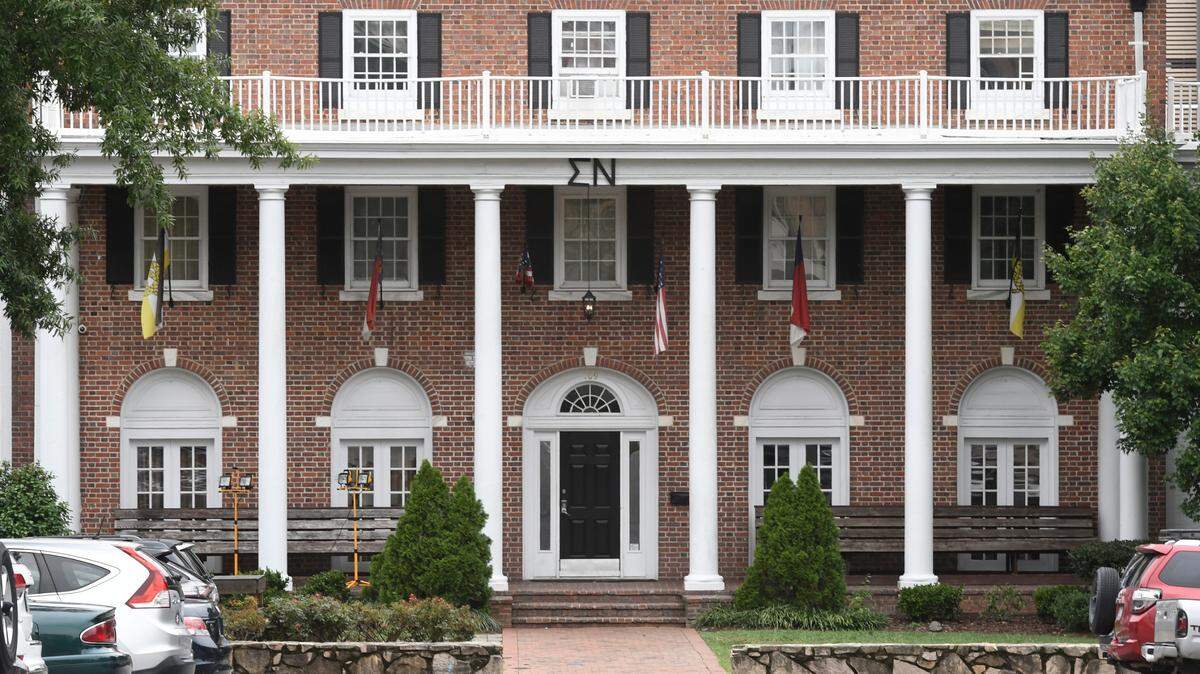
The town’s letter referred to a crowded event at a sorority-affiliated house near campus where more than 50 young women without masks.
The town had sent UNC a letter following the Aug. 4 gathering in which Hemminger said “what happened is not acceptable” and urged the university to take a stronger hand in how students act off campus. UNC also sent a letter to fraternity and sorority chapter presidents reprimanding them for parties and other gatherings that had been reported.
Chapel Hill police have responded to 10 calls about potential violations this month, a town spokesman said, including eight calls about parties over the last two weekends.
Police Chief Chris Blue has said the town will begin enforcing the state’s limits on gatherings — 25 people outside and 10 people inside — for repeated and egregious violations. No one has been cited yet with a violation, which is a misdemeanor.
Bachenheimer, a member of the town-gown task force addressing off-campus problems, said the bulk of that work has been communicating with students about the rules and their responsibility to be good neighbors.
UNC has been hearing from town residents with student neighbors, he said, and continues to encourage them to report issues to the university and, if possible, approach student-neighbors to share their concerns. One group of off-campus students with whom he recently spoke didn’t realize there was a problem until he asked them to think about it from their neighbor’s perspective, he said.
“I don’t want anybody to feel like they shouldn’t get in touch with us if they have a concern,” Bachenheimer said. ”I want people to know we’re going to be responsive to that concern and (also) to encourage people, if they have the opportunity, to talk to students ... from a place of care and concern.”
Four COVID-1 clusters since Friday
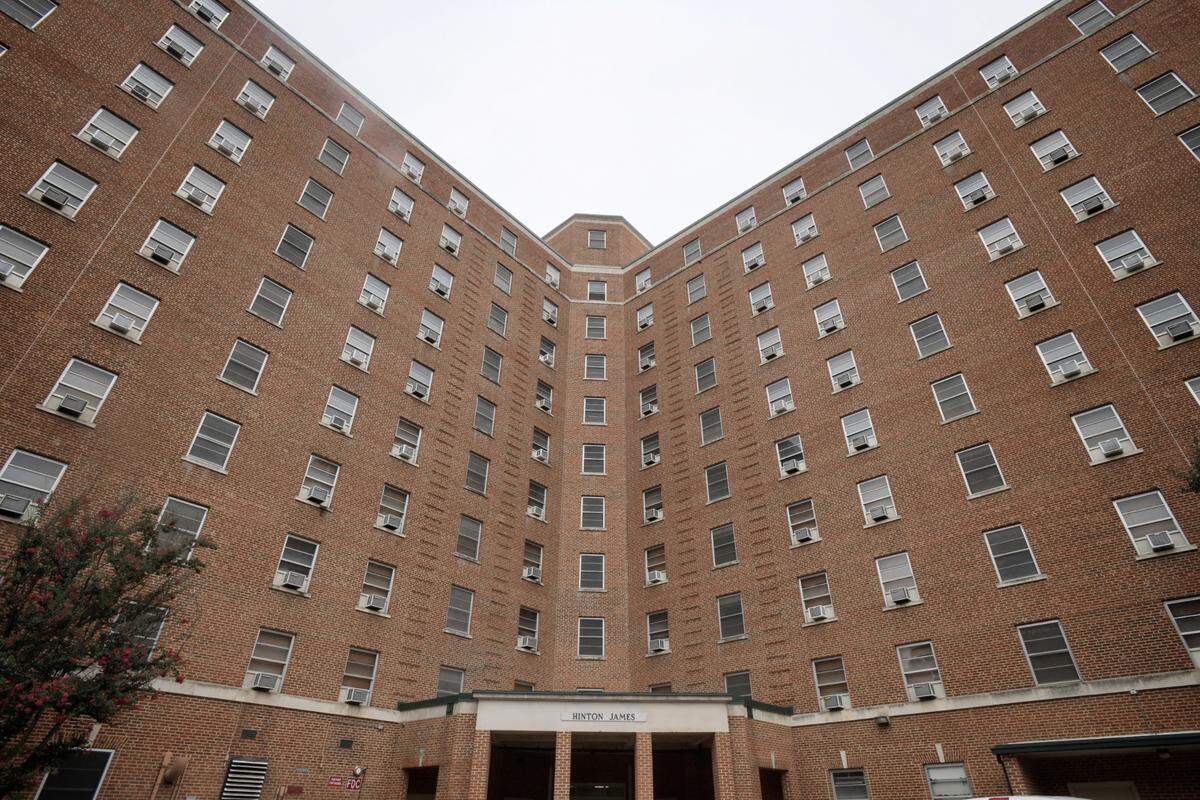
Four clusters of positive COVID-19 cases have been reported among university students since Friday: in the Ehringhaus and Hinton James dorms, in the university-affiliated Granville Towers apartments, and at Sigma Nu fraternity. A cluster is defined as five or more positive cases.
Kim Woodward, operations manager for Orange County Emergency Medical Services, confirmed to The News & Observer that her crews responded to multiple calls to dorms at UNC since school started, including for suspected COVID-19 cases. Woodward, who said she has worked for EMS for 15 years, said crews are frequently called to campus during the first few weeks of every academic year.
The town also has learned about a large party in Raleigh, which college students from UNC and other area universities attended, the letter said.
“We are deeply disturbed by the heightened levels of stress, anxiety and division being felt throughout the community along with the concerns about personal safety expressed by students and residents alike,” town officials wrote.
“The vacuum left by the university’s decision to take minimal responsibility for students when they are off campus has meant that the need for monitoring and reporting has fallen largely to peers and neighbors, which is neither appropriate nor fair,” the said.
Hemminger did give UNC credit Tuesday for its COVID-19 dashboard.
“They’re the only school putting that dashboard out there, communicating the information,” Hemminger said. “They are very good partners in trying to be transparent with what was going on.”
Other UNC system schools, including N.C. State and N.C. Central universities, have dashboards, but none currently provides as much information as UNC’s.
Orange County cases climbing
State data shows Orange County’s number of new daily cases has been climbing since Aug. 12 — nine days after students officially started moving back into campus housing.
The county’s numbers had fallen steadily since July 6, the data showed — but since Thursday, the county has seen double-digit spikes in new, daily cases.
As of Monday, Orange County had 1,475 positive cases, the state reported. Roughly 25% of those cases were reported in people ages 18-24 — up from 22% on Aug. 12 — while another 36% were reported among those ages 25-49.
The data reported on UNC’s dashboard and Orange County’s coronavirus website may not fully portray the number of infections, since the timing for getting those results depends on where a student is tested, whether those test results are reported to UNC, and whether the student lists an out-of-town address on the testing form.
Orange County Health Director Quintana Stewart asked the university in a July 29 letter to offer only online classes at least for the first five weeks of the fall semester and to limit on-campus housing to at-risk students and those who need it.
When it was released a week later to the public, Blouin told the UNC Faculty Executive Committee he was surprised by the letter from the health director, who has been working with the university, Orange County and the towns for several months. Blouin also characterized his July 29 meeting with the Chapel Hill council to talk about the university’s reopening plans as “less than supportive.”
Staff writer Martha Quillin contributed to this story.
This story was originally published August 18, 2020 at 9:48 AM with the headline "Chapel Hill to UNC leaders: Take responsibility for your students’ off-campus behavior."