
‘Innovative’ affordable housing puts health workers, homeless residents under one roof
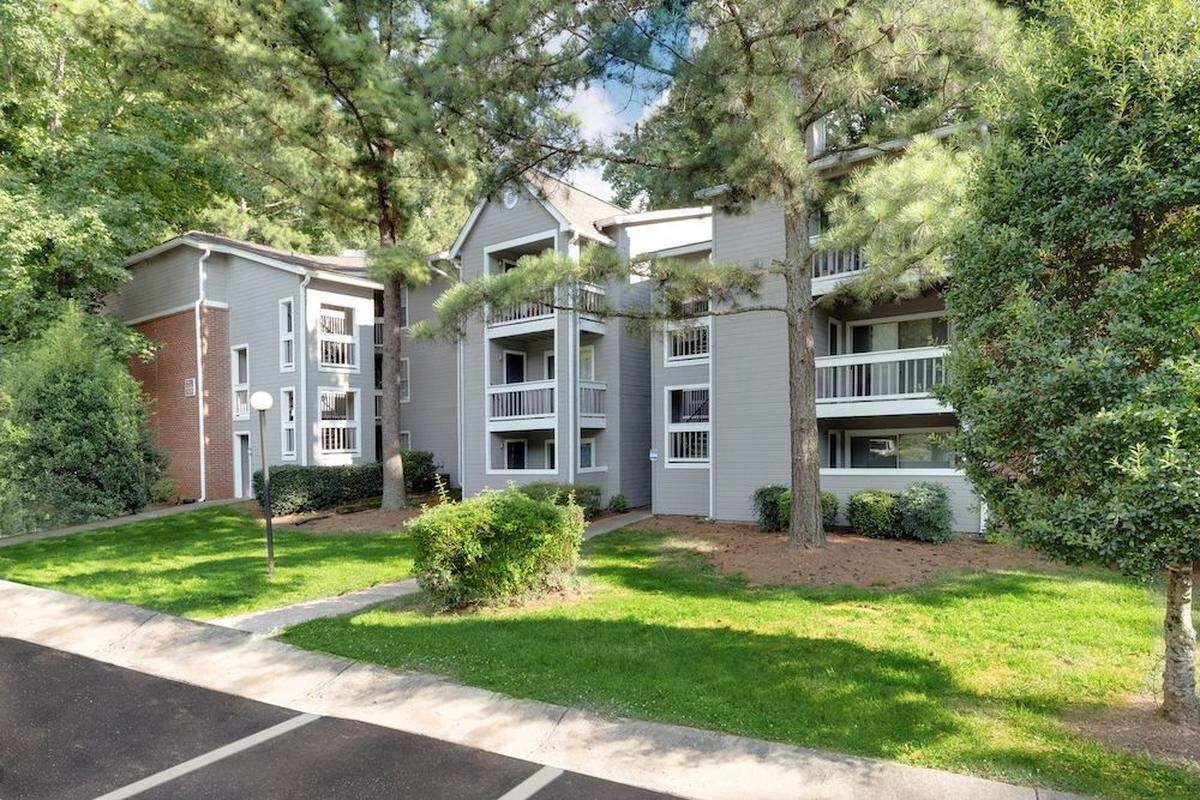
In what’s hailed as an innovative affordable housing community and a first of its kind for the city, Roof Above has purchased the 341-unit HillRock Estates in east Charlotte.
The $50 million deal prioritizes several areas Charlotte leaders have identified as critical to address the city’s affordable housing shortage: saving fast-disappearing “naturally occurring affordable housing” or NOAH, and offerings for essential workers and people who are chronically homelessness.
The goal is to address homelessness through one of its root causes: a lack of affordable housing.
At least 75 units will be supportive housing for people who have been homeless long term, with on-site case management. And a novel partnership with Atrium Health includes a $5 million loan for the project, with 50 units set aside for employees of the health care system.
It will keep the apartments, near the corner of Eastway and Kilborne drives, affordable for households earning up to 80% of the area median income. That’s $46,800 for a single person and $66,800 for a family of four.
This combination of permanent supportive housing for homeless residents and housing for health care workers is unique to Charlotte, said Liz Clasen-Kelly, CEO of Roof Above, the new name for the merged Men’s Shelter of Charlotte and Urban Ministry Center.
Clasen-Kelly said the purchase was motivated by the disappearance of older, more affordable apartments, which makes addressing homelessness harder.
“Just 10 years ago, if someone could afford rent for $700, there were multiple places where people could go to find those apartments. In our current marketplace, the NOAH communities are either being renovated and rents are above $1,000, or they’re being torn down and replaced with a luxury product,” Clasen-Kelly said.
“We see the disappearance of NOAH as driving homelessness and housing insecurity.”
Housing and health care
Roof Above officials have identified as a priority chronic homelessness — people who have been without housing for more than a year and have additional disabling conditions like physical or mental illness or substance use issues that make housing and employment more challenging.
Though it’s a small share of the county’s overall homeless population, it requires substantial attention and resources. Roof Above officials have worked to increase supportive housing in Charlotte, which provides case management and other services in addition to an apartment.
Kinneil Coltman, Atrium Health’s chief community and external affairs officer, said the health system sees the “immediate impact that lack of housing has on the health of our patients.”
She recalled a conversation with an emergency room physician who described frequently treating a homeless woman.
“She would just come back, week after week. She didn’t have enough food. She was really sick. Some days she had been exposed to the elements,” Coltman said. “Those are all of the issues that come up when we don’t have enough affordable housing.”
But once the woman secured housing, those visits decreased.
Another Roof Above supportive housing program, Moore Place, has shown similar results since opening in 2012. A UNC Charlotte study found residents there saw a $2.4 million reduction in health care costs during the first two years living there, including fewer hospital visits and shorter stays.
Coltman also said she was excited to provide affordable housing for Atrium employees, which she said is in line with other economic and educational advancement programs for employees.
In a statement announcing the investment, Atrium President and CEO Gene Woods said the link between health and housing is clear.
“Investing in affordable housing for the communities we are privileged to serve – including essential workers within our Atrium Health family – is an important and meaningful part of fulfilling our mission to provide health, hope and healing – for all,” he said.
Atrium pledged $10 million last year to the Charlotte Housing Opportunity Investment Fund, the private counterpart to the city’s Housing Trust Fund to finance affordable housing developments.
No displacement
The transition to Roof Above’s ownership will not displace any HillRock tenants, Clasen-Kelly said. New income-restricted units will be filled as current tenants leave.
Typical rent for the apartments before the purchase were affordable for households earning between 60% and 80% of the area median income, meaning many likely are already in the target range.
Deed restrictions will keep the units affordable for at least 27 years.
“We believe and hope this innovation is something that can be replicated,” Clasen-Kelly said.
Earlier this year the project received $1.4 million from the city’s Housing Trust Fund and $4 million from a city fund for naturally occurring affordable housing.
In addition to the Atrium Health loan, the project received anonymous donations of $2 million and $5 million —the largest single gift in the organization’s history — from two Charlotte families, Roof Above officials said.
This story was originally published September 1, 2020 at 10:00 AM.
%20Cropped.jpg)