
Developer to preserve ‘historically significant’ piece of Charlotte’s past
A Florida developer planning to build a luxury townhome community in Charlotte said he will save what local preservationists call a historically significant piece of the city’s past.
The rare item is a griffin that adorns a vacant 1928 home that Naples-based Lutgert Companies bought Aug. 28 where it plans to develop its community.
The griffin once graced the Old Charlotte City Hall built in 1891 at North Tryon Street and Fifth Street, according to Dan Morrill of the non-profit preservationist group Preserve Mecklenburg. The city hall was the tallest building then in what is now uptown Charlotte, he said.
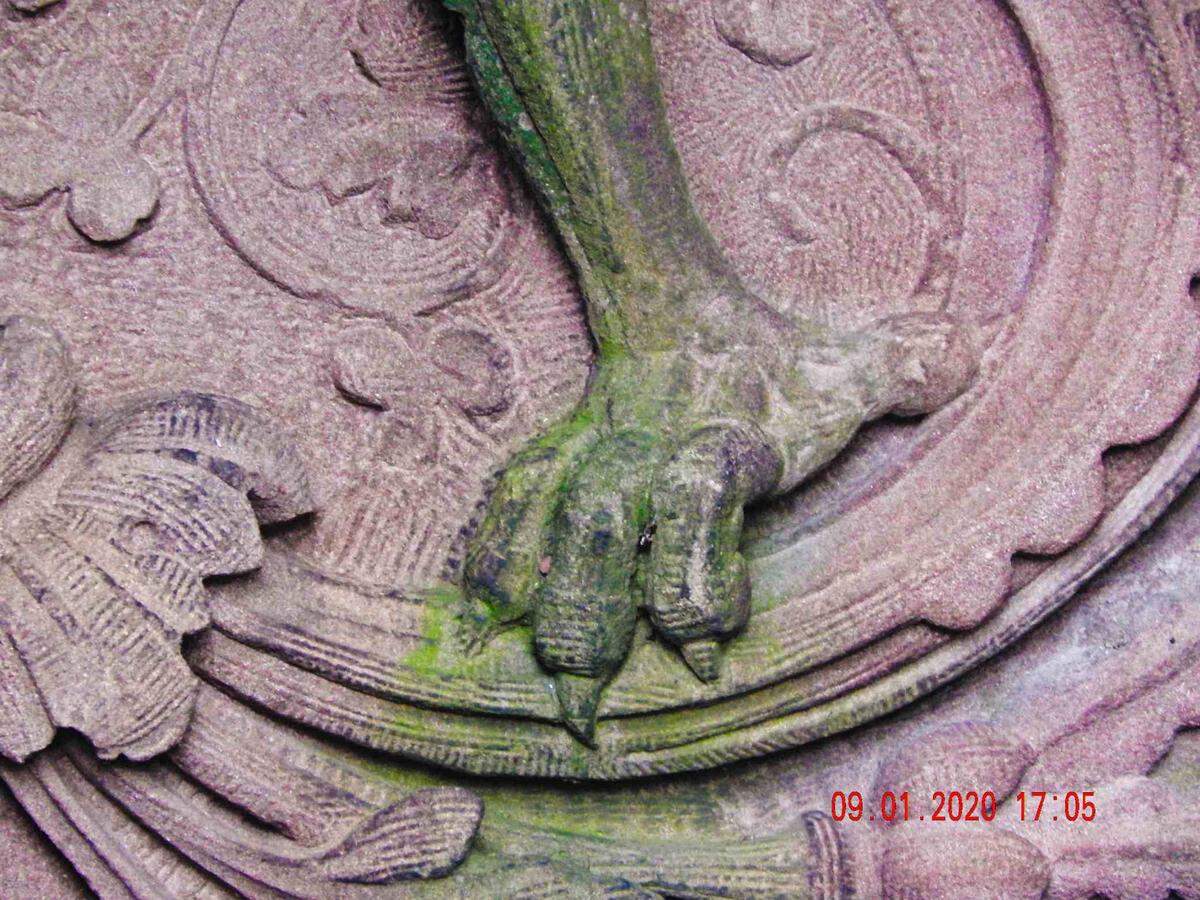
Griffins are mythological claw-footed creatures, part bird, part lion. Their design was a popular feature embedded into homes and buildings of the late 1800s, Morrill said.
In January 2019, Lutgert Companies announced its entry into the Charlotte market with the purchase of 14 townhomes on Cherokee Road in the Eastover neighborhood. It plans to develop a community of 38 luxury condominium homes called the Regent at Eastover.
The company also developed Linville Ridge, an 1,800-acre golf course community in Linville in the N.C. mountains.
Morrill said he contacted the developer after the sale of the home to urge the company to save the griffin. He said he’d been told by a family member of the owner of the home that the developer intended to demolish the house eventually.
The house is on Crescent Avenue, off Providence Road, in the Colonial Heights neighborhood.
Morrill kept up with the fate of the house after learning from Colonial Heights residents last year that the property was being rezoned for future development, he said.
When Morrill contacted the developer, company president Howard Gutman replied with a promise to save the griffin, Morrill and Gutman told The Charlotte Observer Wednesday.
“We have told them that we will help to preserve the griffin by either incorporating it into the eventual redevelopment of the property or donating the griffin to their organization,” Gutman said in an email.
The developer has no plans to demolish the home, Gutman told the Observer in a followup email Thursday night. The house instead “is in the process of being leased,” he said.
Gutman also said the developer was aware that a griffin adorned the front of the house but learned of its historical significance when Morrill contacted the company.
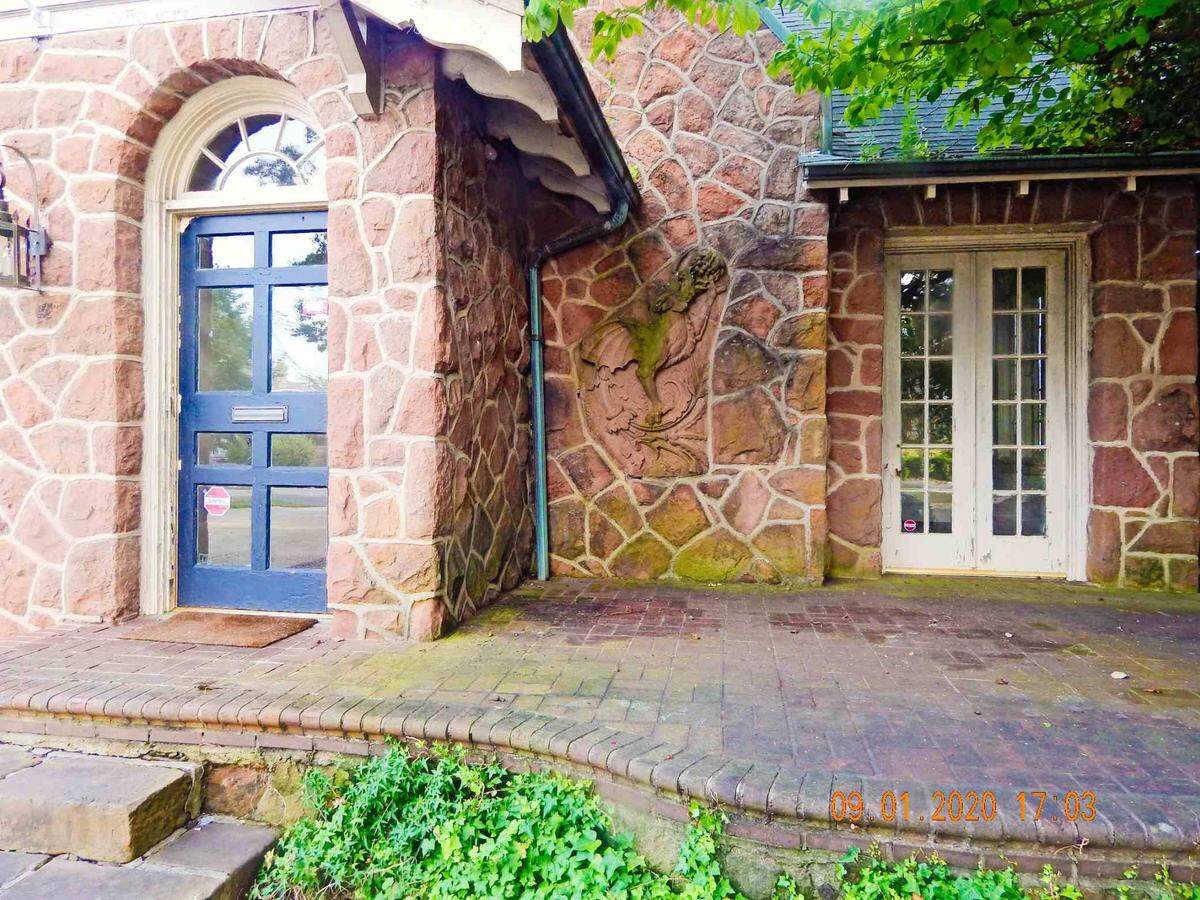
The griffin appears in the brownstone on the front of the house.
Griffins rescued a century ago
The ornate griffins originally appeared on either side of the front door of the Old City Hall, according to Morrill, a longtime Mecklenburg County historian and preservationist.
The building was demolished in 1920 because the city had outgrown the space, according to the Charlotte-Mecklenburg Historic Landmarks Commission
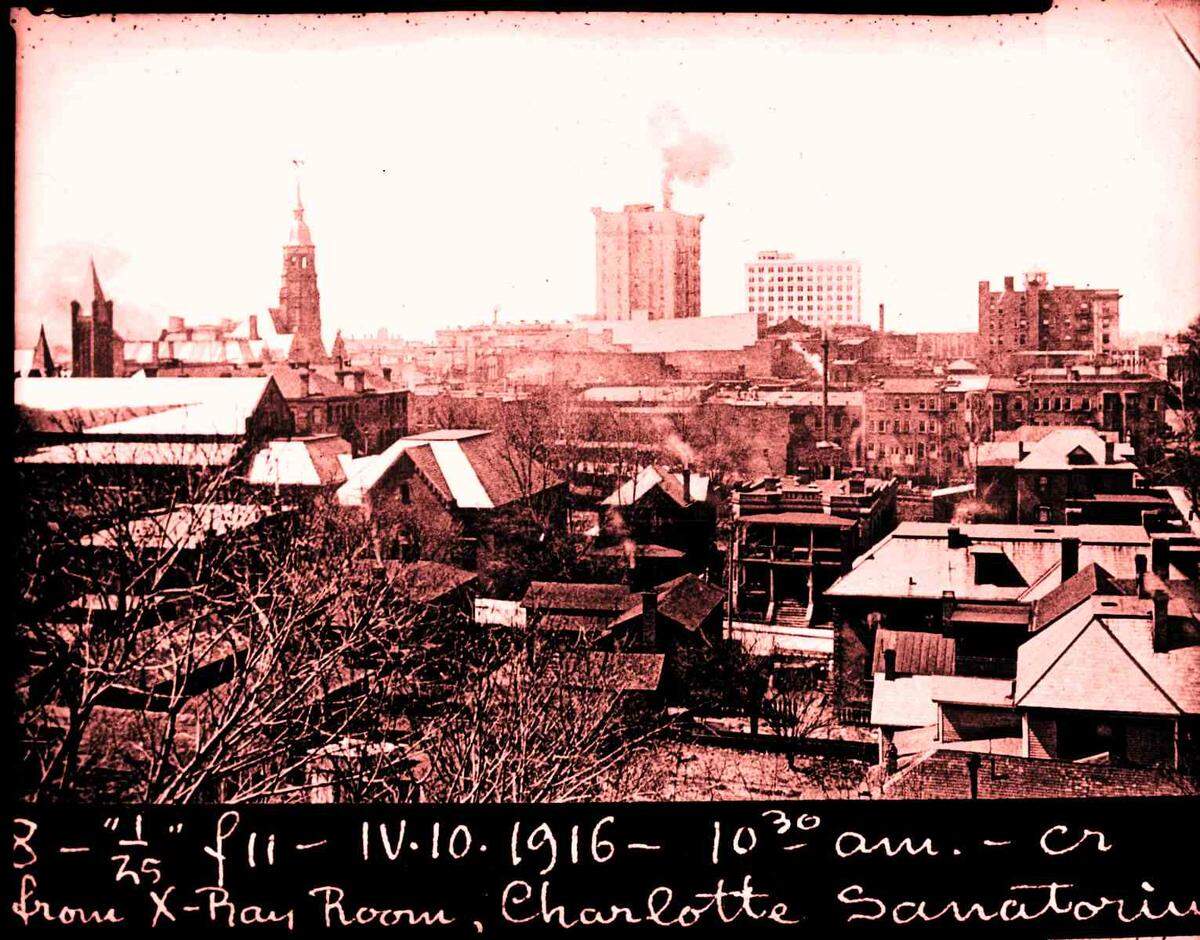
When the city demolished the building, the griffins could have ended up in the pile of demolition dust — if not for a developer who arranged with the city to save them, Morrill said.
The developer, Oscar Thies (pronounced tease), added one of the griffins to the brownstone of the front of the house he built on Crescent Avenue, Morrill said.
Other griffin at Independence Park
In recent years, Charlotte landscape designer Ric Solow incorporated the other griffin into the stone wall at Independence Park in the Elizabeth neighborhood.
The griffin had been in storage on the Foard Construction lot on Pecan Avenue until the company, unaware of the griffin’s origins, donated it to the Elizabeth Neighborhood Association, Morrill said.
Both the Elizabeth community and the park became part of Charlotte in 1907, according to the neighborhood’s Facebook page.
Morrill said Preserve Mecklenburg “is most gratified that the new owner is committed to the preservation of the griffin.”
He hopes the two griffins will one day be reunited in a public display that includes an interpretive sign and an arch made of brownstone.
Saving the griffin should remind the public how crucial it is for Charlotte to have such a private, non-profit group as Preserve Mecklenburg that remains vigilant on such issues, he said.
“The house on Crescent is not a historic landmark,” Morrill said. “It is not in a historic district. Consequently, neither the Historic Landmarks Commission nor the Historic District Commission has any jurisdiction.”
Preserve Mecklenburg receives no government money and relies entirely on donations, he said. But because of its private, non-profit status, Preserve Mecklenburg “can deal with any historic resource,” he said.
CORRECTION: Earlier versions of this story misidentified where the second griffin had been before it was incorporated into the stone wall at Independence Park. The griffin was stored on the Foard Construction lot on Pecan Avenue.
This story was originally published September 3, 2020 at 1:52 PM.