
‘She felt trapped’: How a prenup still haunts the marriage of John and Judy Crosland
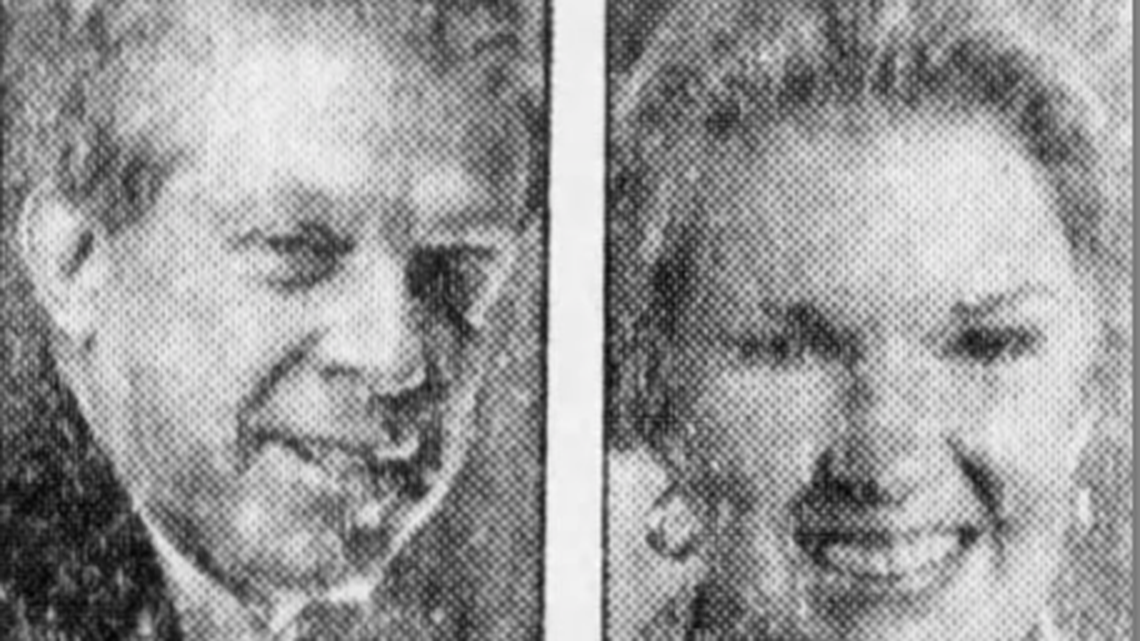
On the night before his 1978 wedding, John Crosland had a gift for his soon-to-be second wife, Judy:
A prenup.
Crosland, perhaps Charlotte’s preeminent real estate developer at the time, hoped the contract would provide a constructive outline for the “mutually satisfactory” relationship Judy and he wanted. Instead, according to court documents, the document drove Judy to tears and left an open wound in their 37-year marriage.
Now the couple’s bickering over the prenuptial agreement has outlived them both.
Crosland, for decades a seminal figure in how his hometown grew, died in 2015 — three years before Judy. During the 1980s and ‘90s, he and Judy were among the city’s power couples, actively involved in Charlotte’s business, cultural and charitable scenes.
Yet, what passed between them on the eve of their Feb. 4, 1978, wedding remains at the heart of a five-year legal fight over Crosland’s multi-million-dollar estate, a fight that resurfaced last month in the state’s second highest court.
Judy Crosland, according to a filing in the court battle, received more than $30 million from her husband’s will in homes, cars and payments from trusts, among other bequests.
But she and, later, her surviving son Michael McClamroch have long argued that the prenup — which she said her husband “trapped” her into signing — wrongly reduced her rightful inheritance.
By how much — or if at all — remains unclear. None of the documents in the legal fight offers even an estimate of John Crosland’s full worth at the time of his death. The will on file at the Mecklenburg County Courthouse dispenses with just over $9 million in Crosland’s personal property but includes few details about his business interests.
Under N.C. law, Judy Crosland would normally be entitled to what’s known as an “elective share,” or 50 percent, of her husband’s estate.
But by signing the prenup, according to the document’s wording, she waived “every right whatsoever which ... she might have or acquire by law through the solemnization of this marriage in any and all property of every kind and character.”
Last month, a three-judge panel of the N.C. Court of Appeals unanimously ruled that the prenup remains binding, upholding a 2019 decision by Mecklenburg County Superior Court Judge Lou Trosch that denied Judy’s estate an elective share.
It’s unclear where the dispute goes from here, though an appeal to the state Supreme Court remains an option. Lynn Chandler, Judy’s attorney, did not respond to an Observer phone call and emails seeking comment.
McClamroch, Judy’s surviving son from her first marriage, also did not respond to Observer requests for an interview.
‘The trick’
In upholding Trosch’s ruling, the three appeals court judges set aside a rash of allegations that still emanate from Judy Crosland’s grave:
How, according to court documents, John surprised her with the prenup at his Charlotte condominium after they had been toasted earlier by family and friends at their rehearsal dinner, and only hours before they were to exchange vows.
How after at least a two-year courtship and engagement to one of the titans of Charlotte’s business community, Judy maintained that she signed the document with no true sense of Crosland’s wealth and no access to legal advice to protect her interests.
In fact, with no one else to talk to, an emotional Judy said she turned to her father, Paul Martin, who was staying with her at Crosland’s place. After reading the prenup, according to court documents, Martin offered this advice: “Judy, if you love him, go ahead.”
Judy McClamroch did just that, saying later that she feared John otherwise would call off the wedding.
But she never fully forgave him. When the couple argued, Judy’s resentment about the prenup frequently resurfaced, documents show. According to her son’s sworn statements, Judy long referred to the marriage contract as “the trick,” which, she said, had sown “a seed of distrust” in the Croslands’ marriage.
Decades later in her brief before the Court of Appeals, Chandler would call out John’s “unscrupulous behavior” in first surprising Judy with the prenup, then pressuring her to accept it or face the humiliation of a canceled wedding.
Chandler also argued that the contract was invalid because Judy signed it under duress and never knew enough about her fiance’s wealth to understand what she was signing away.
Besides, Chandler argued, John came to regret what he had done and told Judy on multiple occasions that he had destroyed the prenup.
If John indeed said those things, he had one more trick to play.
According to court filings, John kept his most important papers in a locked, fireproof cabinet in his SouthPark office. It was there that after his death the prenup was found.
The document was listed on an inventory sheet, with a notation beside it.
“Keep,” it read.
A crying mother
Prenups are experiencing a surge in popularity.
Why? Americans are waiting longer to marry and divorcing more often. With more two-income families, both partners also are more likely to have businesses or professional careers they want to seal off from the ups and downs of wedded life.
According to the Washington Post, a 2016 survey from the American Academy of Matrimonial Lawyers found that 62 percent of its members had reported a jump in the number of couples seeking prenups over the previous three years. More than half of the lawyers said they were seeing more millennials requesting wedding contracts.
In the 1970s, however, the contracts were rarer, academy president John Slowiaczek told the Post in 2017. Back then prenups mostly were used for estate-planning or when, as with the Croslands, one partner in the relationship had significantly more wealth.
John Crosland took over his family’s construction company in the mid-1960s and built homes, shopping centers and whole communities across Charlotte and beyond.
Known to his oldest friends as “Red Man” because of his Scottish coloring, the Davidson College graduate made south Charlotte available to young families by building about 450 affordable homes at Park Road and Sharon Road West.
He helped revitalize areas around the airport, built such commercial touchstones as Quail Corners and Stonecrest, and toward the end of his career created the mixed-used community of Blakeney on what was then the southern edge of the city.
In all, John Crosland helped build more than 20,000 apartments and some 13,500 single-family homes across the Southeast. When he gave up day-to-day control of the Crosland Co. in 1999, the company had amassed more than $400 million in assets and property under development.
Judy, the daughter of a one-time diplomat, grew up in eastern Tennessee and overseas. She attended Mount Holyoke College before graduating from the University of Tennessee. Her interests ranged from the arts to politics. Her obituary lists her as a co-founder of Emily’s List, an organization of women who support progressive politics, including “pro-choice” candidates.
Her first marriage, to a Knoxville homebuilder, broke up after the couple had two sons. The resulting custody fight, according to documents, dragged on for more than a decade.
‘Traditional marriage’
John’s first marriage had ended in the 1970s. According to court records, he had been contemplating a prenup with Judy months out from his wedding. Whether he had shared his thinking with Judy at any point is unclear.
In a deposition for the case, Bailey Patrick, Crosland’s longtime attorney, friend and executor of his estate, said John had rejected a version of a prenup drafted by Patrick’s law firm three or four months before the nuptials, saying that he and Judy preferred “to work it out between themselves.”
At 10 o’clock on the night before the ceremony, after the couple and a few of their family members returned to John’s condo following the rehearsal dinner, Judy said her fiance surprised her in the kitchen with the proposed marriage contract. She claimed after his death that he had never discussed the need for a prenup before.
The language reads like it came from some marital time capsule.
The Croslands’ marriage, according to the document, would be traditional “in which the husband is the provider and the wife is the homemaker.” In exchange for her domestic role, Judy would receive a $750 monthly allowance to cover household and personal expenses “for which she did not need to account.”
“Any extraordinary expenses are to be considered a separate matter to be negotiated at the time,” the prenup says.
John Crosland would keep his name; Judy McClamroch would change hers. They would seek a church that they could both attend, and it was their “absolute intention” that they would not have new children. John Crosland had one living child at the time; Judy had two sons, but would lose one of them later on.
As to the demarcation of their estates, the lines were clearly drawn: Whatever property each partner brought into the marriage they would keep and control, “as if he and she had been at all times unmarried.”
An additional stipulation hammered this point home:
“It is the expressed intent of John Crosland Jr. that the foregoing provisions are to enable him to continue dealing in property with no encumbrances resulting from this marriage.”
The contract also included a pledge that the couple would “strive to reconcile disagreements in a manner which promotes and insures the happiness and continuance of their relationship.”
That provision faced an immediate test.
Late that night, Michael McClamroch, then a seventh-grader who was supposed to be in bed asleep, heard his mother crying, according to a deposition he gave in the estate fight.
He found Judy sitting on the stairs, according to his deposition. She was holding some papers.
Michael, the longtime president and CEO of the East Tennessee Foundation in his native Knoxville, said he did not learn that his mother had signed the prenup until after his stepfather’s death.
Asked during his deposition if he had ever asked her why she did, he said he had.
“She felt trapped,” he said.
The foundation
In his own deposition defending the prenup and John Crosland’s will, Patrick challenged the notion that Judy had been a poorly informed victim exploited by her wealthy husband. He argued that Judy had ample opportunity to challenge the prenup during her almost four-decade marriage, yet never did.
Patrick also testified that some of the language in the marriage contract sounded as if John and Judy had written it together, and that Patrick had never told Judy or heard John say that the contract had been destroyed, as Judy and Michael claimed.
If Judy hadn’t known the precise details of Crosland’s wealth on the day she signed the prenup, according to Patrick, she knew full well that he was a highly successful businessman. Only a few months into her marriage, she also gained yearly access to his finances as co-signer of their joint tax return, Patrick said.
Judy also knew of John’s longtime dream after his death to funnel much of his business interests into the Crosland Foundation, which he began planning in the late 1990s and created in 2001.
In a 2018 tax filing, the foundation listed assets of $3.62 million and a total of $250,000 in contributions to such beneficiaries as Davidson College, Habitat for Humanity, Urban Ministry and Foundation for the Carolinas.
The FFTC website credits the Crosland Foundation with almost $8 million in grants, while also crediting Crosland with establishing a model for estate planning that had led to tens of millions of dollars in additional gifts.
Giving Judy’s estate an elective share of her late husband’s holdings would damage the Crosland Foundation, Charlotte attorney Roy Michaux said in a filing to the Court of Appeals.
Michaux, who represented Patrick and Crosland’s estate in the legal battle, said he welcomed the recent court decisions protecting how Crosland chose to distribute his wealth.
“This opinion carries out John’s wishes, which we thought was very important,” Michaux told the Observer. “John always felt very strongly about those charities.”
‘More generous’
In 2000, Judy hired her own lawyer, the late Jim Preston, to analyze what John planned to leave her after his death. It included an outright bequest of $5 million, two trusts totaling $7 million, the couple’s home in south Charlotte and their mountain place in Linville.
Altogether, Judy would receive about $14.5 million in cash and property, an amount that significantly appreciated before John’s death 15 years later, Michaux says.
In a letter to Patrick included in the court files, Preston based his 2000 analysis on the “working assumption” that John was worth $100 million, and said the developer should do more for Judy by putting additional money into one of her trusts. Such a move also would benefit Crosland’s planned foundation, Preston said.
“Assuming the relationship has been reasonably good, it seems to me that John could/should be more generous in his provision for Judy,” Preston wrote.
“In my view John should not allow any doubt that he honors Judy and wishes to provide for her in a manner that is commensurate with his wealth, the life they have had together, their many years of marriage, and the planning opportunities available to achieve John’s ultimate goals.”
Michaux said John followed Preston’s advice, adding that John had been “highly generous” to Judy and her children through much of the marriage.
Preston’s letter had one last thing to say, and it was about the prenup.
John had shown that he did not intend to use the contract to disown Judy or minimize her inheritance, Preston wrote.
But because Judy had not been represented by an attorney before she signed the prenup, nor had the couple exchanged information about their respective estates, Preston opined that the contract was of “doubtful validity.”
Last month, the judges disagreed.
This story was originally published October 8, 2020 at 6:00 AM.
