He’s one of Charlotte’s most powerful CEOs. He also sings, and wears sunglasses at night.
There is a scenario in which Gene Woods might never have been willing to out himself to Charlotte as a musician.
A scenario in which a social-justice-minded blues song he wrote decades ago, while he was working his way through school by playing in various bands in State College, Pa., was lost and forgotten forever.
In which no one ever would have seen him wearing a fedora and sunglasses at night in a glossy, high-end music video.
In fact, for a long time, the man responsible for leading a healthcare system with more than 50 hospitals and 65,000-plus employees was hesitant to be seen holding a guitar in public except on rare and exclusive occasions — largely because he didn’t want people to think he was doing it out of vanity.
“I was actually doing my music thing on the side and really not bringing it into any sort of professional circle,” says Woods, who has been president and CEO of Charlotte-based Atrium Health since 2016. “And I had to think a lot before wanting to do that. ... But there was something about this moment, something about what I felt I needed to speak to, and this was a great way to do that.”
The result was the creation of a video this summer, amid powerful calls across the country for social justice, for his dusted-off-and-now-new-again song “Not Enuff Joy,” which opens with these lines:
Your brother is in chains, we should all feel the iron
Your sister burns with pain, we should all feel the fire
When is it ever gonna stop?
And since taking the leap by allowing the video to be included in Atrium Health’s virtual employee talent show in late August, the 56-year-old Woods is charging ahead with plans for more music.
All of which begs the question: How serious about this side gig is he going to get?
From fake Fender to college stardom
There’s actually a plausible scenario in which Woods, as a young man, could have sacrificed a promising career in healthcare administration to pursue his passion for music.
But before we get to that ...
His musical journey started years earlier, back when he was a young boy growing up on a U.S. naval base in Spain.
His father, Eugene A. Woods Sr., was stationed and enlisted as an aeronautics mechanic at Naval Station Rota in the Province of Cádiz; his mother, Maria, was from nearby Jerez de la Frontera in southern Spain’s Andalucia region. Thanks to Eugene Sr.’s constant playing of reel-to-reel tapes and vinyl records and eight-tracks, he inherited an affinity for the blues music of guys like Bobby Bland, B.B. King and Little Johnny Taylor; thanks to Maria and her 11 siblings, he developed a deep appreciation for Flamenco music and dance.
At age 10, his uncle put a guitar in Gene Jr.’s hands and taught him to play a simple Spanish melody, one that stuck with him after his parents returned to the States and settled him and his younger sister (also named Maria) in Philadelphia.
He had no way to play it again, though, until somehow — although they could barely afford to pay the rent and keep the lights on — Eugene Sr. and Maria managed to scrape together the money to buy their son what was “essentially a fake Fender Stratocaster” and an amp.
“It was hard to play, the strings were really far away,” Gene Woods says, but he didn’t let it bother him, “and I got a lot of calluses playing that guitar.”
In sixth grade, he played that guitar in a band he formed with two friends, one that started by doing little “shows” in garages for friends and family members, and progressed to a gig at a school talent show that Woods considers his true first-ever live performance.
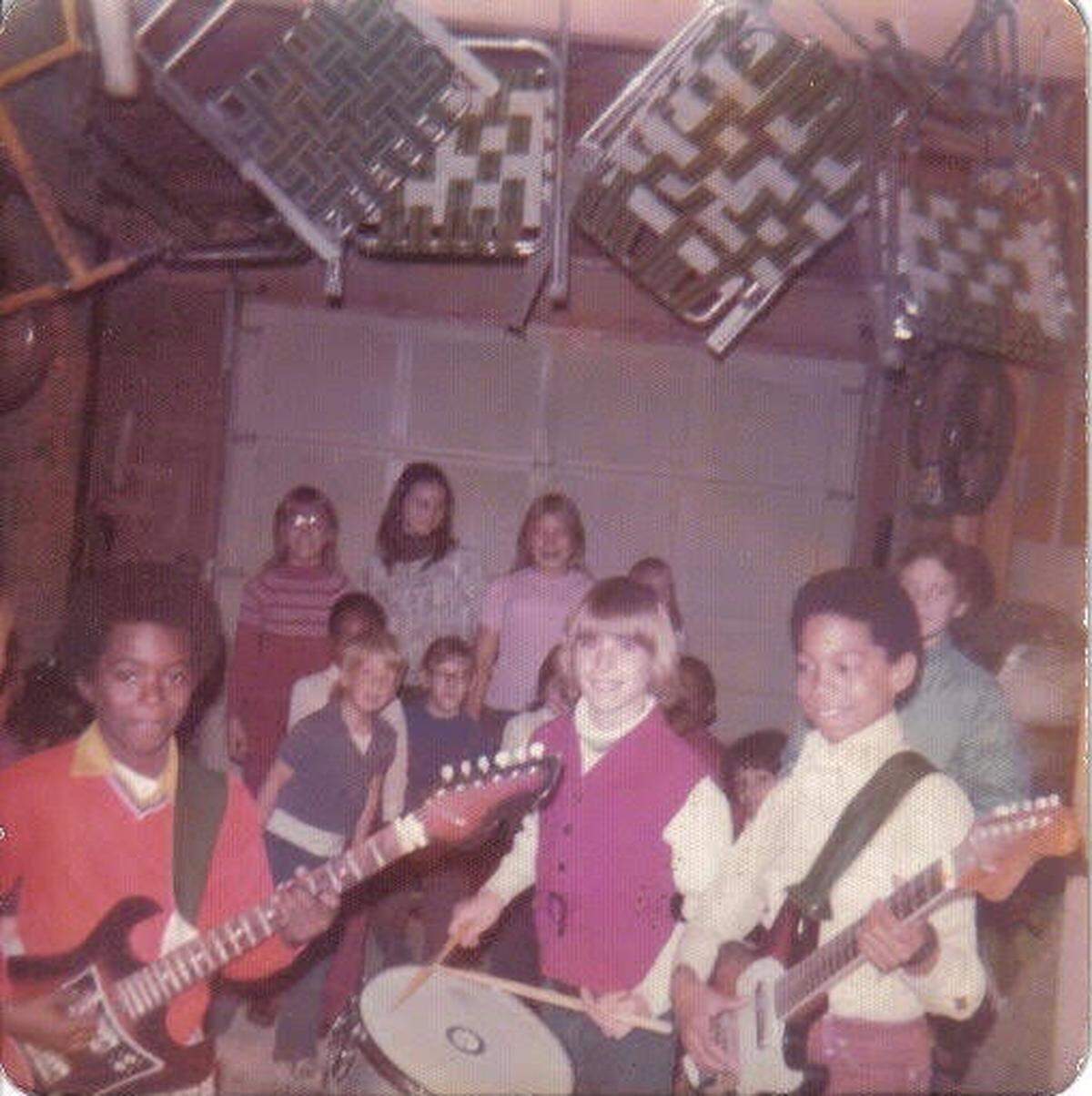
In high school, he had the chops to take on riffs by Jimi Hendrix and The Beatles.
And in college at Penn State University, he paired his talent with his hustle, hooking up with a variety of bands — in genres from blues to rock to jazz — and helping to turn at least one of them into a cash cow.
“One of my early bands — and I still bump into people who remember seeing them at Penn State — it was called Stolyn Hours, and we were the most popular band in State College, at Penn State, at the time,” Woods says of the “classic-rock-type band,” which even released an album (titled “Scattered Winds”) in 1987, the year he earned his bachelor’s degree in health planning and administration.
“All major football weekends, we packed the house, and so on a good night actually — and just think about this back then for a college kid — I could make $400, $500. And on a really, really special night, you can make up to a thousand dollars, which was wonderful (because) my family didn’t have money to pay for college. ...
“So I typically would play Thursday, Friday and Saturday, and that’s what paid the rent, it paid for food, it paid for tuition, and I realized it’s something that was gonna always be part of my life.”
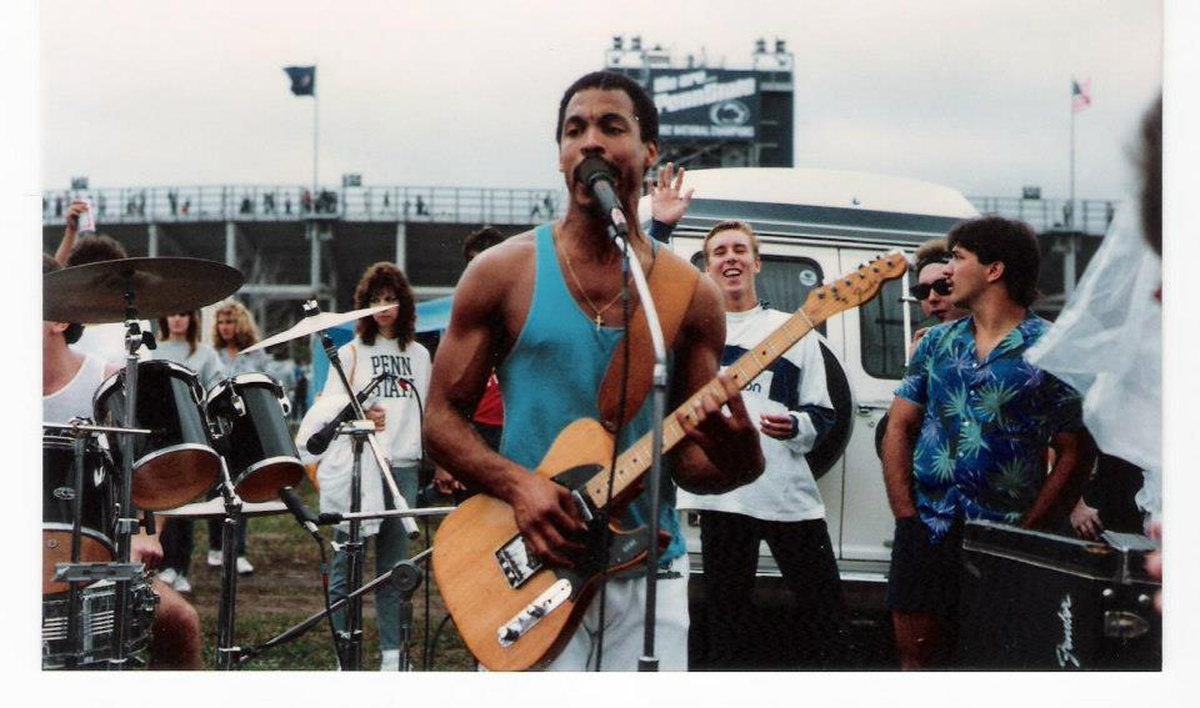
But only a part of it, he decided.
Throughout graduate school at Penn State (where he also went on to earn master’s degrees in business administration and health administration), Woods sang and played guitar for a 10-piece rhythm and blues band called Soul Gypsies.
He had just completed the second master’s program, and Southside Regional Medical Center in Petersburg, Va., had called to offer him a job as a senior executive. He recalls it being a tough decision, but also knowing he had to take it.
“I sat my band together and I said, ‘This is gonna be my last gig coming up because I’ve decided to move,’” Woods recalls. “It was a poignant moment, but it was sort of where I could have gone left (but I went) right.
“And the rest is history.”
Making music, but doing it quietly
That history includes a list of increasingly high-profile leadership roles in healthcare.
CEO of Roy Schneider Hospital on Saint Thomas in the U.S. Virgin Islands from 1998-2001; COO of MedStar Washington Hospital Center in D.C. from 2001-2005; CEO of CHI Saint Joseph Health in Lexington, Ky., from 2005 - 2011; COO and then CEO of Christus Health in Irving, Texas from 2011-2015.
Since arriving in Charlotte in 2016, Woods’s impact has been significant.
He oversaw a massive re-branding for the system, from Carolinas HealthCare to Atrium Health, to support expansion into new markets, such as Georgia. He orchestrated the deal with Winston-Salem’s Wake Forest Baptist Health and Wake Forest University that will bring a four-year medical school to Charlotte. He is the architect of Atrium’s current mission statement — “to improve health, elevate hope and advance healing — for all” — which has paved the way for new community initiatives, from a $10 million commitment to affordable housing to providing free and nutritious meals to thousands of students in need every summer.
.png "image (1).png")
It has never been a career that encourages a guy to let his hair down, and for the bulk of his professional life almost no one beyond his family and his closest friends would have ever seen Woods in anything other than a suit and tie.
But away from the office, on nights and weekends, all through the years, he has continued making music: Dating back to while he was in grad school at Penn State and spanning every subsequent decade of his life, he says he has written about 60 songs, about 35 to 40 of which he has recorded to cassette or CD.
A number of people at Atrium were aware he liked to play guitar, but very few knew he was that serious.
So it was a surprise to many, if not most, when he came on stage at the Dale F. Halton Theater on the CPCC campus — during the 2017 edition of Atrium’s annual talent show — and performed a medley of songs from Santana’s 1977 album “Moonflower” for roughly 1,000 people (at one point even playing the guitar while holding it behind the back of his head).
In 2018, he broke out his guitar again to cap his performance with Charlotte Ballet’s Sarah Hayes Harkins at Dancing With The Stars of Charlotte at Knight Theater, for a similar-sized crowd.
Then later that year, a chain of events was set in motion that would bring his music to a much wider audience than either of those.
‘Don’t judge a book by its cover’
One of the people at work who knew Woods liked to play guitar was Andre Ferreri, who is manager of the fixed-wing department for Gama Aviation, which has a contract to fly air ambulance aircraft for Atrium Health — and who also is the guitarist for a Charlotte-based modern jazz quartet, as well as a studio musician, songwriter, arranger and producer.
Ferreri says he had seen a photo of Woods playing guitar shortly after he started at Atrium, and they started talking about music.
Before long, they were playing together. Eventually they started putting together some demos, and in the fall of 2018, Woods decided he wanted to record several of the songs he had written as a younger man.
On Ferreri’s recommendation, they approached Gat3 Productions, a studio that has been in what is now Lower South End for almost 25 years and has recorded everything from James Brown’s last album (“The Next Step”) to DaBaby’s “Rockstar,” the most ubiquitous song of the summer of 2020.
Ferreri, who already had a small studio inside Gat3, set up a meeting for him and Woods and the studio’s founder, Glenn Tabor. They hit it off, and agreed to start working together to record some of Woods’s songs — though Tabor initially had measured expectations.
“I’ve seen other CEOs and other guys come in that have money and say, ‘Hey, we want to record,’” Tabor says. “And a lot of times, when music is not someone’s main pursuit in life, you often kind of have some preconceived notions, that ‘OK, there’s probably not a lot of talent here since that was never a main pursuit.’ So I just assumed we’d have fun and make a little project — a few songs or whatever — and move on. I didn’t expect great talent.
“But what I learned real quick with Gene was don’t judge a book by its cover.”
Since then, Woods has taken songs he recorded over the years on his own and re-recorded them in a professional studio that has produced Grammy Award winners, as well as recording songs that he wrote long ago but never got around to putting on tape or CD.
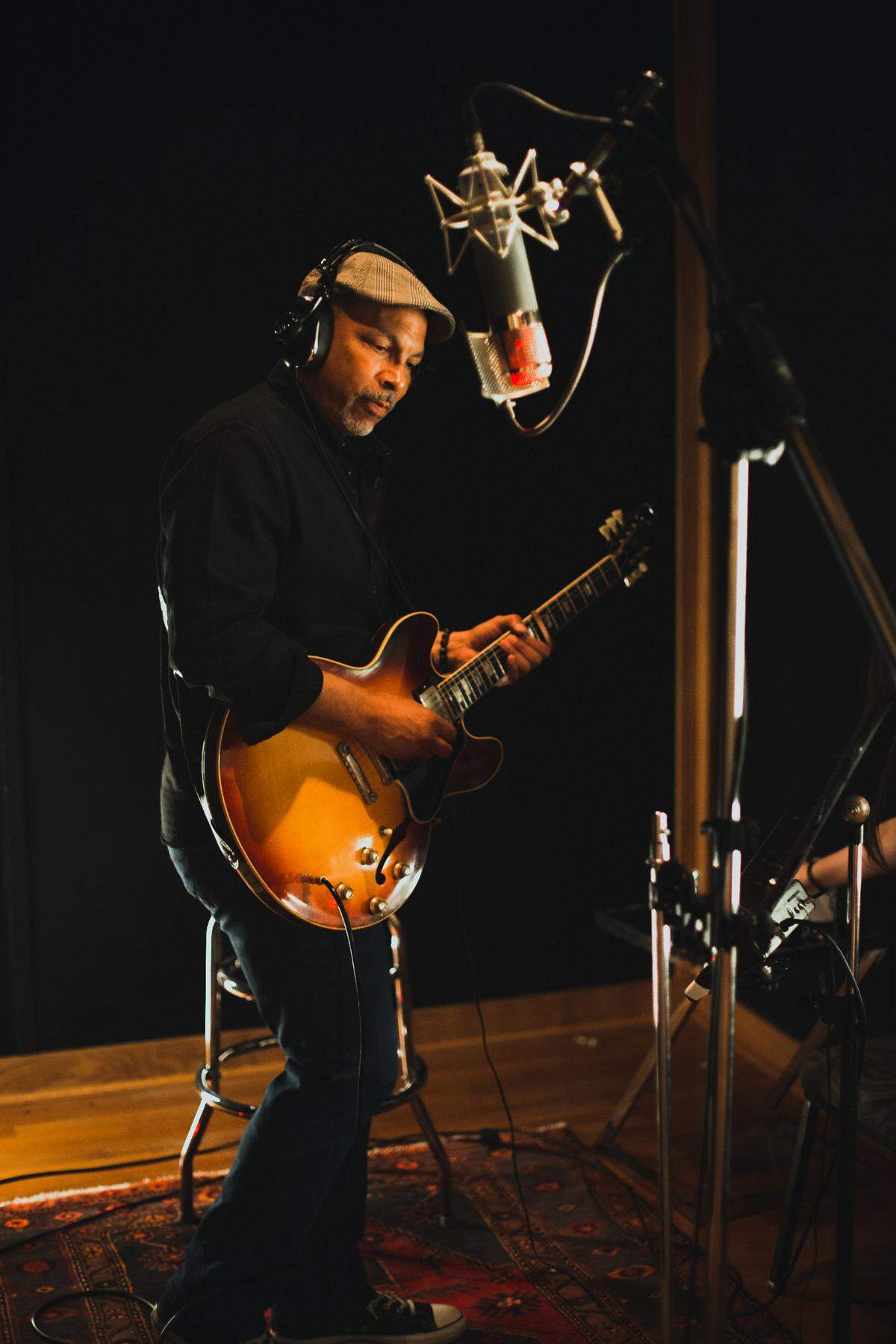
No one is taking this lightly, either: Tabor and Ferreri (who is arranging and producing all the songs), Woods says, have helped assemble a great group of musicians to play with him, including Aaron Sterling, the longtime drummer for John Mayer.
Because Woods is divorced and his two sons are grown and no longer living at home, he has found more time than perhaps he would have been able to otherwise to devote to his musical pursuits.
Still, his day job often can also turn into a night and weekend job, so the process of putting the songs together in the painstaking and perfectionist way everyone involved wants to has been slow and gradual.
In March, the pandemic temporarily brought it to a halt.
Then a couple of months later, nationwide social justice protests and renewed calls for racial equality in the wake of George Floyd’s killing gave it a new purpose.
Something old becomes something new
Woods was inspired to write the song “Not Enuff Joy” when he was in his early 20s, after watching a documentary about a war in Africa.
“What I saw reminded me of some of the communities in Philly that were marginalized so I saw a lot of commonality,” he tells the Observer, “and it just made me think about how, fundamentally, whether you’re in Africa or Philly or anywhere, there’s a common human element.”
His intent was to create a way “to tell them not to give up. Not to give up hope,” he explains in a voice-over introduction for the song he recorded for Atrium Health. “I wanted to tell them that, despite the cold realities they were living, that there was good in the world. And that my greatest hope was that someday they could find a little joy.”
As he wrote, he recalls in the voice-over, “I made a personal commitment to do my part to making this world a better place.”
He believed in the song so much that it would become the first song he ever recorded, done at a studio near Penn State’s campus with him recording the vocal, guitar and bass tracks (everything but the horn).
Nothing significant ever became of the recording, and it eventually ended up in a box in a closet somewhere inside his house. But “it’s always a song that has stuck with me,” he says, “and I’ve always wanted to have an opportunity to actually do a video and see if I could also convey the core of the message in as broad a way as I could.”
This summer, more than three decades after he wrote “Not Enuff Joy,” he found his excuse to make that video.
It all came to a head quickly.
On June 19 — Juneteenth, the annual holiday commemorating the end of slavery in the United States — Woods penned an impassioned essay condemning systemic racism and prejudice that was published on Atrium’s website. “If we truly want to understand the roots of anger and despair that have gripped our country in recent weeks,” he wrote, “then we need to have deeper conversations about the difficulties being faced and not be content with the status quo.”
Meanwhile, due to COVID, Atrium was making plans to hold its annual employee talent show virtually, and its producers asked if Woods would contribute a song.
He immediately thought of “Not Enuff Joy,” he says, noting that “the message of what I wrote as a young man is still as relevant today.”
And since the talent show was going to be entirely pre-recorded, it made perfect sense to develop it into a music video.
All of the stops were pulled out: Adrian Crutchfield, a saxophonist who played with Prince and New Power Generation, and Tyrone Jefferson, the trombonist who led James Brown’s band for a decade, were among the highly decorated musicians who recorded the track in the studio and also appeared in the video; NASCAR team owner Rick Hendrick loaned his 1970 Chevrolet Chevelle SS (a car that also has been featured in videos by Darius Rucker and Brad Paisley) for the shoot; Charlotte Mayor Vi Lyles even has a cameo.
Directed by Madelenn Tabor, Glenn Tabor’s daughter, it was filmed over the course of several nights in July in a variety of locations around Charlotte — one of which is the Black Lives Matter mural on Tryon Street in uptown, a nod to his father’s side of the family. The video also includes a Flamenco dancer, a nod to his mother’s. (It was Madelenn’s idea to have him wear a fedora and sunglasses in the video, by the way.)
The talent show, which tucked Woods’s video in toward the end, premiered on Aug. 28. The video landed on YouTube on Sept. 15.
It was no longer his and Atrium Health’s fun little secret.
‘A lot of people don’t know about this’
Now that this is all out there in the open, though, there are a couple of big questions.
The first is weightier, and that is: It’s great that Woods has committed himself to making the world a better place, and it’s nice that he has written and recorded a song that promotes hope and positivity. But as a very wealthy man, what is he personally doing to try to accomplish that goal?
(The Observer reported that Atrium Health paid Woods nearly $7.3 million in total compensation last year, factoring in bonuses and other benefits.)
“I guess I start off with what I said before, is I grew up with parents that couldn’t afford to put me into college,” Woods says, “so that’s my upbringing and so I understand what struggle is at that fundamental level.”
He talks about how — when Atrium realized that there were COVID testing disparities among people of color in Charlotte’s most marginalized communities — they loaded up medical vans with COVID testing supplies (and food for the hungry) and went into those communities.
He talks about the $10 million commitment to affordable housing and the Kids Eat Free program, and the investment they’re making in high schools in poorer communities to give students a path to successful careers.
Of course, he’s talking about things Atrium is doing. After our call with him, we wonder if he may have misunderstood the question, so we follow up with Chris Berger, vice president of enterprise communications, who tells us about how Woods personally donated $1 million to kick-start the Atrium Health Caregiver Heroes Teammate Emergency Care Fund, used to support employees during the COVID-19 pandemic and other crises. (It’s worth noting that news of this originally came out only because the Charlotte Business Journal got ahold of an internal memo.)
Pressed for other examples of Woods’s personal philanthropy, Berger says: “I really don’t think there is anything else that he is going to share, because that is just not what he does” — meaning, Woods likes to keep that stuff private.
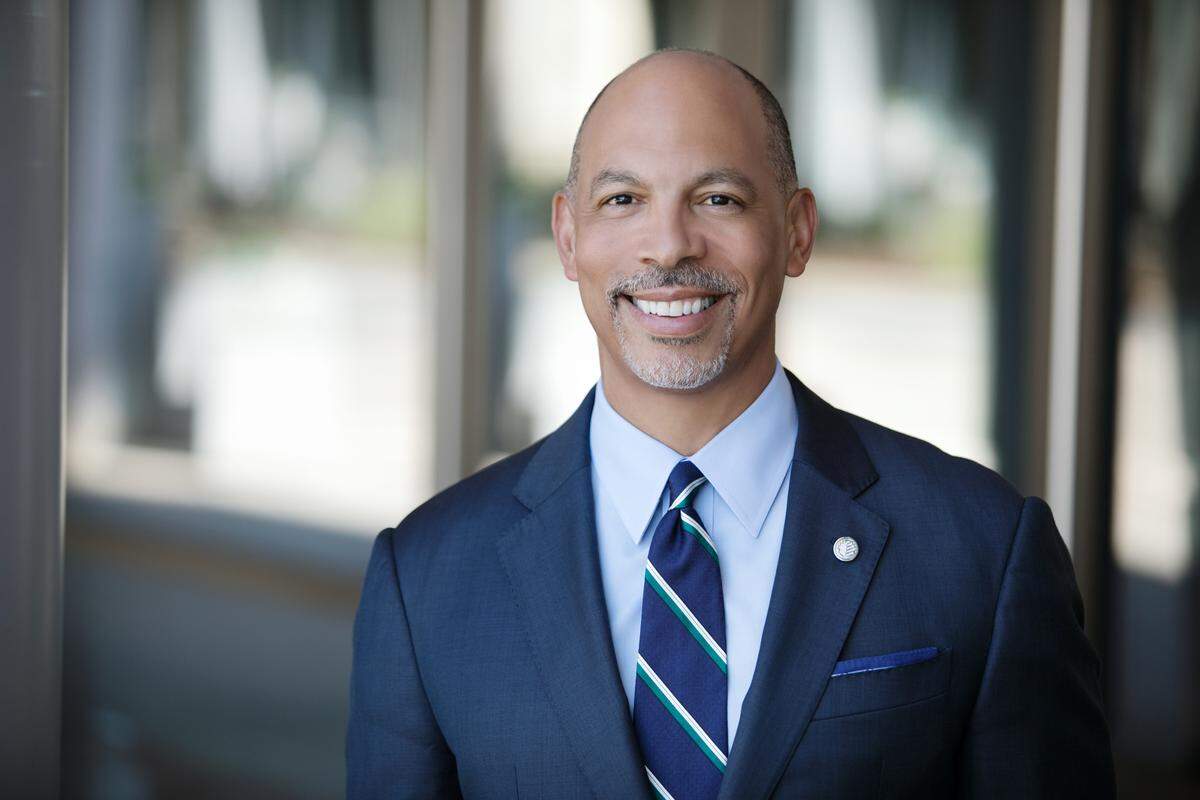
Woods does indeed have a reputation for trying not to draw attention to himself when it comes to personally helping others.
Take Drew Pescaro, a survivor of the mass shooting at UNC Charlotte in April 2019.
Pescaro tells the Observer that Woods personally visited him in the hospital while he was recovering from surgery and personally saw to it that his Atrium medical bills were taken care of. And after Pescaro told Woods that he wanted to work for the Charlotte Hornets, Woods called his friend Fred Whitfield, the team’s president, and connected the two of them.
Whitfield eventually got Pescaro a shadowing opportunity with the team, and the Hornets gave him a full scholarship for his final two years of college.
“So of course the Hornets did a lot of great things,” Pescaro says, “but that connection really got fast-tracked via Eugene. And a lot of people don’t know about this. I’m not sure if he’s ever mentioned it.”
What does the future hold?
The second question you might be wondering is: Does Woods really have legitimate talent, and if so, where does he go with his music from here?
Woods says he’s received “overwhelming, positive feedback from employees,” while Glenn Tabor at Gat3 says “there’s a certain classic, nostalgic thing about (his music), and he is a great guitar player, and a wonderful singer, and a great little songwriter, too.”
That’s easy for people inside his circle to say, though.
So we asked Kory Grow, a senior writer at Rolling Stone who has never heard of Woods, to give a listen and provide an unbiased assessment.
His mini-review: “‘Not Enuff Joy’ has an easy groove that’s even easier to like. Gene Woods obviously tapped into the idea of the song — ‘Not enuff joy and too much pain’ — and marinated on it until it poured out of him. The song may run a little long, but there’s a sincerity to the way he sings that’s admirable.”
As for where he goes with that talent from here, in the near term, he’s hoping to have another music video done soon, for a song titled “Gotta Feel,” which Woods says also addresses “fundamentally the importance of, at this moment, recognizing the humanity in each other.”
Then sometime this winter, he hopes, he will release a 15-song album.

Still, he’s not gearing up for a tour or hoping to vie for Grammys.
“It’s just sort of my mental health therapy,” he says.
“I’m not thinking about any of that. Really I want to just have the opportunity to play and record great music, so that when I’m 70, I can look back and say, ‘During this difficult time ... part of the silver lining for us is we got to hang out and record great music.’ So I’m recording this for the love of music in and of itself. That’s really my only goal.”
“What I’ve shared with other colleagues — other CEO colleagues — is, ‘Don’t be afraid to pursue that creative side. If you’re a painter, do that. If you’re a writer, do that. If you’re into spoken word, do that. If you play music, do that.’ Because I think it’s healthy,” he continues, “as an outlet, given what we’re dealing with in our communities and our country, especially now.
“But also, I think it makes you a better leader. And I think people want to see leaders that are authentic and human now more than ever.”
This story was originally published October 8, 2020 at 3:47 PM.